Understanding the Foundation of AI-Optimized Content Briefs
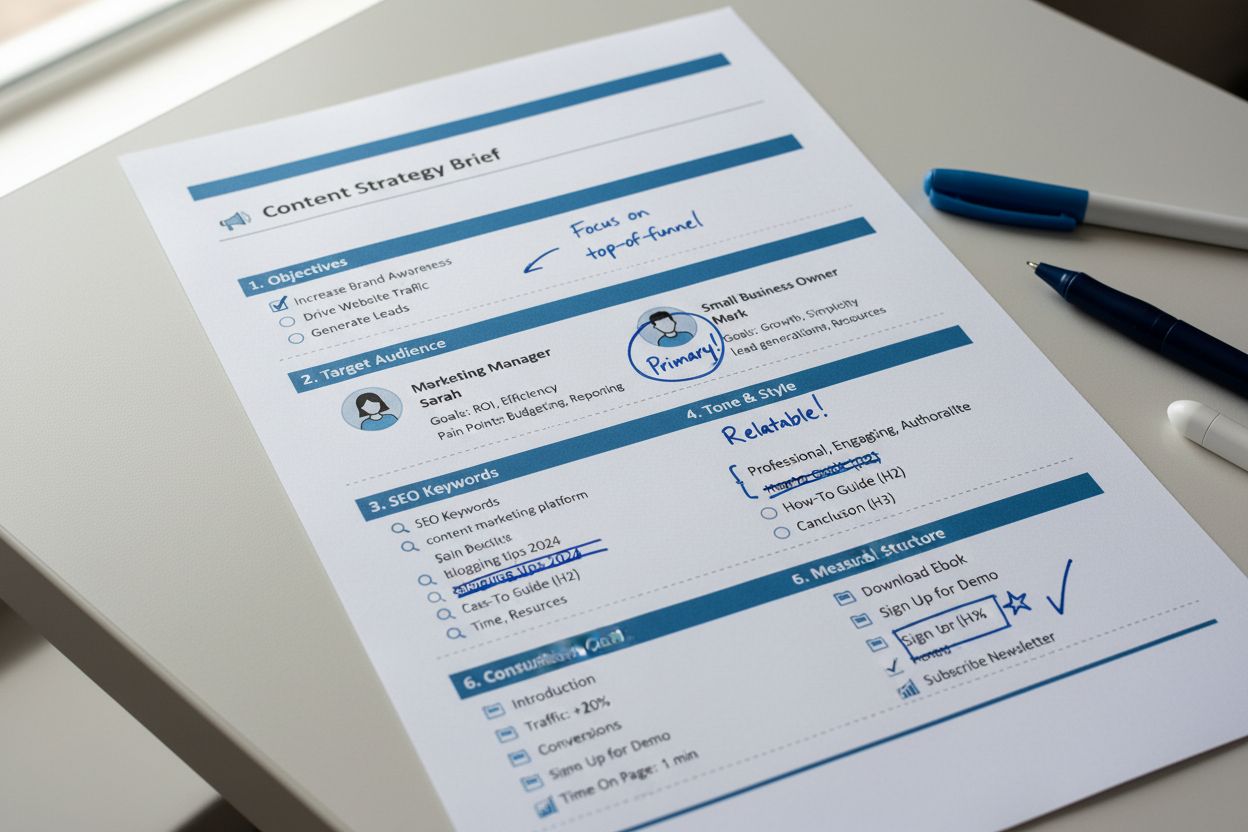
Creating an effective content brief for AI-optimized writing requires a fundamentally different approach than traditional content briefs. The shift from keyword-focused optimization to search intent and information gain means your writers need comprehensive guidance on how to structure content that performs well in both traditional search engines and AI answer generators like ChatGPT, Perplexity, and Claude. A well-crafted brief serves as the blueprint that aligns your content strategist, writing team, and stakeholders around a shared vision of what success looks like. This is especially critical in the era of AI-assisted content, where writers need to understand not just what to write, but how to write in ways that make your content discoverable and citable by artificial intelligence systems.
The foundation of any strong brief begins with clarity about your target audience and their specific needs. Rather than creating generic briefs, you should specify exactly which segment of your broader audience this piece is for. For example, if you’re a SaaS company serving both startups and enterprises, your brief should explicitly state whether this content targets startup founders, enterprise project managers, or team leaders. This specificity helps writers make better decisions about technical depth, language complexity, and the types of examples that will resonate most. Understanding your audience’s pain points, search behavior, and what they’re actually trying to accomplish allows writers to create content that genuinely addresses their needs rather than just covering a topic superficially.
Defining Search Intent and Keyword Strategy
Search intent has become more important than ever in content optimization, especially when considering how AI systems interpret and cite content. Rather than simply listing target keywords, your brief should explain the underlying intent behind those keywords. Are users looking for informational content, trying to solve a specific problem, comparing solutions, or ready to make a purchase decision? This distinction fundamentally changes how content should be structured and what information should be emphasized. When you help writers understand search intent, they can create content that directly addresses what users are actually searching for, which increases the likelihood that AI systems will recognize your content as relevant and authoritative enough to cite.
Your brief should include a SERP analysis that shows writers what currently ranks for their target keywords and what types of content formats are performing best. This might include featured snippets, AI Overviews, People Also Ask sections, or FAQ formats that appear in search results. By showing writers what’s already working, you help them understand the competitive landscape and identify opportunities to create something more comprehensive or from a unique angle. This analysis also reveals what questions users are asking that competitors haven’t fully answered, which creates opportunities for your content to stand out. When writers see that competitors are missing certain perspectives or failing to address specific pain points, they’re more motivated to create genuinely better content that AI systems will recognize as more valuable.
Ready to Monitor Your AI Visibility?
Track how AI chatbots mention your brand across ChatGPT, Perplexity, and other platforms.
Information gain is a critical concept that should be explicitly addressed in your content briefs. This refers to the new, valuable information your content provides that isn’t readily available elsewhere. In the context of AI-optimized content, information gain becomes even more important because AI systems are trained to recognize and prioritize content that offers fresh insights, original research, or unique perspectives. Your brief should include specific guidance on what information gain you expect writers to incorporate. This might include original data, case studies, expert interviews, or frameworks that you’ve developed internally. By making information gain expectations explicit, you ensure that writers aren’t just rehashing what competitors have already published.
When briefing writers on unique perspectives, provide them with access to your information gain swipe file or examples of content that successfully incorporates original insights. Show them what good information gain looks like in your industry. This might include examples of companies that have shared proprietary research, founders who’ve revealed behind-the-scenes stories, or experts who’ve developed unique frameworks. Writers should understand that their job isn’t just to compile existing information but to add genuine value through original thinking, research, or perspective. This distinction is crucial for creating content that AI systems will recognize as authoritative and worth citing.
Structuring Detailed Content Outlines
A comprehensive content outline is one of the most valuable components of an AI-optimized brief. Rather than just providing a table of contents, your outline should break down the main topic into subtopics with specific headings and subheadings that structure the content logically. This outline should be informed by your SERP analysis and should include headings that frequently appear across top-ranking competitors, as well as unique headings that only appear on one or two sites. The outline serves multiple purposes: it helps writers understand the flow of the piece, ensures all key points are covered, and makes it easier for AI systems to parse and understand the content structure.
Your outline should also indicate which sections might benefit from specific formatting like tables, bullet points, or visual elements. For example, if you’re writing about comparing different tools or approaches, a comparison table makes the information more scannable and easier for AI systems to extract and cite. Bullet points work well for lists of benefits, steps in a process, or key takeaways. By indicating where these elements should appear in your outline, you help writers create content that’s not just informative but also structured in ways that AI systems can easily understand and reference. This structural clarity also improves the user experience, as readers can quickly find the information they’re looking for.
Stay Updated on AI Visibility Trends
Get the latest insights on AI mentions, brand monitoring, and optimization strategies.
Specifying On-Page SEO and Technical Requirements
Your brief should include specific on-page SEO elements that writers need to incorporate. This includes the meta description, URL slug, and header structure. While these might seem like technical details, they’re important for helping search engines and AI systems understand the context and relevance of your content. The primary keyword should be included naturally in these elements, but keyword stuffing is outdated and counterproductive. Instead, focus on clarity and relevance. Your brief should also specify the ideal word count based on your competitive analysis, though writers should understand that word count is a guide to comprehensiveness, not a ranking factor.
Include guidance on internal and external linking in your brief. Internal links help build topic clusters and keep readers engaged on your site, while external links to credible sources add authority and context to your content. Your brief should specify which internal pages should be linked to and suggest anchor text that’s both descriptive and natural. For external links, guide writers toward high-quality sources that will enhance credibility. It’s perfectly acceptable to link to competitor content if it genuinely serves your readers. This approach demonstrates confidence in your content and helps AI systems understand that you’re providing comprehensive, well-researched information rather than trying to hide or minimize competing perspectives.
Communicating Brand Voice and Style Guidelines
Brand voice consistency is essential for creating content that feels cohesive across your entire content library. Your brief should include or reference your style guide, which outlines your brand’s tone, vocabulary preferences, and communication style. Are you formal or conversational? Do you use humor? How technical should the language be? These decisions should be consistent across all content, whether it’s written by in-house team members or freelance writers. When writers understand your brand voice, they can make better decisions about how to explain concepts, what examples to use, and how to engage with readers.
Beyond basic style guidelines, your brief should include examples of content that exemplifies your brand voice. Rather than just describing your tone, show writers actual examples of articles or sections that capture the voice you’re looking for. This is far more effective than written descriptions alone. You might also include examples of what NOT to do—content that misses your brand voice or doesn’t align with your values. By providing concrete examples, you help writers internalize your brand voice more quickly and make better decisions throughout the writing process without needing constant feedback and revisions.
Addressing AI Integration and Usage Guidelines
In the era of AI-assisted content, your brief should explicitly address how writers should use AI tools in their process. Should they use AI for research, outlining, drafting, or editing? Are there specific tools you prefer or want to avoid? What’s your policy on AI-generated content versus AI-assisted content? These guidelines help writers understand your expectations and ensure they’re using AI in ways that align with your content strategy. Some organizations want writers to use AI for research and outlining but write the first draft from scratch to maintain authentic voice. Others are comfortable with AI-generated first drafts as long as they’re heavily edited and fact-checked.
Your brief should also include guidance on fact-checking and verification, especially when writers use AI for research. AI systems can sometimes generate plausible-sounding but inaccurate information, so writers need to verify key claims, statistics, and quotes against original sources. Your brief should specify what level of fact-checking is required and provide writers with access to reliable sources or databases they can use for verification. This is particularly important for content that will be cited by AI systems, as inaccurate information can spread quickly and damage your credibility. By making fact-checking expectations explicit, you ensure that your content maintains the highest standards of accuracy and reliability.
Creating Actionable Revision and Feedback Processes
Your brief should outline how the revision process will work and set clear expectations for the number of revisions included. Edits can be time-consuming, so establishing a clear process helps manage both writer expectations and project timelines. Specify how feedback will be communicated, what constitutes a major revision versus a minor edit, and what happens if significant changes are needed after the first draft. This clarity prevents misunderstandings and helps writers understand what they need to do to meet your standards.
Include specific quality checkpoints in your brief that writers should verify before submitting their draft. This might include checking that all claims are supported by evidence, that the content flows logically, that all required sections are included, and that the piece meets your readability standards. By giving writers a checklist of quality criteria, you reduce the number of revisions needed and help them take ownership of the quality of their work. This approach also demonstrates respect for writers’ time and expertise, as they understand exactly what you’re looking for rather than having to guess based on vague feedback.
Providing Context and Supporting Materials
Your brief should include bullet points summarizing the key information that will appear under each heading. These summaries help writers understand what content should be covered without requiring them to do extensive research on their own. You might also include links to relevant internal resources, competitor articles, or research studies that writers should reference. By providing this context upfront, you save writers time and ensure they have access to the best available information. This is particularly valuable for writers who are new to your industry or topic area.
| Brief Component | Purpose | Key Details |
|---|
| Target Audience | Ensures content resonates with intended readers | Demographics, pain points, experience level, search behavior |
| Search Intent | Guides content structure and focus | Informational, problem-solving, comparison, or transactional intent |
| Keyword Strategy | Informs optimization approach | Primary keywords, related terms, SERP analysis |
| Information Gain | Ensures original value | Unique perspectives, original research, frameworks |
| Content Outline | Structures the piece logically | H1, H2, H3 headings, section descriptions |
| On-Page SEO | Optimizes for search visibility | Meta description, URL slug, word count, headers |
| Brand Guidelines | Maintains consistency | Tone, vocabulary, style preferences, examples |
| AI Integration | Clarifies tool usage | Approved tools, fact-checking requirements, draft approach |
| Revision Process | Sets expectations | Number of revisions, feedback method, quality checkpoints |
Leveraging Keyword Clustering for Better Scope Definition
Before creating individual briefs, consider using keyword clustering to map out your entire content strategy. This process groups keywords that share the same search intent, ensuring that each brief has a clear, unique scope. Rather than creating multiple articles that compete with each other for the same keywords, clustering helps you identify which keywords can be targeted on the same page and which need separate articles. This strategic approach prevents content cannibalization and ensures that your content library is well-organized and comprehensive.
When you cluster keywords first, you can create briefs that target multiple related keywords on a single page, which is more efficient than creating separate articles for each keyword. For example, keywords like “keyword research,” “what is keyword research,” “keyword research definition,” and “why is keyword research important” can all be targeted on the same page because they share the same search intent. However, keywords like “how to do keyword research for YouTube” or “keyword research tools” need separate articles because they trigger different search results and serve different user intents. By clarifying this scope in your brief, you help writers understand exactly which keywords they should target and which related topics should be mentioned but not covered in depth.
Finalizing Your Content Brief Template
The most effective approach is to develop a custom content brief template that works for your specific team and organization. Rather than using a generic template, take time to create one that reflects your unique needs, processes, and standards. Your template should include all the elements discussed above, but organized in a way that makes sense for your workflow. Once you’ve created your template, use it consistently across all content projects. This consistency helps your team work more efficiently and ensures that every piece of content receives the same level of strategic planning and guidance.
Remember that your brief template should evolve over time as you learn what works best for your team. After completing several projects, review your briefs and revisions to identify patterns. Are writers consistently asking for clarification on certain sections? Are there recurring quality issues that could have been prevented with better guidance? Use these insights to refine your template and make it more effective. By continuously improving your briefing process, you ensure that your writers have the best possible foundation for creating content that performs well in search engines and gets cited by AI systems.