
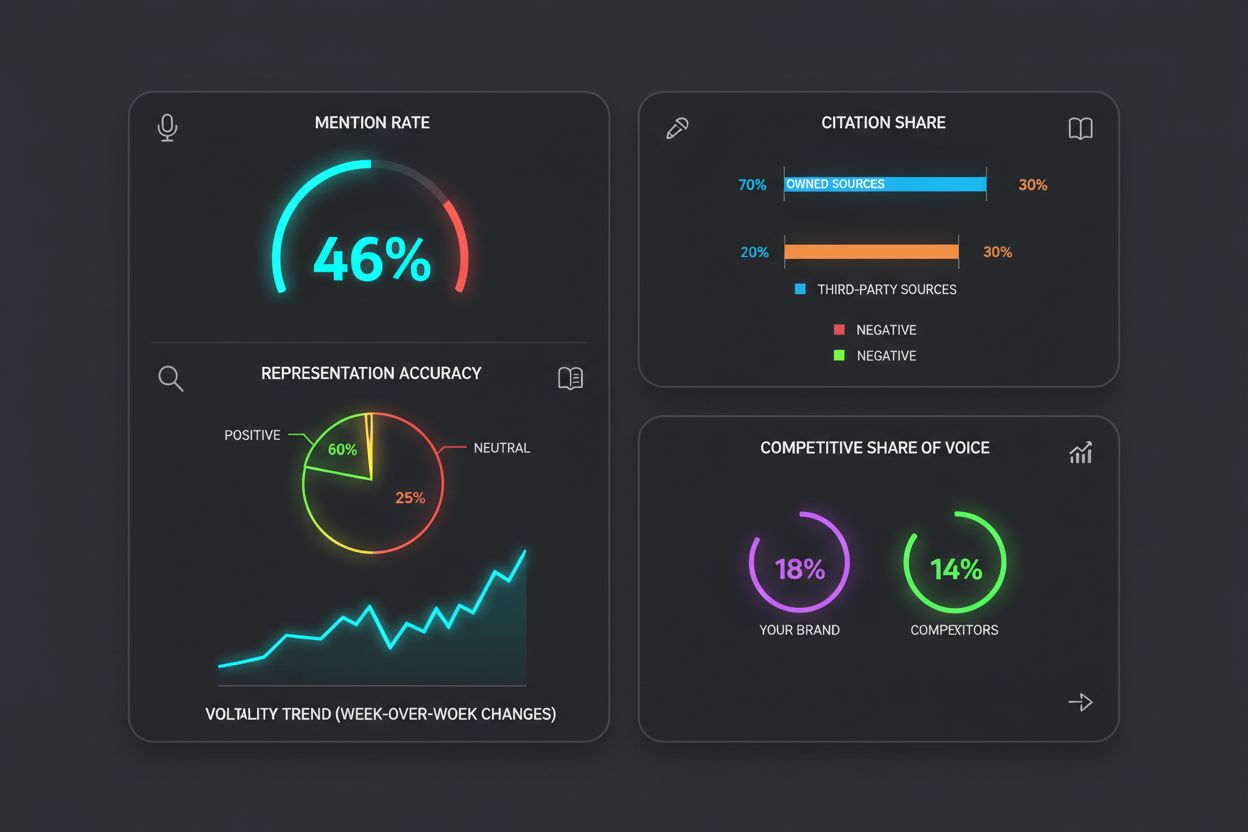
AI Visibility Quick Reference: One-Page Guide
Quick reference guide to AI visibility monitoring. Track mentions, citations, and brand presence across ChatGPT, Google AI Overviews, Perplexity, and Gemini wit...
10 min read

Learn how to build a strong personal brand for AI visibility. Discover strategies to get cited by ChatGPT, Perplexity, Gemini, and Claude through content optimization, authority building, and AI-focused SEO techniques.
Build personal brand for AI visibility by creating consistent, high-quality content across owned and earned media platforms, establishing expertise through structured information and E-E-A-T signals, optimizing for AI crawlers with proper technical SEO, and monitoring your presence across ChatGPT, Perplexity, Gemini, and Claude to ensure accurate representation of your professional identity.
AI visibility represents a fundamental shift in how your professional reputation is built and discovered in the digital age. Unlike traditional search engine optimization that focuses on ranking for keywords and generating clicks, AI visibility centers on how artificial intelligence systems interpret and present your professional identity when users query platforms like ChatGPT, Perplexity, Gemini, and Claude. The distinction is critical because 77% of ChatGPT users rely on it for information, and three out of ten users trust AI answers more than traditional search engines. This means your personal brand is no longer just about appearing in Google results—it’s about how AI systems synthesize and represent your expertise when someone asks about you or your field.
The fundamental difference lies in how these systems evaluate information. Traditional search engines prioritize keywords, backlinks, and click-through rates. AI systems, however, synthesize publicly available information by analyzing recurring themes in your content, consistency of your messages, mentions in reputable publications, and any gaps or contradictions in your online presence. When an AI system generates an answer about you or your expertise, it’s drawing from a comprehensive interpretation of your entire digital footprint rather than matching specific keywords. This means that the first impression an AI creates about you may shape whether you receive business opportunities or face missed connections. Your personal brand is no longer optional—it’s part of professional due diligence in an AI-driven world.
Building AI visibility requires a strategic, methodical approach that begins with understanding your current position and extends to scaling your presence across multiple platforms. The process can be broken down into three manageable phases that progressively strengthen your professional reputation in AI systems.
The foundation of any AI visibility strategy starts with understanding what AI systems currently know about you. Search for yourself in several AI tools—ChatGPT, Perplexity, Gemini, and Claude—and carefully document what appears. Ask these systems direct questions like “Who is [your name]?” or “What is [your name] known for?” and analyze the responses for accuracy and completeness. Is the information correct? Are you positioned accurately within your industry? Do your expertise signals come through clearly? This audit reveals critical gaps and opportunities that will shape your next steps. Document whether AI systems mention your professional affiliations, key achievements, areas of expertise, and whether the information aligns with how you want to be perceived. These gaps become your roadmap for content creation and positioning refinement.
Once you’ve identified gaps, focus on two critical areas: updating your owned platforms and refreshing your cornerstone content. Start by ensuring consistency across all platforms you control—your website, LinkedIn profile, Twitter/X, and any professional directories. Provide the same information everywhere, particularly your professional title, areas of expertise, and key accomplishments. If you’re a founder of Company X, mention it consistently across all profiles. This consistency signals to AI systems that your positioning is intentional and authentic. Next, update your cornerstone content—the pieces that define your expertise. This includes case studies, interviews, thought-leadership articles, and detailed explanations of your methodology. These pieces should clearly convey your positioning and expert messaging. High-quality, substantive information allows AI to associate your name with positive and authoritative context, while overly promotional content may be deprioritized by AI systems seeking genuine expertise.
The final phase involves expanding beyond your owned platforms to earned and paid media, which tend to have stronger impact on AI visibility. Earned media—mentions in reputable publications, interviews, podcast appearances, and industry coverage—carries significant weight because AI systems recognize these as third-party validation of your expertise. Contribute to or be cited by reliable open sources like Wikipedia, Reuters, Fortune, or industry-specific publications. Participate in podcasts, webinars, and industry events where your expertise is discussed. Paid media, such as sponsored articles or promoted content on high-authority platforms, can also enhance visibility. The key is consistency: anchor your expertise around one to three core themes and comment on these topics across articles, LinkedIn posts, podcasts, and events. You don’t need to produce overwhelming amounts of content—a steady cadence is enough, and AI will incorporate it into its understanding of your expertise.
AI citation algorithms operate fundamentally differently from traditional search rankings. While Google focuses heavily on keywords and backlinks, AI systems prioritize content relevance, authority, clarity, and how well information addresses user intent. Understanding these differences allows you to create content specifically optimized for AI visibility.
Certain content structures are significantly more likely to be cited by AI systems. Structured “Best Of” lists with semantic headers organize information clearly and make it easier for AI to parse your content. First-person reviews that detail personal experiences resonate well because they add authenticity and demonstrate real-world application of your expertise. Comparison tables highlighting pros and cons in a visually digestible format are particularly effective because they provide comprehensive information in an easily synthesizable form. FAQ-style content provides direct answers to specific questions, which AI systems value highly when generating responses. Use conversational language and natural phrasing to engage readers—this mirrors how users actually query AI systems and improves the likelihood of citation.
| Content Format | Why AI Systems Prefer It | Implementation Tips |
|---|---|---|
| Structured Lists | Clear hierarchy and semantic organization | Use descriptive headers, number items, provide context |
| First-Person Reviews | Authenticity and real-world application | Share specific experiences, include measurable results |
| Comparison Tables | Comprehensive information in digestible format | Compare 3-5 options, include pros/cons, add brief explanations |
| FAQ Content | Direct answers to specific questions | Use natural question phrasing, provide concise answers |
| Case Studies | Detailed methodology and proven results | Include problem, solution, results, and lessons learned |
When creating content, include examples, data, and case studies to back up your claims. Avoid vague generalizations or SEO filler content; instead, focus on delivering clear, actionable insights that directly address what users are asking. The more specific and substantive your content, the more likely AI systems will recognize it as authoritative and cite it in their responses.
E-E-A-T—Experience, Expertise, Authoritativeness, and Trustworthiness—has become the cornerstone of how AI systems evaluate content credibility. Unlike traditional SEO where E-E-A-T is important but one of many factors, AI systems place exceptional weight on these signals because they’re designed to provide reliable, trustworthy information to users.
Experience means demonstrating that you’ve actually done what you’re talking about. Share your professional journey, the projects you’ve led, the challenges you’ve overcome, and the results you’ve achieved. Don’t just claim expertise—show it through detailed case studies and real-world examples. Expertise involves clearly communicating your knowledge and skills. Create content that demonstrates deep understanding of your field, not surface-level observations. Write detailed guides, conduct original research, and provide insights that only someone with genuine expertise could offer. Authoritativeness comes from being recognized by others in your field. Seek citations from reputable sources, contribute to industry publications, speak at conferences, and build relationships with other recognized experts. When other authoritative voices mention or cite your work, AI systems recognize this as validation of your expertise. Trustworthiness is built through consistency, transparency, and reliability. Maintain consistent messaging across all platforms, be transparent about your methods and limitations, and follow through on commitments. Customer testimonials, case studies, and mentions on forums all contribute to trust signals that AI systems evaluate.
AI systems cannot cite content they cannot access. Ensuring that AI crawlers can effectively index your content is fundamental to building AI visibility. This requires attention to technical optimization that many personal brands overlook.
Start with proper crawler configuration in your robots.txt file. Ensure that AI crawlers like GPTBot and OAI-SearchBot can access your site. Create an XML sitemap to help them navigate your pages efficiently. Schema markup is another critical element—implementing structured data using schema.org provides context that AI crawlers can easily interpret. Mark up your author information, articles, reviews, and other content types with appropriate schema to help AI systems understand your content structure and context. Mobile responsiveness is essential; with growing numbers of users accessing information on mobile devices, ensuring your site looks great and functions properly on all screens is non-negotiable. Page speed matters too—slow-loading pages may be deprioritized by crawlers. Finally, ensure your site is crawlable and indexable; avoid blocking important content behind paywalls or login requirements that prevent AI systems from accessing it.
Owned media alone is insufficient for building strong AI visibility. Your website and social profiles provide the foundation, but earned and paid media amplify your reach and credibility in ways that AI systems recognize and reward.
Earned media includes mentions in reputable publications, interviews, podcast appearances, and industry coverage. These third-party validations carry significant weight because AI systems recognize them as independent verification of your expertise. Pursue guest posting opportunities on industry-specific blogs and publications. Pitch yourself as an expert source for journalists and podcast hosts. Contribute to Wikipedia articles in your field (if appropriate). Participate in industry forums and communities where your expertise is relevant. Each mention in a reputable source strengthens the signals AI systems use to evaluate your authority.
Paid media includes sponsored articles, promoted content, and advertising on high-authority platforms. While not as valuable as earned media, strategic paid placements on reputable platforms can enhance visibility. The key is choosing platforms that align with your expertise and audience. A sponsored article on a major industry publication carries more weight than random advertising. The combination of owned, earned, and paid media creates a comprehensive presence that AI systems recognize as authoritative and trustworthy.
Building AI visibility is an ongoing process that requires regular monitoring and adjustment. You need to track how your brand appears across different AI platforms and measure the impact of your efforts.
Brand mention analysis helps you gauge how frequently your name and expertise are cited across different AI platforms. Use tools like Google Alerts, SEMrush, or Ahrefs to monitor mentions. Track not just frequency but also context—are you being cited for the right reasons? Are your expertise areas being recognized? Competitor citation monitoring provides valuable perspective. See how your rivals are performing in AI visibility. Are they being cited more frequently? For different topics? This analysis reveals gaps in your strategy and opportunities for improvement.
Content freshness evaluation is critical because outdated information can lead to decreased visibility. Regularly review your cornerstone content and update it with new examples, recent data, and current insights. AI systems recognize and reward fresh, current information. Branded search traffic growth indicates whether your AI visibility efforts are translating into real business impact. Monitor how often people search for your name and whether that volume is increasing. Track engagement metrics beyond just clicks—comments, shares, and meaningful interactions indicate that your content resonates with audiences.
The AI landscape is evolving rapidly, and your AI visibility strategy must adapt accordingly. Different AI platforms have different citation behaviors, training data sources, and preferences. ChatGPT draws from training data with a knowledge cutoff, Perplexity actively searches the live web and cites sources, Gemini integrates with Google’s search index and knowledge graph, and Claude emphasizes safety and helpfulness. Understanding these differences helps you optimize for each platform. Stay informed about updates to these systems and adjust your strategy accordingly. Monitor which platforms are citing your content most frequently and double down on optimization for those platforms. Emerging AI tools and platforms will continue to appear—stay ahead by understanding how they work and what they prioritize.
While pursuing AI visibility, never lose sight of authenticity and quality. People still want to work with people. An image of an industry expert should be supported by genuine case studies, clear insights, and credible, well-crafted storytelling. Your future buyers, investors, and partners may first meet the version of you that an AI assistant constructs from your footprint. Ensure it reflects who you truly are. Focus on creating genuinely valuable content that helps your audience solve real problems. Build real relationships with other experts and industry leaders. Contribute meaningfully to your field. These authentic efforts naturally generate the signals—citations, mentions, quality content—that AI systems recognize and reward. The most sustainable approach to AI visibility is to become genuinely excellent at what you do and then ensure that excellence is visible and accessible to AI systems.
Start tracking how your personal brand appears in AI-generated answers. Discover gaps in your AI visibility and optimize your presence across ChatGPT, Perplexity, Gemini, and Claude with AmICited.
Quick reference guide to AI visibility monitoring. Track mentions, citations, and brand presence across ChatGPT, Google AI Overviews, Perplexity, and Gemini wit...
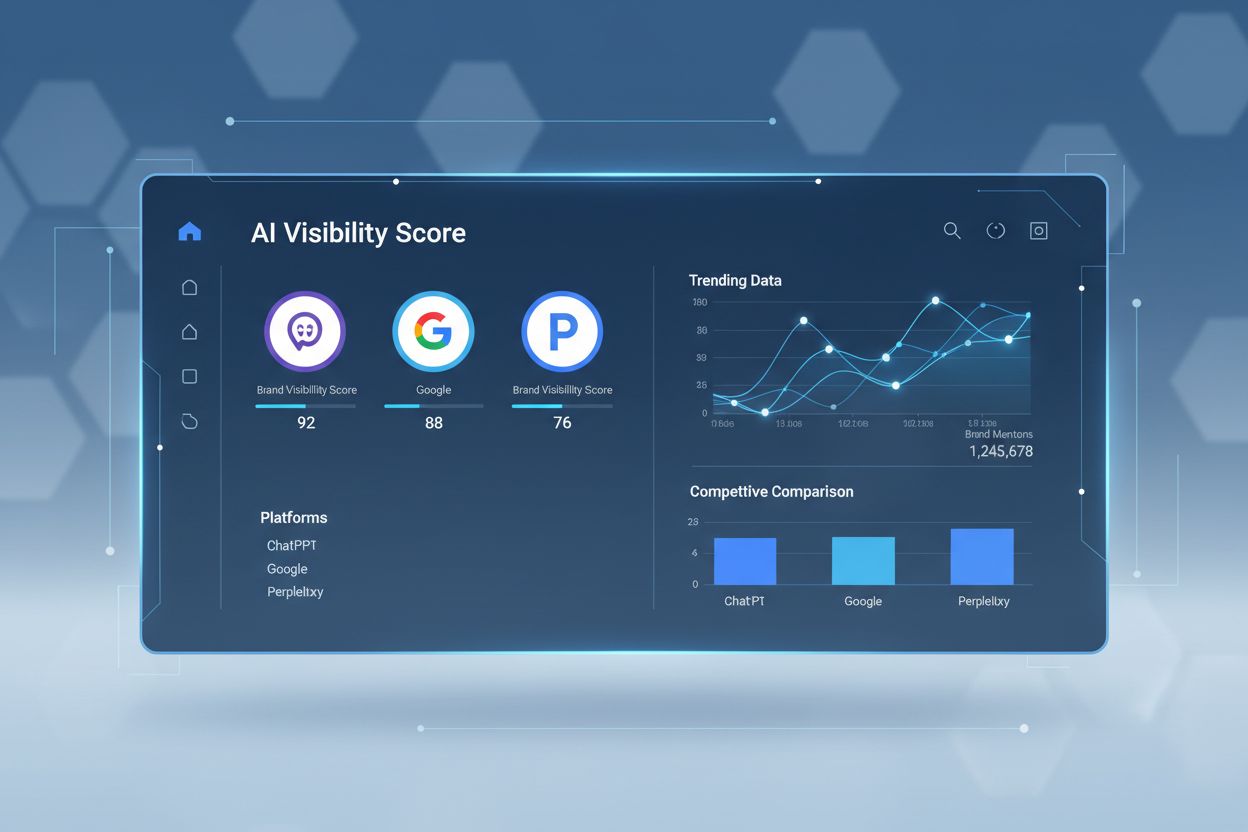
Master the Semrush AI Visibility Toolkit with our comprehensive guide. Learn how to monitor brand visibility in AI search, analyze competitors, and optimize for...

Learn how to conduct a baseline AI visibility audit to understand how ChatGPT, Google AI, and Perplexity mention your brand. Step-by-step assessment guide for b...