
Topical Authority
Topical authority is a website's proven expertise in a specific subject area through comprehensive content coverage. Learn how it impacts AI search visibility a...
10 min read

Learn how to build topical authority through strategic content creation, keyword research, and link building. Establish expertise and improve your search rankings.
Build topical authority by selecting a niche topic, creating comprehensive content across related subtopics, conducting keyword research, developing unique perspectives, and earning quality backlinks from authoritative sources within your industry.
Topical authority refers to your website’s expertise and credibility on a particular subject. It’s the trust that both search engines and users place in your content when you consistently demonstrate deep knowledge about specific topics. Unlike domain authority, which measures overall trustworthiness across all subjects, topical authority focuses on your expertise within specific niches. Building topical authority is essential because Google prioritizes websites that demonstrate genuine expertise, authoritativeness, and trustworthiness (E-E-A-T) when ranking search results. This means establishing yourself as a go-to resource in your field directly impacts your visibility in search engine results pages (SERPs).
Topical authority significantly impacts your search performance because Google trusts authoritative sources and ranks them higher in its search results. When you build strong topical authority, you create multiple benefits for your website. First, it builds confidence in your brand for both readers and search engines, leading to more returning site visitors and higher SERP rankings. Second, topical authority supports natural link building because websites are more likely to share your content organically if they view you as an expert. These backlinks act as votes of confidence to search engines, vouching for your site and increasing its trustworthiness. Third, building topical authority can reduce your marketing spend because you’ll rank higher organically without relying on expensive paid advertising campaigns.
| Benefit | Impact | Timeline |
|---|---|---|
| Search Rankings | Higher positions in SERPs for target keywords | 3-6 months |
| Organic Traffic | Increased visitors from search engines | 3-6 months |
| Link Building | Natural backlinks from relevant sources | Ongoing |
| Brand Trust | Increased credibility with users | Immediate |
| Marketing Efficiency | Reduced reliance on paid advertising | 6-12 months |
The first step in building topical authority is choosing a niche focus rather than trying to rank for broad, highly competitive topics. Aim to become the leading online source of information on a few specific topics within your industry. For example, instead of targeting “knitting” broadly, focus on “knitting patterns” or “beginner crochet patterns.” This approach is much more time- and cost-effective because you can create truly original, high-value content that stands out from competitors.
When selecting your topics, think about your target audience’s entire search journey. If you sell customer relationship management (CRM) software, don’t just target bottom-of-funnel keywords like “buy CRM software.” Also cover top-of-funnel topics like sales, analytics, marketing, productivity, and email marketing. This horizontal topical authority provides context around your brand’s level of expertise and helps you build relationships with prospective leads over time. By targeting search queries across your audience’s entire journey, you’re positioning yourself as a comprehensive resource rather than a one-dimensional vendor.
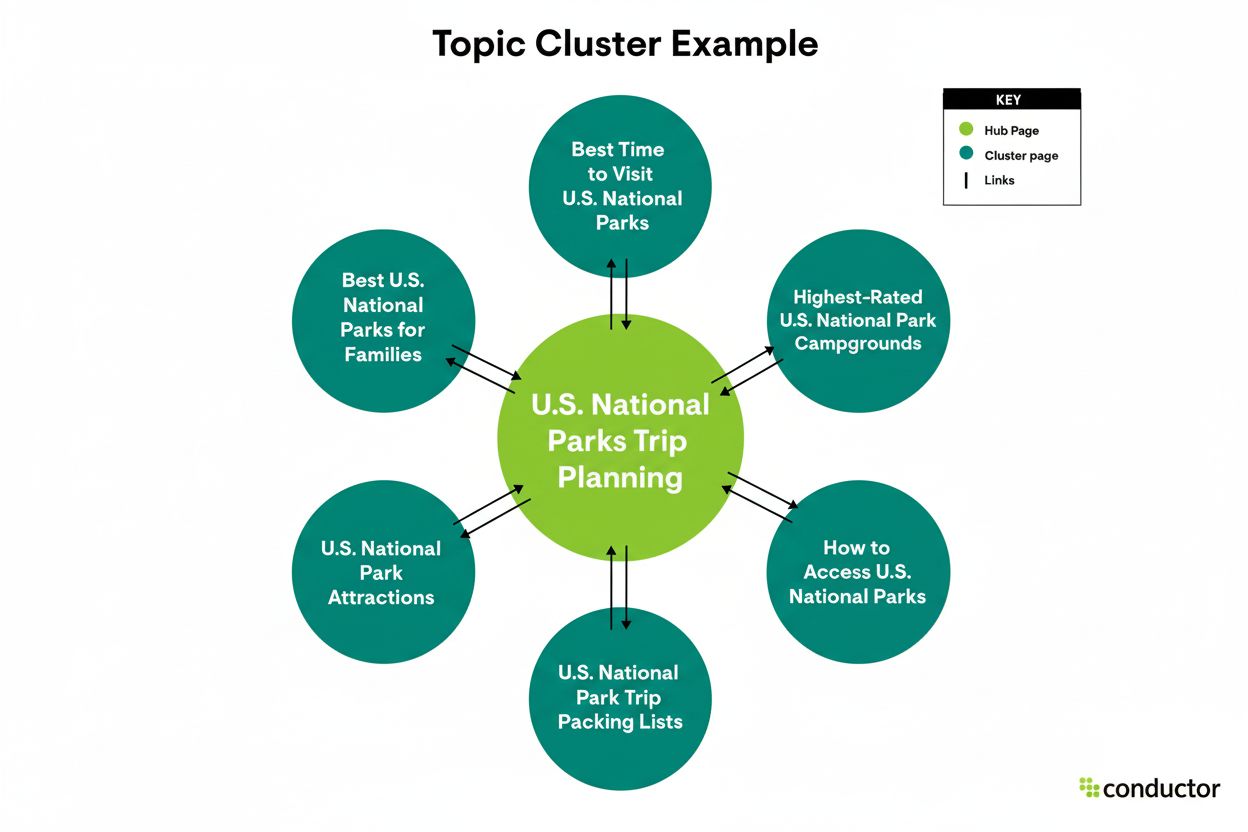
Once you’ve identified your main topic pillars, develop subtopics within each pillar to create content depth. This is where you brainstorm individual content pieces and target keywords that will support your main topics. Create a content hub for each pillar with multiple supporting articles that explore different angles and perspectives. For instance, if your pillar is “marketing,” your subtopics might include digital marketing, ROI of marketing, content marketing, marketing analytics, marketing strategies, social media marketing, marketing funnel stages, and how to write a marketing plan.
The key to this approach is creating perspective-driven content that is rich with information gain rather than generic, copycat content. By covering a subject in-depth with several different pieces of content that take on different perspectives, you prove to readers and search engine algorithms that you have comprehensive knowledge about a given topic. This demonstrates expertise rather than a superficial understanding. When you have specific topics you’re targeting, tackle the highlights on one pillar page and dig into the specifics via related subtopic pages. Then internally link those pages together so search engines understand your website’s structure and hierarchy.
Keyword research is essential for identifying the specific search terms your target audience uses when looking for information about your topics. The more relevant, high-quality, search-friendly content you create, the more topical authority you can build. Use keyword research tools to find search terms related to your main topics and subtopics, focusing on keywords with significant search volume and lower keyword difficulty scores. Pay special attention to keywords where your website has a better chance of ranking based on your current authority level.
When conducting keyword research, look for related themes and questions that users are asking about your topic. These questions reveal what information gaps exist and what your audience actually wants to know. For example, if you’re targeting “marketing analytics,” related themes might include customer metrics, digital marketing analytics, and marketing analytics software. You can also find questions like “How is marketing analytics done?” or “What are examples of marketing analytics?” that you should answer in your content. This approach ensures you’re creating content that directly addresses user intent and provides genuine value.
Comprehensive content is the foundation of topical authority. Each piece of content should thoroughly answer the main question and then elaborate to provide additional value. Cover each subtopic in depth by addressing related themes and answering follow-up questions that users might have. For example, if you’re writing about marketing analytics, include sections on customer metrics, digital marketing analytics, and marketing analytics software. Answer questions like “How is marketing analytics done?” and “What are the different kinds of marketing analytics?” within your article.
The most important aspect of comprehensive content is providing unique, original insights that your competitors can’t match. This might include expert quotes or interviews, a new method or solution, a fresh point of view on an existing topic, or primary research from your own studies or surveys. All of these approaches add information gain to your content, which is what Google rewards. Don’t just rehash what’s already on the internet—provide something new that demonstrates your genuine expertise and firsthand experience with the topic.
Creating unique content is crucial for standing out in search results because a lot of information is repeated across the web. Information gain is the key differentiator—create material that is directly relevant to the user’s search intent while offering new insights on existing topics or exploring them from fresh perspectives. You can incorporate information gain through several approaches: including expert quotes or interviews, providing a new method or solution, suggesting a new point of view on an existing topic, or offering primary research.
The best practice is to include at least one unique element in each piece of content you create. This might mean interviewing industry experts, conducting your own research or surveys, presenting a contrarian viewpoint backed by data, or sharing case studies from your own experience. When you consistently provide original perspectives and insights, you establish yourself as a thought leader rather than just another content creator regurgitating existing information. This uniqueness is what attracts backlinks, social shares, and user engagement—all signals that help build your topical authority.
Quality backlinks from authoritative sources within your topic area play a crucial role in building topical authority. However, it’s not about getting a ton of backlinks from any source—it’s about earning quality backlinks from other authoritative sources within your specific topic. If you’re a CRM software company, you’d want to earn backlinks from sites adjacent to your niche, like project management software, sales team software, or AI customer support tools.
While you can’t fully control who links to your content, you can attract quality backlinks using several techniques. Outreach involves contacting relevant websites and requesting links to your site by explaining what makes your content unique and valuable. Broken link building means finding broken external links on other websites and offering working links from your site as alternatives. Unlinked brand mentions occur when websites mention your brand without including a link—you can reach out and persuade them to add one. Additionally, consider guest posting on other sites with similar or higher authority, providing expert quotes for other content creators, participating in case studies, or engaging in webinars about your expertise. These activities help you reach new audiences, establish credibility, and generate inbound links to your domain.
Crawl efficiency refers to how easily search engine bots can discover and index your website’s pages. If search engines have difficulty navigating your site, your efforts to create contextually-relevant content become less effective. The two main factors to improve crawl efficiency are internal link building and URL structure. When you have specific topics you’re targeting, internally link your pillar pages to related subtopic pages with thoughtful anchor text. This helps search engines understand your website’s structure and hierarchy.
Start by keeping your URL structure consistent and evergreen. Create guidelines for URL structures ahead of time so there’s consistency across your site. For example, if you’re building a content pillar around “CRM,” your URLs might look like: yourdomain.com/crm/what-is-a-crm and yourdomain.com/crm/crm-for-marketing. This structure makes it easy for readers and search engines to understand that both pages fall into the same topic cluster. Adding relevant and useful internal links with thoughtful anchor text to each piece of content helps search engines understand your website’s structure and also makes it easier for readers to discover more of your content.
While quality is the most important aspect of content strategy, quantity comes in a close second. Research shows that 45% of marketers found success by creating more content and posting more often, while 61% found success by improving content quality and authenticity. The key is balancing both—increasing your publishing velocity without sacrificing quality. You can ramp up your content volume by expanding your content team, outsourcing content creation, or repurposing existing content into multiple formats.
However, increasing publishing velocity doesn’t automatically equal more topical authority earned. You need to focus on creating relevant content targeting relevant keywords that your target audience is actually searching for. Publishing more content about topics that don’t align with your niche or that don’t address user intent won’t help you build authority. Instead, focus on consistently publishing high-quality, original content that demonstrates your expertise within your chosen topic areas. This consistent output signals to search engines that you’re an active, authoritative source on your topics.
As your content operations expand, consistency becomes crucial for building trust and authority. Creating a seamless, authoritative experience for your audience requires establishing content standards and defining your brand voice. How jarring would it be if your blog posts didn’t have the same tone, grammar rules, or structures? Consistency is essential for reliability and trustworthiness for searchers finding their way to you through Google Search or interactive AI chats.
Create a brand style guide that describes the voice and tone writers should use when creating content. Your guide should include how to handle numbers, how to cite trusted sources, guidelines around humor, punctuation and formatting for lists, particular brand stances on relevant topics, authoritative websites and subject matter experts to cite, whether you use first, second, or third-person pronouns, which grammar rules to follow, capitalization guidelines, and which spelling variations to use. When you define your brand’s voice early and the ways you’ll approach specific topics, it’s easier to scale your content production without disrupting the reader’s experience.
High-quality content isn’t just comprehensive and easy to read—it also needs to be up-to-date and based on the latest findings to stay relevant. Auditing existing content and updating previously published articles is a productive way to continue getting the most out of your content investment. Research shows that 57% of brands audit their content twice a year or more, and after updating content, 45% of respondents saw more engagement while 43% saw improved SERP rankings.
When auditing and updating your existing posts, focus on three key areas. First, update statistics and citations to reflect the most recent findings—if you cite annual surveys or benchmark reports, update those each year. Second, address new trends and technology—keep up with changes, especially when writing about technology, and cover new platforms or feature updates. Third, look for changes in user intent for your primary keywords by analyzing search intent to ensure you’re still answering the right questions. Regularly updating your content signals to search engines that your site is actively maintained and that you care about providing current, accurate information to your audience.
Tracking your topical authority growth helps you understand whether your efforts are working. Monitor your keyword rankings for target keywords to see if you’re gaining visibility for related terms—if you’re gaining positions for several related terms, it’s a sign you’re building trust around that topic. Use position tracking tools to compare your ranking positions before and after publishing new content. Additionally, track your backlink profile to see if you’re earning quality links from relevant sources. Gaining backlinks shows that trust in your site is growing. Finally, monitor your organic traffic in Google Analytics to see if visits are increasing after you start building authority on specific topics. If organic search traffic is growing, it’s a good sign your topical authority efforts are paying off.
Track how your brand appears in AI-generated answers and monitor your topical authority across ChatGPT, Perplexity, and other AI search engines.
Topical authority is a website's proven expertise in a specific subject area through comprehensive content coverage. Learn how it impacts AI search visibility a...

Learn how topical authority impacts AI search visibility, citations in ChatGPT and Perplexity, and how to build expertise that AI systems recognize and cite.
Learn how page authority works in AI search engines like ChatGPT and Perplexity. Discover what signals AI systems use to evaluate page credibility and how to op...