

Best AI Search Visibility Monitoring Tools 2025 | Track Brand Mentions
Discover the top AI search visibility monitoring tools to track your brand across ChatGPT, Perplexity, and Google AI Overviews. Compare features, pricing, and c...
9 min read

Learn how to compare AI monitoring tools effectively. Discover evaluation criteria, feature comparison frameworks, and selection strategies for brand visibility and AI search monitoring platforms.
Comparing AI monitoring tools requires evaluating key criteria including platform coverage (ChatGPT, Perplexity, Gemini, Claude), monitoring capabilities, pricing models, and integration features. Focus on tools that track brand visibility, provide actionable insights, and align with your organization's specific monitoring needs.
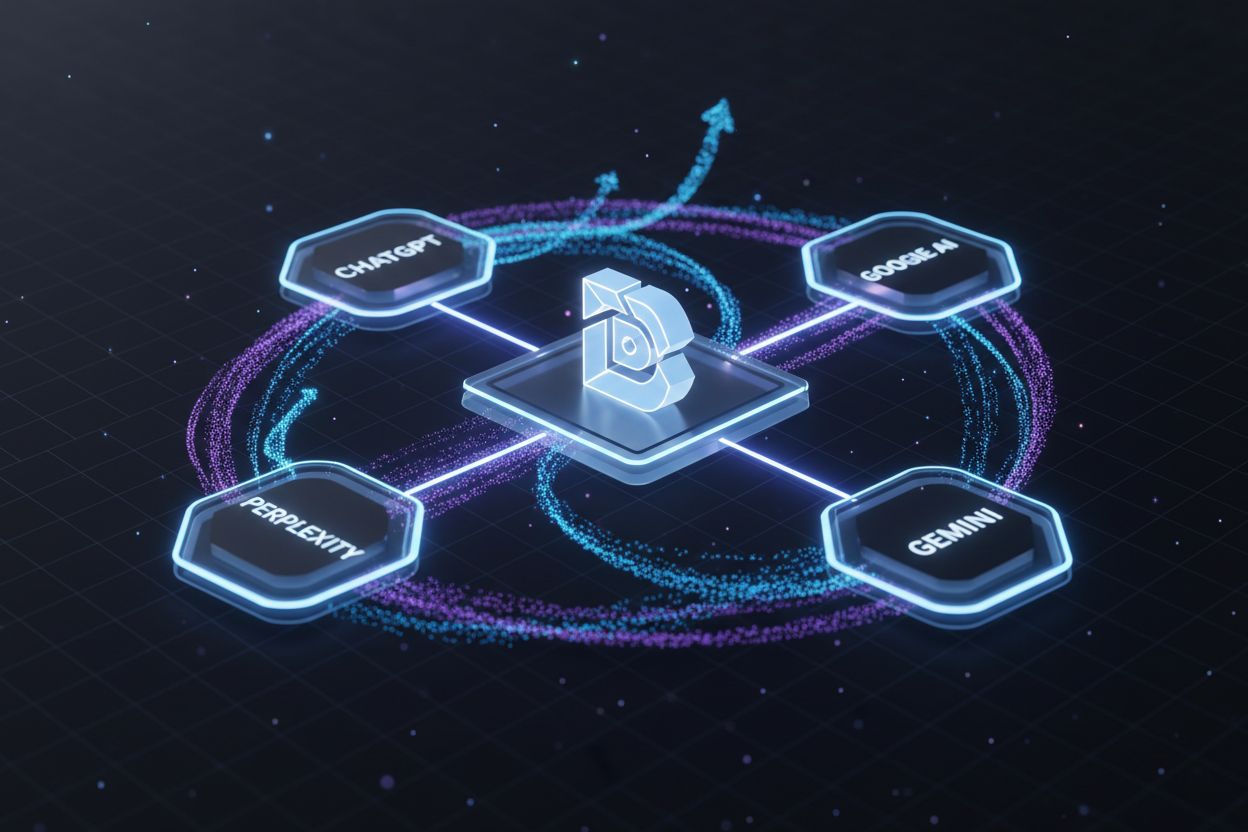
AI monitoring tools are specialized platforms designed to track how your brand, content, and domain appear across artificial intelligence systems like ChatGPT, Perplexity, Gemini, Claude, and Google AI Overviews. Unlike traditional SEO rank trackers that measure position on search engine results pages, AI monitoring tools focus on brand mentions, citations, visibility frequency, and how AI systems reference your content when generating answers. These tools have become essential as generative AI reshapes how users discover information and make purchasing decisions. With 58% of consumers now using generative AI tools for product recommendations and traditional organic search traffic expected to decline by 50% by 2028, understanding your presence in AI-generated responses is no longer optional—it’s critical for maintaining visibility and relevance in the evolving digital landscape.
When comparing AI monitoring tools, you need to assess multiple dimensions that directly impact your ability to track and optimize your brand’s presence. The first critical criterion is platform coverage, which determines which AI systems the tool monitors. Leading platforms like ChatGPT, Perplexity, Gemini, and Claude each have different user bases, data sources, and retrieval mechanisms, so comprehensive monitoring requires visibility across all major players. The second essential criterion is monitoring frequency and data freshness, as AI responses change constantly—sometimes hourly—making real-time or near-real-time tracking significantly more valuable than weekly or monthly snapshots. Third, evaluate the metrics and insights provided, including brand mention frequency, citation rates, share of voice against competitors, sentiment analysis, and positioning data. Fourth, consider integration capabilities with your existing tools like CRM systems, analytics platforms, and content management systems, as seamless integration reduces manual work and enables better decision-making. Finally, assess pricing transparency and scalability, ensuring the tool’s cost structure aligns with your budget while supporting growth as your monitoring needs expand.
Different AI monitoring tools specialize in different aspects of tracking your presence in AI systems. Brand visibility monitoring focuses on how often and where your brand appears in AI-generated responses, providing metrics on mention frequency and visibility trends across platforms. Performance monitoring tracks how your content performs relative to competitors, measuring share of voice and competitive positioning within AI answers. Evaluation and quality monitoring assesses the accuracy, relevance, and quality of how AI systems describe your brand, including sentiment analysis and positioning accuracy. Observability monitoring provides deeper technical insights into how AI models process your content, including data lineage, model behavior, and system reliability. Domain and citation tracking specifically monitors which of your web pages and content pieces are being cited as sources in AI-generated responses, helping you understand which content formats and topics AI systems find most valuable. Understanding which monitoring capabilities matter most for your organization helps you select tools that address your specific needs rather than paying for features you won’t use.
| Feature | Essential | Important | Nice-to-Have |
|---|---|---|---|
| Multi-Platform Coverage | ChatGPT, Perplexity, Gemini, Claude | Google AI Overviews, Bing Copilot | Emerging AI platforms |
| Monitoring Frequency | Weekly or more frequent | Bi-weekly updates | Monthly snapshots |
| Brand Mention Tracking | Yes, with frequency metrics | Yes, basic tracking | Limited tracking |
| Citation Source Analysis | Yes, identifies citing pages | Yes, basic identification | Not available |
| Competitor Benchmarking | Yes, share of voice comparison | Yes, basic comparison | Limited comparison |
| Sentiment Analysis | Yes, how AI describes brand | Yes, basic sentiment | Not available |
| Real-Time Alerts | Yes, for significant changes | Yes, daily digest | Weekly summary only |
| Custom Prompt Testing | Yes, user-defined queries | Yes, preset queries | Not available |
| API Access | Yes, for integration | Yes, limited access | Not available |
| Reporting & Dashboards | Customizable dashboards | Standard reports | Basic reports only |
| Data Export | Multiple formats supported | CSV/PDF export | Limited export |
| Customer Support | 24/7 support available | Business hours support | Email only |
| Free Trial | 14+ days available | 7-14 days available | No trial |
| Pricing Transparency | Clear, upfront pricing | Mostly transparent | Hidden fees possible |
Enterprise organizations should prioritize tools offering advanced features like custom API access, white-label options, dedicated account management, and comprehensive compliance documentation. Enterprise teams need robust integration capabilities with existing marketing technology stacks, advanced user permission management, and the ability to monitor hundreds of prompts across multiple brands or business units. Look for platforms with proven scalability, enterprise-grade security certifications, and SLAs guaranteeing uptime and data accuracy. Mid-market companies benefit from tools balancing comprehensive features with reasonable pricing, typically in the $300-$1,000 monthly range. These organizations need solid multi-platform coverage, actionable insights that drive content strategy, and integration with popular marketing tools like HubSpot or Salesforce. Mid-market teams often lack dedicated AI specialists, so tools with intuitive dashboards and clear guidance on optimization actions are particularly valuable. Startups and small businesses should focus on tools with generous free tiers or low-cost entry points ($29-$199/month), straightforward interfaces requiring minimal training, and clear ROI metrics demonstrating how monitoring translates to business impact. Startups benefit from tools that provide templated prompts and best-practice guidance, reducing the need for internal expertise in prompt engineering and AI visibility optimization.
Implementing an AI monitoring tool successfully requires more than selecting software—it demands strategic planning and organizational alignment. Baseline establishment is your first critical step: before optimizing anything, run your monitoring tool for 3-4 weeks to establish baseline metrics showing where your brand currently stands across AI platforms. This baseline becomes your reference point for measuring improvement and understanding whether changes you make actually move the needle. Prompt strategy development involves identifying the specific queries and prompts your target customers use when searching for solutions like yours. Rather than monitoring generic keywords, focus on prompts that reflect actual buyer intent at different stages of the customer journey—from problem awareness through solution evaluation to purchase decision. Cross-functional alignment ensures that insights from AI monitoring inform your broader content and SEO strategy. Marketing teams need to understand how AI visibility connects to lead generation, sales teams should see how AI mentions impact deal conversations, and product teams benefit from understanding how AI systems describe your solution relative to competitors. Continuous optimization means treating AI monitoring as an ongoing practice, not a one-time audit. AI systems retrain constantly, competitors continuously publish new content, and user behavior evolves, so your monitoring and optimization efforts must adapt accordingly. Most successful organizations review their AI visibility metrics weekly, identify trends monthly, and adjust their content strategy quarterly based on what they’re learning.
AI monitoring tools employ different pricing structures, each with distinct advantages and trade-offs. Per-prompt pricing charges based on the number of queries you monitor, making it cost-effective for organizations monitoring a small, focused set of prompts but potentially expensive as you scale. Tiered subscription models offer fixed monthly costs with increasing feature access and prompt limits at each tier, providing predictability and encouraging broader monitoring as you move up tiers. Usage-based pricing charges based on actual monitoring volume, API calls, or data processed, aligning costs with actual usage but creating unpredictability if your monitoring needs fluctuate. Enterprise licensing provides custom pricing for large organizations with specific requirements, typically including dedicated support and custom integrations. When evaluating ROI, consider that improved AI visibility directly impacts customer acquisition costs by increasing organic discovery through AI systems, reduces content marketing waste by identifying which content formats and topics AI systems actually cite, and provides competitive intelligence revealing what’s working for competitors. Organizations tracking their AI visibility typically see measurable improvements in brand mentions within 60-90 days of implementing optimization strategies informed by monitoring data.
Before committing to an AI monitoring tool, verify its integration capabilities with your existing technology stack. CRM integration allows you to connect AI visibility data with your sales pipeline, helping sales teams understand how AI mentions correlate with deal progression. Analytics integration with Google Analytics or similar platforms enables you to track whether AI-driven traffic converts differently than traditional search traffic. Content management system integration helps you identify which of your published content pieces are being cited by AI systems, informing your content strategy. API access is essential if you need to build custom workflows, automate reporting, or integrate monitoring data into proprietary systems. Data warehouse connectivity matters for organizations with sophisticated analytics infrastructure, allowing you to combine AI monitoring data with other business metrics for comprehensive analysis. Slack or email integration enables real-time alerts when significant changes occur, ensuring your team responds quickly to opportunities or threats. Evaluate whether the tool provides webhooks, REST APIs, or pre-built connectors for your specific platforms, as this dramatically affects implementation complexity and time-to-value.
Many organizations make predictable errors when selecting AI monitoring tools, leading to poor tool adoption and wasted investment. Focusing solely on price without evaluating feature fit often results in selecting tools that lack critical capabilities, forcing expensive switches later. Ignoring platform coverage gaps means choosing tools that monitor ChatGPT but miss Perplexity or Gemini, leaving blind spots in your visibility picture. Overlooking data quality and accuracy leads to making decisions based on unreliable metrics—some tools use sampling methods that miss important trends, while others have inconsistent data collection. Neglecting integration requirements results in manual data export and spreadsheet management, eliminating the efficiency gains that monitoring tools should provide. Underestimating implementation complexity causes delays and frustration when tools require extensive setup, custom configuration, or technical expertise your team doesn’t possess. Failing to define success metrics upfront means you can’t objectively evaluate whether a tool is delivering value, making it difficult to justify continued investment or identify when to switch tools. Not testing with your actual prompts before committing means discovering after purchase that the tool doesn’t monitor the specific queries most relevant to your business.
After evaluating tools against your criteria, narrow your choices to 2-3 finalists and request extended trials or demos. During evaluation, test each tool with your actual target prompts rather than generic examples, as real-world performance often differs from marketing claims. Document baseline metrics during your trial period so you can compare tools objectively. Assess user experience by having team members who’ll actually use the tool test it—a powerful platform that nobody on your team can figure out provides no value. Evaluate support quality by asking questions during your trial and noting response times and helpfulness. Verify data accuracy by manually checking a sample of results against actual AI responses to ensure the tool’s monitoring is reliable. Calculate total cost of ownership including not just subscription fees but also implementation time, training costs, and integration expenses. Review contract terms carefully, particularly around data ownership, cancellation policies, and price increase provisions. Check references by contacting existing customers, particularly those in your industry or of similar size, to understand real-world performance and satisfaction. The best AI monitoring tool for your organization is the one that provides accurate, actionable insights aligned with your specific needs, integrates smoothly with your existing systems, and delivers clear ROI through improved AI visibility and informed optimization decisions.
Track how your brand appears across ChatGPT, Perplexity, Gemini, and other AI platforms with AmICited's comprehensive monitoring solution.
Discover the top AI search visibility monitoring tools to track your brand across ChatGPT, Perplexity, and Google AI Overviews. Compare features, pricing, and c...
Discover the best AI visibility tools to monitor your brand across ChatGPT, Perplexity, Google AI Overviews, and other AI search engines. Compare features, pric...
Learn what AI Rank Trackers are and how they monitor your brand's visibility across ChatGPT, Perplexity, Google AI Overviews, and other AI platforms. Discover t...