
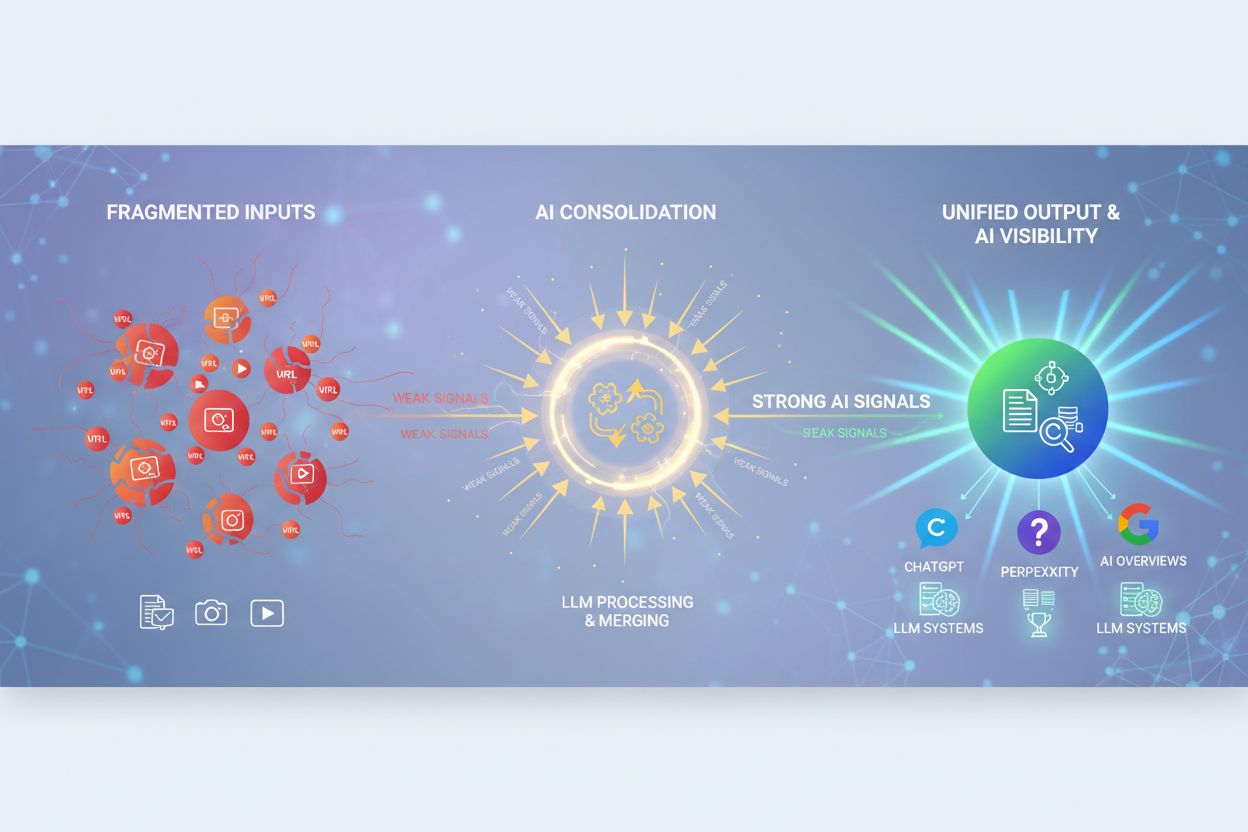
AI Content Consolidation
Learn what AI Content Consolidation is and how merging similar content strengthens visibility signals for ChatGPT, Perplexity, and Google AI Overviews. Discover...
10 min read

Learn how to consolidate and optimize your content for AI search engines like ChatGPT, Perplexity, and Gemini. Discover best practices for content structure, formatting, and visibility in AI-generated answers.
Consolidating content for AI involves organizing, deduplicating, and restructuring your content to be easily discoverable and citable by AI systems. This includes using clear formatting, structured data, Q&A formats, and semantic clarity to help AI models parse, understand, and include your content in generated answers.
Content consolidation for AI is the process of organizing, deduplicating, and restructuring your existing content to make it more discoverable and citable by artificial intelligence systems. Unlike traditional search engine optimization that focuses on ranking entire pages, AI consolidation requires breaking down your content into smaller, modular pieces that AI models can easily parse, understand, and extract for inclusion in generated answers. The fundamental shift is that AI systems don’t rank pages—they rank snippets and pieces of content that can be assembled into coherent responses to user queries.
The rise of AI search platforms like ChatGPT, Perplexity, Gemini, and Microsoft Copilot has fundamentally changed how content is discovered and consumed. In June 2025, AI referrals to top websites spiked 357% year-over-year, reaching 1.13 billion visits. This explosive growth means that visibility in AI-generated answers is now as important as traditional search rankings. However, the content that appears in AI answers isn’t always the same content that ranks highest on Google. Instead, AI systems prioritize content that is clear, structured, authoritative, and easy to parse into usable chunks.
Content consolidation directly impacts your brand’s visibility in AI search results. When you consolidate content effectively, you eliminate redundancy, improve clarity, and make it easier for AI systems to understand and cite your information. This is critical because 53% of Gen Z and Millennial users now prefer direct answers from AI instead of scrolling through traditional search results. If your content isn’t structured for AI consumption, you risk being overlooked entirely, even if you rank well on Google.
| Aspect | Traditional SEO | AI Search Optimization |
|---|---|---|
| Focus | Ranking entire pages | Extracting snippets and pieces |
| Content Structure | Long-form, narrative-driven | Modular, clearly segmented |
| Key Signals | Backlinks, keywords, domain authority | Clarity, structure, semantic meaning |
| Citation Method | Click-through to full page | Direct quote in AI answer |
| Visibility Metric | Search ranking position | Inclusion in AI-generated responses |
| Content Format | Flexible | Q&A, lists, tables, structured data |
The consolidation process also helps you identify and eliminate duplicate content that confuses AI systems. When you have multiple pages covering similar topics with slightly different wording, AI models may struggle to determine which version is most authoritative. By consolidating these pages into a single, comprehensive resource, you create a clear signal of authority and relevance.
Begin by conducting a thorough content audit to identify pages that cover similar topics or answer the same questions. Use tools like Google Search Console, Semrush, or Ahrefs to find pages with overlapping keywords and content themes. Look for variations like “best dishwashers,” “top-rated dishwashers,” and “quietest dishwashers”—these are often candidates for consolidation. When you discover duplicates or near-duplicates, decide whether to merge them into a single comprehensive page or redirect weaker pages to stronger ones.
AI systems parse content by breaking it into smaller, structured segments. Instead of writing long, flowing paragraphs, organize your content into clearly defined sections using proper HTML heading hierarchy (H1, H2, H3). Each section should address a specific question or concept that stands alone. Use Q&A formats, bullet points, numbered lists, and comparison tables to make your content easily extractable. For example, instead of embedding a key fact in a paragraph, present it as a standalone statement or in a structured list that AI can lift directly into an answer.
Your heading structure is critical for AI comprehension. The H1 tag should clearly state the main topic and match your page title. H2 tags should introduce major sections, each addressing a distinct aspect of your topic. H3 tags can break down H2 sections further. This hierarchy helps AI systems understand content boundaries and extract relevant information at the appropriate level of detail. For instance, if your page is about “How to Consolidate Content for AI,” your H2s might be “Audit and Identify Duplicates,” “Structure Content into Modular Pieces,” and “Implement Schema Markup.”
Consolidation requires removing or reconciling conflicting information across your content library. If one page says a product has a 42 dB noise level and another says 45 dB, AI systems become confused about which is accurate. Standardize facts, figures, and claims across all your content. This consistency signals authority and helps AI models confidently cite your information. Additionally, remove pages that simply repeat information from other pages without adding unique value. Keep only the most comprehensive, authoritative version.
Schema markup is code that helps AI systems understand your content structure and meaning. Implement schema types like FAQPage, HowTo, Article, and Product to clearly label your content. Schema markup turns plain text into structured data that machines can interpret with confidence. For example, FAQPage schema explicitly marks questions and answers, making it easier for AI to extract and cite them. Use JSON-LD format, which is the most widely supported schema implementation. Most modern CMS platforms like WordPress, Shopify, and Wix have built-in tools or plugins to add schema without coding.
Semantic clarity means writing in a way that clearly conveys meaning to both humans and machines. Avoid vague language like “innovative” or “cutting-edge” without specifics. Instead, anchor claims in measurable facts: “42 dB dishwasher designed for open-concept kitchens” is clearer than “quiet dishwasher.” Use synonyms and related terms to reinforce meaning—for example, using “noise level,” “sound rating,” and “decibel” together helps AI connect these concepts. Write for intent, not just keywords, by phrasing content to directly answer the questions users actually ask.
AI models prioritize content that resolves intent within the first two sentences. Instead of building narrative tension or context, open with a clear, factual answer. For example, rather than “In today’s evolving digital landscape, content consolidation is becoming increasingly important,” write “Content consolidation is the process of organizing and deduplicating your content to improve AI discoverability.” This approach makes your content immediately useful to both readers and AI systems.
Framing sections around explicit questions mirrors how people naturally search and how AI systems expect to find answers. However, don’t force every heading into a question format—variation keeps content natural. Mix direct questions (“What is content consolidation?”), rhetorical questions (“Ever wondered why your content isn’t cited by AI?”), and statements with implicit answers (“Why AI-friendly formatting shapes discoverability”). The key is ensuring every heading signals the problem you’re resolving.
AI systems can lift content more easily when it’s formatted in structured ways. Use:
Avoid long walls of text, decorative symbols (arrows, stars, multiple punctuation marks), and hiding important information in tabs or expandable menus that AI systems may not render.
Entities are the who, what, and where behind your content—people, brands, tools, organizations. AI systems use entities to understand, verify, and connect information. Always use full, consistent names across every touchpoint. For example, always write “Google Search Generative Experience” instead of alternating between “Google SGE” or “the new AI search feature.” Link entity names to credible sources like official product pages or verified profiles. This consistency strengthens your authority signals and makes it easier for AI to recognize and cite your content accurately.
AI models prioritize explicit, measurable, and verifiable information. Start with facts and data, then add interpretation and context. For example: “Pages with paragraph-length summaries at the top have 35% higher inclusion in AI-generated snippets. This shows that models value content structured for direct retrieval. As a result, brands should prioritize clear, upfront answers.” This layered approach keeps your authority grounded in evidence while leaving room for expert insight.
Avoid creating long walls of text that blur ideas together and make it harder for AI to separate content into usable chunks. Don’t hide important answers in tabs, accordions, or expandable menus—AI systems may not render hidden content, causing key details to be skipped. Refrain from relying solely on PDFs for core information; while search engines can index text-based PDFs, they often lack the structured signals that HTML provides. Never put critical information only in images; while AI can sometimes extract text from images, it adds complexity and reduces accuracy. Always provide alt text and present important details in HTML format.
Additionally, avoid overloaded sentences that pack multiple claims into one line, making it harder for AI to parse meaning. Don’t use decorative symbols or strings of punctuation that distract from actual content. Refrain from making unanchored claims like “next-gen” or “cutting-edge” without context—these leave AI unsure how to classify your information. Finally, don’t neglect traditional SEO fundamentals; crawlability, metadata, internal linking, and backlinks remain essential for ensuring your content is discoverable in the first place.
After consolidating your content, monitor how often it appears in AI-generated answers. Tools like Semrush’s AI SEO toolkit, Perplexity’s citation tracking, and ChatGPT’s browsing mode can show when your pages are being cited or referenced. Focus on three key signals: AI citation share (how often your content is referenced), sentiment (whether mentions are positive, neutral, or critical), and authority context (which other sources appear alongside you). Use these insights to refine your content further. If a key feature frequently appears next to a competitor’s content, that reveals an opportunity to clarify your entity connections or expand supporting content.
Content consolidation for AI is an ongoing process. As AI systems evolve and user behavior changes, continuously audit your content, update outdated information, and refine your structure based on performance data. The brands that embrace this “answer-first” reality and maintain consolidated, well-structured content will shape the next wave of visibility in AI search.
Track how often your content appears in AI-generated answers across ChatGPT, Perplexity, Gemini, and other AI search engines. Get insights into your AI visibility and optimize your content strategy.
Learn what AI Content Consolidation is and how merging similar content strengthens visibility signals for ChatGPT, Perplexity, and Google AI Overviews. Discover...

Community discussion on consolidating website content for AI search visibility. Real experiences from content strategists on eliminating duplicate content and r...
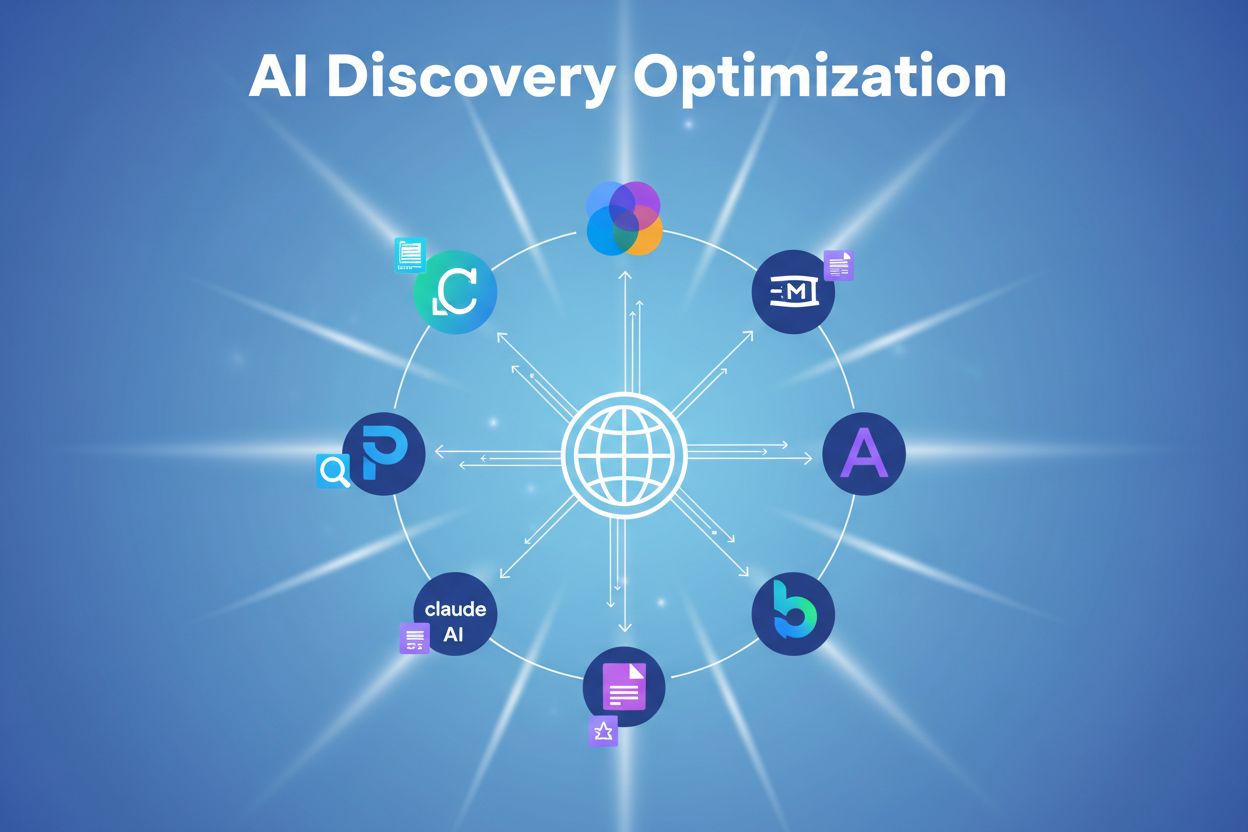
Learn how to optimize content for AI discovery. Understand AI crawlers, content structure, and strategies to ensure your brand is found and cited by ChatGPT, Ge...