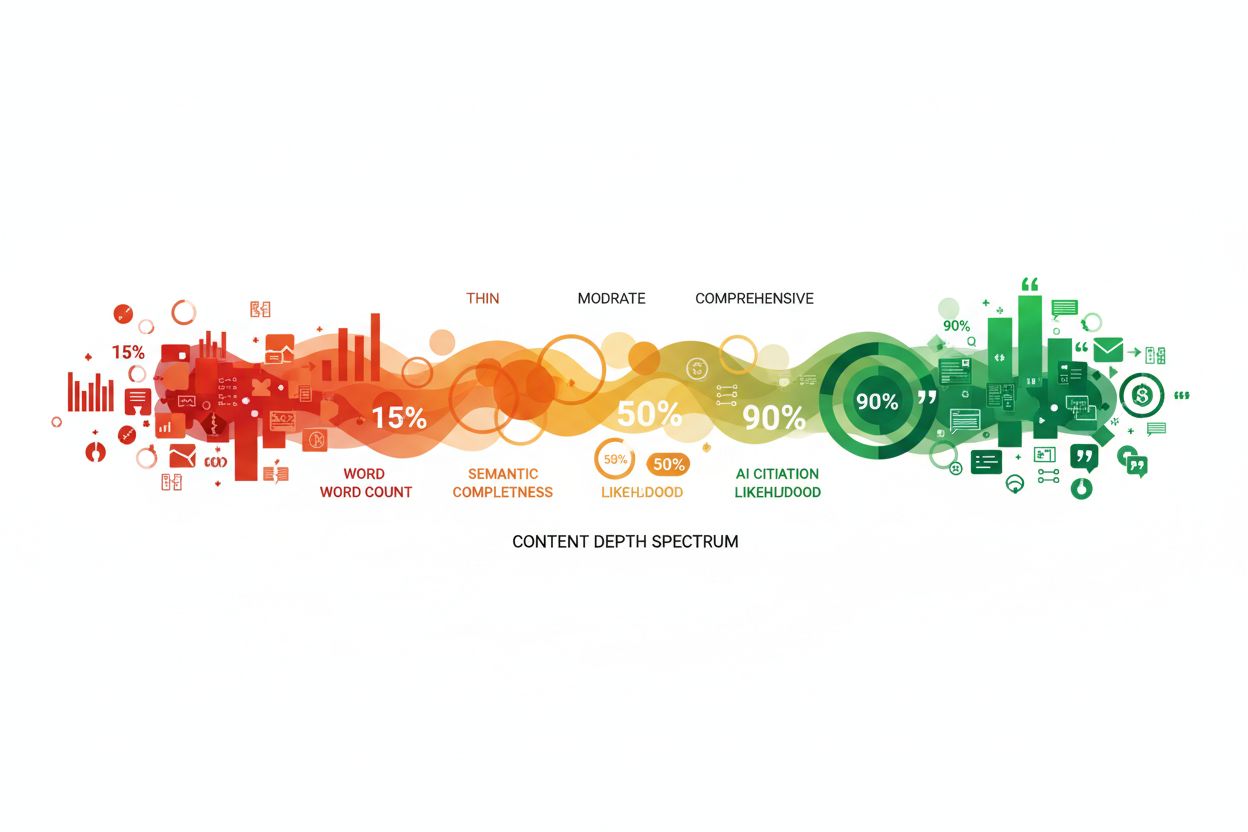
Understanding 10x Content in the AI Era
10x content refers to content that is exponentially better than anything else currently available on a given topic. In the context of AI systems, this means creating material that is not just useful, but exceptional enough to be referenced, cited, and recommended by artificial intelligence platforms like ChatGPT, Perplexity, Google AI Overviews, and other large language models. The concept originated from Rand Fishkin of Moz in 2015, but its importance has intensified dramatically as AI systems become the primary discovery mechanism for information. Your content must now satisfy both human readers and machine learning algorithms that determine what gets cited in AI-generated responses.
The stakes for 10x content have never been higher. As AI Overviews increasingly replace traditional search results, and as users turn to ChatGPT and Perplexity for answers, your brand’s visibility depends on creating content that AI systems actively choose to reference. This is fundamentally different from traditional SEO, where ranking on page one was the primary goal. Now, your content must be compelling enough that AI systems extract it, cite it, and recommend it to users asking questions in natural language.
Key Characteristics of 10x Content for AI Systems
| Characteristic | Description | AI Impact |
|---|
| Comprehensive Coverage | Addresses the topic fully with depth, nuance, and multiple perspectives | AI systems prefer complete answers that don’t require additional sources |
| Original Insights | Includes unique data, research, case studies, or first-hand experience | Differentiates your content from generic AI-generated summaries |
| Clear Structure | Uses proper headings, schema markup, and logical organization | Makes content easier for AI to parse, understand, and extract |
| Authoritative Voice | Demonstrates expertise through credentials, citations, and proven knowledge | Builds trust signals that AI systems use to evaluate source credibility |
| Natural Language | Written conversationally with question-based headings and long-tail keywords | Aligns with how users actually ask questions to AI systems |
| Fresh and Updated | Regularly refreshed with current data, examples, and relevant information | AI systems prioritize recent, accurate information over outdated content |
| Visual and Interactive Elements | Includes diagrams, tables, infographics, and interactive tools | Enhances comprehension and makes content more likely to be featured |
| Direct Answers | Places concise, clear answers at the beginning of sections | AI systems extract direct answers for inclusion in generated responses |
Ready to Monitor Your AI Visibility?
Track how AI chatbots mention your brand across ChatGPT, Perplexity, and other platforms.
Developing Comprehensive, Authoritative Content
The foundation of 10x content for AI begins with depth and comprehensiveness. AI systems like ChatGPT and Perplexity analyze content to determine whether it fully addresses user queries. If your article only covers surface-level information, AI systems will either skip it or combine it with multiple other sources, diluting your brand’s visibility. Instead, you need to create content that answers not just the primary question, but all the related questions a curious reader might ask afterward.
This means going beyond what competitors have written. Most existing content on popular topics simply rehashes the same basic information. AI systems recognize this pattern and actively seek out content that provides additional context, practical examples, troubleshooting guidance, and alternative approaches. When you write about a topic, ask yourself: What would someone want to know after reading an average article? What edge cases or complications might they encounter? What do industry experts say about this topic? By answering these questions within your content, you create material that AI systems recognize as genuinely valuable and comprehensive.
Original research and data are particularly powerful for 10x content. When you include proprietary data, survey results, case studies, or first-hand experience, you create content that cannot be easily replicated or summarized by competitors. AI systems actively seek out original insights because they provide unique value to users. If you conduct research, publish the results prominently. If you have case studies showing real-world results, include them with specific metrics. If you’ve tested multiple approaches and can share what worked and what didn’t, that practical experience becomes a powerful differentiator that AI systems will cite.
Optimizing Content Structure for AI Understanding
AI systems process content differently than human readers. While humans can understand context and infer meaning from poorly structured text, large language models require clear, logical organization to properly extract and utilize information. This means your content structure directly impacts whether AI systems will reference your work.
Start with clear, descriptive headings that function as questions or statements about what the section covers. Instead of vague headings like “Overview” or “Details,” use specific headings like “What are the main benefits of this approach?” or “How do you implement this strategy step-by-step?” This structure helps AI systems understand content boundaries and extract relevant information more accurately. Use proper heading hierarchy (H1 for the main title, H2 for major sections, H3 for subsections) consistently throughout your content.
Schema markup is essential for AI optimization. Structured data tells AI systems exactly what type of content you’re providing. Use FAQ schema if your content answers common questions, How-To schema for instructional content, Article schema for blog posts, and Product schema for product reviews. This markup doesn’t just help search engines—it helps all AI systems understand your content’s purpose and structure. When AI systems encounter properly marked-up content, they can more confidently extract and cite specific sections.
Place direct answers at the beginning of each section. AI systems often extract the first few sentences of a section to include in generated responses. If you bury your answer in the middle of a paragraph, AI systems might miss it or use a less relevant portion of your text. Instead, state your answer clearly and concisely in the opening sentences, then provide supporting details, examples, and context afterward. This approach serves both AI systems and human readers who often scan content looking for quick answers.
Stay Updated on AI Visibility Trends
Get the latest insights on AI mentions, brand monitoring, and optimization strategies.
Creating Content That Ranks in AI Overviews
Google’s AI Overviews feature represents a significant shift in how search results are presented. Rather than showing a list of links, Google now generates summaries that pull information from multiple sources. To be included in these overviews, your content must first rank well in traditional Google search results, but it must also be structured in ways that make it easy for AI to extract relevant information.
The content that appears in AI Overviews typically includes clear definitions, step-by-step instructions, comparison tables, and direct answers to specific questions. If you’re writing about a process, break it into numbered steps with clear explanations for each. If you’re comparing options, create a table that makes the comparison obvious. If you’re defining a concept, provide a clear definition in the opening paragraph, then expand with examples and context.
Featured snippets remain important because they signal to AI systems that your content provides the type of concise, well-organized information that works well in summaries. To optimize for featured snippets, structure your content with clear question-and-answer sections, numbered lists for processes, and definition-style paragraphs for concepts. When Google features your content in a snippet, you’re essentially training AI systems to recognize your content as high-quality and well-structured.
Building Authority and Establishing Thought Leadership
AI systems evaluate authority and credibility when deciding which sources to cite. This means you need to actively build your reputation as an expert in your field. Include author bios that establish credentials and experience. Cite reliable sources and include expert quotes from recognized authorities. Reference original research and data that supports your claims. When your content is surrounded by signals of expertise and authority, AI systems are more likely to trust and cite your work.
Topical authority—becoming the go-to source for comprehensive coverage of a specific subject—is particularly valuable for AI visibility. Rather than writing scattered articles on different topics, focus on building deep expertise in specific areas. Create multiple pieces of content that address different angles of the same topic. Link these pieces together to create a knowledge ecosystem. When AI systems see that your website comprehensively covers a topic from multiple angles, they recognize you as an authoritative source and are more likely to cite your content.
Engage with industry trends and emerging topics within your area of expertise. AI systems value current, relevant information. If you’re writing about a field that’s evolving, show that you’re aware of recent developments and can provide context about how they fit into the broader landscape. This demonstrates that you’re actively engaged with your field, not just rehashing old information.
Optimizing for Natural Language and Conversational Queries
Users interact with AI systems differently than they interact with search engines. Rather than typing short keyword phrases, users ask full questions in natural language. This means your content should be optimized for conversational queries and long-tail keywords that match how people actually speak.
Use question-based headings throughout your content. Instead of “Benefits,” use “What are the main benefits of this approach?” Instead of “Implementation,” use “How do you implement this strategy?” These question-based headings match the way users phrase queries to AI systems, making your content more likely to be selected when AI systems process those queries.
Include semantic variations of your main topic throughout your content. If you’re writing about “content marketing,” also use related terms like “content strategy,” “content creation,” “editorial planning,” and “audience engagement.” This semantic richness helps AI systems understand that your content is relevant to a broader range of related queries. Use these terms naturally within your content, not as forced keyword insertions.
While AI systems primarily process text, multimedia elements enhance content quality in ways that benefit both human readers and AI systems. Videos, infographics, and interactive tools increase engagement and time on page, which are positive signals to search engines and AI systems. Additionally, multimedia content often gets shared more widely, generating more backlinks and mentions that boost your authority.
Create original diagrams and visual explanations that clarify complex concepts. If competitors’ content is primarily text-based, your visual elements become a differentiator. Annotated screenshots, step-by-step process diagrams, and conceptual illustrations help readers understand your content more quickly and make your content more memorable. These visual elements also increase the likelihood that your content will be shared on social media and referenced in other publications.
Include data visualizations for statistics and research findings. Rather than just stating a statistic in text, create a chart or infographic that visualizes the data. This makes the information more impactful and more likely to be shared. When other websites reference your research, they often use your visualizations, which increases your brand visibility and creates more backlinks to your content.
Maintaining Content Freshness and Relevance
AI systems prioritize recent, accurate information. Content that hasn’t been updated in years is less likely to be cited, even if it was once authoritative. Establish a regular content maintenance schedule where you review and update your top-performing pieces quarterly. Update statistics with the latest data, refresh examples with current case studies, and add new information about recent developments in your field.
Include visible “last updated” dates on your content. This signals to both AI systems and human readers that your information is current. When AI systems see a recent update date, they’re more confident that the information is accurate and relevant. This is particularly important for topics where information changes frequently, such as technology, health, or business practices.
Monitor industry discussions on platforms like Reddit, Quora, and LinkedIn to identify emerging questions and concerns. When you see recurring questions or new angles on familiar topics, update your existing content to address these emerging interests. This keeps your content aligned with what people are actually asking about, making it more likely to be cited by AI systems responding to current user queries.
Your website content is important, but it’s not enough. AI systems draw information from multiple sources, including YouTube, LinkedIn, industry publications, and established platforms. To maximize your visibility in AI-generated responses, you need a presence across multiple channels.
Create video content that explains your expertise. YouTube videos are frequently cited by AI systems, and video content often provides a different perspective or explanation style than written content. When you create videos, optimize titles and descriptions with the same care you apply to written content. Include transcripts that make the video content searchable and indexable by AI systems.
Publish thought leadership content on platforms like LinkedIn and Medium. When your insights appear on established platforms, they gain additional credibility. AI systems recognize these platforms as authoritative sources and are more likely to cite content published there. Additionally, content on these platforms often reaches different audiences than your website alone, expanding your overall visibility.
Contribute to industry publications and guest posts on established websites. When your content appears on high-authority domains, it gains credibility that transfers back to your brand. AI systems recognize that content published on trusted platforms has been vetted and is more likely to be accurate and valuable.
Implementing Technical SEO for AI Optimization
Technical SEO remains foundational for AI visibility. Your content must be fast-loading, mobile-friendly, and properly indexed by search engines. AI systems often draw information from search engine indexes, so if your content isn’t properly indexed, AI systems won’t have access to it.
Ensure your website has fast page load times. Compress images, minimize code, and leverage caching to improve performance. Mobile optimization is particularly important because many users access AI systems on mobile devices. Your content must display properly and load quickly on smartphones and tablets.
Use semantic HTML with proper heading hierarchy, list structures, and emphasis tags. This clean code structure helps AI systems parse your content more accurately. Avoid using styling tricks or hidden text to manipulate search rankings—AI systems are sophisticated enough to recognize and penalize these tactics.
Implement internal linking strategically. Link from your comprehensive guides to related articles on your website. This creates a knowledge graph that helps AI systems understand the relationships between your content pieces and recognize your site as a comprehensive resource on your topic.
Creating Content That Drives AI Citations
The ultimate goal of 10x content for AI is to be cited and referenced in AI-generated responses. This means your content must provide value that AI systems recognize as worth sharing with users. Focus on creating content that answers questions completely, provides unique insights, and presents information in ways that are easy for AI systems to extract and utilize.
When your content is cited by AI systems, it drives brand awareness and credibility. Users see your brand name and domain in AI-generated responses, which builds trust and recognition. Over time, consistent citations in AI responses establish your brand as an authoritative source in your field, leading to increased traffic, leads, and business opportunities.
Track your AI visibility using monitoring tools that show where your content appears in AI-generated responses. Understanding which of your content pieces are being cited helps you identify what’s working and refine your strategy accordingly. Double down on the topics and formats that generate the most AI citations, and adjust your approach for content that isn’t being referenced.