

How to Create Top-of-Funnel Content for AI Search Engines
Learn how to create TOFU content optimized for AI search. Master awareness-stage strategies for ChatGPT, Perplexity, Google AI Overviews, and Claude.
13 min read

Learn how to create effective bottom-of-funnel content optimized for AI search engines like ChatGPT and Perplexity. Discover strategies for targeting decision-stage buyers, using internal insights, and structuring content for AI visibility.
Create bottom-of-funnel content for AI by focusing on specific problems with concrete solutions, using internal customer insights from sales and support teams, conducting competitor research, targeting high-intent keywords, and structuring content to build trust before introducing your product. Leverage AI tools to automate research and content generation while maintaining human oversight to ensure accuracy and relevance.
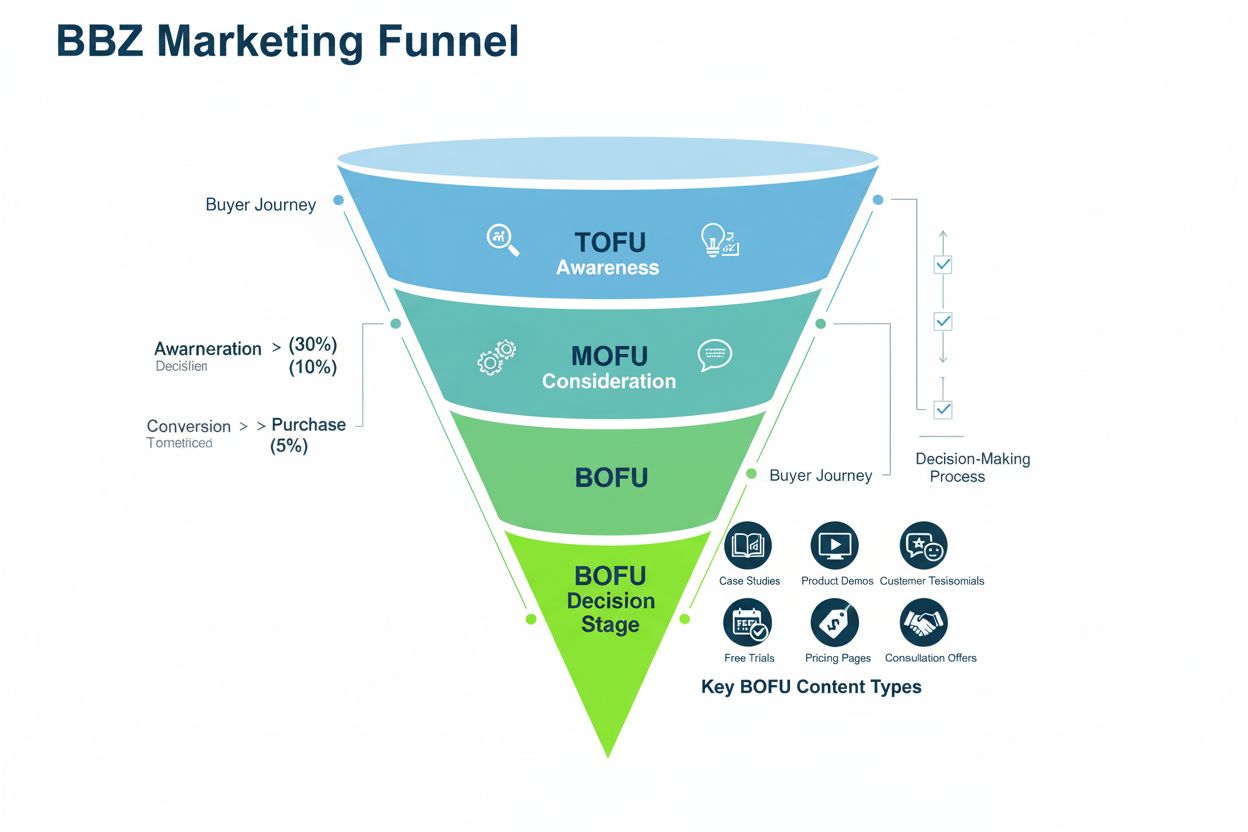
Bottom-of-funnel (BOFU) content is specifically designed for prospects who are in the decision stage of their buyer’s journey. These are high-intent users who have already identified their problem and are actively comparing solutions. Unlike top-of-funnel content that educates broadly, BOFU content focuses on solving highly specific problems with concrete, actionable solutions tied to your platform or service. The key distinction is that BOFU content bridges the gap between customer intent and decision-making by demonstrating how your solution is the best fit for their exact needs.
In the context of AI search engines like ChatGPT, Perplexity, and Gemini, BOFU content becomes increasingly important because these AI systems are trained to cite authoritative, specific, and solution-oriented content when answering user queries. When someone asks an AI search engine “How do I solve X problem?” the AI is more likely to reference and cite your BOFU content if it directly addresses that specific use case with practical, detailed guidance. This means creating BOFU content isn’t just about converting website visitors—it’s about ensuring your brand appears in AI-generated answers that influence purchasing decisions.
The rise of AI search engines has fundamentally changed how prospects research solutions. Rather than clicking through multiple websites, users now ask AI assistants direct questions and receive synthesized answers that cite relevant sources. This shift makes BOFU content more valuable than ever because AI systems prioritize specific, actionable content over generic information. When your BOFU content directly answers a prospect’s decision-stage question with clear, detailed guidance, AI systems are more likely to extract and cite that content in their responses.
Additionally, BOFU content serves a dual purpose in the AI era. It attracts qualified leads through traditional search engines while simultaneously positioning your brand as an authoritative source that AI systems can confidently recommend. This is particularly important for brands competing in crowded markets where generic content gets overlooked. By creating highly specific BOFU content that addresses real customer problems, you increase the likelihood that your brand will be cited when prospects use AI tools to make final purchasing decisions.
| Content Type | Audience Stage | Primary Goal | AI Visibility |
|---|---|---|---|
| Top-of-Funnel (TOFU) | Awareness | Build brand awareness | Lower priority for AI citation |
| Middle-of-Funnel (MOFU) | Consideration | Educate on solutions | Moderate AI visibility |
| Bottom-of-Funnel (BOFU) | Decision | Drive conversions | High AI visibility and citation |
The most critical mistake teams make when creating BOFU content is relying solely on external research and public information. The best BOFU content is grounded in internal customer insights that reveal what prospects actually care about during the decision stage. This means collecting information from three key teams: sales, customer success, and product.
Sales teams understand the objections prospects raise before committing to a purchase. They know which features matter most, what concerns keep deals from closing, and what questions prospects ask repeatedly. Customer success teams hear from customers post-sale about the benefits they’re experiencing and the problems they were trying to solve. Product teams understand the technical capabilities and how they map to real-world use cases. When you combine these three perspectives, you create content that feels tailor-made because it actually is.
To systematize this process, create a custom research assistant using AI tools like ChatGPT. Feed it sales call transcripts, customer support notes, product documentation, and messaging guides. Ask the AI to extract and organize insights into themes: pain points that drive urgency, objections that stall decisions, product capabilities that solve them, and benefits customers highlight post-sale. This becomes the foundation for every BOFU article you create. Instead of guessing what matters at the decision stage, you’re starting with information your teams already know.
Effective BOFU content targets high-intent keywords where prospects are actively comparing solutions. Start by identifying your direct and niche competitors—companies with similar offerings where prospects are already comparing you head-to-head. Avoid broad competitors like Shopify or Wix that serve larger markets; instead, focus on competitors where you can win.
Use keyword research tools to find commercial and transactional keywords that signal decision-making intent. These include patterns like “[Competitor] vs [Your Company],” “[Competitor] alternatives,” “[Your Category] for [specific use case],” and “best [category] software for [specific industry].” The “Alphabet Soup” strategy is particularly effective: type your category into Google with “best [category] software for…” and run through the alphabet to discover new use cases prospects are searching for.
Create a keyword matrix organized by four dimensions: ICP (by department), Category, Competitors, and Features. For each dimension, research keywords that prospects use when searching for solutions. For example, if you’re a payment orchestration platform, you might target keywords like “payment orchestration for SaaS,” “payment routing for high-risk merchants,” or “Stripe alternative for marketplaces.” This ensures you’re not missing any high-intent search opportunities where prospects are ready to make decisions.
AI systems like ChatGPT and Perplexity analyze content structure to understand boundaries, extract relevant information, and determine what to cite. Headers should be question-based and descriptive, matching natural search language. This helps AI systems understand what problem each section solves and when to cite your content in responses.
For example, instead of a header like “Features,” use “How does payment orchestration reduce transaction failures?” or “What are the key differences between payment routing and failover logic?” These specific, question-based headers signal to AI systems exactly what information is contained in each section and make it more likely they’ll cite your content when answering similar questions.
Structure your BOFU content with these key sections:
Introduction: Lead with the specific problem your reader is facing, not with your product. Name the pain point, the stakes, and who this content is for. Build empathy by reflecting the reader’s real challenges before introducing any solution.
Main Body: Outline the solution landscape before introducing your product. Explain how others solve similar problems, discuss different approaches, and help readers understand the broader strategy. This positions you as a helpful resource, not just a vendor.
Product Section: Once you’ve built trust and context, introduce your product as the natural next step. Tie features to business outcomes and frame your product as a partner that solves the specific problems you outlined earlier.
Closing: Recap the core value and include a clear call-to-action. Keep it tight—one or two sentences is usually enough.
Specificity is the foundation of effective BOFU content for AI. Generic content gets overlooked by both search engines and AI systems. Instead, create content that addresses narrowly defined problems with concrete solutions. For example, “How to Write a Blog Post” is TOFU content. “How to Write a Blog Post with ChatGPT” is more specific. “How to Write an SEO-Friendly Blog Post with Copy.ai Workflows” is true BOFU content because it combines a specific problem, a specific platform, and a specific solution.
Each piece of BOFU content should focus on solving one specific problem with your platform. This means creating multiple pieces of content rather than trying to cover everything in one article. If you serve SaaS platforms, crypto exchanges, and iGaming merchants, create separate BOFU articles for each vertical rather than one generic piece. This specificity signals to AI systems exactly what problem your content solves and makes it more likely to be cited when prospects in those verticals ask AI tools for solutions.
When writing BOFU content, lead with the friction your buyers are feeling. Pull pain points directly from sales calls and objection-handling documents. The information should be in the first two lines, not buried further down. This is the part AI systems get wrong most often when generating content, and the only way to get it right is by mining internal conversations. Show real use cases that connect common challenges to practical outcomes. Include competitor breakdowns that honestly explain what competitors do well while positioning your product confidently as the better option.
Creating BOFU content for AI search engines requires understanding how these systems extract and cite information. AI systems prioritize content that is specific, well-structured, and directly answers user queries. This means your content should be optimized for clarity and comprehensiveness rather than just keyword density.
Use clear, descriptive headers that match natural search language. When someone asks an AI “How do I reduce payment failures?” the AI will look for content with headers that directly address this question. If your content has a section titled “Reducing Payment Failure Rates with Orchestration,” the AI is more likely to cite that section in its response.
Include detailed explanations with concrete examples and data. AI systems are more likely to cite content that provides specific, actionable guidance rather than vague advice. For instance, instead of saying “payment orchestration improves reliability,” explain exactly how it works: “Payment orchestration routes transactions across multiple payment providers in real-time, automatically failing over to a backup provider if the primary one experiences issues, reducing payment failure rates by up to 40%.”
Ensure your content is comprehensive and covers the topic thoroughly. AI systems often cite content that provides complete answers to user questions. If your BOFU article comprehensively addresses a decision-stage question with multiple angles, examples, and considerations, it’s more likely to be cited than a shorter, less detailed piece.
BOFU content needs to drive pipeline, not just pageviews. Set up tracking so you can prove the impact of your content on conversions and revenue. Use tools like Dealfront or Dreamdata to track which companies are viewing your BOFU content and identify URLs driving leads. These tools let you see which articles are attracting high-intent prospects without waiting for form fills.
Create dashboards using tools like Looker Studio to visualize what’s driving conversions. Pull data from Google Analytics and map metrics to individual blog URLs. Track page-level views, conversions, demo requests, and form completions. This shows which BOFU articles are moving users down the funnel and generating revenue.
Additionally, monitor how your content appears in AI-generated answers. Tools that track AI search visibility can show you when your content is cited by ChatGPT, Perplexity, or other AI systems. This helps you understand which BOFU articles are resonating with AI systems and influencing prospects during their decision stage.
Mistake 1: Writing for everyone instead of a specific audience. BOFU content should be narrowly targeted. If you try to appeal to all possible buyers, you’ll end up appealing to none. Be specific about who the content is for and what problem it solves.
Mistake 2: Introducing product features too early. Don’t pitch your product in the introduction. First, build empathy by acknowledging the reader’s problem. Then outline the solution landscape. Only after establishing trust should you introduce your product as the natural next step.
Mistake 3: Relying on external research instead of internal insights. The best BOFU content is grounded in what your sales, customer success, and product teams know. Generic information from the open web won’t influence high-stakes buying decisions.
Mistake 4: Creating vague or overly broad content. Specificity beats inclusivity in BOFU content. A piece about “payment solutions” will underperform compared to “payment orchestration for SaaS platforms with high transaction volumes.” The more specific, the better.
Mistake 5: Failing to align teams. BOFU content requires input from sales, customer success, product, and marketing. If these teams aren’t communicating, your content will lack the insights needed to influence decisions. Create a process where these teams regularly share customer intelligence.
Track these metrics to understand the impact of your BOFU content:
Conversion rate: The percentage of visitors who take a desired action (demo request, form fill, purchase). This is the most important metric for BOFU content.
Lead quality: Are the leads generated from BOFU content more qualified and more likely to close? Track this through your CRM.
Time to close: Does BOFU content shorten the sales cycle? Prospects who engage with BOFU content often move faster through the pipeline.
Revenue attribution: How much revenue can be attributed to BOFU content? This is the ultimate measure of success.
AI visibility: How often is your content cited in AI-generated answers? This indicates whether your BOFU content is reaching prospects during their decision stage.
Organic traffic from high-intent keywords: Track traffic from commercial and transactional keywords that indicate decision-stage intent.
By regularly monitoring these metrics and making data-driven adjustments, you can optimize your BOFU content strategy to drive more conversions and revenue.
Track how your content appears in AI-generated answers across ChatGPT, Perplexity, and other AI search engines. Ensure your brand gets cited when prospects research solutions.
Learn how to create TOFU content optimized for AI search. Master awareness-stage strategies for ChatGPT, Perplexity, Google AI Overviews, and Claude.
Learn how to create middle-of-funnel content optimized for AI search engines and answer engines. Discover strategies for building content that AI systems extrac...
Learn what Bottom of Funnel (BOFU) marketing is, how decision-stage content drives conversions, and best practices for BOFU strategies in your sales funnel.