

Identifying AI Visibility Content Gaps
Learn how to identify and close AI visibility content gaps across ChatGPT, Perplexity, and Google AI Overviews. Discover analysis methods and tools to improve y...
12 min read

Learn how to identify content gaps for AI search engines like ChatGPT and Perplexity. Discover methods to analyze LLM visibility, find missing topics, and optimize your content for AI-generated answers.
Find content gaps for AI search by analyzing competitor visibility in LLM responses, identifying missing topics your audience searches for, auditing underperforming content, and comparing your coverage against what appears in AI-generated answers across ChatGPT, Perplexity, and Claude.
Content gaps for AI search are missing topics, keywords, or angles that your target audience is searching for in AI-powered platforms like ChatGPT, Perplexity, and Claude, but your website doesn’t adequately address. Unlike traditional search engine optimization, AI search gaps focus on what large language models cite and reference when generating answers. These gaps represent opportunities where your brand could appear in AI-generated responses but currently doesn’t, or appears less prominently than competitors. Understanding these gaps is critical because AI search engines are fundamentally changing how people discover information, and visibility in these platforms directly impacts your brand’s reach and credibility.
The distinction between traditional SEO gaps and AI search content gaps is important. While traditional search focuses on ranking for specific keywords on search engine results pages, AI search gaps involve ensuring your content is cited and referenced when users ask questions to AI systems. This means your content must not only exist but be structured, authoritative, and directly relevant to the questions AI systems are trained to answer. The stakes are higher because AI-generated answers often consolidate information from multiple sources, and being included in these answers significantly boosts your brand’s visibility and authority.
The first step in finding content gaps for AI search is understanding where your brand currently appears in large language model responses. This requires monitoring specific prompts and questions that are relevant to your industry and tracking whether your content gets cited. Start by identifying high-value prompts—questions that are highly relevant to your products, services, or expertise. For example, if you’re in the financial services industry, you’d want to track prompts like “What are the best investment strategies for beginners?” or “How do I start saving for retirement?”
Use AI visibility tools to see which prompts mention your competitors but not your brand. This reveals immediate opportunities where you could create or improve content to capture visibility. When analyzing competitor mentions in LLM responses, pay attention to which specific pages or content pieces are being cited. This tells you what format, depth, and structure AI systems prefer. Look at the sources section in AI responses to understand why certain competitor pages are being referenced—they likely have superior depth, recency, authority, or better alignment with user intent. Document these patterns because they’ll guide your content creation strategy.
| Metric | What It Reveals | Action to Take |
|---|---|---|
| Prompts mentioning competitors but not you | Direct visibility gaps | Create content addressing these topics |
| Frequency of your mentions in responses | Brand authority level | Improve content depth and expertise signals |
| Position in cited sources | Content relevance ranking | Enhance content structure and comprehensiveness |
| Types of prompts you appear in | Topic authority areas | Expand coverage in these areas |
| Competitor source citations | Content format preferences | Match or exceed competitor content quality |
Finding content gaps requires understanding what your audience is actually searching for in AI systems. Start by researching common questions your audience asks using tools like “People Also Ask” sections in Google, Reddit discussions, industry forums, and social media conversations. These sources reveal the real questions people have that they’re bringing to AI systems. Create a comprehensive list of these questions organized by topic and buyer journey stage—awareness, consideration, and decision.
Next, systematically check whether your website addresses each of these questions. Many organizations discover they have significant gaps in specific buyer journey stages. For instance, you might have excellent awareness-stage content explaining problems and solutions, but minimal consideration-stage content comparing options, or no decision-stage content addressing specific implementation concerns. This buyer journey gap analysis is crucial because AI systems are increasingly used at all stages, and your absence at any stage means lost visibility opportunities.
Use search volume data and trend analysis to prioritize which gaps matter most. A topic with high search volume and growing interest should take priority over niche questions with minimal search activity. Tools like Google Trends, SEMrush, and Ahrefs can show you which topics are gaining traction in your industry. Additionally, monitor industry news and emerging trends because these often represent content gaps before competitors recognize them. Being first to comprehensively address emerging topics gives you a significant advantage in AI search visibility.
Your existing content often contains hidden gaps that can be filled through strategic updates rather than creating entirely new pages. Start by identifying underperforming content using Google Analytics 4 and Google Search Console. Look for pages that previously received traffic from organic search or AI platforms but have seen significant declines. These pages often have content gaps—missing information, outdated statistics, poor structure, or lack of depth compared to what’s currently ranking.
Filter your analytics to specifically examine traffic from AI platforms by setting up a regex filter for sources like ChatGPT, Perplexity, Claude, and other AI systems. This shows you which of your pages AI systems are currently citing and which ones have lost visibility. Pages with declining AI traffic are prime candidates for content gap analysis and updates. Examine what’s changed in the competitive landscape—have competitors published more comprehensive content? Have new subtopics emerged that you haven’t addressed?
When auditing content, look for specific types of gaps: recency gaps (outdated information or publish dates older than two years), readability gaps (poor structure, dense paragraphs, lack of formatting), expertise gaps (missing author credentials or expert perspectives), experience gaps (lack of first-hand insights or real-world examples), and thoroughness gaps (missing subtopics or insufficient depth on covered topics). Each of these gaps reduces your likelihood of appearing in AI-generated answers. Document these gaps systematically so you can prioritize which pages to update first based on potential impact.
Competitive analysis is essential for identifying content gaps you might otherwise miss. Select 2-3 primary competitors and analyze their top-performing content. Use tools like SEMrush, Ahrefs, or Surfer to identify which keywords and topics they rank for that you don’t. More importantly, analyze which of their pages are being cited in AI responses. This reveals what content formats, structures, and depths AI systems prefer.
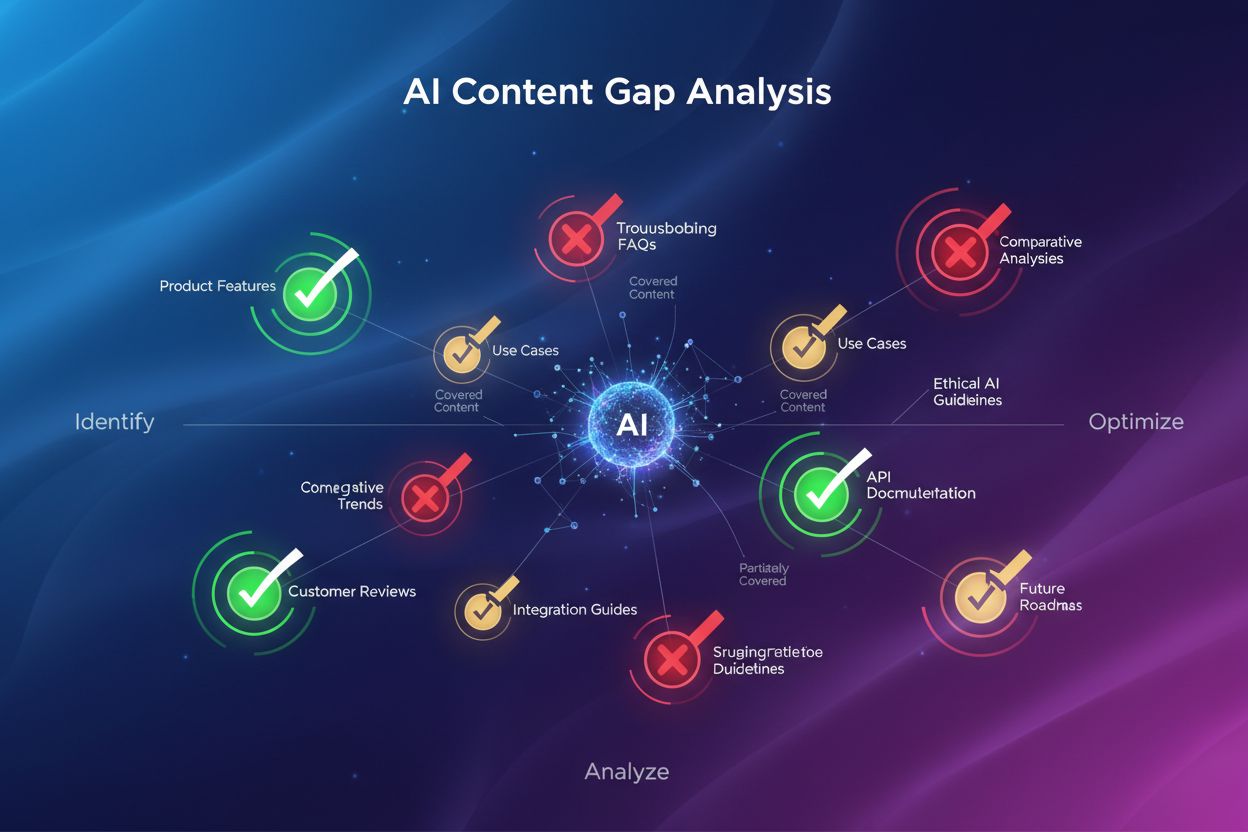
Create a content comparison matrix listing major topics in your industry and marking which ones you cover, which ones competitors cover, and which ones appear in AI responses. This visual representation makes gaps immediately obvious. Pay special attention to topics where competitors appear in AI responses but you don’t—these are your highest-priority gaps. Additionally, examine how competitors structure their content. Do they use tables, comparison charts, step-by-step guides, or expert interviews? AI systems often cite content that’s well-structured and easy to extract information from.
Look beyond just topic coverage to examine content depth and comprehensiveness. A competitor might rank for a keyword you also target, but their content might be significantly more thorough, include more examples, provide more recent data, or address more subtopics. These depth gaps are particularly important for AI search because LLMs tend to cite more comprehensive sources when generating answers. If your content is thinner than competitors’ content on the same topic, that’s a gap worth addressing.
Content gaps aren’t just about missing topics—they’re also about misaligned content. A significant gap exists when your content doesn’t match what users actually want. Analyze the search results and AI responses for your target keywords to understand search intent. Are users looking for informational content (how-to guides, explanations), navigational content (finding specific brands or pages), transactional content (ready to buy), or commercial investigation content (comparing options)?
Examine the dominant content formats ranking for your target keywords. If most results are listicles but you’ve written a comprehensive guide, that’s a format gap. If competitors are publishing video content and you only have text, that’s another gap. AI systems increasingly cite diverse content formats, so having content in multiple formats for important topics improves your visibility. Additionally, look at content structure—do top-ranking pages use tables, bullet points, step-by-step instructions, or expert quotes? Matching these structural elements improves your chances of being cited.
Search intent gaps are particularly important for AI search. If you’re targeting a keyword with commercial intent (users comparing products) but your content is purely informational, AI systems will cite competitors’ comparison content instead of yours. Similarly, if you’re targeting decision-stage keywords but your content lacks specific implementation details or use cases, you’ll lose visibility to more relevant sources. Align your content format and depth with the actual intent behind the searches and prompts you’re targeting.
Effective gap identification requires ongoing monitoring of your AI visibility metrics. Set up tracking for specific high-value prompts using tools that monitor LLM responses. Track whether you appear in responses, your position among cited sources, and how your visibility changes over time. This data reveals whether your gap-filling efforts are working and identifies new gaps as they emerge.
Create a tracking system documenting your baseline AI visibility across key prompts. Record which prompts mention your brand, which mention competitors, and which mention neither. Then, as you create and update content to fill gaps, re-check these prompts monthly to measure improvement. You should see your mention frequency increase and your position among cited sources improve as you address gaps with high-quality content.
Additionally, monitor your competitors’ content updates and new publications. When competitors publish new content addressing topics you haven’t covered, that creates a new gap for you. By monitoring competitor activity, you can respond quickly with your own content before the gap widens. Set up alerts for competitor website updates and industry news so you’re aware of emerging topics before they become significant visibility gaps.
Rather than ad-hoc gap identification, implement a systematic process you can repeat regularly. Start by defining your focus area—which section of your content or which topic cluster you want to analyze. Then gather quick data on what you currently cover and what your audience is searching for. Compare this against what competitors are covering and what appears in AI responses. Finally, prioritize the gaps based on search volume, relevance to your audience, and effort required to address them.
Document your findings in a structured format—a spreadsheet or content management system—that tracks identified gaps, their priority level, the content needed to address them, and the status of your efforts. This documentation ensures gaps don’t get overlooked and helps you measure progress over time. Assign ownership for addressing each gap and set deadlines for content creation or updates.
The most effective approach combines quick wins with long-term strategy. Quick wins are gaps you can address quickly—updating existing content with missing information, adding new sections to thin pages, or refreshing outdated statistics. These provide immediate improvements in AI visibility. Long-term gaps might require creating entirely new content pieces or developing comprehensive topic clusters. By balancing quick wins with strategic long-term content development, you maintain momentum while building sustainable competitive advantages in AI search visibility.
Get real-time visibility into where your content appears in AI-generated answers. Track mentions across ChatGPT, Perplexity, and other AI platforms to identify gaps and opportunities.
Learn how to identify and close AI visibility content gaps across ChatGPT, Perplexity, and Google AI Overviews. Discover analysis methods and tools to improve y...
Learn what AI Content Gap Analysis is and how to identify content gaps to improve your visibility in AI Overviews, ChatGPT, and generative search engines. Disco...

Learn what an AI positioning gap is, why it matters for your brand, and how to identify and close visibility gaps between your brand and competitors in AI-gener...