

AI-Powered Recommendations
Learn how AI-powered recommendations work, from collaborative filtering to hybrid systems. Discover how machine learning personalizes product and content sugges...
10 min read

Learn how AI product recommendations work, the algorithms behind them, and how to optimize your visibility in AI-powered recommendation systems across ChatGPT, Perplexity, and other AI platforms.
AI product recommendations are generated through machine learning algorithms that analyze user behavior, preferences, and purchase history. To get your products recommended, ensure strong online presence, quality content, backlinks, and optimize for AI search engines and recommendation systems.
AI product recommendations are personalized suggestions generated by sophisticated algorithms that analyze vast amounts of user data to predict what products or services a customer might be interested in purchasing. These systems have become fundamental to modern e-commerce, streaming platforms, and increasingly, AI-powered search engines and answer generators like ChatGPT and Perplexity. The primary goal of these recommendation engines is to enhance user experience by presenting relevant products at the right time, while simultaneously driving sales and increasing customer lifetime value. Understanding how these systems work is essential for businesses wanting to increase their visibility in AI-generated answers and recommendations.
AI recommendation systems operate through a multi-stage process that begins with data collection and ends with continuous refinement. The system gathers extensive information about user behavior, including browsing history, purchase patterns, time spent on product pages, cart abandonment data, search queries, and demographic information. This data serves as the foundation for all subsequent analysis and prediction. The algorithms then process this information to identify patterns and correlations that reveal what products similar users have purchased or shown interest in.
The core mechanism involves analyzing user-item interactions through machine learning models that learn underlying patterns in customer behavior. When a user visits a website or interacts with an AI system, the recommendation engine scores thousands of potential products based on predicted relevance to that specific user. The system filters these candidates through multiple stages—first narrowing millions of products down to hundreds of likely candidates, then ranking those candidates to select the top recommendations. This two-stage approach ensures recommendations are both relevant and delivered within milliseconds, which is critical for real-time applications.
| Algorithm Type | How It Works | Best For | Limitations |
|---|---|---|---|
| Collaborative Filtering | Analyzes patterns in user behavior to find similar users and recommend items they liked | Large datasets with rich user interaction history | Struggles with new users/items (cold start problem) |
| Content-Based Filtering | Recommends items similar to those a user has previously liked based on product attributes | New products and items with detailed metadata | May create filter bubbles, limiting discovery |
| Hybrid Systems | Combines collaborative and content-based approaches for balanced recommendations | Most real-world applications requiring accuracy and diversity | More complex to implement and maintain |
| Deep Learning Models | Uses neural networks to identify complex patterns in user preferences and item characteristics | Large-scale systems with complex data relationships | Requires significant computational resources |
Data quality and quantity are absolutely critical to the effectiveness of AI recommendation systems. The algorithms require extensive historical information about user interactions to identify meaningful patterns. This includes explicit data such as ratings, reviews, and likes that users directly provide, as well as implicit data automatically collected through browsing behavior, clicks, search queries, and purchase history. The more comprehensive and accurate this data, the more precise the recommendations become.
For businesses seeking visibility in AI recommendations, this means maintaining a strong digital footprint across multiple channels. Your products need to be discoverable through various data sources that AI systems can access and analyze. This includes having detailed product descriptions, customer reviews, ratings, and a robust online presence. When AI systems crawl the web to train their recommendation models, they’re looking for signals that indicate product quality, relevance, and user satisfaction. Products with comprehensive information, positive reviews, and strong engagement metrics are more likely to be recommended to relevant users.
Collaborative filtering is one of the most widely used approaches in modern recommendation systems. This algorithm identifies users with similar preferences and recommends products that similar users have purchased or rated highly. For example, if User A and User B have both purchased and rated the same products highly, and User A purchases a new product that User B hasn’t seen, the system will recommend that product to User B. This approach powers recommendations on platforms like Amazon and Spotify, where the system learns from the collective behavior of millions of users.
Content-based filtering takes a different approach by analyzing the characteristics and attributes of products themselves. If a user has shown interest in action movies with a particular actor, the system will recommend other action movies featuring that same actor or similar themes. This method is particularly effective for new products that lack user interaction data, as it relies on product metadata rather than behavioral patterns. The system creates feature vectors for each product and matches them against user preference profiles to identify the most similar items.
Hybrid systems combine both approaches to overcome individual limitations. They use content-based logic to handle new items and cold-start scenarios while leveraging collaborative filtering when sufficient behavioral data exists. This balanced approach is employed by major platforms like Netflix, which considers both what similar users watched and the content characteristics of movies and shows to generate recommendations. Hybrid systems typically deliver superior accuracy and broader recommendations compared to single-method approaches.
To increase the likelihood of your products being recommended by AI systems, you need to focus on several key areas. First, optimize your online presence by ensuring your products are listed on major e-commerce platforms, review sites, and relevant directories. AI systems train on data from across the web, so products that appear in multiple authoritative sources are more likely to be included in recommendation models. This includes having presence on platforms like Amazon, your own website, industry-specific marketplaces, and review aggregators.
Second, build strong product data and metadata. AI algorithms rely on detailed product information to make accurate recommendations. Ensure your product descriptions are comprehensive, accurate, and include relevant keywords that describe features, benefits, and use cases. High-quality product images, detailed specifications, and clear categorization help AI systems understand what your products are and who might be interested in them. Customer reviews and ratings are particularly important—they provide social proof and help algorithms understand product quality and relevance.
Third, generate authentic customer engagement and reviews. AI systems heavily weight user-generated content when making recommendations. Products with numerous positive reviews, high ratings, and strong customer engagement signals are prioritized in recommendation algorithms. Encourage satisfied customers to leave reviews, respond to feedback professionally, and maintain high customer satisfaction scores. This creates a positive feedback loop where better-reviewed products get recommended more frequently, leading to more sales and additional reviews.
Fourth, establish authority and credibility through backlinks and mentions across the web. AI systems consider the authority and trustworthiness of sources when training recommendation models. Products from brands with strong online authority, media mentions, and backlinks from reputable websites are more likely to be recommended. This involves building relationships with industry influencers, getting featured in relevant publications, and creating shareable content that naturally attracts links.
The emergence of AI-powered search engines and answer generators like ChatGPT and Perplexity has created new opportunities for product visibility. These systems use large language models trained on vast amounts of internet data to generate answers to user queries. When someone asks these AI systems for product recommendations, the algorithms draw from their training data to suggest relevant products. The products that appear most frequently in high-quality sources, have strong online authority, and are well-documented across the web are more likely to be recommended.
To optimize for these AI answer generators, focus on creating high-quality content that comprehensively addresses customer questions and pain points. When your content ranks well in traditional search engines and appears on authoritative websites, it’s more likely to be included in the training data for AI models. This means your products have a better chance of being recommended when users ask AI systems for suggestions. Additionally, ensure your brand and products are mentioned in industry publications, expert reviews, and authoritative sources that AI systems consider trustworthy.
Understanding where your products appear in AI-generated recommendations is crucial for optimizing your strategy. Monitoring tools can track mentions of your brand, products, and competitors across AI answer generators and recommendation systems. This visibility helps you understand how AI systems perceive your products and identify opportunities for improvement. By tracking which products get recommended and in what contexts, you can refine your product offerings, improve your online presence, and adjust your marketing strategy accordingly.
Regular monitoring reveals patterns in how AI systems recommend your products compared to competitors. If certain products consistently appear in recommendations while others don’t, this indicates where you need to strengthen your online presence or product information. Similarly, tracking which keywords and queries trigger recommendations of your products helps you understand your target audience better and optimize your content strategy.
To maximize your visibility in AI recommendation systems, implement a comprehensive strategy that addresses multiple factors. Maintain consistent and accurate product information across all platforms, as inconsistencies can confuse AI algorithms. Actively manage your online reputation by encouraging reviews and responding to customer feedback. Create valuable content that addresses customer needs and questions, as this content becomes part of the training data for AI models. Build relationships with industry influencers and publications to increase your brand authority and mentions across the web.
Additionally, stay informed about how different AI systems work and what signals they prioritize. As AI technology evolves, recommendation algorithms become more sophisticated, incorporating new data sources and signals. Businesses that understand these changes and adapt their strategies accordingly will maintain strong visibility in AI-generated recommendations. This includes optimizing for emerging AI platforms, ensuring your products are discoverable through new channels, and continuously improving the quality of your product data and customer experience.
Track where your products appear in AI-generated recommendations across ChatGPT, Perplexity, and other AI answer generators. Get real-time insights into your brand visibility.
Learn how AI-powered recommendations work, from collaborative filtering to hybrid systems. Discover how machine learning personalizes product and content sugges...
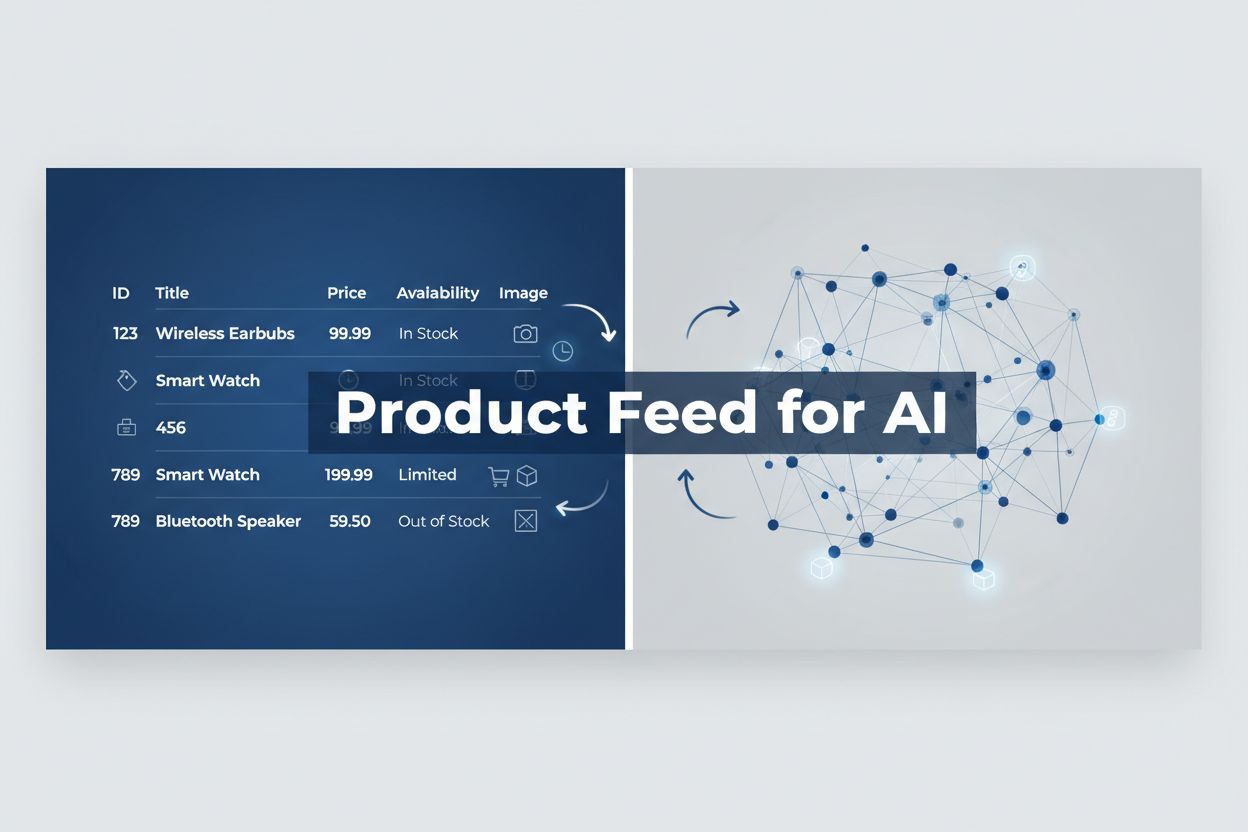
Learn what product feeds for AI are, how they differ from traditional feeds, and how to optimize them for ChatGPT, Google AI Overviews, and Perplexity shopping ...

Discover how customer reviews influence AI recommendation algorithms, improve recommendation accuracy, and enhance personalization in AI-powered systems like Ch...