
Perplexity AI Optimization: How to Get Cited in Real-Time Search
Learn how to optimize your content for Perplexity AI and get cited in real-time search results. Discover citation-ready content strategies, technical optimizati...
5 min read

Learn how to get your website cited by Perplexity AI. Discover the technical requirements, content optimization strategies, and authority-building tactics that help your brand appear in AI-generated answers.
To get your website cited by Perplexity, ensure your site is technically accessible to PerplexityBot, create clear answer-first content with proper schema markup, build domain authority through quality backlinks and reviews, and optimize for the platform's four core evaluation criteria: credibility, recency, relevance, and clarity.
Perplexity AI is a next-generation answer engine that fundamentally differs from traditional search engines like Google. Instead of displaying a list of ranked results, Perplexity synthesizes information from multiple sources and presents a single, comprehensive answer with numbered citations pointing to the original sources. When your website is cited by Perplexity, it appears directly in the answer alongside a clickable link, providing immediate visibility to users actively seeking information. This represents a significant opportunity for brand authority and qualified traffic, as users who encounter your citation are already engaged with the topic and more likely to convert. Unlike traditional SEO where success is measured by ranking position, Perplexity success is measured by citation frequency and placement within AI-generated answers. The platform has experienced explosive growth, with search volume increasing over 200% in 2025, making it increasingly important for businesses to optimize their presence on this emerging platform.
Perplexity’s citation algorithm evaluates websites based on four fundamental criteria that determine whether your content will be selected and cited in answers. Understanding these criteria is essential for developing an effective optimization strategy. The first criterion is credibility, which encompasses publisher authority, expert authorship, and the presence of verifiable references. Perplexity heavily weights domain authority and looks for signals that indicate your organization is a trusted source in your industry. The second criterion is recency, which measures how fresh and up-to-date your content is. Pages that are regularly updated and include current data, statistics, and examples receive higher consideration for citations. The third criterion is relevance, which ensures your content directly answers the user’s question without unnecessary tangents or vague explanations. Perplexity’s algorithm matches the specificity of your answer to the specificity of the query. The fourth criterion is clarity, which evaluates how easily the AI can extract and understand your information. Content that is well-structured with clear headings, logical organization, and concise explanations is significantly more likely to be cited than dense, paragraph-heavy content.
| Evaluation Criteria | Description | Optimization Focus |
|---|---|---|
| Credibility | Publisher authority, expert credentials, citations | Build domain authority, add author bios with credentials |
| Recency | Content freshness and update frequency | Update dates, refresh statistics, add current examples |
| Relevance | Direct match to user’s question | Answer-first structure, clear topic focus |
| Clarity | Structured content easy to extract | Use headings, lists, tables, FAQ and HowTo schema |
Before any content optimization can take effect, your website must be technically accessible to Perplexity’s crawler. This is a critical foundation that many websites overlook, and technical barriers can completely prevent your content from being cited regardless of quality. The first technical requirement is to allow PerplexityBot in your robots.txt file. You must explicitly permit the bot to crawl your site by adding the following configuration: User-agent: PerplexityBot followed by Allow: /. Without this permission, Perplexity cannot access your content at all. The second requirement is to ensure your content is server-side rendered and not JavaScript-dependent. Many modern websites use JavaScript frameworks like React, Angular, or Vue.js, but if your content is only rendered on the client side, Perplexity’s crawler cannot see it. You should verify that your main content is visible in the raw HTML by disabling JavaScript in your browser or using command-line tools like curl. The third requirement is to maintain fast server response times, ideally under 500 milliseconds. Slow-loading pages may be deprioritized or skipped entirely by the crawler. The fourth requirement is to ensure your site has proper XML sitemaps and canonical tags to help Perplexity understand your site structure and avoid duplicate content issues.
The most important content optimization principle for Perplexity is the answer-first approach, which means starting each section with a direct, concise answer to the implied user question before providing supporting details. This structure aligns perfectly with how AI systems extract and cite information. Instead of burying your key point in the middle of a paragraph, lead with it immediately. For example, rather than writing “When implementing ERP systems, the process can be challenging,” you should write “ERP onboarding typically takes 4-8 weeks for mid-size firms because of data migration, employee training, and process adjustments.” This direct approach makes it easy for Perplexity to identify and extract your answer as a citation. Each main section should be phrased as a question in the heading, with the first sentence providing a complete, standalone answer. Keep paragraphs short, typically 2-4 lines, to improve readability for both humans and AI systems. Use bullet points and numbered lists to organize information logically, as these formats are highly extractable by AI systems. Incorporate tables for side-by-side comparisons, as they provide structured data that Perplexity can easily lift and present in its answers. Include inline citations and references for any claims or statistics you make, as this demonstrates credibility and helps Perplexity verify your information.
Implementing proper schema markup significantly increases your chances of being cited by Perplexity. Schema markup uses structured data to explicitly tell search engines and AI systems what your content is about and how it’s organized. The most effective schema types for Perplexity citations are FAQPage schema for frequently asked questions, HowTo schema for step-by-step guides and processes, Article schema for blog posts and guides, and Organization schema for company information. FAQPage schema is particularly powerful because it maps directly to short answers that Perplexity can extract and cite. When you implement FAQPage schema, you’re essentially pre-packaging your Q&A content in a format that AI systems can immediately understand and use. HowTo schema is equally valuable for process-oriented content, as it clearly delineates each step and makes the content highly extractable. You should use JSON-LD format for all schema markup, as it’s the most reliable and widely supported format. After implementing schema, test your markup using Google’s Rich Results Test and Schema.org validation tools to ensure there are no errors. Request a recrawl through Bing Webmaster Tools after adding or updating schema, as this helps Perplexity’s crawler discover and index your structured data more quickly.
While on-page optimization is important, off-page authority signals are equally critical for earning Perplexity citations. Perplexity needs to be confident that it’s citing a credible source, and it uses external validation signals to make this determination. The most important off-page signal is high-quality backlinks from authoritative websites in your industry. Focus on acquiring links from industry news publications, niche-relevant blogs with high domain authority, local business associations, and reputable research institutions. Quality matters far more than quantity; a single backlink from a top-tier industry publication is worth more than dozens of low-quality links. The second important signal is user-generated content and reviews. Encourage customers to leave detailed reviews on third-party platforms like G2, Gartner, TrustRadius, GetApp, and industry-specific review sites. Perplexity analyzes these reviews and mentions to gauge public sentiment and trust. The third signal is expert participation and thought leadership. Contribute expert commentary to industry forums, answer questions on platforms like Quora, and participate in relevant Reddit communities. These activities demonstrate that your organization has recognized experts and contributes valuable knowledge to your industry. The fourth signal is consistent business citations across directories and platforms. Ensure your business name, address, and phone number (NAP) are consistent across all relevant business directories and niche-specific authority sources.
Not all content types are equally likely to be cited by Perplexity. Understanding which formats perform best can help you prioritize your content creation efforts. Comparison content that directly contrasts two or more options (e.g., “GraphQL vs REST API”) performs exceptionally well because it directly answers a common user question. How-to guides with numbered instructions are highly citable because they provide step-by-step processes that Perplexity can extract and present. Definition content that addresses foundational questions like “What is X?” is frequently cited because it provides concise, authoritative explanations. Best/Top lists with summarized criteria and clear rankings are popular citation sources because they provide structured recommendations. FAQ blocks that directly address common questions are ideal for extraction and citation. Analysis content using statistics, charts, or unique benchmarks is valuable because it provides concrete data that Perplexity can cite as evidence. Case studies combining proprietary data and practical advice are cited when they provide unique insights or real-world examples that other sources don’t offer. The common thread among all these content types is that they provide clear, structured, verifiable information that can be easily extracted and presented as a citation.
Tracking your success with Perplexity requires different metrics than traditional SEO. Instead of focusing solely on rankings and click-through rates, you should monitor citation frequency, which measures how often your website appears in Perplexity answers for your target queries. Track your footnote rank, which is the numeric superscript assigned to your citation in the answer (lower numbers indicate more prominent placement). Monitor your answer coverage, which is the percentage of your target queries where at least one of your pages is cited. Measure your Perplexity CTR by dividing clicks from Perplexity by citation impressions, which requires UTM tagging or server log analysis. Create a separate analytics segment for Perplexity traffic so you can track conversions and engagement separately from Google organic traffic. Research shows that Perplexity-driven traffic converts 3-6 times more often than Google organic traffic, making it a valuable revenue channel. Set up a quarterly review process to audit your citation performance, identify gaps where competitors are cited but you’re not, and refresh content that has lost citation visibility. Use tools like Wellows, ZipTie, or Otterly AI to automate citation tracking and Share of Voice monitoring, which saves time and provides more accurate data than manual spot checks.
Understanding what not to do is just as important as knowing what to do. One common mistake is publishing content behind paywalls or login walls. While Perplexity may crawl PDFs and gated content, it rarely cites non-HTML assets or content that requires authentication. Another mistake is ignoring outbound links. Unlike Google, Perplexity actually rewards pages that provide citations to other authoritative sources. Think of your content as an academic paper that cites its sources, not a sales brochure that only promotes your own products. A third mistake is over-optimizing for featured snippets at the expense of comprehensive content. While snippet-style paragraphs help, long bullet lists sometimes get truncated by the LLM, so you should mix different content formats. A fourth mistake is allowing content to become stale. Pages older than nine months without updates see a 35% lower citation rate. You should establish a quarterly content refresh schedule to update statistics, add new examples, and refresh publication dates. A fifth mistake is blocking PerplexityBot in robots.txt or using JavaScript-only rendering. Even brands with strong authority can be completely excluded from Perplexity citations due to technical barriers.
The timeline for seeing results from Perplexity optimization varies depending on the type of change you make. robots.txt updates are recognized within 24 hours, allowing PerplexityBot to begin crawling your site immediately. Content format changes and structural improvements typically show impact within 2-4 weeks as Perplexity’s crawler discovers and re-indexes your updated pages. Building authority signals through backlinks, reviews, and mentions takes longer, typically 2-6 months before you see consistent citation improvements. Most organizations see their first citations within 4-8 weeks of implementing a comprehensive optimization strategy, with citation frequency increasing steadily over the following months. The key is to maintain consistency and continuously monitor your progress, making adjustments based on which content types and topics are earning the most citations. Early adopters who implement Perplexity optimization now will have a significant competitive advantage as the platform continues to grow and more users rely on it for research and decision-making.
Track where your website appears in Perplexity, ChatGPT, and other AI search engines. Get real-time insights into your AI search visibility and stay ahead of competitors.
Learn how to optimize your content for Perplexity AI and get cited in real-time search results. Discover citation-ready content strategies, technical optimizati...
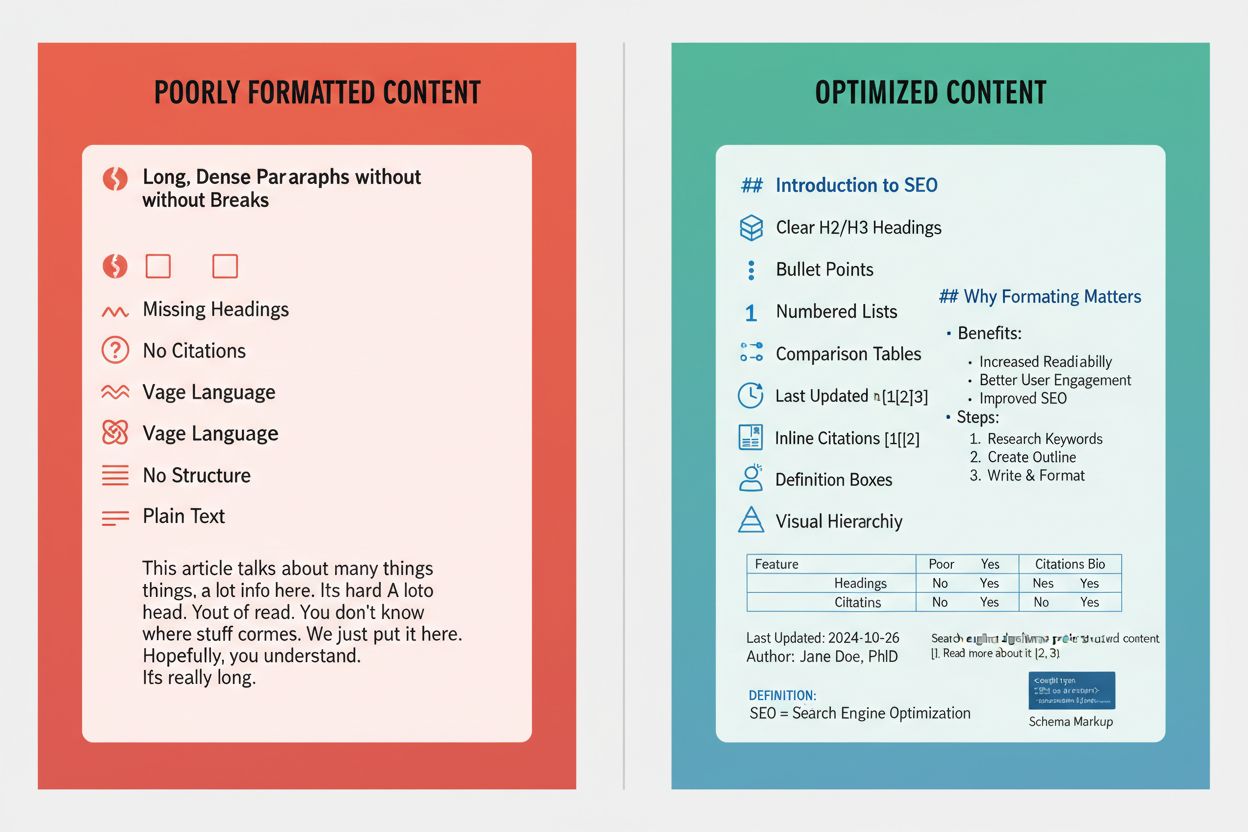
Learn how to format content for maximum pickup in Perplexity citations. Master quotable content, schema markup, and citation strategies to dominate AI search.

Learn how to build personal brand visibility in AI systems like ChatGPT, Google AI Overview, and Perplexity. Discover AI citation strategies to get recognized a...