
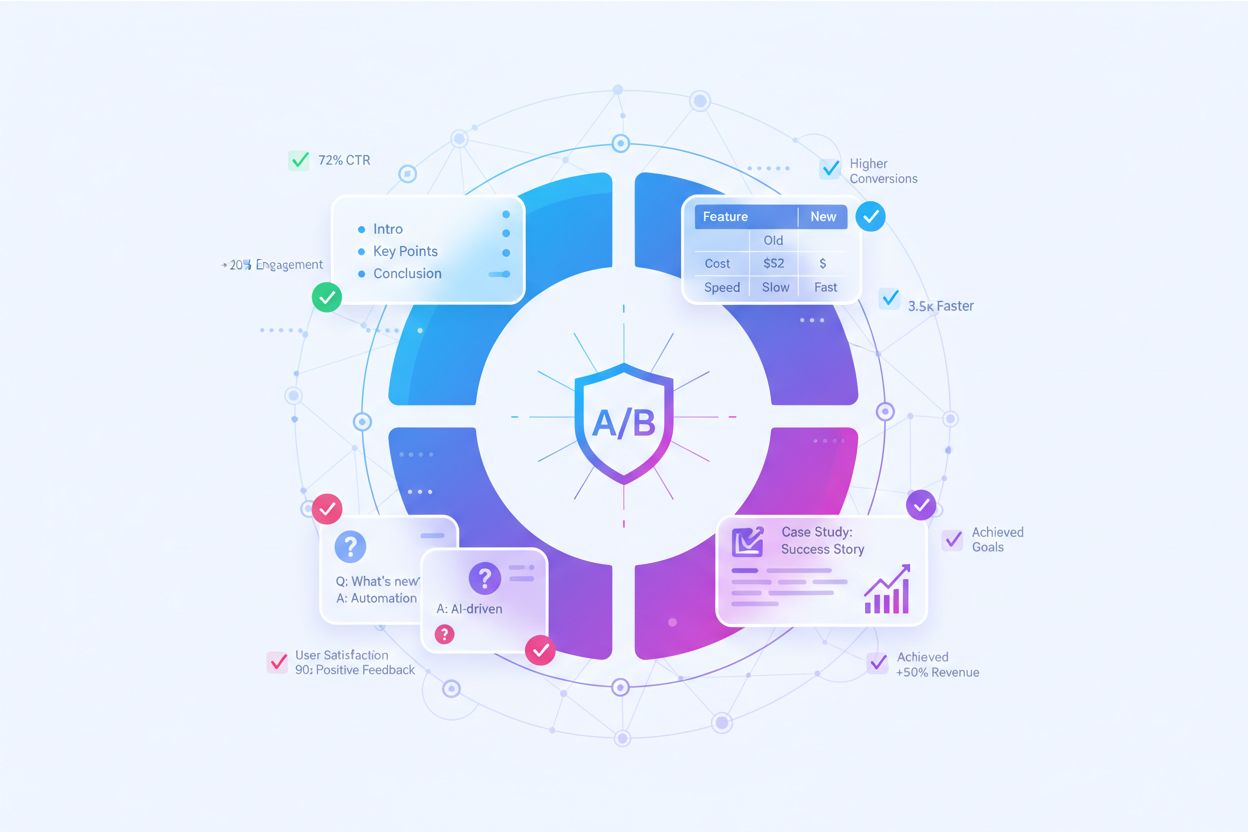
Testing Content Formats for AI Citations: Experiment Design
Learn how to test content formats for AI citations using A/B testing methodology. Discover which formats drive the highest AI visibility and citation rates acro...
10 min read

Learn proven techniques to humanize AI-generated content for better citations in AI answer generators. Improve authenticity, boost visibility in AI search results, and align with E-E-A-T guidelines.
Humanize AI content by incorporating personal insights, using active voice, replacing overused AI phrases, fact-checking information, and editing for brand voice consistency. This makes your content more authentic and citable by AI systems like ChatGPT, Perplexity, and other AI answer generators.
Humanizing AI content is the process of transforming machine-generated text into writing that sounds natural, authentic, and genuinely human. This practice has become increasingly important as AI-generated content appears more frequently across the web, and as AI answer generators like ChatGPT, Perplexity, and similar platforms cite sources in their responses. When your content is humanized effectively, it becomes more likely to be recognized as authoritative and cited by these AI systems, which can significantly boost your brand’s visibility in AI-generated answers.
The relationship between humanized content and citations is direct: AI systems are trained to recognize and cite content that demonstrates expertise, experience, authoritativeness, and trustworthiness (E-E-A-T). When your content reads naturally and provides genuine value, AI systems are more likely to reference it as a credible source. This is particularly important for brands and domains that want to maintain visibility in the emerging landscape of AI search engines and answer generators.
Search engines and AI systems prioritize authentic, human-centered content. Google’s E-E-A-T guidelines explicitly emphasize the importance of content created from direct, personal experiences and hands-on knowledge. When AI systems generate answers, they follow similar principles—they seek out content that demonstrates real expertise and genuine insights rather than generic, formulaic text. By humanizing your AI-generated content, you’re essentially making it more “citable” in the eyes of these systems.
| Aspect | Impact on Citations |
|---|---|
| Personal Insights | Increases likelihood of being cited as authoritative source |
| Active Voice | Makes content more engaging and memorable for AI systems |
| Real-Life Examples | Demonstrates practical knowledge and experience |
| Fact-Checked Information | Builds trust and credibility with AI answer generators |
| Brand Voice Consistency | Establishes recognizable authority in your niche |
| Original Data | Provides unique value that AI systems prefer to cite |
The key insight is that AI systems don’t just look for accurate information—they look for content that feels authentic and trustworthy. When your content is humanized, it passes these quality checks more effectively, making it more attractive for citation in AI-generated answers.
The foundation of humanized AI content begins with high-quality prompts. Rather than using generic instructions, provide your AI writing tool with detailed, specific guidance about tone, style, and perspective. Include information about your brand voice, target audience, and the specific angle you want to take on the topic. This approach ensures that the initial AI output is closer to your desired result, requiring less extensive editing later.
When creating prompts, specify elements such as adopting a particular persona, using a conversational tone, including specific facts and examples, and excluding overused phrases. The more detailed your prompt, the more likely the AI will generate content that already sounds human and authentic. This reduces the humanization work needed afterward and produces content that AI systems recognize as higher quality.
Personal stories and direct experiences are powerful differentiators in humanized content. Rather than presenting generic advice, share specific examples from your own work or industry experience. This demonstrates the “Experience” component of E-E-A-T and makes your content significantly more citable by AI systems. When you include personal anecdotes, case studies, or real-world examples, you’re providing evidence of hands-on knowledge that AI systems value highly.
The most effective approach is to weave personal insights throughout your content rather than isolating them in a single section. When discussing a topic, explain how you’ve encountered it, what you learned, and how that knowledge applies to your readers. This narrative approach makes content feel authentic and gives AI systems multiple touchpoints for recognizing your expertise and authority.
AI writing tools tend to rely on specific phrases and vocabulary that have become recognizable markers of machine-generated content. Common examples include “in today’s world,” “unlock,” “unleash,” “delve into,” “crucial,” “essential,” and “in conclusion.” These phrases appear so frequently in AI-generated text that both humans and AI detection systems immediately recognize them as artificial.
To humanize your content, systematically identify and replace these overused terms with more natural, conversational language. Instead of “in today’s world,” simply say “today” or “now.” Replace “delve into” with “explore” or “examine.” Use “finally” instead of “in conclusion.” This process of replacing formulaic language with genuine, varied vocabulary is essential for making content sound human and increasing its citation potential in AI systems.
Passive voice is a hallmark of AI-generated content. Sentences like “The strategy was implemented by the team” sound robotic compared to “The team implemented the strategy.” By consciously rewriting your content in active voice, you create more engaging, direct communication that reads naturally. Additionally, vary your sentence length and structure—mix short, punchy sentences with longer, more complex ones to mirror the rhythm of human conversation.
This variation in sentence structure, known as perplexity and burstiness, makes content more dynamic and interesting. AI systems recognize this natural variation as a sign of authentic human writing. When your content demonstrates this kind of linguistic variety, it becomes more likely to be cited as a quality source in AI-generated answers.
AI systems can generate inaccurate information confidently. Before publishing any AI-generated content, thoroughly fact-check all claims against reputable sources. This verification process is crucial not only for accuracy but also for building the trustworthiness that AI systems look for when selecting sources to cite. When your content is factually accurate and properly sourced, AI systems recognize it as reliable and are more likely to reference it.
Include citations or links to support your statements where appropriate. This demonstrates your commitment to accuracy and provides AI systems with additional context about your content’s credibility. Fact-checked, well-sourced content is significantly more likely to be cited in AI-generated answers.
Original data is highly valuable for citations. If you have access to unique research, surveys, or proprietary data, incorporate it into your humanized content. AI systems prioritize original insights and data because they represent genuine expertise and cannot be found elsewhere. When you present original findings through charts, graphs, or infographics, you create compelling, citable content that AI systems recognize as authoritative.
This approach aligns perfectly with E-E-A-T guidelines and significantly increases the likelihood that AI answer generators will cite your content. Original research demonstrates that you’ve invested time and resources into understanding your topic deeply, which AI systems interpret as a strong signal of expertise.
Consistent brand voice across all content builds recognition and authority. When your humanized content maintains a distinctive, recognizable voice, AI systems learn to associate that voice with your brand and expertise. This consistency makes your content more memorable and citable. Develop clear guidelines for your brand voice—whether it’s professional and authoritative, casual and conversational, or somewhere in between—and apply these consistently across all content.
When AI systems encounter content that consistently demonstrates a particular voice and perspective, they recognize it as coming from a knowledgeable source. This recognition increases the likelihood of citation in AI-generated answers.
Concrete examples make abstract concepts understandable and memorable. When you include real-life examples, case studies, screenshots, or custom visuals, you provide evidence of practical knowledge. AI systems recognize this type of content as higher quality because it demonstrates hands-on experience. Visual elements also break up text and make content more engaging, which AI systems factor into their assessment of content quality.
The combination of detailed explanations, real-world examples, and supporting visuals creates content that AI systems view as authoritative and worthy of citation.
First-person language signals direct experience and expertise. Research shows that content containing first-person pronouns like “I,” “my,” “we,” and “ours” often ranks higher in search results and is more likely to be cited. This is because first-person language conveys that the author has direct experience with the topic. When you use first-person pronouns appropriately, you’re signaling to AI systems that your content comes from someone with hands-on knowledge.
However, use first-person language strategically and authentically. It should reflect genuine experience, not be forced into every sentence. The goal is to create a sense of personal authority and credibility that makes your content more citable.
Once you’ve humanized your content, monitoring its appearance in AI-generated answers becomes essential. Track how often your brand, domain, or specific URLs appear in responses from ChatGPT, Perplexity, and other AI answer generators. This monitoring reveals whether your humanization efforts are translating into actual citations. When you see your content being cited more frequently, it indicates that your humanized content is meeting the quality standards that AI systems use to select sources.
Pay attention to the context in which your content is cited. Are AI systems using it for factual information, expert opinions, or case studies? Understanding how your content is being used helps you refine your humanization strategy for even better results. Over time, consistent citation in AI-generated answers becomes a powerful indicator of your brand’s authority and trustworthiness in your industry.
Track how your humanized content appears in AI-generated answers across ChatGPT, Perplexity, and other AI search engines. Get real-time alerts when your brand is cited.
Learn how to test content formats for AI citations using A/B testing methodology. Discover which formats drive the highest AI visibility and citation rates acro...

Community discussion on humanizing AI-generated content for better AI platform citations. Writers share techniques for adding authenticity and human expertise t...
Learn how to enhance AI-generated content with human expertise through strategic editing, fact-checking, brand voice refinement, and original insights to create...