

Thin Content Definition and AI Penalties: Complete Guide
Learn what thin content is, how AI systems detect it, and whether ChatGPT, Perplexity, and Google AI penalize low-quality pages. Expert guide with detection met...
10 min read

Learn how to enhance thin content for AI systems like ChatGPT and Perplexity. Discover strategies for adding depth, improving content structure, and optimizing for AI citation and visibility.
Improve thin content for AI by adding depth and value through comprehensive answers, using modular passage-level design, implementing proper schema markup, and ensuring your content demonstrates E-E-A-T signals. Structure content with answer-first formatting, clear headings, and machine-readable HTML to help AI systems retrieve and cite your information accurately.
Thin content refers to webpages that provide little or no added value to users and fail to adequately address search intent. In the context of AI search engines, thin content becomes even more problematic because AI systems rely on comprehensive, well-structured information to generate accurate, citable answers. When your content lacks depth, AI engines struggle to retrieve meaningful passages and are less likely to cite your brand as a source. The challenge has evolved beyond traditional search engine optimization—you must now optimize for Retrieval-Augmented Generation (RAG) systems that power modern AI search platforms.
Thin content typically includes pages with insufficient word count, poorly organized information, duplicate content, low-quality affiliate material, and pages created primarily for keyword ranking rather than user value. Google’s Panda algorithm, introduced in 2011, specifically targeted thin content, and this principle remains core to how both traditional search engines and AI systems evaluate content quality. The difference now is that AI systems need your content to be not just valuable, but also machine-readable and properly structured to extract relevant passages for synthesis into answers.
Content depth directly impacts whether AI systems will retrieve and cite your information. When AI engines process queries, they use RAG systems that first retrieve relevant passages from a knowledge base, then generate synthesized answers. If your content is too shallow, it won’t be selected during the retrieval phase, meaning your brand won’t be cited regardless of how authoritative you are. Research shows that pages with comprehensive, detailed information are significantly more likely to be included in AI-generated answers compared to brief, surface-level content.
The depth requirement varies by topic and search intent. A financial guide explaining tax filing procedures requires substantially more depth than a simple product comparison. However, the principle remains consistent: your content must thoroughly answer the question it promises to address. This means covering related subtopics, providing examples, explaining the “why” behind concepts, and addressing common follow-up questions. When you create content that comprehensively covers a topic, you naturally capture multiple related keywords and questions, making your content more valuable for both traditional search and AI systems.
The most critical structural change for AI optimization is adopting an answer-first format. This means placing a direct, concise answer (40-60 words) immediately below your main heading, before any additional details, images, or supplementary information. This answer serves as a “TL;DR” (Too Long; Didn’t Read) summary that both users and AI systems can immediately understand and cite. This approach is essential because AI systems prioritize content that directly answers queries without requiring the system to synthesize information from multiple paragraphs.
Your answer-first block should explicitly address the primary question without ambiguity. For example, instead of beginning with background information, start with the core answer. This structure makes your content immediately “citable” for AI systems—they can extract this passage directly and present it to users with proper attribution. The answer-first approach also improves user experience by allowing readers to quickly determine if your page contains the information they need. When you combine this with proper formatting and emphasis (using bold text for key terms), you create content that AI systems can easily parse and prioritize.
Traditional SEO optimizes at the page level, but AI systems retrieve information at the passage level. This fundamental difference requires a complete restructuring of how you organize content. Instead of writing long, flowing articles where information is distributed throughout, you must design content as a series of modular, self-contained “atomic” answers. Each H2 and H3 section should function as a standalone answer to a specific question that an AI system might retrieve independently.
This modular design means that every heading should introduce a distinct concept or answer a specific question. When you structure content this way, AI systems can extract individual sections without losing context or meaning. For example, if you’re writing about WordPress caching, instead of one long section covering all caching types, create separate sections: “What is Browser Caching?”, “What is Server Caching?”, and “What is Object Caching?” Each section should be complete enough to stand alone while contributing to the overall article. This approach naturally encourages you to add more depth because each section must thoroughly explain its topic. The modular structure also improves internal linking opportunities and helps users quickly find specific information they need.
Machine readability is no longer optional—it’s a technical requirement for AI visibility. AI systems parse HTML structure to understand content hierarchy and meaning, so your semantic HTML must be clean and purposeful. Use HTML tags for their semantic meaning rather than visual presentation. Your main article content should be wrapped in <article> tags, navigation should use <nav> tags, and supplementary content should use <aside> tags. This explicit structure tells AI systems what content to prioritize and what to de-emphasize.
Beyond semantic HTML, implement schema.org markup to remove all ambiguity from your content. Schema markup is a standardized vocabulary that explicitly tells AI systems what information means. For example, FAQPage schema is particularly powerful for AI ingestion because its question-and-answer structure perfectly matches how RAG systems retrieve information. Article schema should link to Person schema (the author) and Organization schema (your company), creating a verifiable chain of identity and accountability. This technical layer translates your human-readable content into machine-readable facts that AI systems can confidently cite.
Specific formatting practices significantly impact how AI systems parse and understand your content. Use short, declarative sentences with a maximum of 15-20 words. Keep paragraphs brief, containing only 2-4 sentences. This formatting makes content easier for both humans and machines to process. Use H2 and H3 headings to clearly separate every distinct idea, and employ bulleted and numbered lists whenever possible for steps, comparisons, or highlights—these formats are incredibly easy for AI systems to parse and repurpose.
Avoid complex formatting that confuses AI parsers. Tables are particularly problematic because they’re two-dimensional while AI text ingestion is linear. Instead of using <table> tags for core information, format tabular data as multi-level bulleted lists or simple key-value pairs. Similarly, avoid gatekeeping information in PDFs, as PDF content often lacks the structured signals of HTML and is notoriously difficult for AI to parse accurately. Never put key information only in images; while multimodal AI models can “see” images, text should always be present in HTML for reliable parsing. This ensures your information is accessible to all AI systems, not just the most advanced ones.
E-E-A-T (Experience, Expertise, Authoritativeness, Trustworthiness) is the framework AI systems use to filter misinformation and identify credible sources. In a world where AI systems can “hallucinate” or invent false information, E-E-A-T signals are critical trust indicators. Your content must demonstrate all four pillars to be reliably cited by AI systems.
Experience is proven through first-hand, real-world evidence. Share original photos and videos of you using products or performing services. Publish original research, surveys, and case studies. Write in the first person using phrases like “In my 10 years as a developer…” or “When I tested this product…” Real stories about failures and successes demonstrate authentic experience that AI systems cannot fabricate.
Expertise is established at the author level through detailed author bio pages that list qualifications, certifications, relevant industry experience, and links to verifiable professional profiles like LinkedIn or industry associations. Authoritativeness is proven by what other trusted sources say about you—this requires an “always-on” digital PR strategy to earn mentions and citations from high-authority publications. Trustworthiness is demonstrated through transparent “About Us” and “Contact Us” pages with real-world information, combined with an unbroken chain of technical markup connecting your content to verified author and organization entities.
Thin content often fails because it doesn’t adequately address the full scope of user search intent. Before writing or improving content, conduct thorough research into all the questions your audience is asking about your topic. Use tools like Google’s “People Also Ask” feature, keyword research platforms, and community forums to identify the complete web of related questions. Your content should then be structured to answer these questions directly, often using the questions themselves as your H2 and H3 subheadings.
This question-driven approach naturally leads to more comprehensive content because you’re addressing multiple angles of the topic. For example, if your topic is “How to choose a web host,” your content should address not just the basic answer but also related questions like “What features should I look for?”, “How much should I spend?”, “What’s the difference between shared and dedicated hosting?”, and “How do I migrate to a new host?” By comprehensively addressing these related questions, you create content that serves multiple search intents and provides more value for AI systems to retrieve and cite.
If you have multiple pages addressing similar topics with insufficient depth, consolidation is often the best solution. Instead of maintaining five 300-word articles on similar topics, combine them into a single comprehensive 1,500-word guide. This approach eliminates keyword cannibalization issues where multiple thin pages compete for the same rankings, and it creates a more authoritative resource that AI systems will prioritize.
When consolidating content, identify pages targeting the same primary keyword or addressing very similar topics. Analyze what’s currently ranking for these keywords—if the top search results are nearly identical, that’s a signal to combine your pages. However, if the top results for different keyword variations are substantially different, that indicates you should keep them separate but significantly improve each one. The consolidation process should involve merging the best information from all pages, adding new depth and insights, and restructuring the content using the modular, answer-first approach described above.
Original data and research are powerful differentiators that prevent your content from being thin. AI systems recognize and prioritize content that provides unique insights and information not available elsewhere. Conduct original surveys, compile case studies from your experience, analyze industry data, or perform experiments relevant to your topic. This original content becomes a unique value proposition that AI systems will cite because it’s information they cannot find elsewhere.
Original research doesn’t require massive budgets. Even small surveys of your audience, analysis of your own data, or documentation of your experience provides original insights. When you include original data in your content, cite it properly and explain your methodology. This transparency builds trust with both users and AI systems. Original content also naturally attracts backlinks and mentions from other sources, which further signals authority to AI systems.
| Content Element | Impact on AI Visibility | Implementation Priority |
|---|---|---|
| Answer-First Summary | High - Immediately citable | Critical - Implement first |
| Modular Structure (H2/H3) | High - Enables passage retrieval | Critical - Restructure content |
| Schema Markup | High - Improves machine readability | Critical - Add to all pages |
| Original Data/Research | High - Unique value signal | High - Differentiate content |
| Author E-E-A-T Signals | High - Trust indicator | High - Build author profiles |
| Comprehensive Coverage | Medium-High - Reduces thin content | High - Expand thin pages |
| Internal Linking | Medium - Topical authority | Medium - Optimize structure |
| Multimedia Elements | Medium - Engagement signal | Medium - Add where relevant |
Internal linking helps AI systems understand your topical authority and content relationships. When you link from one page to related pages using descriptive anchor text, you’re essentially telling AI systems how your content relates to other topics. This helps RAG systems understand the broader context of your expertise and retrieve multiple related pages when answering complex queries.
Your internal linking strategy should connect pages that address related aspects of a topic. For example, if you have a comprehensive guide on web hosting, link to related pages about specific hosting types, migration guides, or performance optimization. Use descriptive anchor text that indicates what the linked page covers—avoid generic phrases like “click here.” This approach helps AI systems understand your content structure and increases the likelihood that multiple pages from your site will be retrieved and cited when answering related queries.
Content freshness is a signal of reliability for both traditional search and AI systems. If your content contains outdated information, statistics, or examples, it becomes thin in terms of current value. Conduct regular content audits to identify pages with outdated information, and refresh them with the latest data, trends, and developments in your industry. Update publication dates and add “last updated” timestamps to signal freshness.
When refreshing content, don’t just update statistics—use the opportunity to restructure the content using the modular, answer-first approach. Add new sections addressing recent developments or emerging questions in your field. This refresh process often reveals opportunities to add more depth and value. AI systems recognize and prioritize recently updated content, especially when the updates include new information and insights.
Traditional metrics like rankings and traffic are insufficient for measuring AI optimization success. You need new KPIs focused on AI citation and visibility. Track your inclusion rate—how often your brand is cited in AI-generated answers for your target queries. Monitor brand mentions and citations across AI platforms, both linked and unlinked. Analyze your share of influence—what percentage of the AI’s answer reflects your brand’s unique perspective or data.
Manually test your target queries on platforms like ChatGPT, Perplexity, and Google’s AI Overviews to see if your content is being cited. Use tools designed for AI visibility monitoring to systematically track how your brand appears in AI answers. Look for increases in branded search volume and direct traffic, which are byproducts of high visibility in AI answers. These metrics provide a more accurate picture of your AI optimization success than traditional SEO metrics.
Several common mistakes can undermine your efforts to improve thin content for AI. First, avoid simply adding more words without adding real value—AI systems can detect padding and fluff. Every sentence should contribute meaningful information. Second, don’t neglect the technical foundation—even excellent content won’t be cited if it lacks proper schema markup and semantic HTML. Third, avoid creating multiple similar pages that compete with each other; consolidate and create one authoritative resource instead.
Don’t ignore author expertise signals—AI systems need to know who wrote your content and why they’re credible. Avoid hiding important information in images or PDFs where AI systems can’t reliably access it. Don’t use complex table formatting that confuses AI parsers. Finally, don’t treat AI optimization as a one-time project; content requires ongoing updates and refinement as your industry evolves and new questions emerge.
Track how your content appears in AI-generated answers across ChatGPT, Perplexity, and other AI search engines. Get insights into your citation rates and optimize your content strategy.
Learn what thin content is, how AI systems detect it, and whether ChatGPT, Perplexity, and Google AI penalize low-quality pages. Expert guide with detection met...
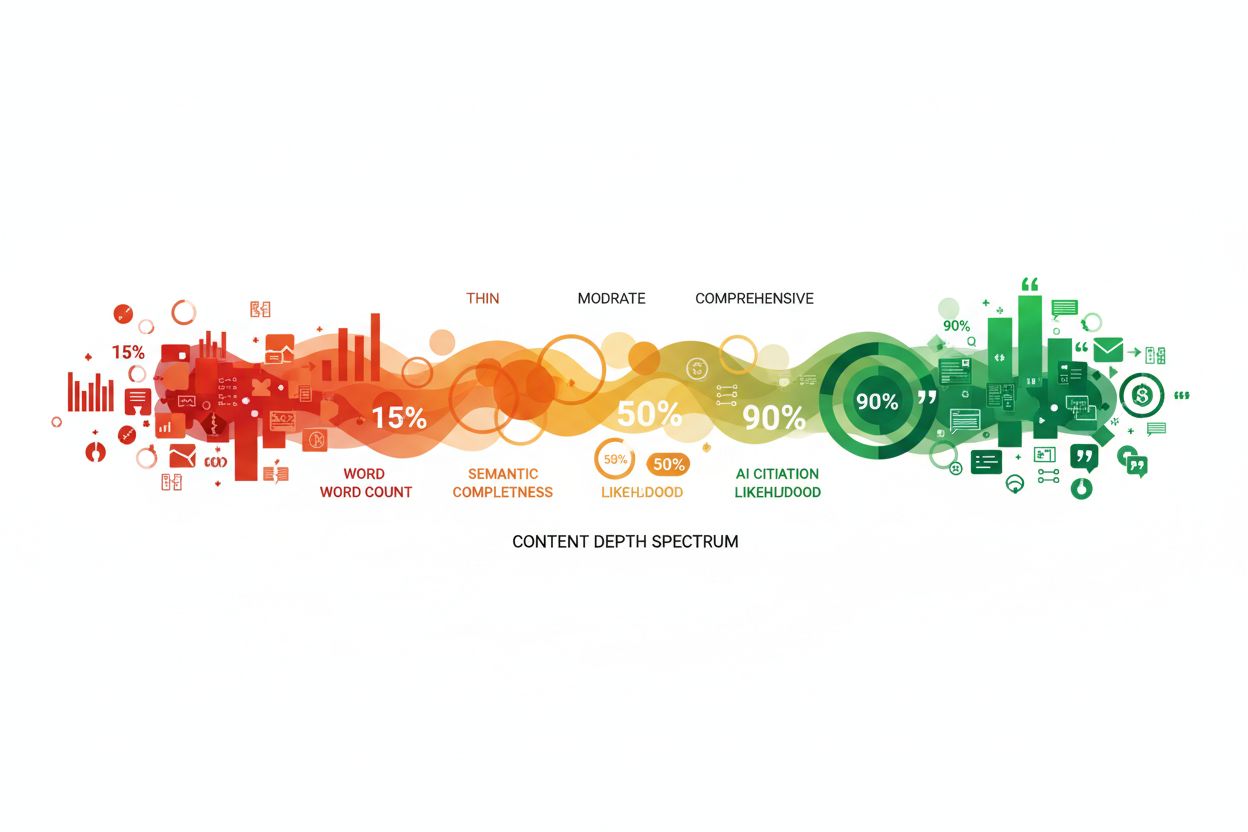
Learn how to create content deep enough for AI systems to cite. Discover why semantic completeness matters more than word count for ChatGPT, Perplexity, and Goo...
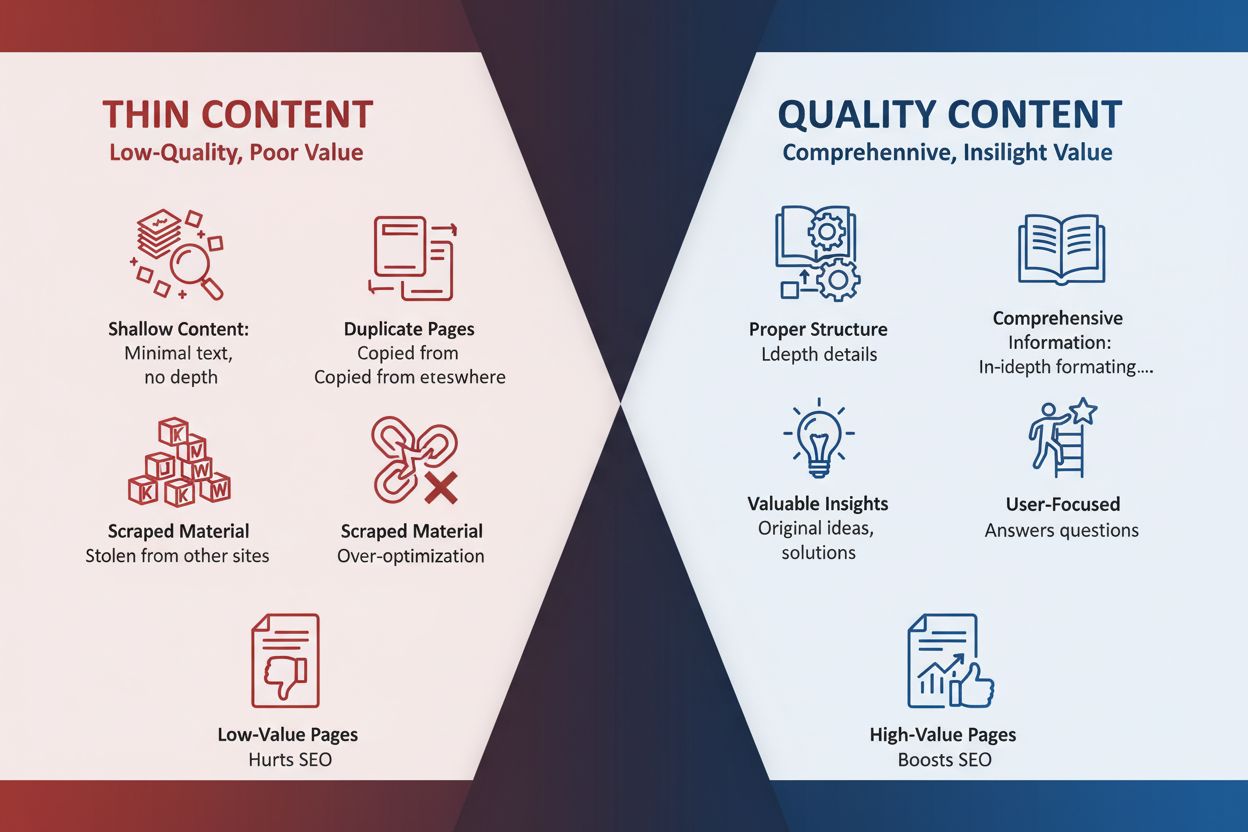
Thin content definition: web pages with insufficient valuable information. Learn types, SEO impact, identification methods, and strategies to improve or remove ...