Understanding Citation Frequency in AI Systems
Citation frequency refers to how often your content, brand, or domain appears as a source in AI-generated answers across platforms like ChatGPT, Perplexity, Google AI Overview, and similar systems. Unlike traditional search engine rankings, AI citation frequency is determined by a complex interplay of domain authority, content quality, technical optimization, and community presence. When users ask questions to AI systems, these platforms analyze millions of sources to synthesize answers, and the sources they choose to cite become your citations. Understanding what drives these citations is essential for any brand seeking visibility in the age of AI-powered search.
The importance of citation frequency cannot be overstated. Research analyzing over 30 million AI citations reveals that each AI platform has developed completely different trust signals and sourcing behaviors. What gets you cited on ChatGPT may not necessarily get you cited on Perplexity, and both differ significantly from Google’s AI Mode. This means a one-size-fits-all approach to increasing citations will fail. Instead, you need a strategic, multi-layered approach that addresses the specific preferences of each AI system while building sustainable authority signals that work across all platforms.
Build Domain Authority Through Strategic Backlinks
Domain authority is the single most powerful predictor of AI citations. Research shows that websites with over 24,000 referring domains average approximately 6.8 citations, while those with fewer than 300 referring domains receive only 2.5 citations—a difference of nearly 3x. This demonstrates that backlinks remain fundamental to increasing citation frequency, even in the AI era. However, the quality and diversity of these backlinks matter far more than sheer quantity.
To increase citation frequency through backlinks, focus on acquiring links from diverse, trustworthy domains rather than accumulating links from low-quality sources. Each referring domain acts as an independent validation of your content’s credibility. AI systems interpret a broad network of backlinks as a signal that your content is genuinely valuable and worthy of citation. Start by identifying high-authority domains in your industry and developing relationships with journalists, editors, and content creators who might naturally reference your work. Create original research, data studies, or frameworks that journalists want to cite. Become the source behind the source—when a Forbes article cites your research, and that research is then referenced by other publications, you’ve entered the AI citation ecosystem.
| Authority Signal | Citation Impact | Implementation Strategy |
|---|
| Referring Domains (300+) | 2.5 citations baseline | Build diverse backlink profile across industry |
| Referring Domains (24,000+) | 6.8 citations | Develop original research journalists cite |
| Page Trust Score (7 or below) | 2.7 citations | Improve page-level authority signals |
| Page Trust Score (24+) | 6.2 citations | Earn high-quality, relevant backlinks |
| Domain Traffic (under 2.7K visitors) | 2.4 citations | Increase organic visibility through SEO |
| Domain Traffic (over 1.16M visitors) | 6.4 citations | Dominate search rankings for key topics |
Ready to Monitor Your AI Visibility?
Track how AI chatbots mention your brand across ChatGPT, Perplexity, and other platforms.
Optimize Content Length and Depth
Content length is the third most impactful factor for AI citations. Articles under 500 words average approximately 4.1 citations, while comprehensive content exceeding 2,300 words reaches 5.1 citations. The sweet spot for maximum citation frequency is around 1,500 words minimum, where content naturally covers multiple subtopics and provides comprehensive answers that AI systems recognize as authoritative. This isn’t about padding content with fluff—it’s about thoroughly exploring topics in ways that demonstrate expertise and provide genuine value.
When creating longer content, structure it strategically to help AI systems parse and extract information efficiently. Use clear section headings that break content into digestible chunks, with each section containing 100-150 words of focused content. Sections that are too short (under 35 words) don’t provide enough context for AI systems to understand the topic fully, while sections exceeding 150 words become dense and harder for AI to parse effectively. Include tables, bullet points, definitions, and examples throughout your content to provide multiple ways of presenting information. This structural diversity helps AI systems identify the most relevant information to cite when answering user questions.
Create AI-Friendly Content Structure
AI systems don’t just evaluate content quality—they evaluate how well content is structured for machine readability. Pages featuring FAQ sections within the main content average 4.9 citations compared to 4.4 for pages without them. Similarly, pages that phrase titles or H1 headings as questions average 4.6 citations versus 4.5 for pages without question-based formatting. This seemingly small difference compounds across hundreds of queries, significantly impacting your overall citation frequency.
Implement question-based headings throughout your content that mirror how users actually ask questions. Instead of “Benefits of Project Management Tools,” use “What Are the Key Benefits of Project Management Tools?” This alignment with natural language queries helps AI systems quickly identify clear answers to cite. Include dedicated FAQ sections that address common questions your audience asks. These sections should contain real, well-structured answers rather than relying solely on FAQ schema markup—research shows that actual FAQ content matters far more to AI systems than technical metadata. Use bullet points to list key information, numbered lists for step-by-step processes, and definition boxes for important concepts. This formatting makes your content easier for both human readers and AI systems to understand and extract.
Stay Updated on AI Visibility Trends
Get the latest insights on AI mentions, brand monitoring, and optimization strategies.
Maintain Content Freshness and Relevance
Content freshness directly impacts citation frequency. Pages updated within the last two months average 5.0 citations, while content untouched for over two years drops to 3.9 citations. This represents a meaningful decline in citation potential simply due to age. AI systems interpret regular updates as signals of relevance and information currency. Even older articles can regain citation momentum if you add new insights, updated statistics, recent case studies, or expanded sections with additional details.
Establish a content refresh schedule where you update your most important pages every 2-3 months. This doesn’t require complete rewrites—focus on adding new data points, recent examples, updated statistics, and fresh insights that reflect current industry conditions. Update your “last modified” date prominently so both readers and AI systems recognize the content as current. For secondary pages, quarterly updates are sufficient. Prioritize pages that already receive citations or target high-value queries. When you refresh content, notify relevant publications and communities about the updates, as this can trigger new citations as AI systems re-evaluate your content.
User-generated content platforms like Reddit and Quora are now primary sources for AI citations. Research shows that Reddit appears in the top citations for all three major AI platforms (ChatGPT, Google AI Overview, and Perplexity), with Perplexity pulling 47% of its citations from Reddit alone. This represents a fundamental shift in how AI systems evaluate credibility—they increasingly trust the collective wisdom of communities over individual expertise. Your presence on these platforms directly impacts citation frequency.
Contribute genuine, helpful insights to relevant community discussions without being promotional. Share first-hand experience, specific examples, and practical advice that demonstrates real expertise. When you provide value in these discussions, other community members reference and upvote your contributions, which signals to AI systems that your perspective is credible and valuable. Aim to contribute to 10 Reddit threads with 50+ comments and post 3 high-value Quora answers in your category every week. Be transparent about your role or affiliation, but focus on providing genuine value rather than self-promotion. Over time, as your contributions accumulate and gain engagement, AI systems will recognize you as a trusted voice in your field, increasing the likelihood of citations.
Different AI platforms have distinct citation preferences that require tailored strategies. ChatGPT pulls 48% of its citations from Wikipedia, valuing encyclopedic authority combined with authentic human discussion. Google AI Overview prioritizes Reddit (21%), YouTube (19%), and Quora (14%), favoring engagement and multimedia content. Perplexity relies heavily on Reddit (47%) and review platforms, trusting crowd-sourced wisdom and real-world feedback.
To increase citation frequency across all platforms, develop a multi-platform content strategy. For ChatGPT dominance, create comprehensive guides that read like Wikipedia entries but incorporate real user discussions and practical examples. For Google AI Overview, produce video content that answers specific questions in your niche, optimize for engagement through comments and discussions, and build presence on platforms Google values. For Perplexity, focus on authentic community participation and encourage genuine customer reviews on platforms like G2, Capterra, and Trustpilot. This platform-specific approach ensures you’re optimizing for each system’s actual citation patterns rather than hoping a generic strategy works everywhere.
Technical performance impacts citation frequency more than many marketers realize. Pages with moderate Interaction to Next Paint (INP) speeds of 0.59-1.07 seconds earn 4.8-5.6 citations, while pages with fast Largest Contentful Paint (LCP) times of 0.2-1.02 seconds yield about 4.9 citations. Pages with LCP times exceeding 1.85 seconds see reduced citations. While technical metrics aren’t the primary driver of citations, they contribute to overall site quality signals that AI systems evaluate.
Optimize Core Web Vitals by compressing images, reducing unnecessary scripts, enabling caching, and ensuring mobile responsiveness. Monitor crawl errors and fix broken pages (404s, 500s) that prevent AI crawlers from accessing your content. Keep your site architecture clean with important pages no more than 3 clicks from the homepage. Ensure your site is accessible by testing that core content loads even when JavaScript is disabled. Allow key AI bots like ChatGPT-User, OAI-SearchBot, Claude-Web, and PerplexityBot to access your site through your robots.txt file. These technical foundations ensure that AI systems can actually discover, crawl, and parse your content effectively.
Implement Structured Data and Semantic Optimization
Structured data helps AI systems understand your content correctly. Use JSON-LD format to implement Organization, Product, Service, Article, Person, and FAQPage schema markup. While FAQ schema markup itself doesn’t directly boost citations (its impact is about 3x weaker than actual FAQ content), other structured data types help AI systems interpret your content more accurately. Ensure your meta descriptions and URLs are semantically relevant to your content topics—pages with high semantic alignment between their URL, meta description, and content earn more citations than those with generic or misaligned metadata.
Create clear, descriptive URLs that reflect your content topic. Instead of /page-123/, use /how-to-increase-citation-frequency/. Write meta descriptions that accurately summarize your content and include relevant keywords naturally. Use heading hierarchy correctly, with H1 for your main topic and H2/H3 for subtopics. This semantic clarity helps AI systems quickly understand what your page is about and when it’s relevant to cite.
Identify and Fix Citation Gaps
Citation gaps represent opportunities where competitors are cited but you’re missing. These gaps directly reduce your citation frequency. Audit which articles, roundups, and reviews AI already cites in your category by running prompts in ChatGPT, Perplexity, or Google AI Overview. Note the pages that appear in AI answers for queries relevant to your business. Then identify pages where competitors are mentioned but your brand is absent.
Reach out to authors of these pages with specific reasons why your product or service should be included. Highlight product updates, new use cases, or data they overlooked. Even securing mentions in just 10 high-citation pages can result in your brand appearing in hundreds of AI responses. This outreach approach is often faster than creating entirely new content, making it one of the highest-ROI strategies for increasing citation frequency quickly.
Enhance Readability and Accessibility
Text readability influences citation frequency more than many realize. Content written at a Flesch-Kincaid Grade 6-8 level averages 4.6 citations, while highly complex writing (Grade 11+) drops to 4.0 citations. AI systems prefer content that’s accessible to a general audience without being oversimplified. This means using clear language, shorter sentences, and avoiding unnecessary jargon while maintaining authority and depth.
Write for clarity without sacrificing expertise. Define technical terms when you first introduce them. Use active voice instead of passive voice. Break complex ideas into smaller, digestible pieces. Include examples and analogies that help readers understand abstract concepts. This approach benefits both human readers and AI systems, as clearer content is easier to parse and more likely to be cited as a reliable source.
Monitor and Measure Citation Frequency
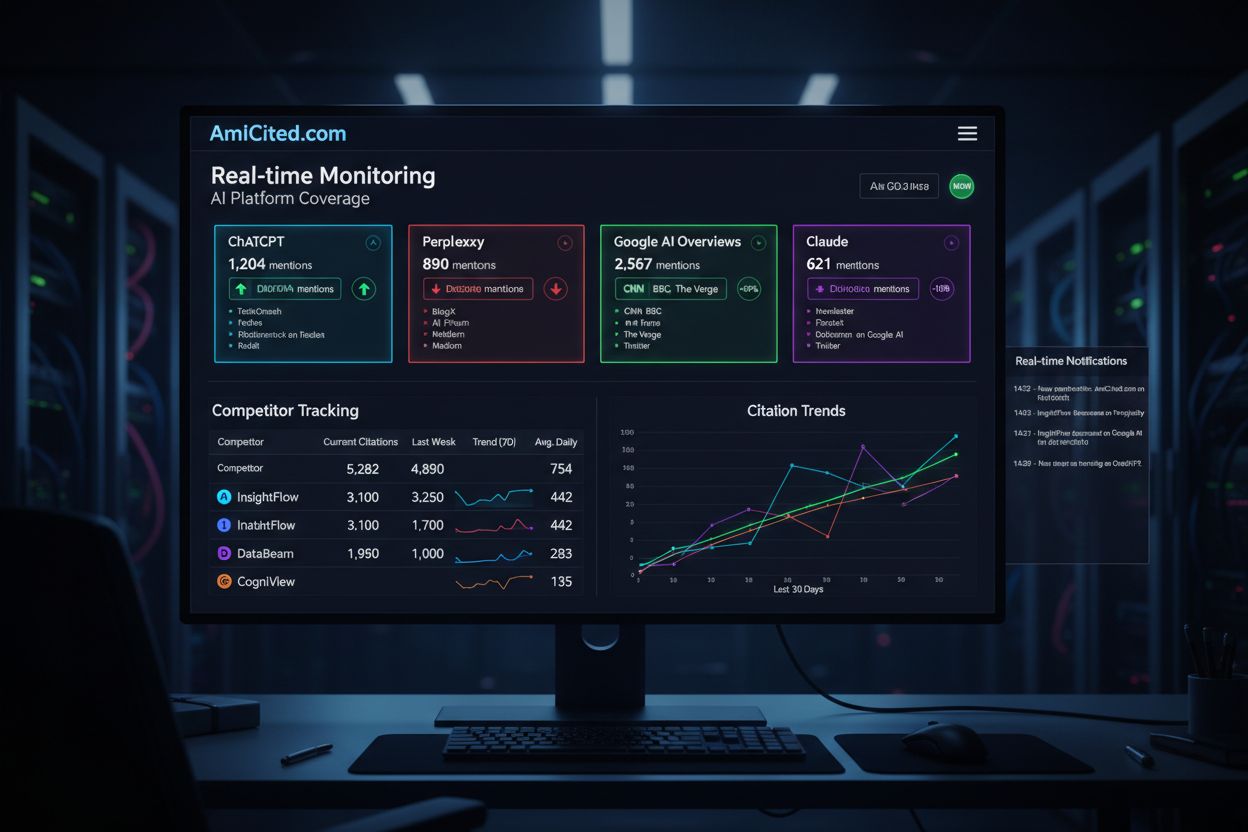
Increasing citation frequency requires ongoing measurement and optimization. Track which of your pages appear in AI answers, how often they’re cited, and in what context. Identify patterns in your most-cited content to understand what resonates with AI systems. Monitor competitor citations to identify gaps and opportunities. Use this data to inform your content strategy, focusing resources on topics and formats that generate the most citations.
Establish baseline metrics for your current citation frequency across different AI platforms. Set realistic targets for improvement based on your domain authority and content resources. Review progress monthly and adjust your strategy based on what’s working. Citation frequency isn’t a one-time optimization—it’s an ongoing process of refinement and improvement as AI systems evolve and your competitive landscape changes.