

How Do I Get Started with GEO Today?
Learn how to get started with Generative Engine Optimization (GEO) today. Discover essential strategies to optimize your content for AI search engines like Chat...
9 min read

Learn how to integrate GEO into your content workflows with technical implementation, localization strategies, and best practices for geographic targeting across multiple markets.
Integrate GEO into content workflows by implementing geographic targeting through technical architecture decisions, location-specific keyword strategies, AI-powered content creation, structured data markup, local citations, performance monitoring, and continuous optimization across your target markets.
Geographic Engine Optimization (GEO) represents a strategic approach to content creation and distribution that extends beyond traditional SEO by focusing on location-specific search intent and regional user behavior. When integrated into your content workflows, GEO enables you to deliver highly relevant content to users in different geographic markets, significantly improving your visibility in local search results and driving qualified traffic from your target regions. The integration of GEO into content workflows is not merely a tactical adjustment but a fundamental restructuring of how you plan, create, and optimize content for diverse geographic audiences.
Research indicates that 46% of all Google searches have local intent, while 78% of location-based mobile searches result in offline purchases within 24 hours. These compelling statistics underscore the critical importance of implementing a robust GEO workflow that maximizes your content’s local search visibility. By integrating GEO into your content workflows, you position your brand to capture high-intent users actively searching for solutions in their specific geographic locations. This integration requires careful planning across multiple dimensions of your content strategy, from initial research and keyword development through technical implementation and ongoing optimization.
The foundation of any successful GEO integration begins with comprehensive geographic market research and analysis. Before creating any location-specific content, you must understand the unique characteristics, opportunities, and competitive landscape of each target market. This research phase involves utilizing AI-powered analytics tools to identify high-opportunity locations, analyze competitor presence in different regions, and understand regional search patterns that differ significantly from global trends.
During this phase, you should map competitor locations to understand their geographic footprint and identify gaps in market coverage. Analyze regional keyword variations to discover how users in different locations search for your products or services using local terminology, slang, and cultural references. Identify untapped geographic markets where demand exists but competition remains minimal. AI tools excel at processing vast datasets to reveal location-specific trends that manual research might overlook, enabling you to make data-driven decisions about which markets to prioritize in your content workflow. This foundational research ensures your content strategy aligns with actual market demands and geographic opportunities rather than assumptions about what different regions need.
| Research Component | Purpose | Tools & Methods |
|---|---|---|
| Competitor Analysis | Understand market positioning in target regions | Geographic mapping, SERP analysis, local directory audits |
| Keyword Research | Identify location-specific search terms and variations | AI keyword tools, regional search volume data, intent analysis |
| Market Demand | Assess opportunity size and growth potential | Analytics platforms, trend analysis, demographic data |
| Cultural Insights | Understand regional preferences and behaviors | Local market research, cultural databases, user surveys |
| Search Patterns | Discover how users search differently by location | Search query analysis, voice search patterns, mobile behavior |
Once you understand your target markets, the next critical step involves developing targeted keyword strategies for each geographic market. This goes far beyond simple translation of your primary keywords—it requires understanding how users in different regions actually search for your products or services. Use AI-enhanced keyword research tools to focus on location-specific long-tail keywords that combine your primary services with geographic modifiers, such as “emergency plumber downtown Chicago” or “organic bakery near Central Park.”
AI algorithms excel at identifying semantic relationships between location-based terms and user intent, revealing patterns that would be impossible to discover manually. These insights enable you to create comprehensive keyword maps that guide your entire content creation process. For each target location, develop a unique set of keywords that reflect local search behavior, regional terminology, and cultural preferences. This keyword strategy becomes the backbone of your content workflow, ensuring that every piece of content you create targets specific geographic search intent. By aligning your content with location-specific keywords, you dramatically increase the likelihood that your content will appear in search results when users in those regions are actively searching for solutions you provide.
With your keyword strategies in place, you can now deploy AI writing tools to generate location-specific content that resonates with regional audiences. However, this step requires careful balance between AI efficiency and human oversight to maintain quality standards and authentic local voice. AI-generated content should incorporate local landmarks, regional terminology, and cultural references that establish genuine geographic relevance rather than appearing as generic content with location names inserted.
Create content pillars that address location-specific pain points, highlight regional success stories, and showcase local partnerships. For example, if you’re a financial services company, create content about local investment opportunities, regional economic trends, and case studies featuring businesses in that specific market. This approach builds trust and demonstrates your business’s genuine connection to each market. AI tools can accelerate the content creation process significantly, but human editors must review and refine the output to ensure it reflects authentic local knowledge and cultural sensitivity. The most effective approach combines AI’s efficiency with human expertise in local markets, resulting in content that feels genuinely tailored to each region rather than mass-produced.
The technical foundation of your GEO workflow is equally important as the content itself. Technical GEO implementation includes several critical components that help search engines properly understand and categorize your location-specific content. Implement structured data markup using schema.org vocabulary to clearly identify your business locations, addresses, and geographic coordinates. This structured data helps search engines understand the geographic relevance of your content and can enhance your appearance in local search results and knowledge panels.
Configure geographic targeting in Google Search Console for each target market, explicitly telling Google which content is intended for which geographic regions. Implement hreflang tags for multi-location websites to prevent duplicate content issues and ensure that users in different regions see the appropriate version of your content. These HTML attributes convey the language and location of each web page to search engines, enabling them to serve the most applicable content to users in specific regions. Create geographic sitemaps that organize your location-specific content in a way that search engines can easily crawl and index. These technical foundations are essential for ensuring that your carefully crafted location-specific content actually reaches the audiences you’ve created it for.
Local citations represent mentions of your business name, address, and phone number (NAP) across relevant directories and platforms. Systematically building local citations for each target location strengthens your geographic authority signals and improves your visibility in local search results. Maintain consistent NAP information across all platforms—inconsistencies confuse search engines and can harm your local search rankings. Use AI tools to monitor citation consistency and identify new directory opportunities in your target markets. Automated monitoring helps maintain accuracy across hundreds of potential citation sources, ensuring that your business information remains consistent as you expand into new geographic markets.
Focus on high-quality, relevant directories specific to your industry and target regions. For example, if you operate restaurants, ensure your business is listed in restaurant-specific directories in each target market. If you provide professional services, register with industry-specific directories that are trusted in those regions. These citations serve as trust signals to search engines and help establish your business’s legitimacy in each geographic market. The more consistent and comprehensive your citation profile across relevant directories, the stronger your local search authority becomes.
Effective GEO integration requires continuous monitoring of geographic performance metrics to understand what’s working and identify opportunities for improvement. Monitor local search rankings for your target keywords in each geographic market, tracking how your content performs in local search results over time. Analyze geographic traffic patterns to understand which regions are driving the most valuable traffic to your website. Track location-specific conversion rates to identify which markets are generating the highest-quality leads or sales.
Set up automated alerts for ranking changes, citation inconsistencies, and competitor movements in your target markets. This proactive approach enables rapid response to market changes and competitive threats. Use AI-powered analytics platforms to identify patterns and opportunities that traditional monitoring might miss. These platforms can correlate geographic performance data with other metrics to reveal insights about what drives success in different markets. By establishing comprehensive monitoring systems, you create a feedback loop that informs your ongoing optimization efforts and helps you allocate resources to the markets showing the strongest performance.
The final step in integrating GEO into your content workflows involves continuous optimization based on performance data and market feedback. Use AI insights to identify high-performing content patterns and scale successful strategies across new geographic markets. This might involve identifying which types of content resonate most strongly in certain regions and adapting that approach for similar markets. Regular optimization ensures your GEO workflow remains effective as search algorithms evolve and market conditions change.
Establish a regular review cycle—monthly or quarterly—to assess performance data, identify underperforming content or markets, and adjust your strategy accordingly. Test different content approaches in smaller markets before scaling to larger ones. Implement A/B testing for location-specific landing pages and content variations to identify what resonates most strongly with different regional audiences. This iterative approach to optimization ensures that your GEO workflow continuously improves over time, delivering better results as you refine your understanding of each market’s unique characteristics and preferences.
One of the biggest mistakes in GEO workflow implementation involves creating generic content with location names inserted rather than developing genuinely location-specific content that addresses regional needs and preferences. Users can immediately sense when content is not authentically tailored to their region, and this inauthentic approach damages trust and reduces engagement. Instead, invest time in understanding each market’s unique characteristics and creating content that genuinely reflects local knowledge and cultural sensitivity.
Another common challenge involves inconsistent implementation across multiple locations. When managing content for numerous geographic markets, maintaining consistency in quality, messaging, and technical implementation becomes increasingly difficult. Establish clear processes and templates that ensure consistency while allowing for regional customization. Use project management tools and content calendars to coordinate your GEO workflow across multiple markets and team members. Finally, many organizations underestimate the time required to see results from GEO efforts. Initial improvements typically appear within 3-6 months, with substantial results manifesting after 6-12 months of consistent implementation and optimization. Patience and persistence are essential for long-term success.
Track key performance indicators including local search rankings, geographic organic traffic growth, location-specific conversion rates, and citation consistency scores. Advanced AI analytics can correlate these metrics with business outcomes, providing insights into workflow effectiveness and optimization opportunities. Successful GEO workflows typically generate 25-40% increases in local search visibility within six months, accompanied by improved conversion rates from geographically targeted traffic.
Beyond these quantitative metrics, monitor qualitative indicators such as customer feedback from different regions, brand sentiment in local markets, and the relevance of your content to regional audiences. These qualitative insights help you understand whether your GEO workflow is truly resonating with local audiences or simply improving rankings without driving meaningful engagement. By combining quantitative and qualitative metrics, you gain a comprehensive understanding of your GEO workflow’s effectiveness and can make informed decisions about future optimization efforts.
Track where your content appears in AI-generated answers and ensure your brand visibility across ChatGPT, Perplexity, and other AI search engines.
Learn how to get started with Generative Engine Optimization (GEO) today. Discover essential strategies to optimize your content for AI search engines like Chat...
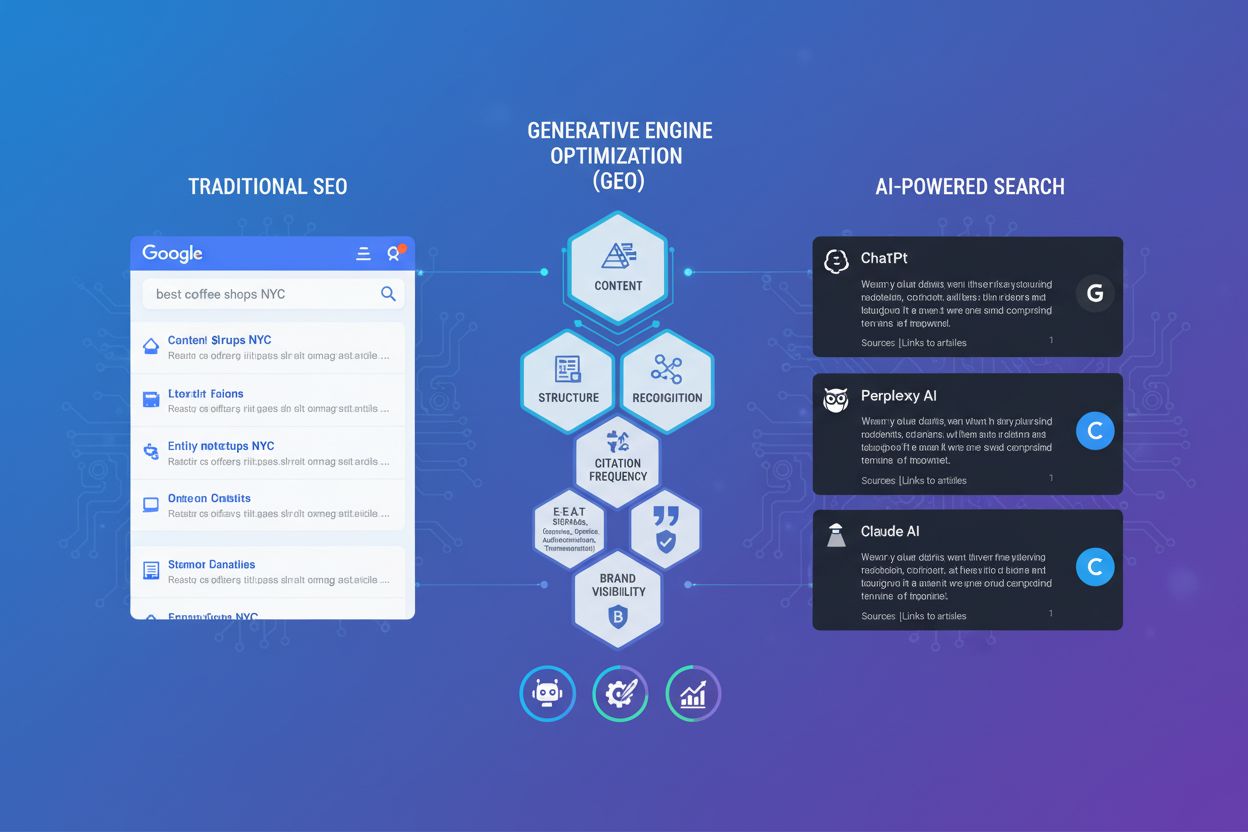
Learn what Generative Engine Optimization (GEO) is, how it differs from SEO, and why it's critical for brand visibility in AI-powered search engines like ChatGP...
Learn how to train your marketing team on GEO with practical frameworks, role assignments, and tools. Master AI search optimization for ChatGPT, Perplexity, and...