

How to Balance Lead Generation and AI Visibility
Learn how to balance lead generation with AI search visibility. Discover hybrid gating strategies, content optimization techniques, and monitoring approaches to...
10 min read

Learn how to align paid search and organic SEO with AI optimization. Discover strategies to eliminate keyword cannibalization, unify keyword intelligence, and create cohesive campaigns that improve ROI and visibility across search engines and AI platforms.
Integrate paid and organic AI strategy by unifying keyword intelligence, eliminating cannibalization, creating AI-optimized content from paid insights, automating bidding based on organic momentum, and aligning messaging across all channels. This creates a cohesive system where paid and organic efforts reinforce each other, reducing costs while improving visibility in both traditional search and AI-powered platforms.
The traditional approach of managing paid search and organic SEO as separate channels is no longer viable in today’s AI-driven landscape. Most marketing teams operate with fragmented data, siloed budgets, and disconnected strategies that waste resources and miss critical opportunities. When your paid campaigns and organic content work independently, you’re essentially competing against yourself—bidding on keywords you already rank for, missing high-margin terms that need dual coverage, and failing to leverage insights from one channel to strengthen the other. The integration of paid and organic AI strategy transforms this fragmented approach into a unified system where every dollar spent and every piece of content created works in concert to maximize visibility and ROI.
The challenge intensifies with the rise of AI search engines like ChatGPT, Perplexity, and Google’s AI Overviews. These platforms are fundamentally changing how users discover information, with 1,200% growth in AI-generated answers between July 2024 and February 2025. According to Gartner research, organic traffic is expected to decline by 50 percent or more before 2028 due to generative AI search adoption. This means brands can no longer rely solely on traditional SEO tactics or paid search alone—they must optimize for both traditional search results and AI-powered answer platforms simultaneously. A truly integrated strategy addresses this dual optimization challenge by ensuring your brand maintains visibility across all discovery channels.
The foundation of any successful paid and organic integration is a unified keyword intelligence model that merges insights from both channels into a single source of truth. Rather than maintaining separate keyword lists for PPC campaigns and SEO content, you should cluster keywords by search intent and user behavior patterns that span both channels. This approach reveals which terms drive clicks, which convert, and where your efforts overlap or conflict.
When you analyze keywords through an integrated lens, patterns emerge that remain invisible in siloed systems. You discover that certain high-volume terms have low conversion intent and waste paid budget, while other lower-volume terms convert exceptionally well and deserve increased investment in both paid ads and organic content. An AI-driven keyword clustering model can automatically group related terms by intent, user journey stage, and commercial value, transforming a chaotic list of hundreds of keywords into organized clusters that guide both your content strategy and ad spend allocation. This unified model becomes your strategic compass, directing resources toward opportunities that benefit from dual coverage and away from inefficient overlaps.
| Keyword Cluster | Search Intent | Paid Strategy | Organic Strategy | Expected ROI |
|---|---|---|---|---|
| Problem awareness | Educational | Low bid, awareness focus | Comprehensive guides | Medium-term |
| Solution comparison | Evaluative | Medium bid, comparison ads | Detailed comparison content | Medium-term |
| Purchase intent | Transactional | High bid, conversion focus | Product pages, reviews | High, immediate |
| Brand + feature | Navigational | Medium bid, brand protection | Detailed feature pages | High, immediate |
| Long-tail variations | Specific intent | Low bid, niche focus | Targeted blog posts | Medium, sustained |
Keyword cannibalization—when your paid ads and organic rankings compete for the same search terms—represents one of the most common and costly mistakes in fragmented marketing strategies. You might be paying premium prices for clicks on keywords where your website already ranks in the top three organic positions, essentially paying to steal traffic from yourself. An integrated AI strategy identifies these conflicts before they drain your budget and redirects spend toward terms where you lack organic visibility or where ads and content working together would dominate the search results.
AI systems can analyze your current organic rankings, paid campaign keywords, and conversion data to pinpoint exact overlaps and quantify the wasted spend. When you discover you’re bidding on a keyword where you rank #2 organically, the intelligent response is to reduce or eliminate that paid bid and redirect the budget toward adjacent keywords where you have no organic presence. This reallocation doesn’t reduce your visibility—it actually improves it by expanding your footprint across more search terms while reducing overall spend. The savings from eliminating cannibalization can be reinvested in high-ROI opportunities, creating a more efficient and profitable search strategy that maximizes your share of voice across the entire search landscape.
Your paid search campaigns contain a goldmine of data about what actually drives clicks and conversions—information that should directly inform your organic content strategy. When you feed PPC conversion data into your content planning process, you transform content creation from guesswork into a data-driven discipline. The keywords that generate the highest-quality leads in your paid campaigns, the ad copy that resonates most strongly, the landing page elements that drive conversions—all of this intelligence should shape the topics, structure, and messaging of your organic content.
An integrated approach uses AI to analyze your top-performing ad groups and automatically generate content briefs that address the same user intent with greater depth and authority. If your paid campaigns show strong conversion rates for “enterprise project management software,” your organic strategy should create comprehensive content that establishes topical authority around project management, team collaboration, and enterprise solutions. This content becomes evergreen assets that continue generating traffic and conversions long after paid campaigns end, while also improving your Quality Scores in paid search by creating better alignment between ad copy, landing pages, and overall site relevance. The result is a virtuous cycle where paid insights fuel organic growth, which in turn reduces your reliance on paid traffic and lowers your overall customer acquisition costs.
One of the most sophisticated applications of paid and organic integration is using organic ranking momentum to automatically adjust your paid bidding strategy. When your organic rankings for a particular keyword are climbing, you can reduce paid bids on that term while maintaining visibility, knowing that organic traffic will fill the gap. Conversely, when organic rankings slip or competition increases, you can automatically increase bids to maintain market share during the recovery period. This dynamic bidding approach requires AI systems that monitor organic performance in real-time and adjust paid strategies accordingly.
This automation delivers multiple benefits simultaneously. First, it reduces wasted spend on keywords where organic visibility is already strong and growing. Second, it protects your market share during periods when organic rankings fluctuate due to algorithm updates or competitive pressure. Third, it optimizes your overall search budget by allocating resources where they’re most needed rather than maintaining static bid levels regardless of organic performance. A financial services company, for example, might notice that their organic rankings for “retirement planning strategies” are climbing steadily. The AI system automatically reduces bids on that term while monitoring the organic traffic impact. If organic traffic reaches expected levels, the reduced spend is redirected to competitive terms where organic visibility remains weak. This continuous optimization ensures you’re always spending efficiently while maintaining consistent visibility.
Message consistency across all discovery channels has become critical as AI systems increasingly influence how your brand is perceived and cited. When users encounter your brand through a paid ad, then see your organic content in search results, and finally encounter your information cited in an AI-generated answer, the experience should feel cohesive and reinforce a consistent brand narrative. Inconsistent messaging creates confusion, reduces trust, and dilutes your brand authority in the eyes of both users and AI systems.
An integrated strategy ensures that your ad copy, organic page titles and descriptions, content tone, and key messaging all align around core brand themes and value propositions. If your paid ads emphasize “enterprise-grade security,” your organic content should reinforce this positioning, and your website structure should make security-related information easily discoverable by AI systems that might cite your content. This alignment is particularly important for AI search engines like ChatGPT and Perplexity, which analyze your content to determine whether it’s authoritative enough to cite. When your messaging is consistent and your content demonstrates clear expertise, AI systems are more likely to include your brand in their generated answers, providing visibility that doesn’t depend on traditional ranking positions or paid placements.
Your paid search campaigns reveal exactly who converts and what motivates them to take action. This behavioral data is far more valuable than demographic assumptions or generic audience segments. An integrated strategy uses PPC conversion data to build AI SEO personas based on real buyer behavior rather than speculation. You can identify which audience segments generate the highest lifetime value, what content resonates with each segment, and how different personas move through your sales funnel.
When you feed this audience intelligence into your organic content strategy, you create content that speaks directly to the people most likely to convert. Rather than creating generic blog posts that attempt to appeal to everyone, you develop targeted content clusters that address the specific needs, questions, and concerns of your highest-value audience segments. A B2B SaaS company might discover through PPC data that their highest-converting audience consists of operations managers at mid-market companies who are specifically concerned with implementation timelines and team training. This insight should drive organic content creation toward resources that address these specific concerns—implementation guides, training resources, case studies from similar companies—rather than generic product overviews. This targeted approach improves both organic rankings (because content is more relevant to actual user intent) and conversion rates (because content speaks directly to buyer needs).
The user experience on your paid landing pages represents years of optimization and testing—you know what layout, messaging, and calls-to-action drive conversions. Yet many organizations fail to apply these hard-won insights to their organic content, creating a jarring disconnect when users move from a highly optimized paid landing page to a generic blog post. An integrated strategy mirrors the conversion-focused structure of your best-performing paid landing pages in your organic content.
This doesn’t mean making all organic content look identical to paid landing pages—organic content should maintain its educational value and natural flow. Rather, it means applying the same conversion principles to organic pages: clear value propositions, logical information hierarchy, compelling calls-to-action, and removal of friction from the user journey. If your paid landing pages use a specific headline structure that drives high click-through rates, apply similar principles to your organic content headlines. If your paid pages feature customer testimonials in a particular format that increases conversions, incorporate similar social proof elements into your organic content. If your paid pages use specific emotional triggers or urgency language that motivates action, reflect these principles in your organic messaging. This consistency creates a seamless experience where users feel they’re moving through a cohesive brand experience rather than jumping between disconnected channels.
Traditional marketing analytics were designed for a world where paid and organic operated independently. Modern integration requires new metrics and measurement approaches that capture how paid and organic efforts interact and reinforce each other. You need visibility into keyword cannibalization metrics, shared audience behavior, cross-channel attribution, and combined ROI calculations that account for both channels’ contributions to conversions.
Key performance indicators for an integrated strategy should include: the percentage of keywords where you have both paid and organic visibility (and whether this overlap is strategic or wasteful), the cost-per-acquisition when paid and organic work together versus separately, the organic ranking improvements that result from paid campaign insights, and the reduction in paid spend achieved through organic growth. You should also track how your brand appears in AI-generated answers across platforms like ChatGPT, Perplexity, and Google’s AI Overviews—metrics that traditional analytics platforms don’t capture. Leading organizations implement specialized tracking to understand not just whether users find them through paid or organic channels, but how they discover and engage with content through AI interfaces, information that’s crucial for optimizing future investments in both channels.
The final critical element of paid and organic integration is establishing unified workflows and technology infrastructure that eliminate silos and enable real-time data sharing between teams. When your SEO team works in one tool, your PPC team in another, and your content team in a third, integration becomes nearly impossible. Modern marketing stacks should feature integrated platforms or seamless API connections that allow keyword data, performance metrics, and audience insights to flow freely between systems.
This unified infrastructure enables the automation and optimization that makes integration valuable. When your keyword research tool automatically shares intent-based clusters with your content planning platform, which then informs your paid campaign structure, you’ve created a system where insights compound and reinforce each other. When your analytics platform can attribute conversions to both paid and organic touchpoints and calculate the combined ROI of integrated campaigns, you have the data needed to justify continued investment in integration. When your team uses shared dashboards that show paid and organic performance side-by-side, collaboration becomes natural rather than forced. The investment in unified technology infrastructure pays dividends through improved efficiency, better decision-making, and the ability to execute sophisticated integration strategies that would be impossible with fragmented tools.
Track how your brand appears in AI-generated answers on ChatGPT, Perplexity, and other AI search engines. Ensure your content gets cited and your domain maintains visibility in the age of AI search.
Learn how to balance lead generation with AI search visibility. Discover hybrid gating strategies, content optimization techniques, and monitoring approaches to...
Discover how artificial intelligence is transforming SEO strategies, from AI Overviews to answer engine optimization. Learn what the future of search looks like...
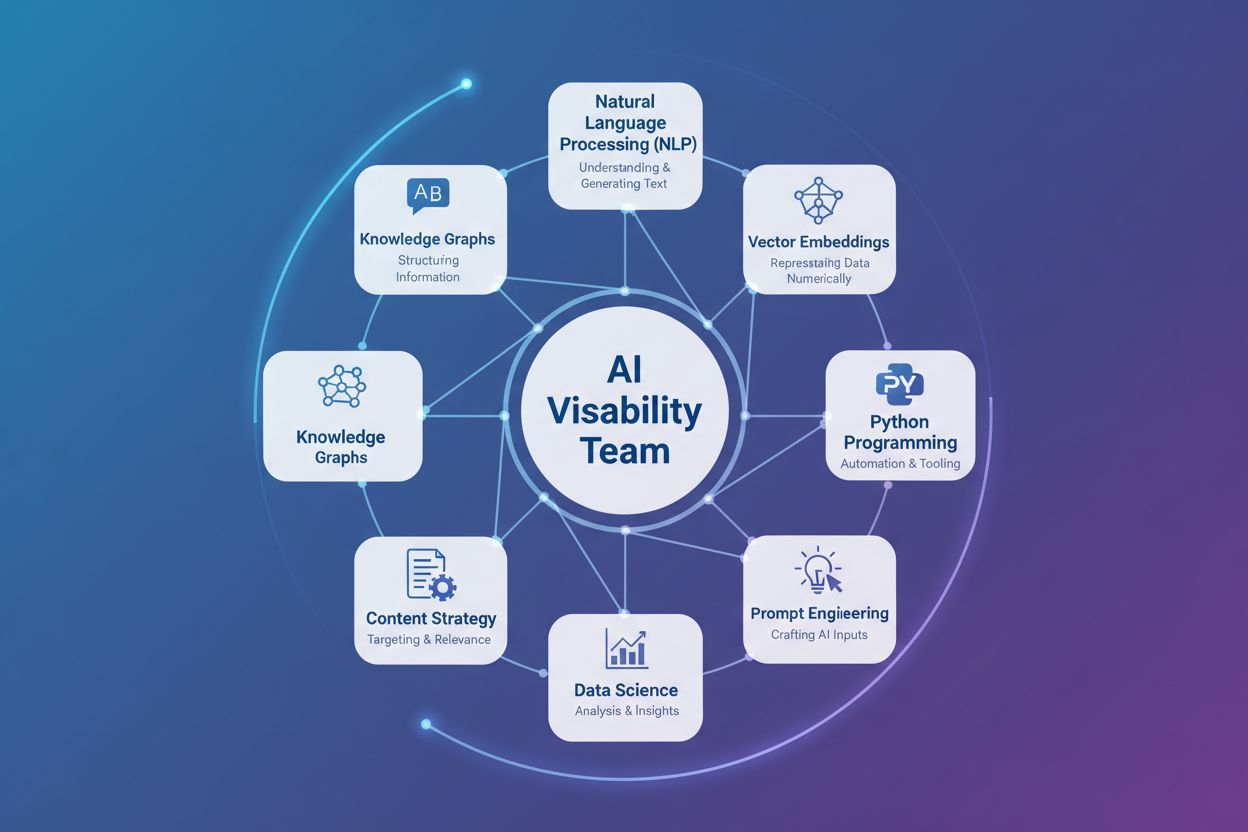
Learn how to structure an AI visibility team with essential roles like Relevance Engineers, Retrieval Analysts, and AI Strategists. Discover key skills, organiz...