
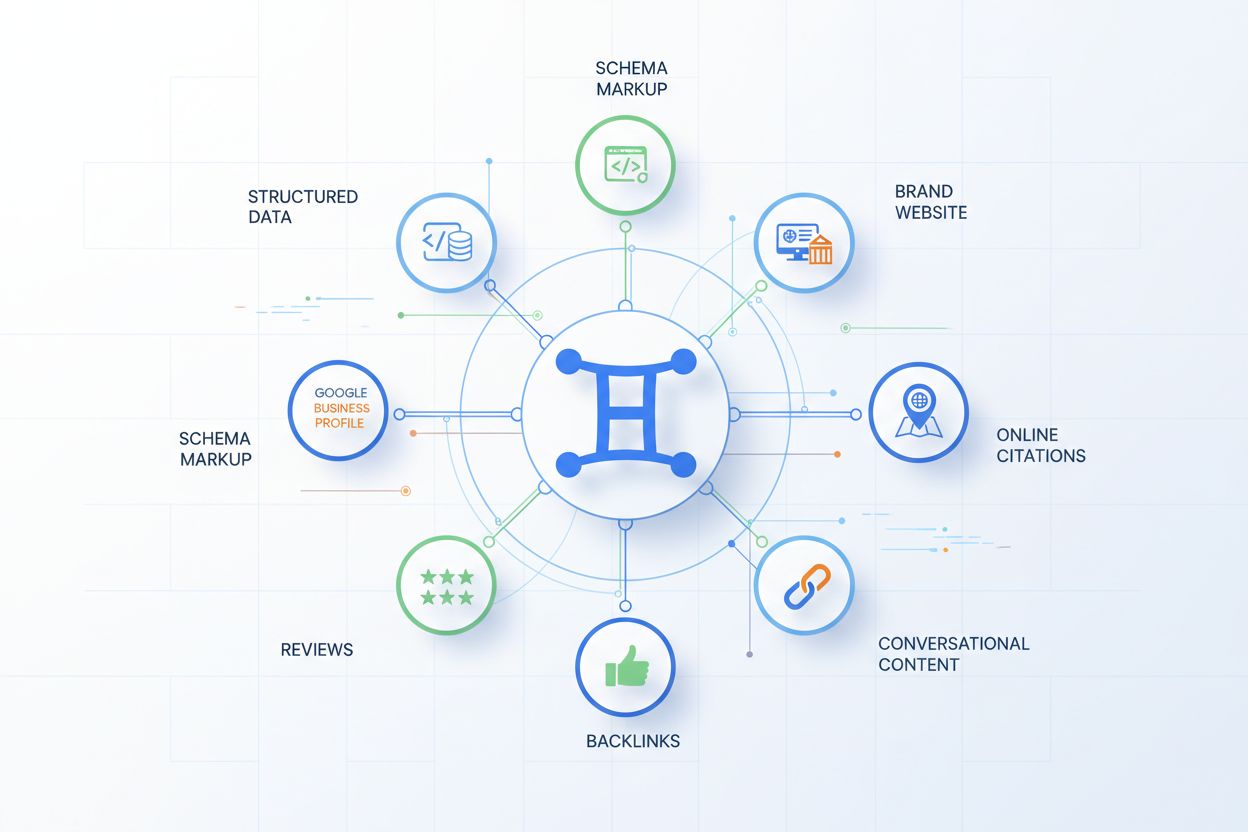
Google Gemini Optimization: Brand Visibility in Google's AI Assistant
Learn how to optimize your brand for Google Gemini citations. Discover proven strategies to increase visibility in AI-generated answers with 52.15% of Gemini ci...
6 min read

Learn how to optimize your content for Google Gemini and other AI search engines. Master Answer Engine Optimization (AEO) strategies to increase brand visibility in AI-generated answers.
Optimize for Google Gemini by creating comprehensive, high-quality content that answers specific user questions directly. Focus on E-E-A-T signals, use structured data markup, optimize for conversational queries, and ensure your website has strong technical SEO foundations. Since Gemini pulls from top-ranking Google search results, traditional SEO practices remain essential while adapting content for AI readability.
Google Gemini is an advanced AI-powered answer engine integrated into Google’s search ecosystem that generates direct, conversational answers to user queries rather than simply listing links. Unlike traditional search results, Gemini synthesizes information from multiple sources and provides comprehensive responses with citations. This fundamental shift in how users access information has created a new optimization discipline called Answer Engine Optimization (AEO) or Generative Engine Optimization (GEO). Understanding how Gemini works is crucial for ensuring your brand remains visible as search behavior evolves from keyword-based queries to conversational, AI-generated answers.
Google Gemini operates through a sophisticated multi-step process to deliver accurate, authoritative answers. When you submit a query to Gemini, the system first conducts broad searches across Google’s index to identify relevant content. It then performs what Google calls “fanning out”—conducting multiple refined searches based on related topics and subtopics to gather comprehensive information. For example, a query about experimental melanoma treatments triggers searches for specific therapies, clinical trials, and emerging treatments. Gemini retrieves the top-ranking pages from these searches, evaluates them for authority and reliability using E-E-A-T criteria (Expertise, Experience, Authoritativeness, Trustworthiness), and synthesizes the information into a coherent answer. This process means that content ranking well in traditional Google search results has a significant advantage in appearing within Gemini’s responses.
| Aspect | Traditional SEO | Gemini/AEO Optimization |
|---|---|---|
| Primary Goal | Rank webpage on search results | Get content featured in AI-generated answers |
| Content Focus | Keyword optimization and rankings | Direct answers to questions; semantic meaning |
| Query Types | Short keywords | Long-tail, conversational, full questions |
| E-E-A-T Importance | Important | Critical—AI evaluates credibility deeply |
| Technical Focus | Meta tags, keyword density | Structured data, schema markup, clean HTML |
| Success Metrics | Click-through rates, rankings | Content quality that AI chooses to cite |
| Content Strategy | Periodic updates | Continuous monitoring and refinement |
The foundation of optimizing for Google Gemini is maintaining strong traditional SEO practices. Google has explicitly confirmed that the fundamentals of SEO haven’t changed—your website must be technically sound, crawlable by Googlebot, and provide genuine value to users. This means ensuring your site loads quickly on mobile devices, uses HTTPS encryption, has a clear site structure, and contains indexable content. Implement descriptive heading tags (H1, H2, H3), write concise meta descriptions, and optimize your content for relevant keywords naturally. Since Gemini pulls from Google’s top-ranking results, appearing in traditional search results is your first step toward appearing in AI answers. However, the optimization process must evolve beyond simple keyword placement to focus on semantic meaning, content comprehensiveness, and user intent satisfaction.
Users interact with Gemini differently than traditional search engines—they ask full questions and use natural language rather than fragmented keywords. To optimize for this behavior, shift your keyword research strategy to capture conversational phrases and question-based queries. Instead of targeting “best ChatGPT alternatives,” optimize for “What are the best ChatGPT alternatives for research?” and provide clear, direct answers. Identify the questions your audience actually asks by analyzing “People Also Ask” sections in Google results, using tools like Gemini itself to generate related questions, and studying customer support conversations. Create content that directly answers these questions within the first 40-60 words, as Gemini often pulls concise answers from the top of pages. Structure your content with question-based headings that mirror how users phrase their queries, making it easier for Gemini to identify and extract relevant answer snippets.
Content structure is critical for AI comprehension. Gemini and other AI systems need to quickly parse your content to extract meaningful information. Break your content into clear sections with descriptive headings and subheadings, use bullet points and numbered lists for steps or features, and include comparison tables for products or options. Each of these elements provides “hooks” that AI systems can easily identify and cite. For example, if you’re explaining a process, use numbered steps; if comparing options, use a table; if listing benefits, use bullet points. Keep paragraphs short (3-4 sentences maximum) and ensure each paragraph focuses on a single idea. Use bold text to highlight important keywords and concepts, but avoid keyword stuffing. The goal is to make your content so clearly organized that an AI system can easily find self-contained answers without needing to synthesize information across multiple paragraphs.
E-E-A-T (Expertise, Experience, Authoritativeness, Trustworthiness) signals are more critical for AI optimization than ever before. Gemini is programmed to cite sources it trusts, and it evaluates trustworthiness through multiple signals. Include detailed author bios that highlight relevant qualifications, certifications, and professional experience. Cite reputable sources and link to peer-reviewed research when making claims. Include case studies or firsthand examples that demonstrate your expertise. For YMYL (Your Money or Your Life) topics—such as health, finance, or legal advice—Gemini heavily weights content from established institutions, government agencies, and recognized experts. Display industry recognition, awards, and credentials prominently on your pages. Ensure your company information is consistent across the web, including your Google Business Profile, industry directories, and social media. The more signals you provide that establish your authority in your field, the more likely Gemini will cite your content as a trusted source.
Schema markup is one of the most powerful yet underutilized tools for AI optimization. Structured data provides explicit context about your content in a machine-readable format that helps Gemini understand exactly what information you’re presenting. Implement appropriate schema types based on your content: use FAQPage schema for question-answer content, HowTo schema for instructional content, Product schema for product information, and Article schema for blog posts and news content. When you properly mark up a recipe with schema, Gemini can instantly identify cooking times, ingredients, and instructions without needing to parse your text. This makes your content significantly more likely to be cited in AI answers. Use Google’s Rich Results Test and Schema Markup Validator to ensure your implementation is correct. Ensure that all information in your schema markup matches the visible content on your page—AI systems penalize mismatches between structured data and visible text, as this indicates potential manipulation.
Gemini favors comprehensive content that covers multiple facets of a topic while remaining precise and current. Rather than creating thin pages that target many keyword variations, invest in deep, authoritative content that thoroughly addresses specific questions. Cover related subtopics and provide context that helps users understand the broader topic. Update your content regularly—add timestamps like “(Updated December 2025)” to signal freshness to both readers and AI systems. When industry changes occur, add new sections with fresh insights and data. For topics where timeliness matters (technology, finance, health), an updated 2025 guide will typically outperform a static 2022 article. Create FAQ sections that address common questions your audience asks, as these are particularly valuable for AI systems looking for concise, direct answers. The combination of comprehensive coverage, regular updates, and clear organization signals to Gemini that your content is authoritative and current.
Your off-page presence significantly influences whether Gemini cites your content. Work to build a “cloud of authority” through mentions and links across the web. Pursue guest posting opportunities on industry publications, participate in expert roundups, maintain active social media profiles, secure listings on relevant directories, and encourage customer reviews. Each mention builds credibility signals that tell Gemini your brand is a recognized voice in your field. For local businesses, optimize your Google Business Profile and ensure consistent citations across local directories. Monitor your brand mentions across the web using tools that track where your brand appears in AI-generated content. The more your brand is referenced and linked to across authoritative sources, the more likely Gemini will include your content in its answers.
Tracking your visibility in AI search is essential for ongoing optimization. Use specialized tools that monitor how often your content appears in AI-generated answers across Gemini, ChatGPT, and Perplexity. These tools provide insights into which topics trigger your citations, which competitors are being cited instead of you, and where content gaps exist. Monitor your traditional Google rankings alongside your AI visibility—they’re correlated but not identical. Set up alerts for significant changes in how AI systems cite your content. Analyze which pages receive traffic from AI crawlers and which pages are being ignored. Use this data to prioritize optimization efforts, focusing first on pages that Gemini is already crawling but not citing. Track conversions and engagement metrics beyond just traffic volume, as AI-driven traffic often converts at higher rates because users have already received context about your offering.
Avoid these critical pitfalls that undermine AI optimization efforts. Don’t stuff keywords or use unnatural language—Gemini’s advanced language understanding detects and penalizes this. Don’t neglect content structure—poorly organized content gets skipped regardless of quality. Don’t ignore schema markup—it’s a deciding factor in whether your content gets pulled into answers. Don’t publish thin or generic content—Gemini filters out redundant information that simply rehashes existing sources. Don’t lack E-E-A-T signals—anonymous content without credentials or citations undermines trustworthiness. Don’t take a set-it-and-forget-it approach—the AI landscape evolves rapidly and requires continuous monitoring. Don’t overlook user experience—while optimizing for AI, remember that users may click through to your site from Gemini’s citations, so ensure your pages load quickly and provide value beyond what was summarized in the AI answer.
Track how often your content appears in AI-generated answers across Gemini, ChatGPT, and Perplexity. Get real-time insights into your AI search performance and identify optimization opportunities.
Learn how to optimize your brand for Google Gemini citations. Discover proven strategies to increase visibility in AI-generated answers with 52.15% of Gemini ci...
Learn about Gemini Deep Research, Google's agentic AI feature for comprehensive research. Understand how it works, capabilities, pricing, and how it compares to...

Learn what Generative Engine Optimization (GEO) is and how to optimize your brand for visibility in AI search engines like ChatGPT, Perplexity, and Gemini. Disc...