
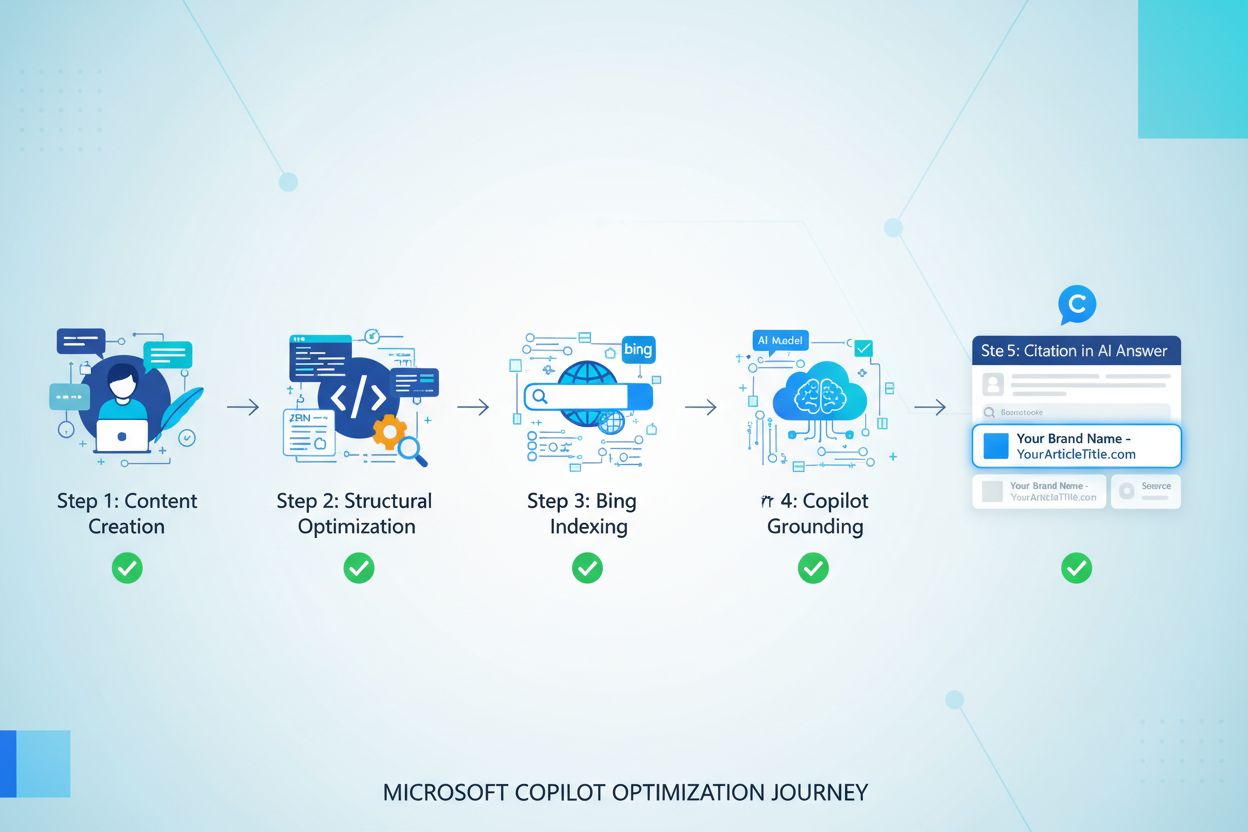
Microsoft Copilot Optimization: Getting Mentioned in Bing's AI
Learn how to optimize your content for Microsoft Copilot visibility. Master Bing AI optimization strategies to get cited in Copilot answers and increase brand v...
12 min read

Learn how to optimize your brand for Microsoft Copilot. Discover technical SEO strategies, content structure, schema markup, and best practices to improve visibility in AI-powered search answers.
Optimize for Microsoft Copilot by implementing proper schema markup, creating structured content with clear headings, ensuring keyword relevance, building fresh reviews, and maintaining technical SEO fundamentals. Focus on content clarity, snippable answers, and trust signals to improve your visibility in AI-generated responses.
Microsoft Copilot has become a critical discovery channel for businesses, with millions of users accessing it daily through Windows, Edge browser, and Microsoft 365 applications. Unlike traditional search engines that display ranked lists of links, Copilot breaks down content into smaller, structured pieces through a process called parsing, then assembles these pieces into comprehensive answers. This fundamental difference means your optimization strategy must shift from ranking entire pages to making your content easy for AI systems to extract, understand, and include in generated responses. The stakes are significant—AI referrals to top websites increased 357% year-over-year in June 2025, reaching 1.13 billion visits, demonstrating the massive opportunity available to businesses that optimize effectively.
While AI search optimization introduces new requirements, traditional SEO fundamentals remain essential and non-negotiable. Your website must maintain excellent crawlability, ensuring search engines and AI systems can access and index all your content without obstacles. Proper metadata implementation, including title tags and meta descriptions, continues to serve as critical signals that help AI systems understand your page’s purpose and scope. Internal linking structure remains vital for establishing content hierarchy and distributing authority throughout your site. Backlinks from authoritative sources still function as trust signals that validate your expertise and credibility. These foundational elements create the baseline infrastructure that allows AI systems to discover and evaluate your content in the first place. Without solid technical SEO, even perfectly optimized content will struggle to gain visibility in Copilot responses.
The way you structure your content directly impacts whether AI systems can extract and use it in generated answers. AI assistants don’t read content sequentially like humans do—they parse pages into modular, reusable pieces that can be evaluated independently for relevance and authority. This parsing process means your content organization becomes a critical optimization factor. Use clear, descriptive headings (H2 and H3 tags) that act like chapter titles, defining where one idea ends and another begins. These headings help AI systems identify content boundaries and understand the logical flow of information. Avoid long walls of text that blur ideas together and make it difficult for AI to separate content into usable chunks. Instead, break complex information into digestible sections with clear topic boundaries. Never hide important information in tabs, accordions, or expandable menus, as AI systems may not render or access hidden content, causing critical details to be skipped entirely in generated responses.
| Content Element | Best Practice | Why It Matters |
|---|---|---|
| Page Title | Clear, natural language summarizing content | Signals purpose and scope to AI systems |
| H1 Tag | Matches or closely reflects page title | Sets clear expectations and improves confidence signals |
| Meta Description | Explains value/outcome without keyword stuffing | Helps AI understand context and relevance |
| H2/H3 Headings | Descriptive, question-based when possible | Defines content slices and improves parsing |
| Lists & Tables | Structured formatting for complex details | Enables direct extraction into AI responses |
| Q&A Format | Direct questions with clear answers | Mirrors search intent and lifts easily into responses |
Schema markup is structured data code that helps AI systems understand your content with confidence. Implemented in JSON-LD format, schema markup transforms plain text into machine-readable information that clearly labels your content type, whether it’s a product, review, FAQ, local business, or event. For Microsoft Copilot optimization, the LocalBusiness schema is particularly important, as it provides Copilot with clean, structured information about your business including address, service area, reviews, price range, and links to trusted platforms. This structured data eliminates ambiguity and gives AI systems the confidence to include your information in recommendations. When implementing schema markup, always validate your code using Google’s Rich Results Test or Schema.org testing tools to catch errors before they affect your visibility. Proper schema implementation directly improves your local presence signal, which Copilot weighs at 10% of its ranking formula, and supports other critical factors like relevance and authority.
Consistent alignment between your page title, H1 tag, and meta description creates powerful confidence signals for AI systems. These three elements work together to communicate your page’s purpose clearly and unambiguously. Your page title should use natural language that directly summarizes what the content delivers, aligning with actual search intent rather than keyword density. Your H1 tag should match or closely reflect your page title while setting clear expectations for what follows in the content. Your meta description should explain the value or outcome users will gain, avoiding keyword stuffing in favor of genuine clarity about content benefits. When these three elements align semantically, AI systems gain confidence that your page is genuinely relevant to user queries. For example, if your page targets “quiet dishwashers for open-concept kitchens,” your title might be “Best Quiet Dishwashers for Open-Concept Kitchens,” your H1 “Quietest Dishwashers for Modern Homes,” and your description “Explore top-rated dishwashers designed for open kitchens, featuring ultra-low decibel ratings, energy efficiency, and smart-home compatibility.” This alignment signals topical coherence and improves both discoverability and selection probability.
AI systems don’t just rank pages—they extract specific content pieces to assemble into answers. Snippable content is concise, self-contained, and makes sense even when pulled out of context. This means your most important information should be presented in one- to two-sentence responses that directly address specific questions. Use structured formatting like lists, tables, and Q&A blocks that can be lifted cleanly into AI responses without requiring surrounding context. Ensure your headings are strong and descriptive, signaling where complete ideas start and end. Write with self-contained phrasing where sentences maintain meaning independently. For example, instead of writing “It operates at a low noise level,” write “It operates at 42 dB, which is quieter than most dishwashers on the market.” The second version provides complete information that stands alone. This approach dramatically increases the likelihood that Copilot will select your content for inclusion in generated answers, as it requires minimal processing or context addition.
Semantic clarity goes beyond word choice—it encompasses how you phrase, format, and punctuate content so AI systems can interpret meaning with confidence. AI systems don’t just scan for keywords; they analyze meaning, context, and consistency. Write for intent, not just keywords, using phrasing that directly answers the questions users actually ask. Avoid vague language like “innovative” or “eco-friendly” without specifics—instead, anchor claims in measurable facts. Add context to every claim; instead of “quiet dishwasher,” write “42 dB dishwasher designed for open-concept kitchens.” Use synonyms and related terms to reinforce meaning and help AI connect concepts—for instance, using “quiet,” “noise level,” and “sound rating” together strengthens semantic understanding. Keep punctuation simple and consistent, using periods and commas in standard ways rather than decorative arrows, symbols, or long strings of punctuation that confuse parsing. Avoid overloaded sentences that pack multiple claims into one line, making it harder for both AI and readers to extract meaning. These practices ensure AI systems can classify your content as relevant and extract it with confidence.
Authority functions as your online reputation in Copilot’s ranking formula, weighted at 20% of the total score. The more credible sources mention or link to your business, the more trust you accumulate. Get your company listed on trusted business directories like Sortlist, Clutch, and Semrush, which serve as authority signals. Pursue backlinks from reputable sources including local news outlets, industry blogs, and niche websites relevant to your field. Create data-backed content that journalists and bloggers want to reference, naturally earning mentions and links. Pitch local stories that position your business as an expert resource. Write guest articles for established publications in your industry. These authority-building activities signal to Copilot that your business is real, respected, and worthy of recommendation. Authority works in combination with other signals—a business with strong authority but weak reviews will still underperform compared to one with balanced strength across all factors.
Reviews represent 25% of Copilot’s ranking formula, making them one of the most impactful optimization factors. Copilot specifically values recent, high-quality reviews that demonstrate your business is active and reliable. Aim to maintain at least 10 reviews in the past year and keep your average rating at 4.5 or higher. Claim and fully set up your profiles on major platforms including Google Maps, Yelp, and Trustpilot, plus any niche review sites relevant to your industry. Respond to all reviews, both positive and negative, showing that you’re active and care about customer feedback. This engagement builds credibility with both Copilot and potential customers. Implement a systematic review generation process by following up with satisfied customers via email, including direct review links, and making the process as frictionless as possible. Showcase your best testimonials on your website to build confidence. Fresh, consistent reviews signal to Copilot that your business maintains customer satisfaction and remains actively engaged with its market.
Keyword relevance comprises 30% of Copilot’s ranking formula, making it the single most important factor. However, relevance isn’t about keyword density—it’s about clear alignment between what users search for and what your content delivers. If someone searches “website maintenance Toronto,” your page should explicitly state that you provide website maintenance services in Toronto. Use your primary keyword phrase in critical locations: the H1 tag, at least one H2 heading, the meta title, the meta description, and early in your content body. Include location names and service variations naturally throughout your content to help Copilot understand your geographic and service scope. Use synonyms and related terms that people might search for—for instance, “website upkeep,” “site maintenance,” and “ongoing website support” all reinforce the same concept. The goal isn’t to stuff keywords everywhere but to speak naturally while ensuring Copilot clearly understands what your business offers and where it operates. Strong keyword relevance combined with other signals creates a powerful optimization foundation.
Local presence accounts for 10% of Copilot’s ranking formula but serves as a critical trust signal, especially for service-based businesses. Ensure your business has a verified physical address or a clearly defined service area that proves your business is real and trustworthy. This verification is particularly important for local searches where users are looking for nearby services. Include your complete business information in schema markup: name, address, phone number, service areas, and business hours. Keep this information consistent across all platforms—your website, Google Business Profile, Yelp, and other directories should all show identical details. Inconsistencies confuse AI systems and reduce trust signals. If you serve multiple locations, clearly define each service area rather than claiming to serve everywhere. This specificity helps Copilot match your business to relevant local queries. A strong local presence signal combined with other optimization factors significantly improves your chances of appearing in Copilot recommendations for location-based searches.
Several common mistakes significantly reduce your visibility in Copilot responses. Don’t hide important information in tabs or expandable menus—AI systems may not render hidden content, causing critical details to be skipped. Avoid relying on PDFs for core information; while searchable, PDFs lack the structured signals that HTML provides. Never put key information only in images; while AI can sometimes interpret image text, it adds complexity and reduces accuracy. Always provide alt text and present critical details in HTML to ensure reliable understanding. Avoid long walls of text that blur ideas together and make parsing difficult. Don’t use decorative symbols, arrows, or excessive punctuation that confuse parsing algorithms. Avoid unanchored claims like “next-gen” or “cutting-edge” without context—these leave AI unsure how to classify your content. Don’t overload sentences with multiple claims; instead, break complex ideas into separate, clear statements. These mistakes directly reduce your likelihood of being selected for Copilot answers.
Effective optimization requires continuous monitoring and measurement of how your brand appears in Copilot responses. Track how often your brand is mentioned in Copilot answers, sentiment of those mentions, and share of voice compared to competitors. Monitor which specific pages get cited in Copilot conversations and what queries trigger your citations. Identify gaps where competitors appear but you don’t, revealing optimization opportunities. Use AI monitoring tools designed specifically for answer engines to track these metrics systematically. Establish baseline measurements before implementing optimizations so you can quantify improvement. Review Copilot responses to your target keywords regularly to understand how your content is being used. This data-driven approach reveals what’s working and where additional optimization is needed, enabling continuous improvement of your Copilot visibility strategy.
Track how your brand appears in Microsoft Copilot and other AI search engines. Get real-time insights into your AI search visibility and optimize your presence across all major AI platforms.
Learn how to optimize your content for Microsoft Copilot visibility. Master Bing AI optimization strategies to get cited in Copilot answers and increase brand v...

Community discussion on optimizing for Microsoft Copilot. Real insights on how to get cited in Copilot which is integrated into Windows, Edge, and Office.
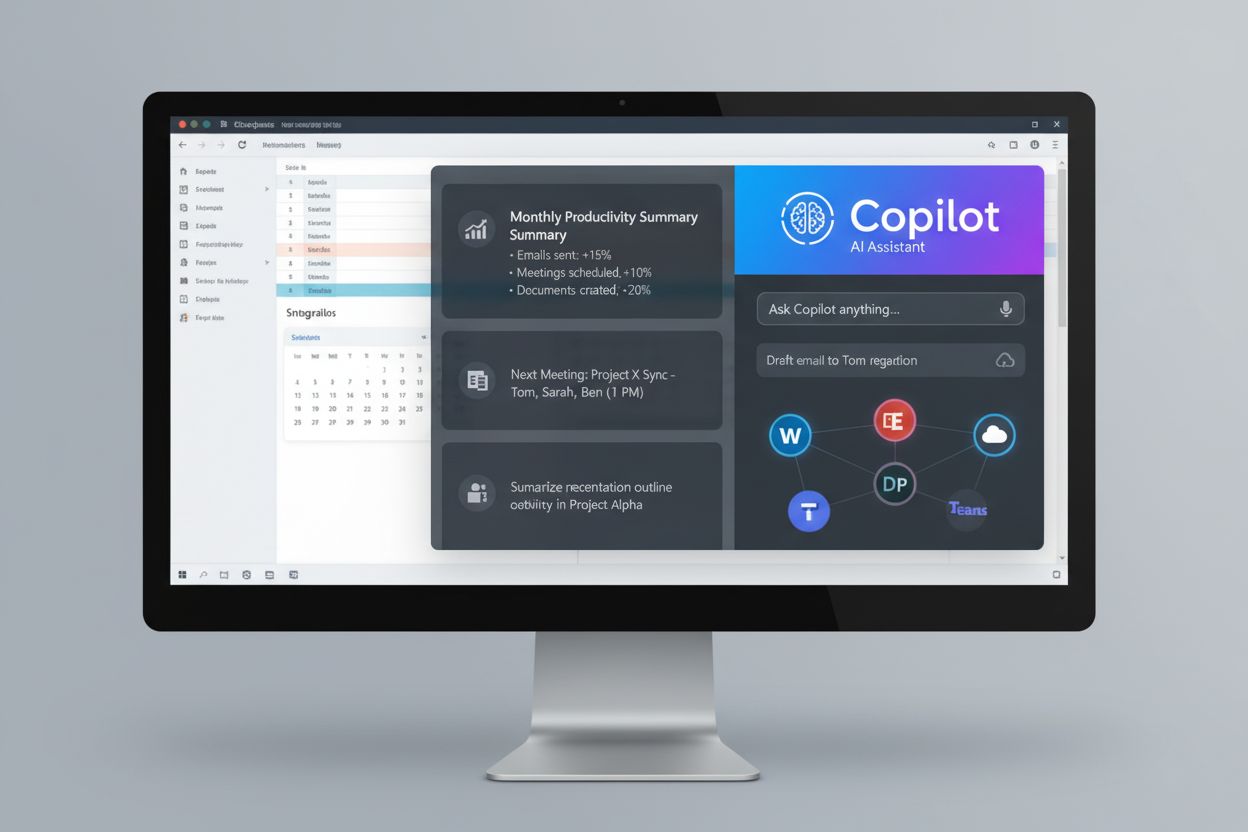
Learn what Microsoft Copilot is, how it integrates across Microsoft 365 products, and its role in AI-powered workplace productivity and enterprise adoption.