Understanding Content Originality Proof
Proving that content is original has become increasingly important in today’s digital landscape where information spreads rapidly across multiple platforms and AI systems. Content originality refers to the ability to verify that a piece of work—whether written, visual, or multimedia—is authentic, unaltered, and traceable to its true creator. This proof serves multiple critical purposes: establishing intellectual property rights, preventing plagiarism claims, maintaining credibility with audiences, and ensuring compliance with search engine guidelines that penalize duplicate content. The challenge lies in selecting the right combination of methods that work best for your specific content type and use case.
Manual Content Verification Methods
The first line of defense in proving content originality is conducting thorough manual checks before publishing or sharing your work. Self-review is essential because you understand your own writing style, research process, and unique perspective better than anyone else. Start by carefully proofreading your content and comparing it against the sources you consulted during research to ensure you haven’t inadvertently paraphrased or copied material. This process helps identify any sections that might appear too similar to existing sources. Additionally, peer review from colleagues or subject matter experts provides fresh perspectives and can catch similarities you might have missed. These reviewers can identify whether your content maintains a unique voice and perspective rather than simply repackaging existing information. Manual verification also includes conducting exact phrase searches on Google by placing key sentences in quotation marks to check if identical content exists elsewhere online. For visual content, reverse image searches using Google Images or similar tools can verify whether your images are truly original or have been used previously.
Ready to Monitor Your AI Visibility?
Track how AI chatbots mention your brand across ChatGPT, Perplexity, and other platforms.
Plagiarism detection software has become an industry standard for verifying content originality. These tools compare your content against comprehensive databases containing billions of web pages, academic papers, and published materials to identify potential matches. Originality.AI is a leading platform that uses advanced algorithms to scan your text against multiple databases and provides detailed reports showing any matching content with percentage scores indicating how much of your work matches existing material. Copyscape is another widely-used free plagiarism checker that specializes in detecting duplicate content across the internet, making it particularly useful for web publishers and content marketers. Grammarly and Chegg also offer plagiarism detection features integrated into their writing assistance platforms. These tools work by creating a digital fingerprint of your content and comparing it against indexed material, providing you with concrete evidence of originality. The reports generated by these tools serve as documentation that your content has been verified against existing sources, which is valuable for legal protection and credibility purposes.
| Tool | Best For | Key Features | Cost |
|---|
| Originality.AI | Comprehensive verification | AI detection, plagiarism check, readability analysis | Subscription-based |
| Copyscape | Web content | Duplicate detection, monitoring | Free and premium options |
| Grammarly | Writing quality | Grammar, plagiarism, style checking | Freemium model |
| Chegg | Academic content | Student paper verification | Subscription-based |
Content Credentials and C2PA Standards
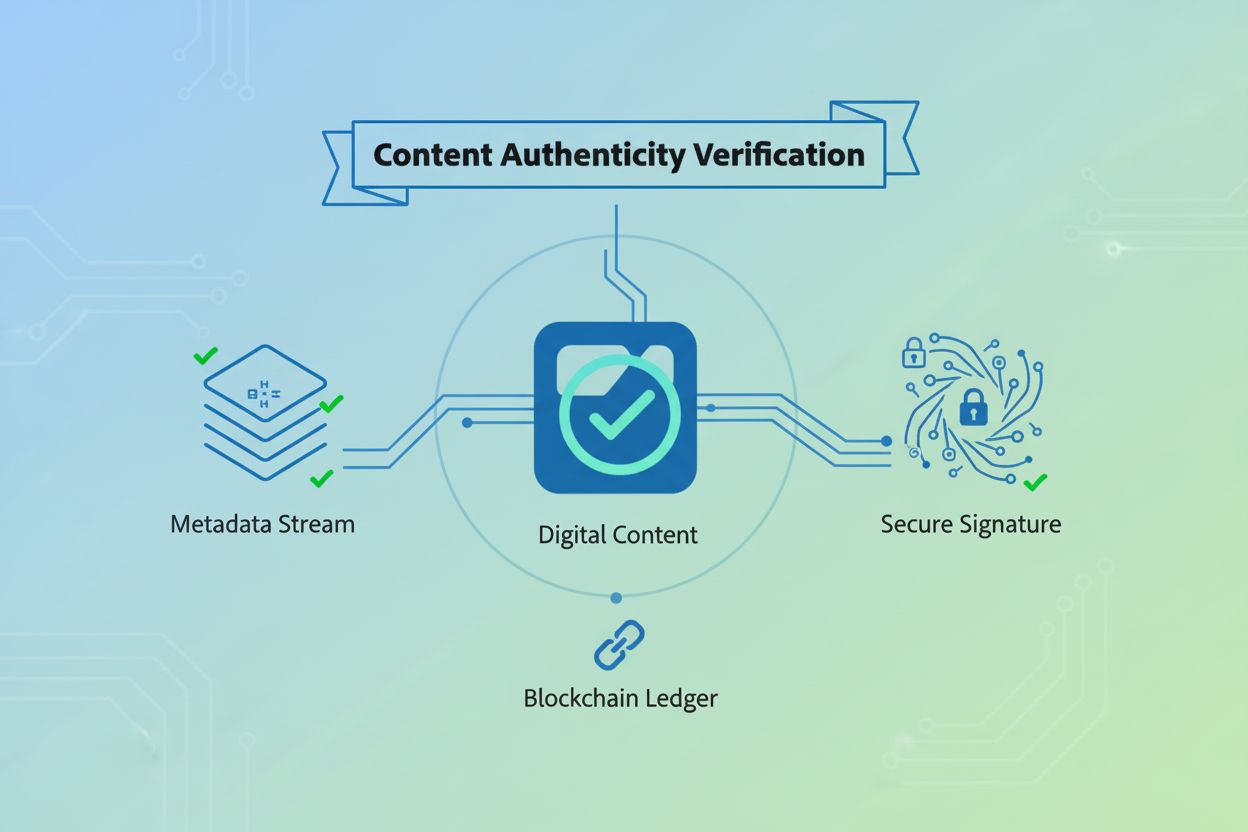
Content credentials represent a modern approach to proving originality by embedding verifiable metadata directly into digital files. The Coalition for Content Provenance and Authenticity (C2PA) has established open standards that allow creators to attach detailed information about their work including who created it, when it was created, what tools were used, and whether it has been edited or modified. This system functions like a “nutrition label” for digital content, providing transparent information about the content’s origin and history. Adobe has implemented C2PA standards in its Creative Suite applications, allowing users to apply content credentials to images, videos, and documents. When you apply content credentials to your work, the metadata remains attached even when the file is shared across platforms, enabling anyone to verify your authorship and see the complete edit history. These credentials are cryptographically signed, meaning they cannot be altered without detection. The C2PA specification ensures that this provenance data remains consistent and secure across different applications and devices, creating a standardized way to prove originality across the creative industry.
Stay Updated on AI Visibility Trends
Get the latest insights on AI mentions, brand monitoring, and optimization strategies.
Digital Timestamps and Blockchain Technology
Digital timestamps provide legal proof that your content existed at a specific date and time, which is crucial for establishing priority of creation. A timestamp works by creating a unique hash (digital fingerprint) of your document through cryptographic functions. This hash is then certified by a Time Stamping Authority (TSA) and recorded with an exact timestamp, creating an immutable record. If even a single character in your document changes, the hash changes completely, making any alteration immediately evident. Digital Timestamps service allows you to timestamp files for as little as $2.50 per file, storing the encrypted fingerprint on the blockchain for permanent verification. Blockchain technology adds an additional layer of security by recording your content’s hash on a distributed, decentralized ledger that cannot be altered or deleted without leaving a trace. Unlike traditional centralized systems that rely on a single authority, blockchain distributes the verification across multiple nodes, making it virtually impossible to tamper with the record after creation. This approach is particularly valuable for intellectual property protection because it creates a permanent, publicly auditable record that proves you possessed the content at a specific point in time, which is essential in legal disputes or copyright claims.
Advanced Content Authenticity Verification
Beyond basic plagiarism detection, advanced content authenticity checkers employ sophisticated technologies to verify originality at deeper levels. N-gram analysis breaks down content into smaller chunks of text to identify repeated strings that might indicate plagiarism or copying patterns that simple text matching might miss. Content fingerprinting creates unique identifiers for your work that can be compared against other content fingerprints to detect similarities even when text has been paraphrased or significantly modified. Stylometry analyzes writing style and linguistic patterns to determine authorship and identify whether content matches the writing characteristics of the claimed author. Semantic analysis uses artificial intelligence and machine learning to examine the meaning and context of text rather than just matching words, allowing detection of plagiarism even when synonyms have been substituted or sentences have been restructured. These advanced methods are particularly effective at catching sophisticated plagiarism attempts where someone has attempted to disguise copied content through paraphrasing or synonym replacement.
Search Engine and Linguistic Verification
Search engine verification provides a basic but effective method for checking content originality. Placing exact phrases from your content in quotation marks on Google reveals whether identical text appears elsewhere online. For visual content, Google Reverse Image Search allows you to verify whether your images are truly original or have been published previously. Readability checkers like Flesch Kincaid analyze your content’s readability level and can help identify whether your writing style is consistent with your other work or whether sections appear to have been written by different authors. Specialized academic databases like JSTOR, PubMed, and Core provide access to millions of academic articles and research papers, allowing deeper verification for scholarly content. These tools help identify whether your research findings or data have been previously published in academic literature. Linguistic analysis can also reveal whether content matches the writing patterns of known authors, helping establish authentic authorship and detect ghostwritten or plagiarized material.
Metadata analyzers examine the digital signature and technical information embedded in files to determine their origin and creation history. This includes information about the device used to create the content, software applications involved, and modification timestamps. For software developers, tools like MOSS (Measure of Software Similarity) can detect plagiarism in source code by comparing code structure and logic patterns. External audits conducted by third-party verification agencies provide independent confirmation of content originality, which is particularly valuable for organizations needing to demonstrate compliance or establish credibility with stakeholders. Platforms like MediaTrust, Storyful, and Snopes offer crowdsourced verification where multiple users can evaluate the authenticity of content, combining human expertise with technological verification. These specialized approaches are particularly useful for high-stakes situations such as legal proceedings, regulatory compliance, or protecting valuable intellectual property where multiple layers of verification strengthen your position.
Creating Original Content from the Start
While proving originality after creation is important, creating original content from the beginning is the most effective strategy. This involves maintaining detailed records of your research sources throughout the writing process, making it easier to properly cite and reference materials while avoiding plagiarism. Developing your unique voice as a creator means providing your own perspective, analysis, and insights rather than simply repackaging existing information. This distinctive writing style becomes your “writing fingerprint” that distinguishes your work from others. Avoiding common pitfalls such as overusing quotes, engaging in synonym swapping (replacing words with synonyms without changing the fundamental structure), or becoming too dependent on templates helps ensure your content remains genuinely original. Refining your work through multiple drafts and revisions allows you to develop more sophisticated arguments and unique perspectives that differentiate your content from similar material on the same topic. By combining strong original creation practices with verification tools, you create a comprehensive approach to content originality that protects your intellectual property and maintains your credibility.