
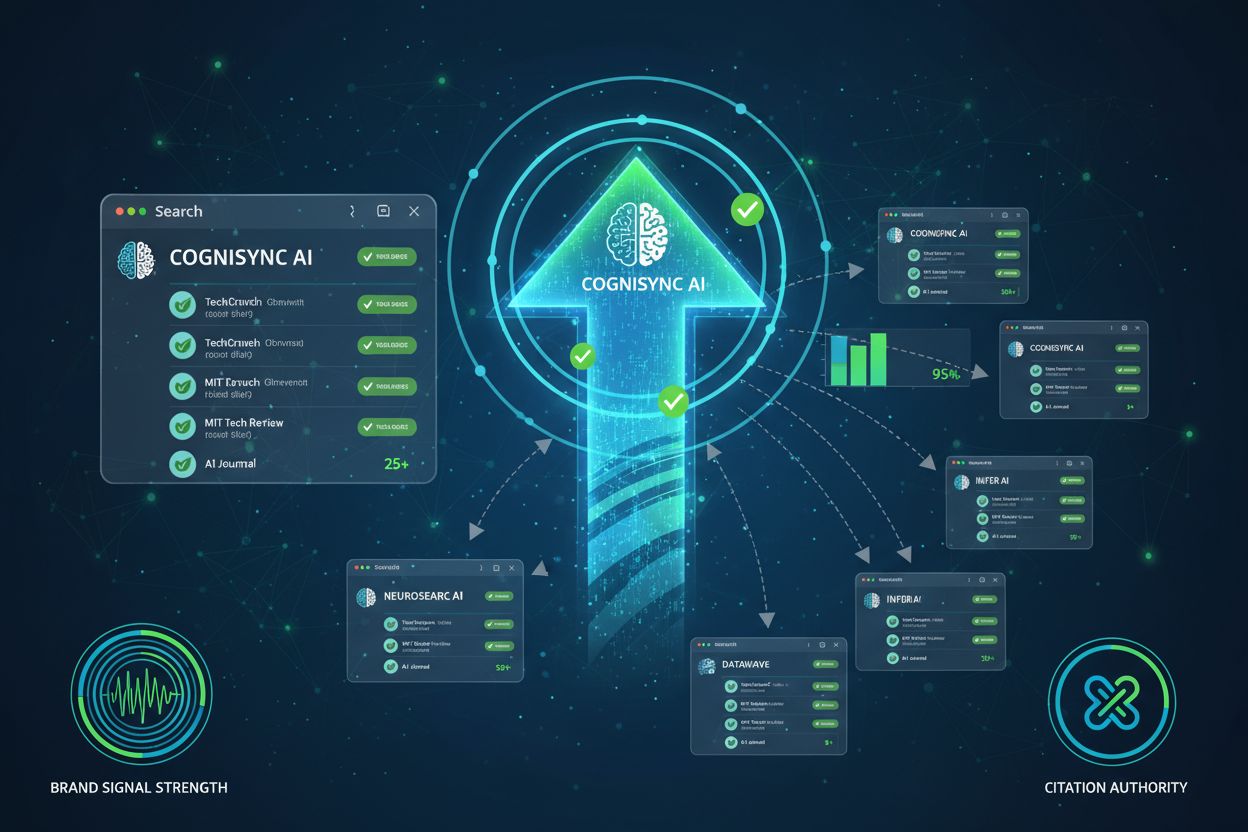
Outranking Competitors in AI Search: Tactical Approaches
Master AI search optimization with proven tactics to outrank competitors in ChatGPT, Perplexity, and Google AI Overviews. Learn brand visibility strategies that...
10 min read

Learn the best strategies and tools to monitor AI search engine updates, track algorithm changes, and stay informed about ChatGPT, Perplexity, Google AI, and other AI answer generators.
Stay updated on AI search changes by using dedicated monitoring tools like AmICited, SE Ranking, and Semrush to track brand mentions and visibility across AI platforms. Subscribe to official status dashboards, follow industry blogs, join SEO communities, and regularly audit your content performance on ChatGPT, Perplexity, Google AI Overviews, and Gemini.
The landscape of AI search engines and answer generators is evolving rapidly, with platforms like ChatGPT, Perplexity, Google AI Overviews, and Gemini constantly updating their algorithms and ranking factors. These changes directly impact how your brand, content, and website appear in AI-generated responses. Unlike traditional search engines where algorithm updates happen periodically, AI platforms are continuously learning and refining how they present information to users. Understanding these changes is critical for maintaining your brand visibility and ensuring your content remains discoverable in this new search paradigm. The challenge is that AI platforms don’t always announce updates publicly, making it essential to have a proactive monitoring strategy in place.
The most effective way to stay updated on AI search changes is by implementing dedicated monitoring tools that track your brand’s appearance across multiple AI platforms simultaneously. These tools provide real-time insights into how your content is being cited, where your brand appears in AI answers, and how your visibility changes over time. Platforms like AmICited, SE Ranking, Semrush, and Ahrefs now offer specialized AI visibility trackers that monitor your presence across ChatGPT, Perplexity, Google AI Overviews, and Gemini. These tools automatically scan AI responses to your target keywords and collect data on brand mentions, website links, positioning, and competitor visibility. By using these monitoring solutions, you can detect changes in how AI platforms treat your content and respond quickly to maintain or improve your visibility.
| Monitoring Tool | Platforms Tracked | Key Features | Best For |
|---|---|---|---|
| AmICited | ChatGPT, Perplexity, Google AI, Gemini | Real-time brand mention tracking, visibility scoring, competitor analysis | Comprehensive AI monitoring |
| SE Ranking | Google AI Overviews, ChatGPT, Gemini, Perplexity | AI Search Toolkit, historical data, trend analysis | Multi-platform tracking |
| Semrush | Google AI Overviews, ChatGPT, Gemini | AI visibility insights, content optimization recommendations | Enterprise-level monitoring |
| Ahrefs | Multiple AI platforms | AI visibility tracking, content performance analysis | Technical SEO teams |
| Backlinko Tools | ChatGPT, Perplexity, Google AI | LLM tracking, brand mention analysis | Content creators |
Each major AI platform maintains official channels where they announce updates and changes to their systems. Google Search Status Dashboard provides real-time information about Google’s algorithm updates, including changes to AI Overviews and ranking factors. Google regularly releases core updates, spam updates, and feature announcements that directly affect how content appears in AI-generated responses. Similarly, OpenAI (ChatGPT) and Perplexity publish updates through their official blogs and status pages, though they are less frequent than Google’s announcements. Following these official channels ensures you receive accurate, first-hand information about significant changes rather than relying on third-party interpretations. Setting up alerts for these platforms’ official announcements helps you stay informed immediately when changes occur, allowing you to adjust your content strategy proactively rather than reactively.
Staying informed about AI search changes requires following reputable industry publications that cover AI search engine optimization and algorithm updates. Major SEO and marketing blogs like Search Engine Land, Search Engine Journal, Backlinko, and Moz regularly publish in-depth analyses of AI platform changes, their implications for content creators, and best practices for optimization. These publications employ experienced analysts who interpret complex algorithm changes and provide actionable insights for businesses. Industry blogs often publish detailed guides on how to optimize for specific AI platforms, track emerging trends, and understand the technical aspects of how AI systems evaluate and cite content. Subscribing to newsletters from these sources ensures you receive curated, expert-analyzed information about AI search changes directly in your inbox, saving you time while keeping you informed about developments that matter to your business.
Professional communities and forums dedicated to SEO and digital marketing provide valuable peer-to-peer insights about AI search changes. Communities like the Ahrefs SEO community, Moz Q&A, Reddit’s r/SEO, and specialized Slack groups for digital marketers are places where professionals share observations about algorithm changes, discuss emerging trends, and help each other troubleshoot visibility issues. These communities often detect and discuss changes before they’re officially announced, as members experiment with their content and share findings. Participating in these communities allows you to learn from others’ experiences, ask questions about specific changes affecting your industry, and contribute your own observations. Many community members are SEO professionals and agency owners who have deep expertise and can provide context about how changes might affect different types of businesses. Engaging actively in these networks also helps you build relationships with other professionals who can become valuable resources for staying informed.
Beyond using monitoring tools, regular audits of your content performance across AI platforms help you detect changes in how your content is being treated. This involves periodically searching for your target keywords on ChatGPT, Perplexity, Google AI Overviews, and Gemini to manually observe how your content appears, whether it’s cited, and how it’s positioned relative to competitors. These manual audits complement automated monitoring tools by providing qualitative insights that tools might miss. You should document your findings over time, noting changes in citation frequency, positioning, and the context in which your content is mentioned. By comparing audit results across weeks and months, you can identify patterns that indicate algorithm changes or shifts in how AI platforms evaluate content. This practice also helps you understand the specific factors that influence your visibility on each platform, enabling you to make informed decisions about content optimization and strategy adjustments.
Tracking how your competitors’ visibility changes across AI platforms provides valuable context for understanding broader algorithm shifts. When multiple competitors experience visibility changes simultaneously, it often indicates a platform-wide algorithm update rather than issues specific to your content. Most modern AI monitoring tools include competitor tracking features that allow you to compare your visibility against key competitors across all major AI platforms. By analyzing competitor performance trends, you can identify which content types, formats, and optimization strategies are gaining traction in AI-generated answers. This competitive intelligence helps you understand what’s working in your industry and adjust your content strategy accordingly. Additionally, if competitors suddenly gain significant visibility while your presence remains flat, it signals that you may need to update your content, improve your optimization, or adjust your approach to match what AI platforms are favoring.
As AI platforms evolve, the best practices for content optimization change accordingly. Staying updated on AI search changes means continuously learning about new optimization techniques and adjusting your content strategy. Key optimization factors that frequently change include content length preferences, formatting requirements, the importance of structured data and schema markup, and how AI platforms evaluate authority and expertise. For example, research shows that Perplexity AI values recent, comprehensive content with clear structure and multimedia sources, while ChatGPT prefers conversational, context-rich content with semantic richness. Google AI Overviews still prioritize traditional SEO factors like ranking position and featured snippet optimization. Understanding these platform-specific preferences and how they evolve helps you create content that’s more likely to be cited by AI systems. Following industry publications, attending webinars, and participating in professional development ensures you’re always aware of the latest optimization strategies and can implement them before your competitors do.
Implementing a systematic approach to tracking keywords and topics helps you monitor how AI platforms treat specific subject areas over time. Create a list of your most important keywords and topics, then regularly check how they’re handled across different AI platforms. Note whether AI Overviews appear for these keywords, which sources are cited, and whether your content is included. Many monitoring tools allow you to set up automated tracking for specific keywords, generating reports that show changes in visibility, citation frequency, and positioning. By tracking the same keywords over weeks and months, you can identify patterns that indicate algorithm changes or shifts in how AI platforms prioritize different types of content. This systematic approach also helps you understand which topics and keywords are most valuable for your business in terms of AI visibility, allowing you to prioritize your content creation and optimization efforts accordingly.
Many AI platforms offer community programs, beta testing opportunities, and direct feedback channels where you can learn about upcoming changes and provide input on how platforms evolve. Participating in these programs gives you early access to new features and changes, allowing you to adapt your strategy before changes roll out to the general public. OpenAI, Google, and Perplexity occasionally invite users to test new features and provide feedback, which can give you insights into the direction these platforms are heading. Engaging with these communities also positions your brand as forward-thinking and helps you build relationships with platform developers and other industry leaders. Additionally, providing feedback about how these platforms affect your business can influence future development, ensuring that your concerns and needs are considered as these platforms evolve.
To effectively stay updated on AI search changes, establish a centralized monitoring dashboard that consolidates data from multiple sources. This dashboard should include metrics from your AI visibility monitoring tools, manual audit findings, competitor benchmarking data, and industry news. Creating a regular reporting system—whether weekly, bi-weekly, or monthly—helps you track trends over time and identify significant changes that require action. Your dashboard should highlight key metrics like brand mention frequency, visibility scores, citation rates, and positioning across different AI platforms. By visualizing this data, you can quickly spot anomalies or trends that might indicate algorithm changes. Sharing these reports with your team ensures everyone understands how your brand is performing in AI search and can contribute to strategy adjustments. A well-organized monitoring system transforms raw data into actionable insights that drive your AI search optimization strategy.
Get real-time insights into how your brand appears in AI-generated answers. Track mentions, visibility changes, and competitor performance across ChatGPT, Perplexity, Google AI, and more.
Master AI search optimization with proven tactics to outrank competitors in ChatGPT, Perplexity, and Google AI Overviews. Learn brand visibility strategies that...
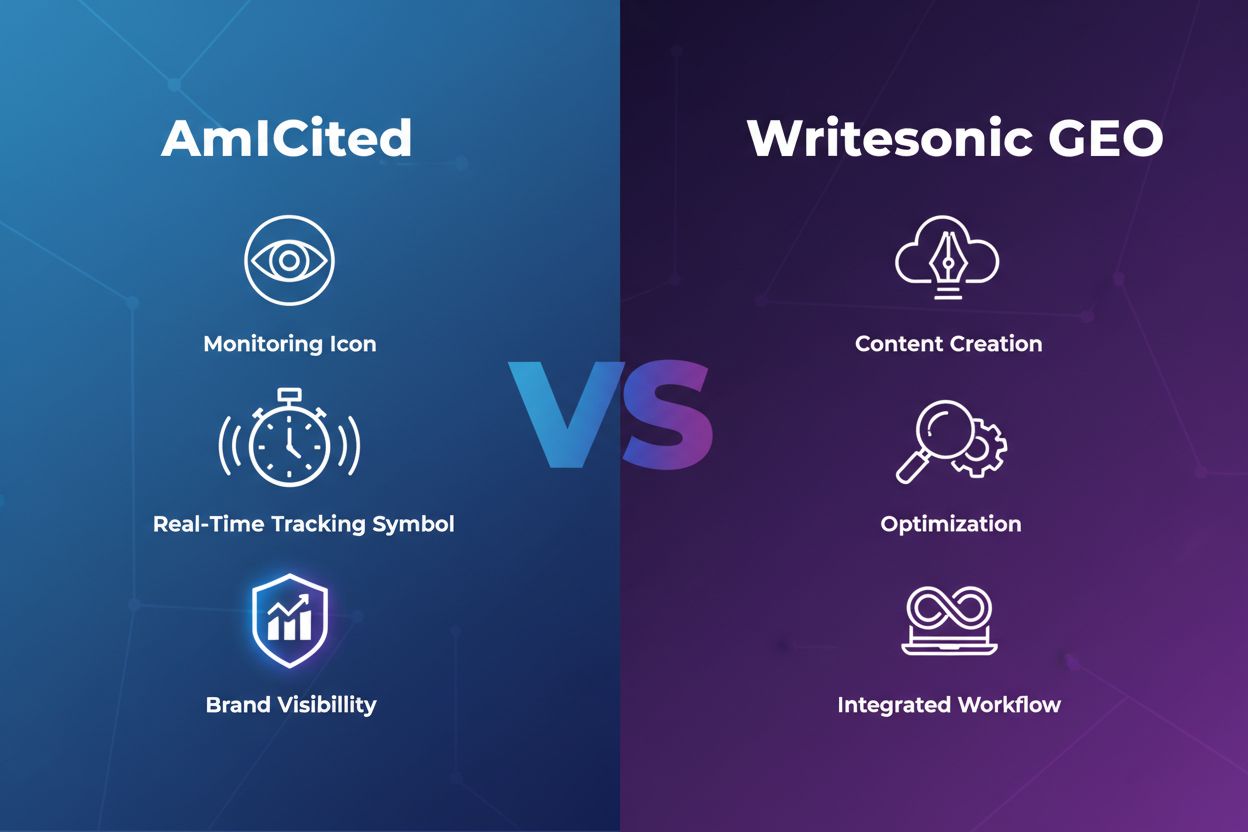
Compare AmICited AI monitoring with Writesonic GEO. Understand the differences between pure monitoring and integrated optimization for AI search visibility.
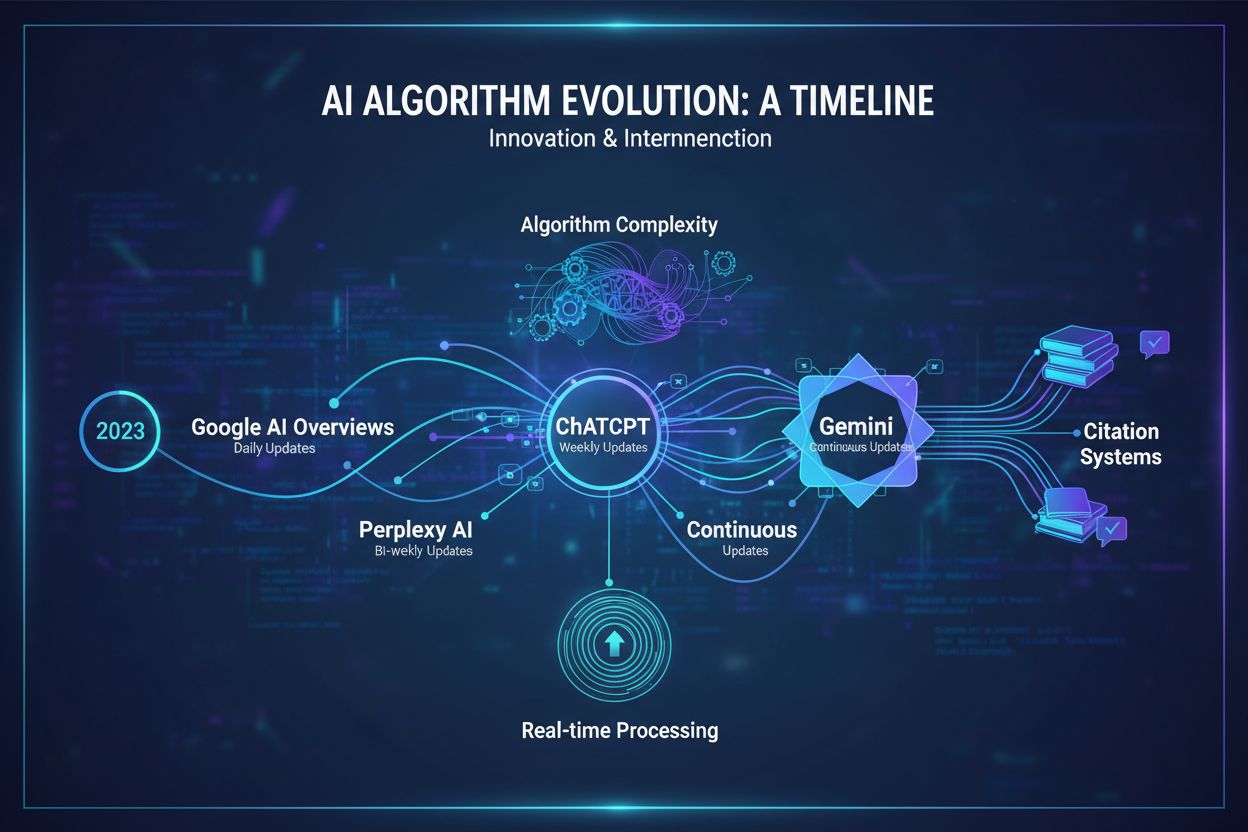
Learn how to monitor AI algorithm updates across ChatGPT, Perplexity, and Google AI Overviews. Track your brand's visibility with real-time metrics and citation...