Understanding HARO and Its Role in AI Search Visibility
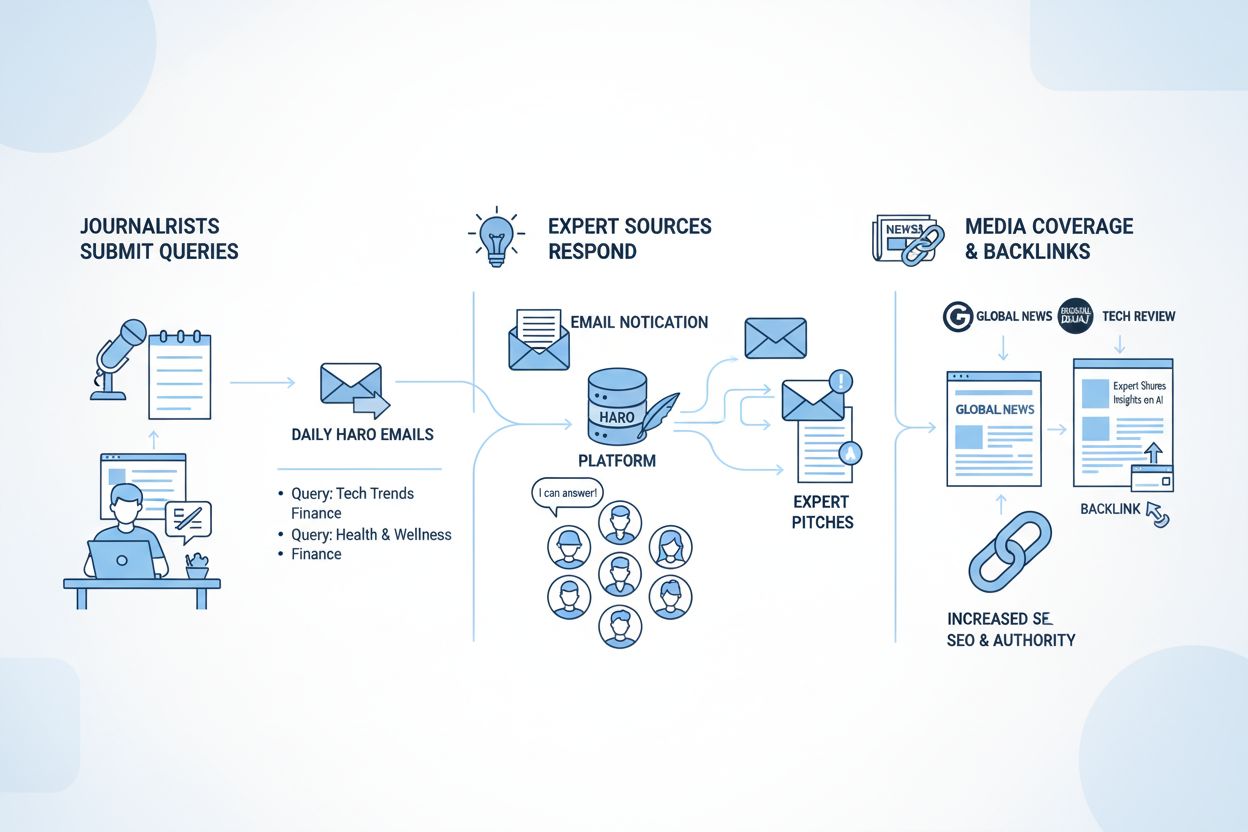
HARO (Help A Reporter Out) is a powerful platform that bridges the gap between journalists seeking expert insights and knowledgeable professionals willing to share their expertise. Founded to streamline the media outreach process, HARO has evolved into a critical tool for building brand authority and visibility in AI-generated answers. The platform operates by sending daily email digests containing journalist queries across various industries and topics, allowing experts to pitch their insights and potentially earn media mentions. In the context of modern AI search engines like ChatGPT, Perplexity, and Google AI Overviews, HARO has become increasingly valuable because these AI systems prioritize information from authoritative, frequently-cited sources. When your brand appears in reputable publications through HARO-sourced quotes, you’re not just gaining traditional media coverage—you’re building the digital footprint that AI systems use to determine which brands to cite in their generated answers.
The fundamental principle behind HARO’s effectiveness for AI search optimization lies in how large language models (LLMs) generate responses. These AI systems don’t rely on keyword matching like traditional search engines; instead, they analyze patterns across the web to determine which sources appear most frequently and authoritatively when discussing specific topics. When journalists cite your expertise through HARO, they create brand mentions on high-authority domains that AI systems heavily weight in their training data and live web searches. This means a single well-placed HARO response can result in multiple mentions across different publications, exponentially increasing your brand’s probability of appearing in AI-generated answers.
How AI Search Engines Prioritize Sources and Citations
To effectively use HARO for AI search optimization, you must first understand how AI search engines evaluate and cite sources. Unlike traditional Google search, which returns a list of links, AI search engines like ChatGPT and Perplexity generate synthesized answers by pulling information from multiple sources simultaneously. These systems prioritize sources based on two critical factors: frequency and relevancy. Frequency refers to how often your brand is mentioned across the web, particularly on authoritative domains. Relevancy determines whether AI systems understand your brand’s connection to specific topics and industries. When an AI system receives a user query, it searches for information that best answers that question, weighing sources that appear frequently in relevant contexts more heavily than obscure mentions.
| Factor | Traditional SEO | AI Search Optimization |
|---|
| Primary Signal | Backlinks and keyword density | Brand mentions and topical authority |
| Source Quality | Domain authority metrics | Publication reputation and citation frequency |
| Content Format | Keyword-optimized articles | Expert quotes and authoritative insights |
| Citation Method | Hyperlinks | Direct mentions and attributed quotes |
| Update Frequency | Periodic crawling | Real-time web indexing and training data |
The distinction is crucial: AI systems don’t just count links—they count mentions. A quote attributed to you in Forbes carries significantly more weight than a backlink from a low-authority blog. This is where HARO becomes exceptionally powerful. By positioning yourself as a go-to expert through HARO responses, you generate the exact type of citations that AI systems prioritize. When journalists quote you, they’re creating attributed mentions that signal to AI systems that your brand is a trusted authority in your field. Over time, as these mentions accumulate across multiple publications, your brand becomes increasingly likely to appear when AI systems answer questions related to your expertise.
Ready to Monitor Your AI Visibility?
Track how AI chatbots mention your brand across ChatGPT, Perplexity, and other platforms.
Identifying and Responding to High-Value HARO Queries
The first practical step in using HARO for AI search optimization is identifying queries that align with your brand’s expertise and AI visibility goals. HARO sends three daily email digests (morning, afternoon, and evening) containing journalist queries organized by category. Rather than responding to every query, successful HARO users develop a strategic approach focused on queries that will generate the most valuable citations. Start by analyzing which topics and industries are most relevant to your brand’s core offerings and the search terms you want to dominate in AI answers. If you’re a cybersecurity firm, for example, you should prioritize queries about data breaches, security best practices, and emerging threats rather than general technology questions.
When evaluating HARO queries, consider the publication tier and reach of the journalist making the request. HARO includes information about where the journalist works, allowing you to assess the potential impact of your response. A query from a journalist at TechCrunch, Forbes, or The Wall Street Journal will generate far more valuable citations than a query from a smaller blog. However, don’t dismiss mid-tier publications entirely—consistent mentions across multiple reputable sources create a stronger signal for AI systems than a single mention in a top-tier publication. Additionally, pay attention to the specificity of the query. Journalists asking detailed, specific questions are often writing in-depth features or investigative pieces that will receive more attention and citations from AI systems. A query asking for “insights on AI implementation in healthcare” is more valuable than a generic “thoughts on AI trends” request.
When crafting your HARO response, quality and authenticity are paramount. Journalists receive dozens of responses to each query, and they select quotes based on how well they answer the specific question, the credibility of the source, and the uniqueness of the perspective offered. Your response should directly address the journalist’s question without excessive self-promotion. Provide specific examples, data points, or insights that demonstrate your expertise. Include a brief bio that establishes your credentials and makes it easy for the journalist to verify your authority. The goal is to make the journalist’s job easier by providing a quote-ready response that they can use directly in their article. When your response is published, the journalist will typically include your name, title, company, and sometimes a link to your website—all of which contribute to your AI search visibility.
Building Strategic Authority Through Consistent HARO Engagement
Consistency is the key to leveraging HARO for long-term AI search optimization success. Rather than responding sporadically to HARO queries, develop a sustainable system for regularly identifying and responding to relevant opportunities. Many successful brands allocate specific team members to monitor HARO digests and respond to queries within their expertise areas. This consistent engagement serves multiple purposes: it increases the frequency of your brand mentions across publications, establishes you as a reliable expert source that journalists trust, and creates a pattern of citations that AI systems recognize as a signal of authority. Over time, journalists may even begin reaching out to you directly for quotes, further amplifying your visibility.
To maximize the impact of your HARO strategy, track and document all your responses and resulting publications. Create a spreadsheet or database that records which queries you responded to, which journalists published your quotes, and where those articles appeared. This tracking serves two purposes: it helps you identify which types of queries and publications generate the most valuable citations, and it provides evidence of your media presence that you can use for other marketing purposes. Additionally, when your quotes are published, actively monitor for the resulting citations and mentions. Set up Google Alerts for your name and company to catch articles featuring your HARO responses. When you identify a published article with your quote, consider sharing it on your social media channels and including it in your company’s media kit. This amplification extends the reach of the original article and creates additional touchpoints for AI systems to discover your brand.
Stay Updated on AI Visibility Trends
Get the latest insights on AI mentions, brand monitoring, and optimization strategies.
Integrating HARO with Your Broader AI Search Strategy
While HARO is a powerful tool for building brand mentions and authority, it’s most effective when integrated into a comprehensive AI search optimization strategy. HARO should work in conjunction with other tactics that enhance your visibility in AI-generated answers. These complementary strategies include optimizing your website’s content for AI search behavior, implementing structured data markup to help AI systems understand your content, building strategic partnerships with other authoritative brands, and creating original research or data that journalists and AI systems cite. The synergy between these tactics creates a multiplier effect: your HARO responses drive citations that boost your authority, which makes your website content more likely to be cited by AI systems, which in turn makes you a more attractive source for future HARO queries.
One critical aspect of integrating HARO into your AI search strategy is ensuring consistency in how your brand is described and defined across all channels. When journalists quote you through HARO, they’ll describe your company and expertise in their own words. To maximize the impact of these mentions, ensure that your website, social media profiles, and other owned channels consistently communicate your core value proposition and areas of expertise. If your HARO responses position you as an expert in “sustainable supply chain management,” make sure your website and LinkedIn profile emphasize this same positioning. This consistency helps AI systems develop a clear understanding of your brand entity and the topics you’re associated with, making it more likely they’ll cite you when answering questions in your area of expertise.
Measuring the Impact of HARO on Your AI Search Visibility
Tracking the impact of your HARO efforts on AI search visibility requires a multi-layered measurement approach. Start by monitoring your brand’s appearance in AI-generated answers across major platforms. Periodically search for queries related to your expertise on ChatGPT, Perplexity, Google AI Overviews, and Claude, noting whether your brand appears in the generated responses. You can also use specialized tools that track your brand’s visibility across AI search engines, providing data on which queries trigger your mentions and how frequently you appear. These tools often show you the specific prompts that generate your citations, allowing you to understand which topics and questions are most likely to surface your brand in AI answers.
Beyond direct AI search visibility, measure the business impact of your HARO strategy through traditional analytics. Track traffic from AI search engines to your website by setting up filters in Google Analytics 4 that identify sessions originating from ChatGPT, Perplexity, and other AI platforms. Monitor how this traffic converts compared to traditional organic search traffic. Additionally, track the media mentions and backlinks generated through HARO responses. Each published article featuring your quote represents a citation that contributes to your authority in the eyes of both AI systems and traditional search engines. Over time, you should see an increase in both the quantity and quality of mentions, which correlates with improved visibility in AI-generated answers. The ultimate measure of success is whether your HARO efforts translate into increased brand awareness, lead generation, and business growth.
Common Mistakes to Avoid When Using HARO for AI Search Optimization
Many brands make critical mistakes when approaching HARO that undermine their AI search optimization efforts. The most common error is responding to queries that don’t align with your expertise or brand positioning. While it might be tempting to respond to every query in hopes of generating more mentions, responding to irrelevant queries wastes your time and can actually harm your brand’s entity definition in AI systems. If you’re a B2B software company but respond to queries about consumer products, you’re creating confusing signals about what your brand actually does. AI systems learn from patterns, and inconsistent mentions can dilute your topical authority. Instead, maintain strict discipline about which queries you respond to, focusing exclusively on those that genuinely align with your expertise and business goals.
Another significant mistake is prioritizing quantity over quality in your responses. A poorly written, generic response that doesn’t directly address the journalist’s question is unlikely to be published, wasting your effort. Even if it is published, a weak response doesn’t establish you as a credible expert. Journalists are looking for insightful, specific, quote-ready responses that add value to their articles. Invest time in crafting thoughtful, well-researched responses that demonstrate genuine expertise. Additionally, avoid the temptation to over-promote your products or services in your HARO responses. Journalists are seeking expert insights, not sales pitches. If your response reads like an advertisement, it will be rejected or heavily edited, potentially losing the impact you were hoping for. The goal is to establish yourself as a trusted expert first; the business benefits will follow naturally as your authority grows.
Finally, don’t neglect the follow-up and amplification phase after your quotes are published. Many brands respond to HARO queries and then forget about them, missing the opportunity to maximize the impact of the resulting publications. When your quotes are published, actively promote the articles through your social media channels, email newsletters, and other marketing channels. This amplification extends the reach of the article and creates additional opportunities for AI systems to discover and cite your brand. Additionally, use published articles as social proof in your marketing materials, case studies, and sales conversations. Each HARO-generated publication is a valuable asset that should be leveraged across your entire marketing strategy to maximize its return on investment.