

People Also Ask (PAA)
Learn what People Also Ask (PAA) is, how it works, and why it matters for SEO. Discover optimization strategies to rank in PAA boxes and capture first-page SERP...
13 min read

Learn how to leverage Google’s People Also Ask feature to create AI-optimized content that ranks in AI search engines and improves brand visibility in AI answers.
Use People Also Ask (PAA) data to identify real user questions and search intent patterns, then create comprehensive AI-optimized content that answers these questions. Structure your content with clear answer paragraphs, implement FAQ schema markup, optimize for mobile, and keep content fresh to improve visibility in both traditional search and AI-generated answers.
People Also Ask (PAA) is Google’s machine learning-powered SERP feature that displays expandable question boxes designed to anticipate and answer related queries users might have about their search topic. When you search for something like “content marketing strategy,” you see accordion-style boxes filled with questions that users commonly ask next. This feature has become increasingly important for AI content optimization because it reveals the exact questions your audience wants answered, which directly influences how AI search engines like ChatGPT, Perplexity, and Google’s AI Mode select and cite your content.
The significance of PAA for AI content cannot be overstated. PAA visibility has exploded by 34.7% in the US from February 2024 to January 2025, making it one of the most dominant ways users discover information. More importantly, 63% of PAA interactions happen on mobile devices, where users expect immediate, conversational answers—exactly the format that AI search engines prioritize when generating responses. By understanding what questions appear in PAA boxes, you’re essentially getting a direct window into user intent patterns that AI systems use to determine which sources to cite and how to structure their answers.
The relationship between PAA and AI content is symbiotic. Google’s PAA algorithm analyzes billions of searches to identify follow-up questions users naturally ask, creating a real-time map of information gaps and curiosity patterns. AI search engines like ChatGPT and Perplexity use similar intent-mapping techniques when generating answers, making PAA data invaluable for predicting what questions your content should address. When you optimize for PAA questions, you’re simultaneously optimizing for the conversational, question-answer format that AI systems prefer when citing sources.
The first step in using PAA for AI content is identifying which questions matter most for your business and audience. Rather than randomly targeting every question that appears in PAA boxes, you need a strategic approach that focuses on questions with genuine search demand and business relevance. Start by researching your primary keywords and examining the PAA boxes that appear for those queries. Tools like AlsoAsked provide a visual tree structure showing how questions branch and expand, revealing the natural progression of user curiosity through a topic.
When analyzing PAA questions, look for patterns in question structure and intent. Questions beginning with “how to,” “why,” and “can you” consistently appear in PAA boxes because they represent actionable intent. For example, “How to optimize content for AI search” appears more frequently than “What is AI search” because users want practical guidance. 86% of queries triggering PAA boxes are question-based, with featured answers averaging 41 words, but this doesn’t mean you should create short, superficial answers. Instead, use this insight to craft clear, concise opening answers followed by comprehensive supporting content.
The competitive intelligence aspect of PAA research is equally important. Examine which sites currently appear in PAA boxes for your target questions. Are they high-authority domains or newer sites? What content format do they use—FAQ sections, blog posts, or dedicated answer pages? Notice the language patterns and technical depth. Some queries favor definition-style answers while others want step-by-step processes. By documenting these patterns in a spreadsheet, you create a roadmap showing exactly what Google and AI systems expect for different question types. This competitive analysis reveals gaps where current PAA answers are weak, outdated, or missing crucial details—these represent immediate opportunities where better content can displace incumbents.
Once you’ve identified your target PAA questions, the next step is creating content that satisfies both Google’s algorithmic requirements and genuine user needs. The fundamental challenge is balancing conciseness with comprehensiveness—Google wants immediate, 41-word answers for PAA boxes, yet it also rewards comprehensive, authoritative content that demonstrates genuine expertise. The solution is layered content depth where your immediate answer paragraph is self-contained and directly responsive to the question, followed by progressively deeper layers of context, examples, and related information.
Structure your content with a clear answer paragraph at the top that could stand alone as a complete response. This paragraph should be factual, direct, and free of fluff or preambles. For example, if answering “How do I optimize content for AI search,” your opening might be: “Optimize for AI search by creating comprehensive, question-focused content with clear answer paragraphs, implementing FAQ schema markup, ensuring mobile optimization, and maintaining content freshness through regular updates.” This answer is complete enough to satisfy someone who only reads that paragraph, yet intriguing enough to pull interested readers deeper into your content.
After your immediate answer, expand systematically through additional sections that provide context, nuance, examples, and edge cases. Use clear headers that telegraph information hierarchy, bold key phrases naturally (not like you’re highlighting for a robot), and include numbered lists when explaining processes. The formatting matters tremendously because AI systems analyze content structure to determine which sections answer specific questions. When you use semantic HTML headers (H2, H3) and logical content organization, you make it easier for both Google’s algorithms and AI systems to extract relevant information and cite your content accurately.
| Content Element | Purpose | AI System Benefit |
|---|---|---|
| Clear answer paragraph | Immediate response to question | Provides snippet for AI answers |
| Supporting context | Explains nuance and background | Helps AI understand full context |
| Practical examples | Demonstrates real-world application | Increases citation likelihood |
| Related questions section | Addresses follow-up curiosities | Signals topical authority |
| FAQ schema markup | Structured data for algorithms | Improves content discoverability |
Technical optimization forms the foundation that enables both PAA visibility and AI content citation. FAQ schema markup is your primary tool for signaling question-answer content to Google and AI systems. When implementing FAQ schema, ensure the content in your schema is visible on the actual page—not hidden, not behind tabs, not loaded dynamically after user interaction. Google’s validation requirements are strict, and what validated six months ago might throw errors today. Set up monitoring through Google Search Console’s enhancement reports to catch issues before they tank your visibility.
Mobile optimization goes far beyond responsive design. Since 63% of PAA engagements happen on mobile devices, your content must deliver exceptional mobile experiences. Core Web Vitals scores directly influence which content appears in PAA boxes and gets cited by AI systems. The loading speed requirements are granular—every element that could appear in a PAA snippet needs to be immediately accessible. Text content should load in the first 14KB of HTML, images should be optimized and lazy-loaded below the fold, and there should be zero layout shift when content loads. Mobile-specific user experience factors like font sizes (minimum 16px), tap target spacing, and no horizontal scrolling are non-negotiable for PAA optimization.
Content freshness signals dramatically influence PAA selection algorithms. Recently updated articles appear 4.3 times more frequently than stale content covering identical topics. Google tracks multiple freshness indicators including content modification timestamps, new internal links pointing to the page, updated citations and external references, schema markup modification dates, and user engagement metrics showing current relevance. Implement a sustainable content updating workflow where you review high-value PAA targets quarterly, update trending topics monthly, and make immediate updates when significant industry changes occur. A practical hack involves updating your FAQ sections monthly with new questions pulled from actual search data, adding fresh Q&As to existing content, and updating your modified date to signal freshness to algorithms.
For organizations with large content libraries, scaling PAA optimization requires systematic processes that identify, prioritize, and optimize hundreds or thousands of pages without overwhelming your team. Start by categorizing your existing content into three buckets: currently appearing in PAA (protect and enhance), near-miss content (one optimization away), and PAA-absent but high-potential pages. For near-miss content, fixes are often surgical—add a clear answer paragraph at the top, update outdated statistics, include more specific examples, or structure existing content with clearer headers.
Your prioritization framework should weigh multiple factors beyond just traffic potential. Consider business value (does this question relate to your core offerings?), competitive difficulty (how many sites already appear in PAA for this question?), and resource requirements (how much work is needed to optimize?). A page that could capture PAA for a high-conversion query deserves more investment than one targeting informational searches with no commercial intent. Create repeatable workflows and templates for common question types so different team members can execute optimization consistently. Develop style guides specifically for PAA-optimized content and build approval processes that don’t create bottlenecks.
Monthly PAA performance reviews keep momentum going and feed insights back into your strategy. Which optimizations worked? What patterns emerged? Where did competitors gain ground? Track which of your pages appear in PAA boxes using tools like seoClarity’s Rank Intelligence feature, which automatically monitors PAA inclusion across thousands of keywords. This data reveals optimization patterns and helps you identify new opportunities before competitors discover them. The sustainable approach involves training your content team to think “PAA-first” for new content, ensuring every new article naturally includes clear answer paragraphs, structured sections, and related question coverage.
The ultimate goal of using PAA for AI content is improving how your brand appears in AI-generated answers across ChatGPT, Perplexity, Google’s AI Mode, and similar platforms. PAA questions directly correlate with the types of queries that trigger AI search, meaning content optimized for PAA questions is simultaneously optimized for AI citation. When you answer the questions that appear in PAA boxes, you’re addressing the exact information gaps that AI systems identify when generating responses.
However, there’s a critical distinction between appearing in PAA boxes and being cited by AI systems. While PAA optimization improves your chances of AI citation, the relationship isn’t automatic. AI systems evaluate content based on relevance, authority, comprehensiveness, and how well it satisfies user intent—similar to but distinct from PAA selection criteria. This is where brand visibility monitoring in AI search becomes essential. Tools that track how your content appears in AI answers, what tone AI systems use when mentioning your brand, and which pages get cited most frequently provide insights that traditional SEO metrics miss.
The strategic advantage comes from understanding that PAA optimization creates a foundation for AI visibility, but you need dedicated monitoring to understand the full picture. When you see that your content appears in PAA boxes for “how to optimize for AI search” but rarely gets cited in actual AI answers for that same question, it signals a gap between PAA optimization and AI citation. Perhaps your content is too technical, lacks the conversational tone AI systems prefer, or doesn’t address the specific angle that AI systems emphasize. By monitoring both PAA appearance and AI citation patterns, you can refine your content strategy to maximize visibility across both traditional and AI-powered search surfaces.
Track how your content appears in AI answers, ChatGPT, Perplexity, and other AI search engines. Get real-time insights into your AI brand visibility and optimize your content strategy accordingly.
Learn what People Also Ask (PAA) is, how it works, and why it matters for SEO. Discover optimization strategies to rank in PAA boxes and capture first-page SERP...
Community discussion on using Google's People Also Ask feature for AI content optimization. Strategies for leveraging PAA data to improve visibility in AI-gener...
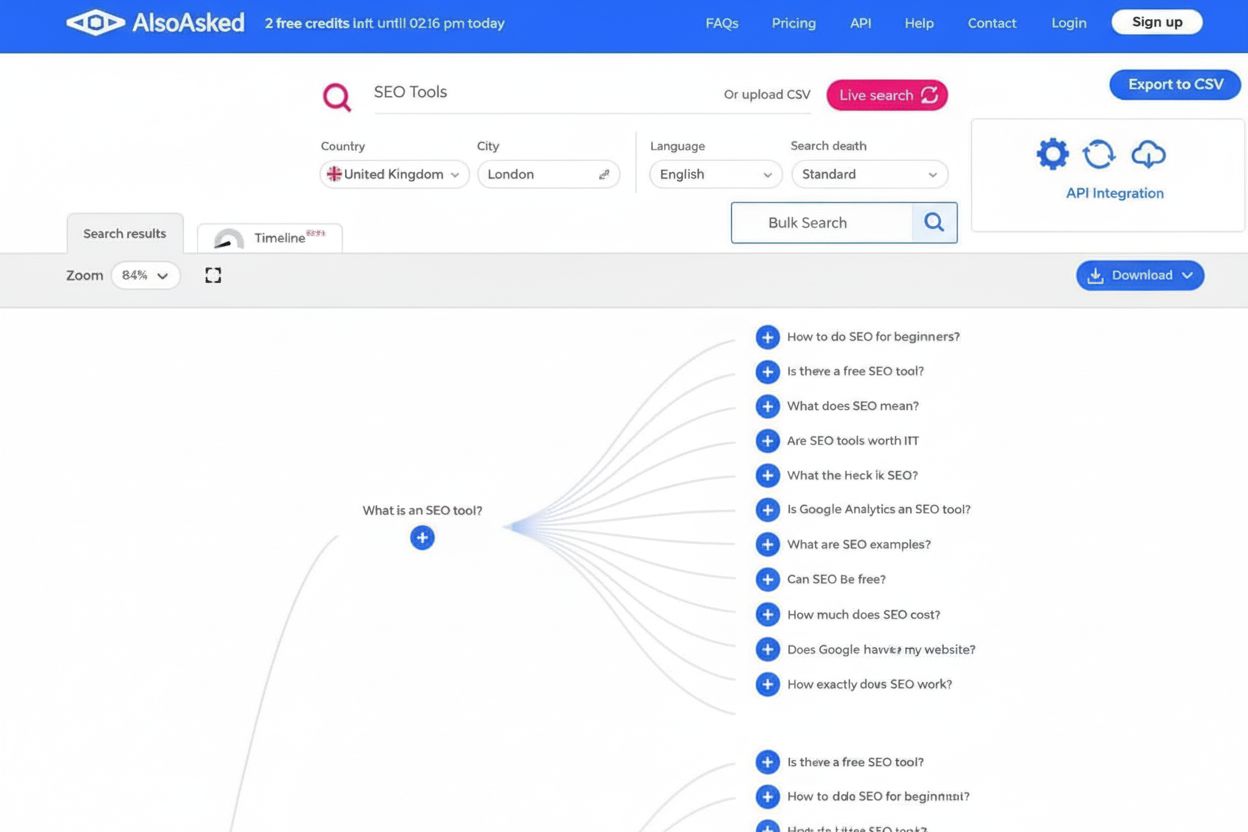
AlsoAsked is a People Also Ask data extraction tool that maps hierarchical question structures from Google search results. Learn how it enables content strategy...