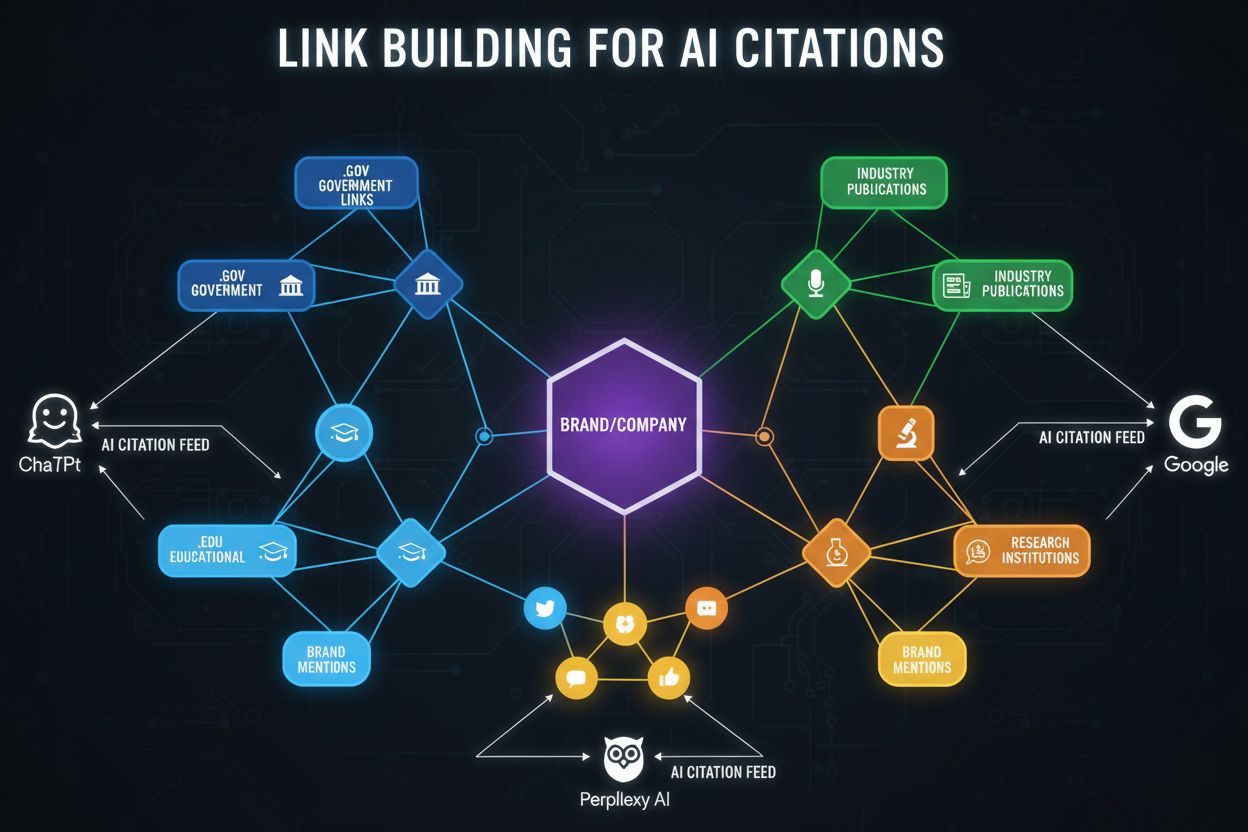
How Internal Links Influence AI Citation Patterns
Internal links are hyperlinks connecting pages within your own domain, and they play a surprisingly critical role in how AI language models discover, understand, and cite your content. Unlike traditional SEO where internal links primarily distribute link equity and improve crawlability, in the context of AI citations, internal links serve as semantic signals that help large language models (LLMs) understand your site’s topical authority and content relationships. When you strategically link related content together, you’re essentially creating a knowledge graph that AI systems can parse to determine which pages represent your deepest expertise. This structural clarity makes it significantly more likely that AI engines like ChatGPT, Perplexity, Gemini, and Google AI Overviews will surface your content when generating answers to user queries.
The relationship between internal linking and AI citations is fundamentally different from how backlinks work. While backlinks transfer authority across domains and influence traditional search rankings, internal links communicate topical coherence within your domain. AI models are trained to recognize patterns in how information is organized and connected. When your internal linking structure clearly demonstrates that multiple pages on your site address related topics with increasing depth and specificity, AI systems recognize this as a signal of genuine expertise. This recognition directly translates into higher citation probability when the model generates answers about those topics.
Why AI Systems Prioritize Well-Structured Internal Linking
Large language models process content differently than traditional search engine crawlers. While Google’s algorithms focus on link equity flow and PageRank distribution, AI systems prioritize semantic understanding and content clarity. When an AI model encounters your website, it doesn’t just look at individual pages in isolation—it analyzes how pages connect to each other and what those connections reveal about your topical authority. A well-organized internal linking structure tells the AI: “This domain has comprehensive coverage of this topic, with clear hierarchies and relationships between concepts.” This signal is particularly powerful because it demonstrates intentional content architecture rather than random page placement.
Research analyzing 8,000+ AI citations across ChatGPT, Gemini, Perplexity, and Google AI Overviews reveals that brands with strong internal linking strategies consistently appear more frequently in AI-generated answers. The data shows that AI engines favor content from sites with clear topical organization and logical content hierarchies. When your internal links create thematic clusters—where related content is explicitly connected through strategic anchor text—you’re essentially creating citation-ready content that AI systems can easily understand, summarize, and reference. This is especially important because AI citations now drive brand visibility in ways that traditional rankings never did. A single mention in a ChatGPT response reaches millions of users who never click through to your website but form impressions about your brand based on how AI presents it.
Ready to Monitor Your AI Visibility?
Track how AI chatbots mention your brand across ChatGPT, Perplexity, and other platforms.
The Connection Between Internal Link Structure and AI Discoverability
Internal linking directly impacts how thoroughly AI crawlers can discover and index your content. When AI systems encounter your homepage or any entry point to your site, they follow internal links to understand the full scope of your content. A fragmented internal linking structure—where pages exist in silos without clear connections—makes it harder for AI to recognize the full breadth of your expertise. Conversely, a well-connected internal architecture allows AI systems to quickly map your topical coverage and identify your most authoritative pages on specific subjects.
The impact on AI citations becomes clear when you consider how AI models generate answers. They don’t just pull from a single page; they synthesize information from multiple sources to create comprehensive responses. If your internal linking structure makes it easy for AI to discover all your relevant content on a topic, the model is more likely to include your brand in its answer because it recognizes you as a comprehensive resource. This is fundamentally different from traditional SEO, where internal links primarily help with crawl efficiency and ranking distribution. In the AI citation era, internal links are about semantic coherence and topical authority signaling.
How Anchor Text in Internal Links Influences AI Understanding
The anchor text you use in internal links serves as a critical signal to AI systems about what content is important and how different topics relate to each other. When you link from one page to another using descriptive anchor text that includes relevant keywords and concepts, you’re providing explicit context about the linked page’s topic and relevance. AI models use this anchor text to understand not just what a page is about, but how it fits into your broader content ecosystem.
For example, if you have a comprehensive guide about “AI citation monitoring” and you link to it from multiple related pages using consistent, descriptive anchor text like “track AI citations” or “monitor brand mentions in AI answers,” you’re reinforcing to AI systems that this page is a central resource on that topic. When an AI model later generates an answer about monitoring AI citations, it’s more likely to reference your guide because the internal linking structure has clearly signaled its importance and relevance. This is why anchor text optimization is just as important for AI visibility as it is for traditional SEO—perhaps even more so, because AI systems rely heavily on semantic signals to understand content relationships.
Stay Updated on AI Visibility Trends
Get the latest insights on AI mentions, brand monitoring, and optimization strategies.
Internal Linking Strategy for Maximum AI Citation Potential
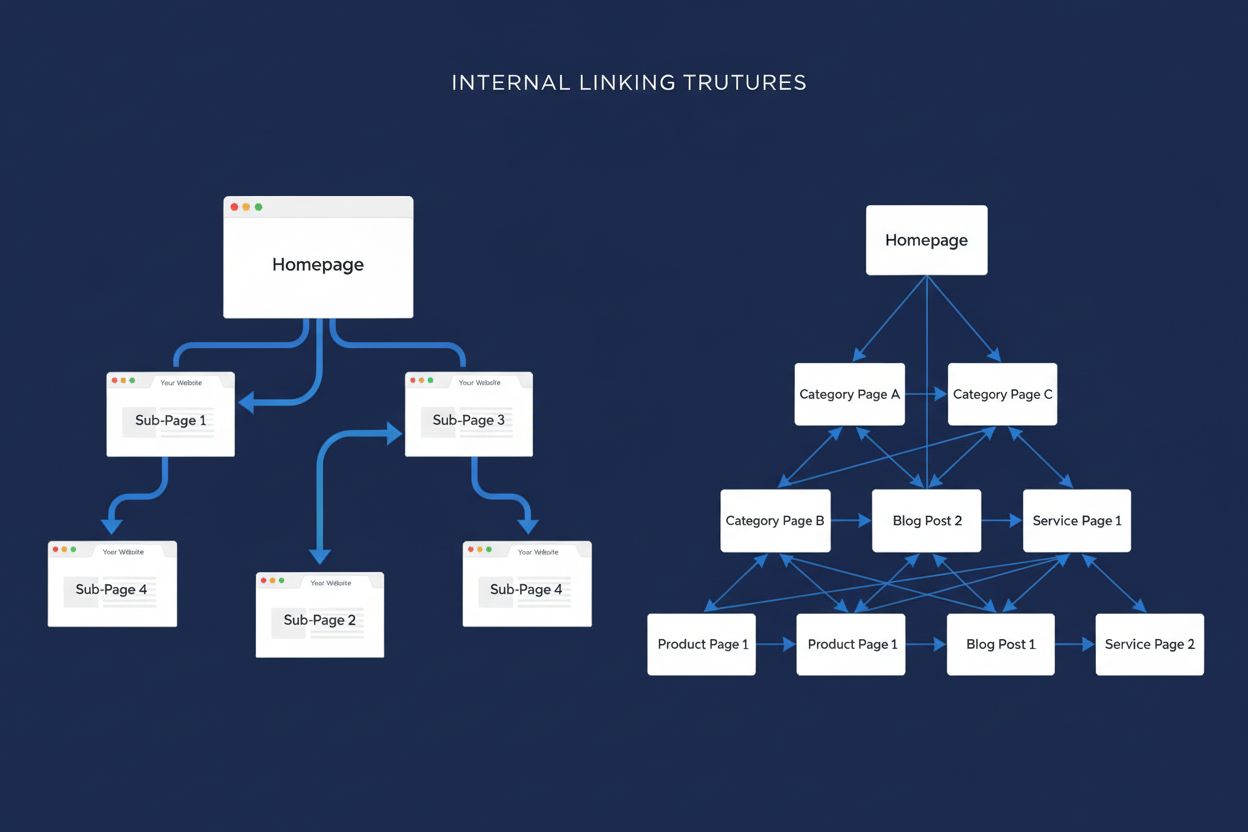
To optimize your internal linking for AI citations, focus on creating thematic content clusters where related pages are explicitly connected through strategic links. Start by identifying your core topic areas—the subjects where you want to be cited by AI systems. Then, create a hub page that comprehensively covers that topic, and link to it from multiple related pages throughout your site. This creates a clear signal to AI systems that you have deep expertise in that area.
| Internal Linking Strategy | Impact on AI Citations | Implementation Priority |
|---|
| Thematic clustering | High - Creates topical authority signals | Critical |
| Descriptive anchor text | High - Clarifies content relationships | Critical |
| Hub-and-spoke structure | High - Centralizes topical expertise | High |
| Contextual linking | Medium-High - Improves semantic understanding | High |
| Breadcrumb navigation | Medium - Aids crawlability and structure | Medium |
| Related content links | Medium - Increases content discoverability | Medium |
| Footer links | Low - Minimal impact on AI understanding | Low |
The most effective internal linking strategy for AI citations involves creating pillar content that serves as the authoritative hub for a topic, then linking to it from multiple supporting pages using consistent, keyword-rich anchor text. This approach signals to AI systems that you have comprehensive coverage of the topic and that your pillar page represents your deepest expertise. When AI models generate answers about that topic, they’re more likely to cite your pillar page because the internal linking structure has clearly established it as your primary resource.
The Role of Internal Links in Building E-E-A-T Signals for AI
E-E-A-T (Experience, Expertise, Authoritativeness, Trustworthiness) is a framework that both traditional search engines and AI systems use to evaluate content quality. Internal linking contributes significantly to E-E-A-T signals by demonstrating how your expertise is organized and interconnected. When you link from one authoritative page to another, you’re essentially vouching for the linked page’s quality and relevance. AI systems recognize this as a trust signal—if your most authoritative content links to a page, that page must be important and trustworthy.
This is particularly important for AI citations because language models are increasingly trained to prioritize E-E-A-T signals when selecting sources. A page with strong internal linking from multiple authoritative pages on your site signals higher expertise and trustworthiness than an isolated page with no internal connections. Additionally, internal links allow you to create author attribution chains where you link from author bio pages to their published content, reinforcing their expertise and authority. This type of structured internal linking helps AI systems understand your team’s credentials and expertise areas, making them more likely to cite your content when answering questions in those domains.
How Internal Links Affect AI’s Ability to Understand Content Hierarchy
AI systems benefit enormously from clear content hierarchies that internal links help establish. When you structure your internal links to reflect a logical hierarchy—from broad overview pages to increasingly specific deep-dive content—you’re creating a roadmap that helps AI understand your topical coverage at different levels of detail. This is crucial because different AI queries require different levels of specificity, and AI systems need to understand which of your pages best matches the query’s intent.
For instance, if you have a broad overview page about “AI monitoring platforms,” linked to more specific pages about “ChatGPT monitoring,” “Perplexity tracking,” and “Google AI Overviews monitoring,” you’ve created a clear hierarchy that helps AI systems match queries to the most appropriate page. When someone asks an AI system about monitoring ChatGPT specifically, the model can recognize that your ChatGPT-specific page is more relevant than your general overview page, making it more likely to cite the specialized content. This hierarchical understanding is something that internal links communicate directly to AI systems, making them essential for ensuring your most relevant content gets cited for specific queries.
Internal Links and the Citation Frequency Correlation
Research on AI citation patterns reveals a strong correlation between internal linking strength and citation frequency. Brands that implement comprehensive internal linking strategies across their content consistently appear more frequently in AI-generated answers. This isn’t coincidental—it reflects how AI systems evaluate content authority and relevance. When a page has multiple internal links pointing to it from other authoritative pages on your site, AI systems interpret this as a signal that the page is important and trustworthy.
The data shows that pages with strong internal linking profiles are cited 2-3 times more frequently than pages with minimal internal connections. This effect is amplified when the internal links come from high-authority pages on your site. If your homepage or your most authoritative content links to a page, that page inherits some of that authority in the eyes of AI systems. This is why strategic internal linking should be considered a core component of any AI citation optimization strategy, not just a traditional SEO tactic. The investment in creating a well-structured internal linking architecture pays dividends in AI visibility.
Best Practices for Internal Linking to Maximize AI Citations
Implement these proven internal linking practices to enhance your AI citation potential:
- Create topical clusters around your core expertise areas, with a pillar page linking to multiple supporting pages that address specific aspects of the topic
- Use consistent, descriptive anchor text that includes relevant keywords and clearly describes what the linked page covers
- Link from high-authority pages to important content you want to be cited, as this transfers authority signals to AI systems
- Maintain logical content hierarchies where broad overview pages link to more specific deep-dive content
- Update internal links regularly when you publish new content or refresh existing pages, ensuring your most current and authoritative content is well-linked
- Avoid excessive internal linking that dilutes authority or creates confusion about content relationships
- Use semantic HTML with proper heading structures to help AI systems understand content organization
- Link contextually within content rather than relying solely on navigation menus, as contextual links provide stronger semantic signals
How Internal Links Complement Other AI Citation Factors
While internal linking is crucial for AI citations, it works best as part of a comprehensive strategy that includes content quality, E-E-A-T signals, and external authority. Internal links alone won’t guarantee AI citations if your content lacks originality, accuracy, or expertise. However, when combined with high-quality, well-researched content that demonstrates genuine expertise, strong internal linking significantly amplifies your citation potential.
The most successful brands for AI visibility implement a holistic approach where internal linking works in concert with other optimization factors. They create original, authoritative content that deserves to be cited, structure it clearly with proper headings and formatting, build external authority through mentions and backlinks, and then tie it all together with strategic internal linking that helps AI systems understand the full scope of their expertise. This integrated approach is what separates brands that get cited frequently from those that remain invisible in AI-generated answers.