

How to Prevent Content from Losing AI Visibility in AI Search Engines
Learn proven strategies to maintain and improve your content's visibility in AI-generated answers across ChatGPT, Perplexity, and Google AI Overviews. Discover ...
11 min read

Learn how media companies achieve visibility in AI-generated answers through content optimization, earned media, digital PR, and strategic positioning across AI platforms like ChatGPT, Gemini, and Perplexity.
Media companies achieve AI visibility by creating high-quality, structured content that appears in AI-generated answers through earned media coverage, strategic digital PR, clear content formatting, and maintaining presence across trusted platforms like Wikipedia and the Google Knowledge Graph.
AI visibility refers to how often a media company’s content, brand, and expertise appear in AI-generated answers across platforms like ChatGPT, Perplexity, Google AI Overviews, Claude, and Gemini. Unlike traditional search engine optimization that focuses on ranking positions, AI visibility measures whether large language models cite, reference, or summarize your content when users ask relevant questions. For media companies, this represents a fundamental shift in how audiences discover and consume information, as users increasingly turn to AI tools instead of clicking through traditional search results.
The importance of AI visibility for media companies cannot be overstated. When an AI system includes your publication in its response, it provides credibility validation and reaches users at the exact moment they’re seeking answers. This zero-click environment means visibility is no longer about driving traffic through links—it’s about being recognized as a trusted source that AI systems rely on to inform their responses. Media companies that understand and optimize for AI visibility gain significant competitive advantages in shaping narratives and maintaining audience engagement.
Large language models don’t rank content the way Google does. Instead, they generate responses by analyzing patterns in their training data and selecting information based on relevance, accuracy, and authority. The process works through tokenization and semantic parsing, where text is broken down into meaningful units and relationships between concepts are analyzed. When a user asks a question, the LLM identifies the most relevant sources based on how frequently certain information appears near related topics in its training data.
Authority signals play a critical role in this process. LLMs prioritize content from sources that appear frequently in high-quality publications, have strong backlink profiles, and maintain consistent presence across trusted platforms. Media companies with established reputations benefit from this because their content is more likely to appear in training datasets and be recognized as credible. The models also consider content structure and clarity—well-organized articles with clear headings, bullet points, and direct answers to common questions are more likely to be extracted and cited in AI responses.
Recency and freshness matter significantly as well. LLMs tend to surface newer content over outdated information, which means media companies that publish timely, relevant coverage gain visibility advantages. Additionally, the models recognize entity relationships—when your publication is consistently mentioned alongside recognized brands, experts, and organizations, the LLM better understands your topical authority and is more likely to include you in responses.
Research shows that up to 89% of AI citations come from earned media, according to MuckRack data. This means traditional media coverage, press mentions, and third-party references are among the most powerful signals for AI visibility. When your media company is featured in respected publications, quoted by journalists, or mentioned in industry coverage, these mentions train AI systems to recognize your brand as authoritative and trustworthy.
Earned media works differently in the AI era than it did in traditional SEO. While overall media mentions have declined, brand reach has actually increased by 10%, suggesting that AI systems prioritize context and quality over quantity. A single high-authority mention in a respected trade publication can be more valuable than dozens of mentions in lower-tier outlets. This shift means media companies should focus on securing coverage in publications that are frequently cited in AI training data—typically major news outlets, industry-specific publications, and authoritative sources.
The mechanism is straightforward: when journalists and publishers write about your media company, their articles become part of the training data for large language models. When users later ask questions related to your coverage area, the LLM is more likely to reference your publication because it has seen your name and content associated with relevant topics across multiple trusted sources. This creates a compounding effect—the more earned media you generate, the more visible you become in AI responses.
Large language models interpret content differently than human readers. They prioritize clear structure, logical organization, and direct answers to common questions. Media companies that format their content strategically significantly improve their chances of being cited in AI responses. This includes using descriptive headings that match natural search language, breaking information into digestible sections, and providing direct answers early in articles rather than burying them in lengthy introductions.
Schema markup and structured data are increasingly important for AI visibility. By implementing proper schema markup—such as Organization, NewsArticle, or Author schemas—media companies provide machine-readable context that helps LLMs understand the content more accurately. This structured information makes it easier for AI systems to extract relevant facts, quotes, and insights from your articles. Additionally, named entity optimization ensures that key people, organizations, and concepts mentioned in your content are clearly identified and linked to authoritative sources like Wikipedia or Wikidata.
The formatting of content also matters significantly. Articles that use bullet points, tables, and clear subheadings are more likely to be parsed and cited by LLMs. When you present statistics, expert quotes, or original research in a visually organized format, AI systems can more easily extract and reuse this information in their responses. Media companies should also ensure that their content is mobile-friendly, loads quickly, and is free of technical errors—these factors influence how search engines and AI systems crawl and interpret your content.
Digital PR campaigns that secure high-quality backlinks from authoritative sources significantly boost AI visibility. When respected websites link to your media company’s content, it signals to both search engines and LLMs that your work is credible and worth referencing. The quality of these backlinks matters more than quantity—a single link from a major publication carries more weight than dozens of links from low-authority sites.
Effective digital PR for AI visibility involves creating linkable assets that provide genuine value to other publishers. This might include original research, comprehensive guides, expert commentary on industry trends, or data-driven insights that other journalists want to reference. When you publish something newsworthy or uniquely valuable, journalists and bloggers naturally link to it, creating the external validation that AI systems use to evaluate credibility.
| Strategy | Impact on AI Visibility | Implementation |
|---|---|---|
| Original Research | High - Unique data is frequently cited | Conduct surveys, analyze trends, publish findings |
| Expert Commentary | High - Establishes thought leadership | Secure quotes from recognized experts |
| Comprehensive Guides | Medium-High - Provides authoritative overview | Create in-depth, well-researched articles |
| Press Releases | Medium - Amplifies newsworthy announcements | Distribute through trusted PR channels |
| Guest Articles | Medium - Builds presence on authority sites | Pitch to high-authority publications |
| Backlink Outreach | Medium - Increases citation opportunities | Identify relevant sites and pitch content |
The relationship between backlinks and AI visibility is direct: media companies with stronger backlink profiles are more likely to be cited in AI responses because LLMs recognize these links as signals of authority and trustworthiness. Additionally, the anchor text used in these backlinks provides context about your content, helping AI systems understand what topics you cover and how you should be positioned.
Media companies that produce original research, exclusive interviews, and unique data significantly increase their AI visibility. Large language models actively seek out content that provides new information or perspectives rather than simply summarizing existing knowledge. When you publish original research with verifiable statistics, expert quotes with clear attribution, or case studies that demonstrate real-world applications, you create content that AI systems are more likely to extract and cite.
The key is ensuring that your original content is well-sourced and credible. Include citations for all statistics, clearly attribute expert quotes with names and titles, and provide context for your findings. This transparency helps LLMs evaluate the reliability of your content and increases the likelihood that they’ll reference it. Additionally, keeping your content updated is crucial—outdated information reduces credibility, while regularly refreshed content signals that you’re actively maintaining your expertise.
Media companies should also consider how their content serves different user intents. Some users ask factual questions that require specific data points, while others seek analysis, opinion, or context. By creating content that addresses multiple angles of a topic, you increase the chances that your publication will be cited across different types of AI responses. For example, a media company covering technology might publish both a news article about a product launch and an in-depth analysis of its market implications—both pieces serve different user needs and increase overall visibility.
Wikipedia and Wikidata serve as critical reference points for large language models. When your media company has an accurate, well-maintained Wikipedia entry, LLMs can more easily verify information about your organization and understand your topical focus. Similarly, Wikidata provides structured, machine-readable information that helps AI systems connect facts and resolve ambiguity about your brand.
The Google Knowledge Graph is another essential platform for AI visibility. When your media company appears in the Knowledge Graph with accurate information about your organization, leadership, and coverage areas, LLMs have verified context to draw from when generating responses. This verification process helps ensure that when your company is mentioned in AI responses, the information is accurate and properly contextualized.
Media companies should also maintain consistent naming and branding across all platforms. When your organization is referred to by different names or descriptions across the web, it becomes harder for AI systems to recognize and consolidate information about you. Standardizing how your company name appears, maintaining consistent descriptions of your mission and focus areas, and ensuring that all your online profiles link back to your official website helps LLMs build a clear, unified understanding of your brand.
Reddit and other community platforms have become increasingly important for AI visibility. Research shows that LLMs frequently draw from Reddit discussions when generating responses, particularly for questions about recommendations, reviews, and real-world experiences. Media companies can increase their visibility by encouraging authentic discussions about their coverage and engaging genuinely with communities interested in their topics.
The key is authenticity—LLMs and community moderators both value genuine participation over promotional content. Rather than directly promoting your media company, focus on providing valuable insights, answering questions, and participating in meaningful discussions. When your journalists and editors engage authentically in relevant communities, they build credibility and increase the likelihood that your company will be mentioned positively in discussions that LLMs later reference.
Media companies should also monitor how they’re being discussed across platforms. Understanding what people say about your coverage, which topics generate the most interest, and where misconceptions exist helps you create content that addresses real audience needs. This feedback loop improves both your content quality and your AI visibility, as you’re creating material that directly responds to what users are actually asking about.
Tracking AI visibility requires different approaches than traditional SEO analytics. Since AI tools generate answers rather than displaying clickable search results, visibility is measured through mentions, citations, and how frequently your content appears in AI responses. Media companies should set up Google Analytics 4 to track referral traffic from AI platforms like ChatGPT, Perplexity, and Google AI Overviews by creating custom channels that filter these sources.
Beyond traffic metrics, media companies should regularly audit how their brand and content appear in AI responses. This involves manually searching for relevant queries in ChatGPT, Gemini, and Perplexity to see whether your publication is cited, how it’s described, and what context is provided. Tracking these mentions over time reveals trends in your AI visibility and helps identify which content types and topics generate the most AI citations.
Key metrics to monitor include:
Several emerging tools now offer AI visibility tracking specifically designed for this purpose. These platforms run targeted prompts through various AI systems to detect mentions, track citations, and provide competitive benchmarking. By combining manual audits with automated tracking tools, media companies gain comprehensive visibility into how AI systems perceive and reference their brand.
The most effective approach to AI visibility involves coordinating across all media channels. Paid media drives traffic to well-optimized content, earned media provides third-party validation, shared media builds topical relevance through community engagement, and owned media serves as the foundation for deep, authoritative content. When these channels work together, they create multiple signals that reinforce your media company’s authority and expertise.
For example, a media company might secure a thought leadership article in a top trade publication (earned media), amplify it through LinkedIn and industry newsletters (shared media), publish a detailed analysis on their website (owned media), and run targeted ads to reach relevant audiences (paid media). Within weeks, this coordinated approach creates multiple touchpoints where your brand appears in connection with a specific topic, significantly increasing the likelihood that LLMs will cite your company when users ask related questions.
The key is message consistency across channels. When the same core insights appear credibly across multiple sources, AI systems recognize this as a strong signal of authority and trustworthiness. Media companies should map their audience’s questions to content topics across all channels, then reinforce core messages through different formats and platforms. This integrated approach not only improves AI visibility but also strengthens brand recognition and audience engagement across all digital touchpoints.
Track how often your media company appears in AI-generated answers across ChatGPT, Perplexity, Google AI Overviews, and other AI search engines. Get real-time insights into your AI visibility and competitive positioning.
Learn proven strategies to maintain and improve your content's visibility in AI-generated answers across ChatGPT, Perplexity, and Google AI Overviews. Discover ...
Learn proven strategies to improve your brand's visibility in AI search engines like ChatGPT, Perplexity, and Gemini. Discover content optimization, entity cons...
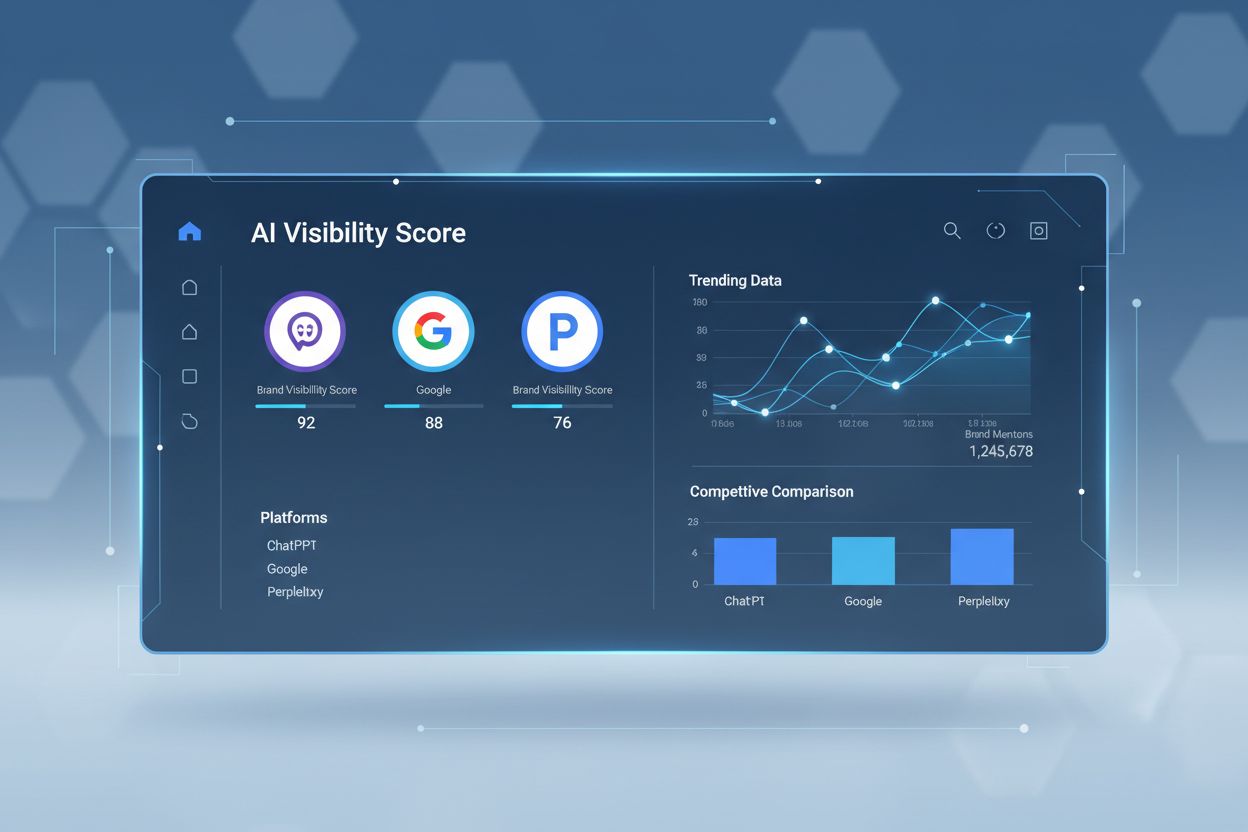
Master the Semrush AI Visibility Toolkit with our comprehensive guide. Learn how to monitor brand visibility in AI search, analyze competitors, and optimize for...