

How to Optimize Your Products for AI Shopping Assistants
Learn how to optimize your e-commerce store for AI shopping assistants like ChatGPT, Google AI Mode, and Perplexity. Discover strategies for product visibility,...
11 min read

Learn how retail brands optimize for AI search engines like ChatGPT, Perplexity, and Google AI Overviews. Discover AEO strategies, content optimization, and monitoring techniques to increase brand visibility in AI-generated answers.
Retail brands optimize for AI by creating structured, conversational content that answers customer questions directly, implementing Answer Engine Optimization (AEO) strategies, enhancing product listings with detailed information, monitoring their visibility in AI-generated answers, and ensuring their websites are technically optimized for AI bot crawling and content rendering.
AI search optimization has become a critical priority for retail brands as generative AI platforms like ChatGPT, Perplexity, and Amazon’s Rufus chatbot reshape how consumers discover products. Unlike traditional search engines that display lists of links, AI search engines provide conversational answers that synthesize information from multiple sources and make product recommendations directly within the AI interface. This fundamental shift compresses the traditional customer journey from hours of research across multiple websites to minutes within a single AI platform. For retail brands, this means visibility in AI-generated answers is now as important as ranking in Google search results.
The growth of AI search traffic to retail websites has been exponential. According to recent data, traffic from AI sources to retail sites increased by 1,200% in February compared to July 2024, with visits doubling every two months since September 2024. More importantly, shoppers arriving from AI sources demonstrate higher engagement, with a 23% lower bounce rate compared to visitors from other channels, indicating that these users are more qualified and intent-driven. This trend reflects growing consumer trust in AI tools, with 58% of consumers now saying that AI platforms like ChatGPT have replaced traditional search engines as their primary source for product and service recommendations.
Answer Engine Optimization (AEO) is the practice of structuring and presenting content in ways that AI systems can easily understand, extract, and cite in their generated answers. While traditional SEO focuses on ranking for keywords in search engine results pages, AEO focuses on making your content the authoritative source that AI engines pull from when answering customer questions. The key difference is that AI engines don’t crawl and index pages the way Google does; instead, they use Retrieval-Augmented Generation (RAG) technology to retrieve information from external sources and synthesize it into natural language responses.
To optimize for AEO, retail brands must understand how AI engines process information. These systems use Natural Language Processing (NLP) to break down customer queries into meaningful components and then generate responses by predicting relevant content based on learned patterns. This means your content must be semantically rich, factually accurate, and structured for machines that reason rather than just rank. The goal is to make your brand’s information so clear, authoritative, and well-organized that AI systems naturally select it as a source when answering customer questions about products in your category.
| Optimization Aspect | Traditional SEO Focus | AEO Focus |
|---|---|---|
| Primary Goal | Rank for keywords in search results | Appear as source in AI-generated answers |
| Content Structure | Keyword-optimized paragraphs | Conversational, question-based answers |
| Query Type | Short-tail keywords | Long-tail, conversational questions |
| Content Format | Blog posts, product pages | FAQs, structured data, direct answers |
| Measurement | Rankings and click-through rates | Brand citations in AI responses |
| Technical Requirements | Crawlability and indexation | Bot rendering and content accessibility |
Retail brands must fundamentally rethink how they structure content to be AI-friendly. The most effective approach is to write content that directly answers customer questions in the way people naturally ask them. This means creating comprehensive FAQ pages, product guides, and educational content that addresses common customer queries with clear, concise answers positioned near the top of the page. AI systems prioritize content that provides direct answers within the first 40-60 words, so your most important information should appear immediately rather than buried in lengthy introductions.
Structuring content with clear headings and subheadings (H1, H2, H3) is essential for AI comprehension. Use question-based headings that mirror how customers actually search, such as “What is the best waterproof running shoe for marathon training?” rather than generic titles. Break up text into short paragraphs and use bullet points strategically to highlight key information. This formatting helps both AI systems and human readers quickly scan and understand your content. Additionally, implement schema markup (structured data) to provide AI engines with explicit context about your content, products, and business information. Schema markup helps AI systems understand the semantic meaning of your content beyond just the text itself.
For retail specifically, enhance product listings with detailed, conversational information that answers common customer questions. Instead of just listing specifications, include information about use cases, benefits, comparisons with similar products, and answers to frequently asked questions. Many successful retailers are adding FAQ sections directly to product pages and bulking up product descriptions with text that corresponds to common questions customers ask about that product category. This approach makes your products more discoverable in AI answers while also improving the user experience for human shoppers.
Successful content optimization for AI requires a multi-faceted approach that combines several key strategies. First, write for authority and transparency by demonstrating genuine expertise, clearly attributing information, and including author credentials and company context. Align your content strategy with Google’s E-E-A-T guidelines (Experience, Expertise, Authoritativeness, and Trustworthiness), which AI systems increasingly use to evaluate source credibility. This means including author bios, publication dates, citations, and evidence of expertise in your content.
Second, optimize for conversational queries by using natural language that mirrors how people actually speak. Instead of targeting short keywords like “running shoes,” target longer, conversational phrases like “What are the best running shoes for flat feet?” or “How do I choose running shoes for marathon training?” These conversational queries are increasingly how people interact with AI systems, and your content should be written to answer these specific questions comprehensively.
Third, ensure mobile-friendliness and fast load times since most conversational searches happen on mobile devices. AI bots also struggle to render dynamic website content, missing crucial functionality like navigation, add-to-cart buttons, and product reviews. Retailers should audit their websites to ensure that AI bots can properly access and render all important content, including product information, reviews, and pricing. This technical optimization is just as important as content optimization for ensuring visibility in AI answers.
Fourth, maintain updated Google Business Profiles with location-specific information and local keywords. For retail brands with physical locations, local optimization remains important as AI systems incorporate location data into their recommendations. Ensure your business information is consistent across all platforms and includes relevant local keywords and customer reviews.
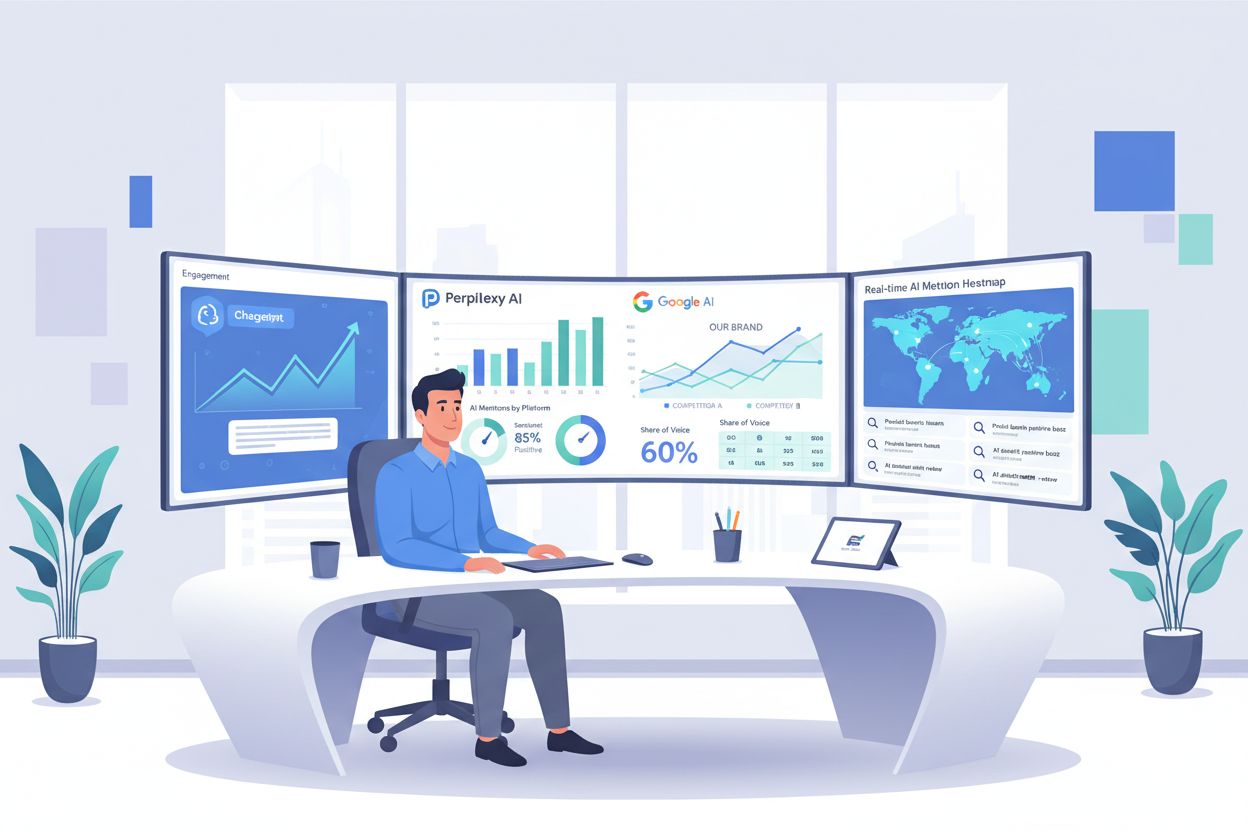
Monitoring your brand’s visibility in AI-generated answers is essential for understanding the effectiveness of your optimization efforts and identifying improvement opportunities. Use specialized tools that track how often your brand is cited in AI-generated answers from platforms like ChatGPT, Perplexity, Google AI Overviews, and other AI search engines. These monitoring tools provide insights into which queries trigger your brand in AI responses, how frequently you appear, and which competitors are also being cited.
Leverage traditional analytics tools like Google Search Console, Google Analytics, and SEMrush to monitor traffic patterns and identify trends in how AI traffic differs from traditional search traffic. Test specific queries manually in AI platforms like Perplexity and ChatGPT to see which of your content pieces are being cited and how your brand is being represented in AI answers. This hands-on testing helps you understand what’s working and what needs improvement.
Additionally, follow industry trends and emerging AEO platforms to stay ahead of changes in how AI systems source and present information. The AI search landscape is evolving rapidly, with new platforms and features launching regularly. Brands that stay informed about these changes and adapt their strategies accordingly will maintain competitive advantages in AI visibility. Consider joining industry communities, following AEO thought leaders, and regularly testing your brand’s visibility across different AI platforms.
Innovative retail brands are experimenting with several specific tactics to improve their AI visibility. Some brands are increasing their presence on platforms like Reddit that have data partnerships with AI companies like OpenAI. Since AI systems use these partnerships to source information, having authoritative, helpful content on these platforms can increase your chances of being cited in AI answers. However, this should be done authentically—providing genuine value rather than attempting to game the system.
For brands selling on Amazon, optimizing product listings with text that corresponds to common questions asked on Amazon’s Rufus chatbot has proven effective. This involves analyzing the types of questions customers ask about your product category and ensuring your product descriptions and listing content directly address these questions. The same principle applies to your own website—structure product information to answer the questions your customers are actually asking.
Some retailers are also experimenting with AI search advertising where available. Platforms like Perplexity and Amazon are beginning to offer advertising options within their AI interfaces, allowing brands to appear alongside organic AI-generated answers. These early-stage advertising opportunities may become increasingly important as AI search grows, so brands should monitor these developments and test them when available.
While traditional SEO and AEO share some similarities, they require fundamentally different approaches. Traditional SEO optimizes for ranking in search engine results pages by targeting specific keywords, building backlinks, and improving technical performance. The goal is to appear in the list of results that users click on. AEO, by contrast, optimizes for being cited as a source within AI-generated answers, which means your content must be authoritative, factual, and directly answer customer questions.
AI systems don’t rank content the way Google does; instead, they evaluate content based on relevance, authority, and factual accuracy. This means that keyword density, backlink profiles, and traditional ranking factors matter less for AEO. What matters more is whether your content is the most authoritative, comprehensive, and trustworthy answer to a customer’s question. Additionally, AI systems increasingly prioritize original research, expert perspectives, and first-hand experience over content that simply aggregates information from other sources.
The measurement metrics are also different. While SEO success is measured by rankings and click-through rates, AEO success is measured by brand citations in AI-generated answers and traffic from AI sources. This requires different monitoring tools and analytics approaches. Brands need to track not just whether they rank for keywords, but whether they’re being cited as sources in AI answers and how much traffic they’re receiving from AI platforms.
The rise of AI search represents a fundamental shift in how consumers discover and purchase products. As AI agents become more sophisticated, they may soon handle complex shopping tasks autonomously—finding the perfect gift, restocking household supplies, or comparing products across multiple retailers—all without direct human intervention. This means retailers are becoming less direct intermediaries between brands and consumers, with AI platforms increasingly acting as the primary interface.
This shift could significantly impact traditional retail marketing channels. Paid search advertising and sponsored product listings may become less effective as consumers increasingly rely on AI recommendations rather than clicking through search results. This makes organic visibility in AI answers increasingly valuable, as it represents one of the few ways brands can influence consumer decisions without paying for advertising. Retailers that successfully optimize for AI now will have significant competitive advantages as AI search becomes the norm for online shopping.
However, the opportunity is substantial for brands that act now. Early adopters of AEO strategies are already seeing significant returns on their optimization efforts. A major US retailer that implemented comprehensive AI optimization saw a 40% increase in organic traffic and a 25% boost in conversions specifically from AI-driven search platforms within six months. An athletics retailer saw a 180% increase in page requests through AI channels and a 420% increase in traffic from ChatGPT. These results demonstrate that AI optimization is not just a future consideration—it’s a current opportunity for brands willing to invest in it.
Track how often your retail brand appears in AI-generated answers from ChatGPT, Perplexity, and other AI search engines. Get insights into your AI visibility and optimize your presence.
Learn how to optimize your e-commerce store for AI shopping assistants like ChatGPT, Google AI Mode, and Perplexity. Discover strategies for product visibility,...

Learn how to optimize products for AI shopping platforms. Discover strategies for improving visibility in ChatGPT Shopping, Google AI Overviews, Rufus, and Perp...
Learn how to set up AI brand monitoring to track your brand across ChatGPT, Perplexity, and Google AI Overviews. Complete guide with tools, strategies, and best...