

How Does YouTube Content Affect AI Citations in ChatGPT and Perplexity
Learn how YouTube content influences AI citations across ChatGPT, Perplexity, and Google AI. Discover why YouTube dominates with 200x more citations than compet...
10 min read

Discover how tutorial content performs in AI citations. Learn why YouTube tutorials dominate AI search with 200x advantage over competitors and how to optimize tutorial content for AI visibility.
Tutorials, particularly video tutorials on YouTube, perform exceptionally well in AI citations. YouTube accounts for approximately 20% of all AI citations across platforms and is cited 200x more than any other video platform. Tutorial content that demonstrates practical applications, step-by-step processes, and visual explanations ranks highly in AI search results, especially for how-to queries, product demonstrations, and technical instructions.
Tutorial content demonstrates exceptional performance in AI citations, with video tutorials leading the way as one of the most cited content formats across all major AI platforms. Understanding how tutorials rank in AI search results is crucial for content creators, educators, and brands looking to maximize their visibility in the era of generative AI. The data reveals clear patterns about which types of tutorials perform best and why AI systems consistently prioritize tutorial content when answering user questions.
YouTube tutorials hold an unprecedented position in AI citations, accounting for approximately 20% of all citations across AI platforms and commanding a 200x advantage over any other video platform. This dominance extends across every major AI search engine, including Google AI Overviews, Google AI Mode, Perplexity, and ChatGPT. The data collected from May 2024 through September 2025 demonstrates that YouTube is not just the preferred video platform—it is essentially the only video platform that AI systems consistently cite. Competitors like Vimeo (0.1%), TikTok (0.1%), Dailymotion (0%), and Twitch (0%) barely register in AI citations, making YouTube’s position virtually uncontested in the video tutorial space.
The citation share varies by platform, with Google AI Overviews citing YouTube in 29.5% of responses, making it the #1 cited domain overall, ahead of authoritative sources like Mayo Clinic (12.5%). Google AI Mode cites YouTube in 16.6% of responses, while Perplexity includes YouTube citations in 9.7% of queries. Even ChatGPT, which has no obligation to favor Google properties, shows growing YouTube citations with 100% week-over-week growth, though from a smaller base. This consistent preference across independent platforms validates YouTube’s position as the universal authority for video tutorials in AI search.
| AI Platform | YouTube Citation Share | Ranking Position | Week-over-Week Change |
|---|---|---|---|
| Google AI Overviews | 29.5% | #1 domain | -32.8% |
| Google AI Mode | 16.6% | #1 domain | -3.2% |
| Perplexity | 9.7% | #5 domain | +4.8% |
| ChatGPT | 0.2% | Growing | +100% |
| Average Across Platforms | 20% | Top ranking | Varies |
Different tutorial categories show varying levels of success in AI citations, with practical, demonstration-based content significantly outperforming abstract or purely informational tutorials. AI systems demonstrate a clear preference for tutorials that provide actionable steps, visual demonstrations, and concrete examples that users can immediately apply. Tutorials that show “how-to” processes, product demonstrations, financial tool usage, and medical education with action components consistently receive high citation rates from AI platforms.
High-performing tutorial categories include platform-specific tutorials (such as “TD Ameritrade post-merger” instructions), medical education content with practical action components, current pricing and deal-hunting tutorials, financial tool demonstrations, and product reviews with step-by-step guidance. These tutorials succeed because they combine visual clarity with practical utility—users can watch and immediately understand how to complete a task. The average ranking position for YouTube tutorials in AI citations falls between 6.3 and 9.7 across platforms, indicating that tutorials typically serve as supplementary evidence rather than primary sources, complementing text-based authority with visual demonstration.
Lower-performing tutorial categories include strategic planning tutorials, career advice and academic selection guidance, abstract financial concept explanations, technical architecture decision tutorials, and pure informational content without visual benefit. These tutorials struggle because they lack the immediate practical application that AI systems prioritize. When users ask abstract questions about strategy or planning, AI systems tend to cite text-based authoritative sources rather than video tutorials, as the visual format doesn’t add significant value to conceptual discussions.
AI platforms consistently cite tutorial content because it serves multiple functions that align with how generative AI systems evaluate and present information. Tutorials provide structured, step-by-step information that AI systems can easily parse and summarize for users. The visual component of video tutorials adds credibility and clarity, allowing AI systems to confidently cite the content knowing that users can verify the information through demonstration. Additionally, tutorials often contain high fact density—specific instructions, measurements, timing, and procedures that AI systems recognize as authoritative and verifiable.
The preference for tutorials also reflects how AI systems understand user intent. When someone asks “how do I…” or “show me how to…”, they’re seeking actionable guidance, and tutorials directly answer this intent. AI systems recognize that tutorial content, particularly video tutorials, provides the most direct path to answering procedural questions. The combination of visual demonstration, clear narration, and step-by-step structure makes tutorials exceptionally easy for AI systems to extract relevant information and present it to users in a coherent way.
Furthermore, tutorial content benefits from strong engagement signals that AI systems monitor. YouTube tutorials typically receive high watch time, completion rates, and user engagement metrics that signal quality and usefulness. These engagement signals reinforce the authority of tutorial content in AI systems’ evaluation frameworks. When millions of users watch and complete a tutorial, AI systems interpret this as validation that the content is accurate, helpful, and worth citing in responses to similar queries.
Tutorial content performs differently depending on where users are in their decision-making journey, with distinct patterns emerging at awareness, consideration, and decision stages. At the top of funnel (awareness stage), product-related tutorials account for approximately 56% of citations, with educational and how-to tutorials making up a significant portion. This challenges traditional content marketing wisdom that suggests awareness-stage content should focus primarily on education rather than product demonstrations. AI systems recognize that even early-stage users benefit from seeing how products work in practice.
At the middle of funnel (consideration stage), tutorial citations remain strong but diversify to include comparison tutorials, feature demonstration videos, and user review tutorials. Product tutorials drop slightly to 46% of citations as AI systems incorporate more outside perspectives and comparative content. This is where tutorial content that compares multiple solutions or demonstrates different approaches performs particularly well. Users at this stage want to see tutorials that show how different products or methods work in comparison, helping them evaluate options.
At the bottom of funnel (decision stage), product-specific tutorials and setup tutorials peak in citation frequency, with product content reaching over 70% of citations. Tutorials that show exactly how to implement, set up, or use a specific product dominate at this stage. Users ready to make a purchase decision want detailed tutorials that confirm they’re making the right choice and show them exactly what to expect during implementation.
Tutorial content performs differently in B2B and B2C contexts, reflecting the distinct needs and search behaviors of business and consumer audiences. In B2B scenarios, product-specific tutorials from company websites account for nearly 56% of citations, with affiliate tutorials (13%) and user review tutorials (11%) following. B2B buyers rely heavily on official product tutorials and implementation guides because they need to understand how solutions integrate with their existing systems and processes. Tutorials that demonstrate integration, configuration, and enterprise-level use cases perform exceptionally well in B2B AI citations.
In B2C scenarios, tutorial content shows more variety, with product tutorials dropping to approximately 35% of citations. Affiliate tutorials (18%), user review tutorials (15%), and general educational tutorials (15%) all receive higher citation rates. B2C audiences benefit from seeing tutorials from multiple perspectives—not just official product tutorials but also independent reviews and user experiences. This diversity reflects how B2C buyers want to see tutorials from people like themselves, not just official sources. Tutorial content that shows real-world usage, personal experiences, and honest reviews performs particularly well in B2C AI citations.
To maximize tutorial performance in AI citations, content creators should focus on several key optimization strategies that align with how AI systems evaluate and cite tutorial content. First, structure tutorials with clear, searchable headings that mirror the exact questions users ask. AI systems parse tutorial content more effectively when headings are specific and question-based, such as “How to Set Up Two-Factor Authentication” rather than generic titles like “Security Features.” This helps AI systems understand the tutorial’s scope and cite it for specific queries.
Second, optimize for multiple platforms simultaneously. While YouTube dominates video citations, AI systems also draw from tutorials published on blogs, LinkedIn, industry-specific platforms, and community forums. Distributing tutorial content across multiple platforms increases the likelihood that AI systems will encounter and cite your tutorials. A tutorial published only on YouTube reaches fewer AI systems than one distributed across YouTube, your website, LinkedIn, and relevant industry platforms.
Third, enhance fact density within tutorials by including specific data points, measurements, timestamps, and verifiable claims. AI systems recognize tutorials with high fact density as more authoritative and citable. Include statistics, recent examples, updated information, and specific instructions that users can verify. This makes your tutorials more attractive to AI systems looking for authoritative sources to cite.
Fourth, implement structured data and schema markup for tutorial content. Use VideoObject schema for YouTube videos and HowTo schema for written tutorials. This helps AI systems understand the tutorial’s structure, duration, and content more clearly, making it easier for them to cite your tutorials appropriately in AI-generated responses.
Finally, maintain content freshness by updating tutorials regularly with new information, updated screenshots, and current examples. AI systems prefer content that’s been recently updated, as it signals ongoing authority and accuracy. Tutorials updated within the last 3-6 months receive higher citation rates than outdated tutorials, even if the older content is still technically accurate.
Tracking how your tutorials perform in AI citations requires systematic monitoring across multiple platforms and regular analysis of citation patterns. Use specialized AI citation tracking tools to monitor mentions of your tutorials across ChatGPT, Perplexity, Google AI Overviews, and other AI platforms. Log which tutorials get cited, in what context, and at what position within AI responses. This data reveals which tutorial topics, formats, and styles resonate most with AI systems.
Create a custom channel group in Google Analytics 4 to track traffic coming from AI sources separately from traditional search traffic. This allows you to measure not just whether your tutorials are cited, but whether those citations drive meaningful traffic and conversions. Compare the behavior of AI-sourced visitors to traditional search visitors—research shows that AI search visitors convert 4.4x better than traditional search users, making tutorial citation performance a valuable metric for business outcomes.
Establish baseline measurements for your tutorial content’s current AI citation performance, then track improvements monthly. Monitor citation frequency (how often your tutorials are cited), citation quality (position and context within AI responses), and citation velocity (how quickly new tutorials earn citations after publication). These metrics provide clear visibility into whether your tutorial optimization efforts are working and where to focus future content creation.
Track how your tutorial content appears in AI-generated answers across ChatGPT, Perplexity, and Google AI Overviews. Get real-time insights into your brand's visibility in AI search results.
Learn how YouTube content influences AI citations across ChatGPT, Perplexity, and Google AI. Discover why YouTube dominates with 200x more citations than compet...
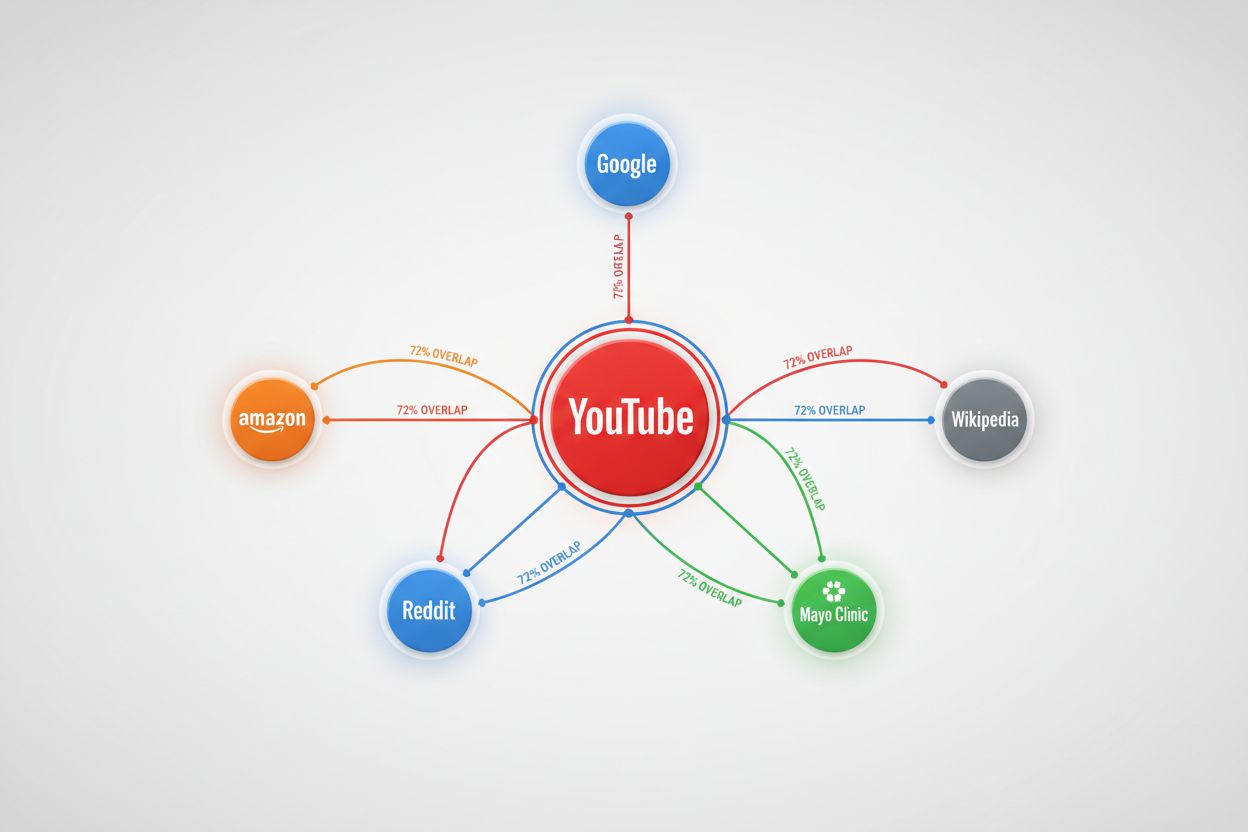
YouTube dominates Google AI Overviews with 29.5% citation share, cited 200x more than other video platforms. Learn why and how to leverage this for your brand.
Discover which content types AI systems cite most frequently. Learn how YouTube, Wikipedia, Reddit, and other sources rank across ChatGPT, Perplexity, and Googl...