

How Does ChatGPT Choose Which Sources to Cite? Complete Guide
Discover how ChatGPT selects and cites sources when browsing the web. Learn about credibility factors, search algorithms, and how to optimize your content for A...
7 min read

Learn how ChatGPT Search retrieves real-time information from the internet using web crawlers, indexing, and partnerships with data providers to deliver accurate, cited answers.
ChatGPT Search retrieves information by using web crawlers to discover and index webpages, accessing OpenAI's own index and Bing's search index through a Microsoft partnership, and sourcing data from trusted news and data providers. The system then passes this retrieved information to ChatGPT's language model to generate accurate, cited responses.
ChatGPT Search is a feature that enhances ChatGPT’s responses by retrieving real-time information from the internet and providing citations to its sources. Unlike the base ChatGPT model, which relies on static training data with a knowledge cutoff date, ChatGPT Search actively queries the web to deliver current, accurate information. Understanding how this retrieval process works is essential for anyone looking to optimize their content visibility in AI-powered search results.
ChatGPT Search operates through a multi-step retrieval process that combines web crawling, indexing, and intelligent information retrieval. When you submit a query to ChatGPT Search, the system first determines whether real-time information is necessary to answer your question accurately. If the system identifies that current data would improve the response, it automatically initiates a web search without requiring you to manually click the search icon. The system then retrieves relevant information from multiple sources, passes this data to ChatGPT’s large language model, and generates a comprehensive response that synthesizes information from various webpages while providing proper citations.
This retrieval mechanism differs fundamentally from traditional search engines like Google. Rather than simply ranking webpages by relevance, ChatGPT Search extracts specific information from multiple sources and synthesizes it into a cohesive answer. This approach allows users to get direct answers to their questions without needing to visit multiple websites, though citations are provided for users who want to explore sources further.
The foundation of ChatGPT Search’s retrieval capability lies in its web crawling and indexing infrastructure. OpenAI operates its own web crawler called OAI-Searchbot, which continuously explores the internet to discover and catalog webpages. This crawler systematically visits websites, analyzes their content, and determines which pages should be stored in OpenAI’s proprietary index. The indexing process involves sophisticated algorithms that evaluate page quality, relevance, and trustworthiness to decide which content should be included in the searchable database.
Beyond its own crawler, OpenAI has established a strategic partnership with Microsoft that grants ChatGPT Search access to Bing’s search index. Bing, Microsoft’s search engine, maintains its own extensive web index built through its primary crawler called Bingbot. This partnership is mutually beneficial—it allows ChatGPT Search to leverage decades of accumulated search technology and algorithmic refinement from Bing’s operations. By accessing both OpenAI’s index and Bing’s index, ChatGPT Search can retrieve information from a broader range of sources than it could using a single index alone.
| Data Source | Provider | Purpose |
|---|---|---|
| OpenAI Index | OpenAI (OAI-Searchbot) | Primary web crawling and indexing |
| Bing Index | Microsoft (Bingbot) | Secondary index access via partnership |
| News & Data Providers | Trusted third-party sources | Real-time data for specific categories |
| Specialized Feeds | Financial, sports, weather data | Formatted display of current information |
Beyond general web indexing, ChatGPT Search has established partnerships with trusted news and data providers to access specialized, real-time information. These partnerships enable ChatGPT Search to display current information in specially formatted layouts that go beyond standard text responses. For example, when you ask about sports scores, ChatGPT Search can display a formatted table showing team scores and upcoming games pulled directly from official sports data feeds. Similarly, financial data, weather information, and news updates come from dedicated data providers rather than being extracted from general web content.
These partnerships are crucial for delivering accurate, up-to-date information in categories where timeliness is critical. Rather than relying on web crawlers to find this information scattered across various websites, OpenAI has direct data feeds from authoritative sources. This approach ensures that users receive the most current information available, formatted in a way that’s easy to understand and act upon. The partnerships also help ChatGPT Search maintain higher accuracy standards in specialized domains where incorrect or outdated information could be particularly problematic.
Once ChatGPT Search has access to indexed content from its various sources, the retrieval and ranking process determines which specific pieces of information are most relevant to your query. The system uses natural language processing to understand the semantic meaning of your question, then searches the index for content that matches your intent. Rather than simply matching keywords, the system analyzes the conceptual meaning of both your query and the indexed content to find genuinely relevant information.
The ranking algorithm considers multiple factors when determining which sources to prioritize. Content quality and authority play significant roles—pages from established, reputable websites are weighted more heavily than content from lesser-known sources. Relevance to the specific query is another critical factor, with the system evaluating how closely each piece of content addresses your question. Freshness is also considered, particularly for queries where recent information is important. The system may also evaluate topical expertise, giving preference to content from sources that demonstrate deep knowledge in the relevant subject area.
After retrieving relevant information from the web, ChatGPT Search passes this data to ChatGPT’s large language model (LLM) for processing and synthesis. The language model doesn’t simply copy text from the retrieved sources; instead, it analyzes the information, identifies key points, and generates a new response that synthesizes insights from multiple sources. This synthesis process allows ChatGPT Search to provide answers that are more comprehensive than any single source could offer, while still maintaining accuracy by grounding the response in retrieved information.
The language model also handles the citation and attribution process, ensuring that sources are properly credited for the information used in the response. When ChatGPT Search generates an answer, it includes links to the original sources alongside the relevant information. This transparency allows users to verify claims, explore sources in greater depth, and understand where specific information originated. The citation system is particularly important for building trust, as users can see exactly which sources contributed to the answer they received.
ChatGPT Search offers both automatic and manual search triggering capabilities. In automatic mode, the system analyzes your query and determines whether real-time information would improve the response. If the system detects that your question relates to current events, recent developments, or time-sensitive information, it automatically initiates a web search and displays a “Searching the web” status before providing the response. This automatic triggering means you don’t need to manually request a search for queries where current information is clearly beneficial.
For queries where you want to ensure web search is used regardless of the system’s automatic assessment, you can manually trigger a search by clicking the globe icon in the ChatGPT interface. This manual option gives you control over when web search is used, which can be helpful for queries where you specifically want the most current information available, even if the system might otherwise rely on training data. The combination of automatic and manual triggering provides flexibility while ensuring that users can always access real-time information when needed.
While ChatGPT Search significantly improves upon the base ChatGPT model’s limitations, it’s important to understand its constraints and knowledge cutoff considerations. The base ChatGPT model, such as GPT-4o, has a knowledge cutoff date of October 2023, meaning it lacks information about events and developments after that date. Without web search enabled, ChatGPT may speculate or “hallucinate” (generate fabricated information) when asked about recent events or current information.
ChatGPT Search addresses this limitation by retrieving current information from the web, but the system still relies on the underlying language model’s training data for context and reasoning. This means that while ChatGPT Search can provide up-to-date facts and figures, it may still have gaps in understanding very recent developments or niche topics that haven’t yet been widely covered online. Additionally, the quality of ChatGPT Search results depends on the quality of indexed content available—if reliable information about a topic hasn’t been published online or indexed by the crawlers, ChatGPT Search cannot retrieve it.
ChatGPT Search represents a fundamentally different approach to information retrieval compared to traditional search engines like Google. While Google presents a ranked list of webpages and relies on users to find answers by visiting multiple sites, ChatGPT Search synthesizes information from multiple sources into a single, comprehensive answer. Google’s approach is better suited for navigational searches where you want to find and visit a specific website, while ChatGPT Search excels at informational searches where you want direct answers to questions.
Google’s search algorithms have been refined over more than two decades, giving them significant advantages in handling edge cases, understanding search intent, and filtering out low-quality content. ChatGPT Search, being newer, is still developing its algorithmic sophistication. However, ChatGPT Search may offer advantages for complex questions requiring synthesis of information from multiple sources, and it provides a more conversational experience where you can ask follow-up questions and refine your search through dialogue rather than reformulating queries.
Track how your content appears in ChatGPT Search, Perplexity, and other AI answer generators. Get insights into your AI search visibility and optimize your presence across AI-powered platforms.
Discover how ChatGPT selects and cites sources when browsing the web. Learn about credibility factors, search algorithms, and how to optimize your content for A...
Discover the key differences between ChatGPT and ChatGPT Search. Learn about real-time web browsing, knowledge cutoffs, accuracy, and when to use each version f...
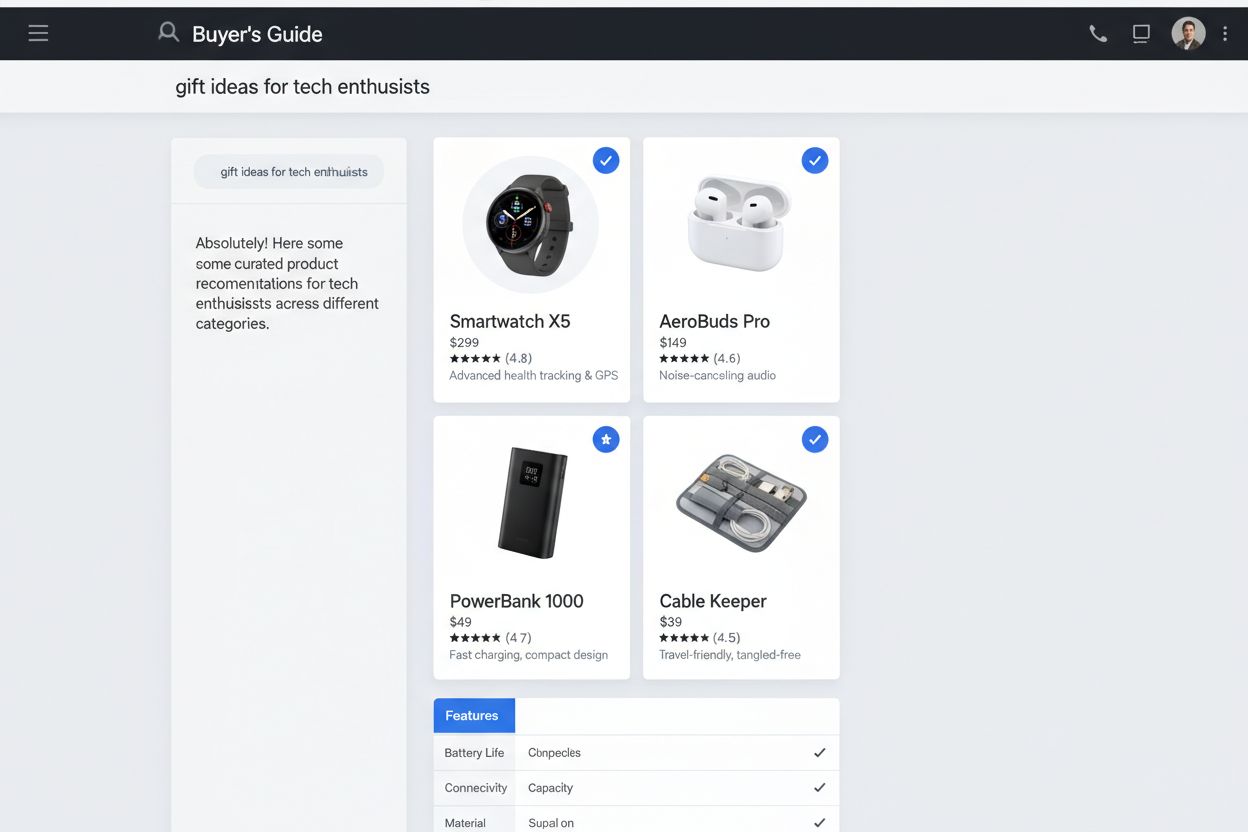
Learn how to get your products featured in ChatGPT buyer's guides and AI-generated research. Discover optimization strategies for ChatGPT Shopping Research and ...