
Creating Original Data That AI Wants to Cite
Learn how to create original data and research that AI systems actively cite. Discover strategies for making your data discoverable to ChatGPT, Perplexity, Goog...
9 min read

Discover why creating original research is critical for AI visibility. Learn how original research helps your brand get cited in AI-generated answers and improves visibility across ChatGPT, Perplexity, and other AI search engines.
Yes, original research is essential for AI visibility. AI systems prioritize authoritative, fact-dense content with verifiable data, statistics, and expert insights. Original research demonstrates expertise, builds credibility with AI engines, and increases your chances of being cited in AI-generated answers across ChatGPT, Perplexity, and other AI platforms.
Original research has become one of the most powerful assets for achieving visibility in AI-generated answers. Unlike traditional search engine optimization that focuses on ranking positions, AI visibility depends on whether AI systems recognize your content as credible enough to cite. When you create original research with verifiable data, statistics, and expert insights, you’re essentially creating the type of content that AI engines are trained to trust and reference.
The shift from traditional SEO to what experts call Generative Engine Optimization (GEO) fundamentally changes how brands should approach content strategy. AI systems like ChatGPT, Perplexity, and Google’s AI Overviews use Retrieval-Augmented Generation (RAG) technology, which means they search for and synthesize information from multiple sources to create answers. When your original research appears in these synthesized answers, it influences how millions of users perceive your brand—often before they ever click through to your website.
AI engines don’t evaluate content the same way traditional search engines do. While Google’s algorithm considers factors like backlinks and keyword optimization, AI systems prioritize authority, authenticity, recency, and representation. Original research excels in all these dimensions because it demonstrates genuine expertise and provides the kind of fact-dense content that AI systems can confidently cite.
When you publish original research, you’re creating content that contains specific data points, statistics, and findings that AI systems can extract and verify. This is fundamentally different from general blog posts or marketing copy. AI systems can identify original research because it typically includes methodology, data sources, and verifiable claims—all signals that indicate high-quality, trustworthy information.
| Factor | How Original Research Helps | Impact on AI Visibility |
|---|---|---|
| Authority | Demonstrates expertise through original data collection and analysis | AI systems recognize and prioritize authoritative sources |
| Authenticity | Provides genuine insights rather than repurposed content | AI engines distinguish original research from derivative content |
| Fact Density | Contains statistics, percentages, and verifiable data points | Higher likelihood of being extracted and cited in AI answers |
| Recency | Fresh research signals current market conditions | AI systems prefer up-to-date information for accurate responses |
| Verifiability | Includes methodology and sources that can be checked | Builds trust with AI systems and users reading AI-generated answers |
Being cited in AI-generated answers is the new form of visibility. Research from Semrush analyzing over 100 million AI citations across ChatGPT, Google AI Mode, and Perplexity revealed that certain types of content consistently appear in AI responses. Original research, particularly from authoritative sources, receives disproportionately high citation rates compared to general content.
When your original research gets cited in an AI-generated answer, several important things happen simultaneously. First, your brand gains visibility to users who are actively seeking information—they see your research referenced as a credible source. Second, the citation itself becomes a signal to AI systems that your content is trustworthy and relevant. Third, users reading the AI-generated answer may click through to your research to learn more, driving qualified traffic to your website.
The data shows that original research with multimedia elements and third-party mentions yields significantly more visibility in AI search than standard content. This is because AI systems recognize that research which has been independently verified or cited by other authoritative sources carries more weight. When your original research is mentioned by industry publications, cited in other research, or discussed in professional communities, AI systems take notice and are more likely to include it in their responses.
Not all original research is created equal when it comes to AI visibility. To maximize your chances of being cited by AI systems, your research needs to be structured in ways that AI engines can easily parse and extract. This means using clear headlines, organizing data into tables and visualizations, and presenting findings in modular, self-contained sections.
AI systems break down complex queries into multiple sub-questions and then search for passages that answer each specific angle. This means your original research should cover your topic comprehensively, addressing not just the main question but also related angles and adjacent topics. If you’re publishing research about a particular industry trend, for example, you should address how it affects different segments, what the data shows across regions, and what implications it has for various stakeholder groups.
The structure of your research matters enormously for AI visibility. When you use clear section headers, include data in tables, and present key findings in bullet-point format, you’re making it easier for AI systems to extract relevant passages. This increases the likelihood that your research will be cited in AI-generated answers, because the AI system can easily identify and pull the specific information it needs.
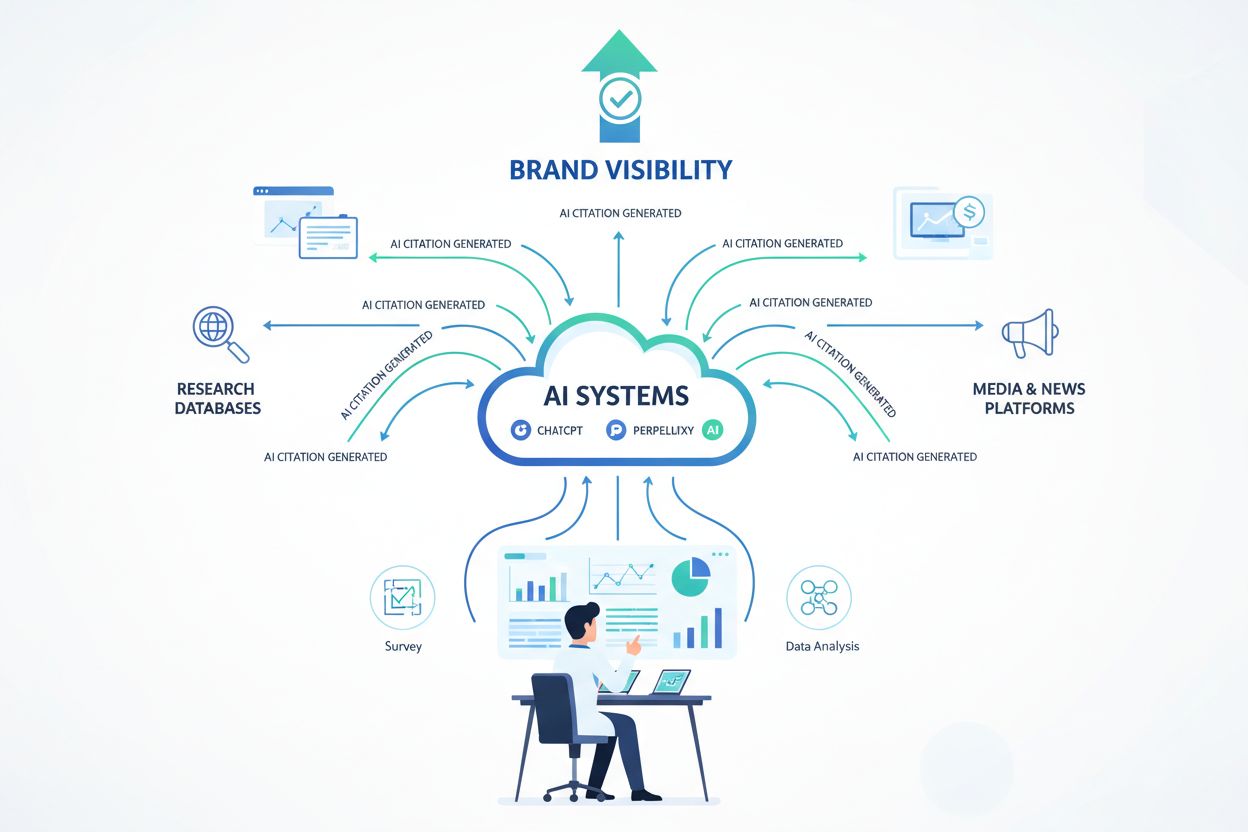
AI systems can distinguish between original research and content that simply aggregates or summarizes existing information. This distinction is crucial for understanding why original research is so valuable for AI visibility. When you conduct original research—whether through surveys, data analysis, interviews, or experiments—you’re creating something that didn’t exist before. AI systems recognize this originality and treat it differently than they treat derivative content.
Aggregated content, while useful for readers, doesn’t carry the same weight with AI systems. If you’re simply summarizing findings from other sources or combining existing research, AI systems will likely cite the original sources instead of your aggregation. However, if you conduct your own analysis of existing data, interview experts, or gather new data through surveys, you’re creating original research that AI systems will recognize and cite.
This doesn’t mean you should never aggregate or summarize existing research. Rather, it means that to maximize AI visibility, you should focus on creating content that adds new insights, original analysis, or unique perspectives. When you combine original research with thoughtful analysis of existing research, you create content that AI systems recognize as valuable and authoritative.
Creating original research that gets cited by AI systems requires strategic planning and execution. Start by identifying topics where your brand has genuine expertise and where original research would provide value to your audience. This might be industry trends, customer behavior patterns, market analysis, or performance benchmarks specific to your field.
Once you’ve identified your research topic, design your research methodology carefully. Whether you’re conducting surveys, analyzing data, or interviewing experts, make sure your methodology is sound and transparent. AI systems and the users reading AI-generated answers both benefit from understanding how you gathered your data and what limitations your research might have. Include your methodology in your published research so that AI systems can verify the credibility of your findings.
When publishing your research, structure it for AI discoverability. Use clear, descriptive headlines that explain what each section covers. Include data in tables and visualizations that AI systems can parse. Break your findings into modular sections that can stand alone, because AI systems often extract individual passages rather than entire articles. Include key statistics and findings in multiple formats—in the text, in tables, and in visualizations—to increase the chances that AI systems will find and cite your research.
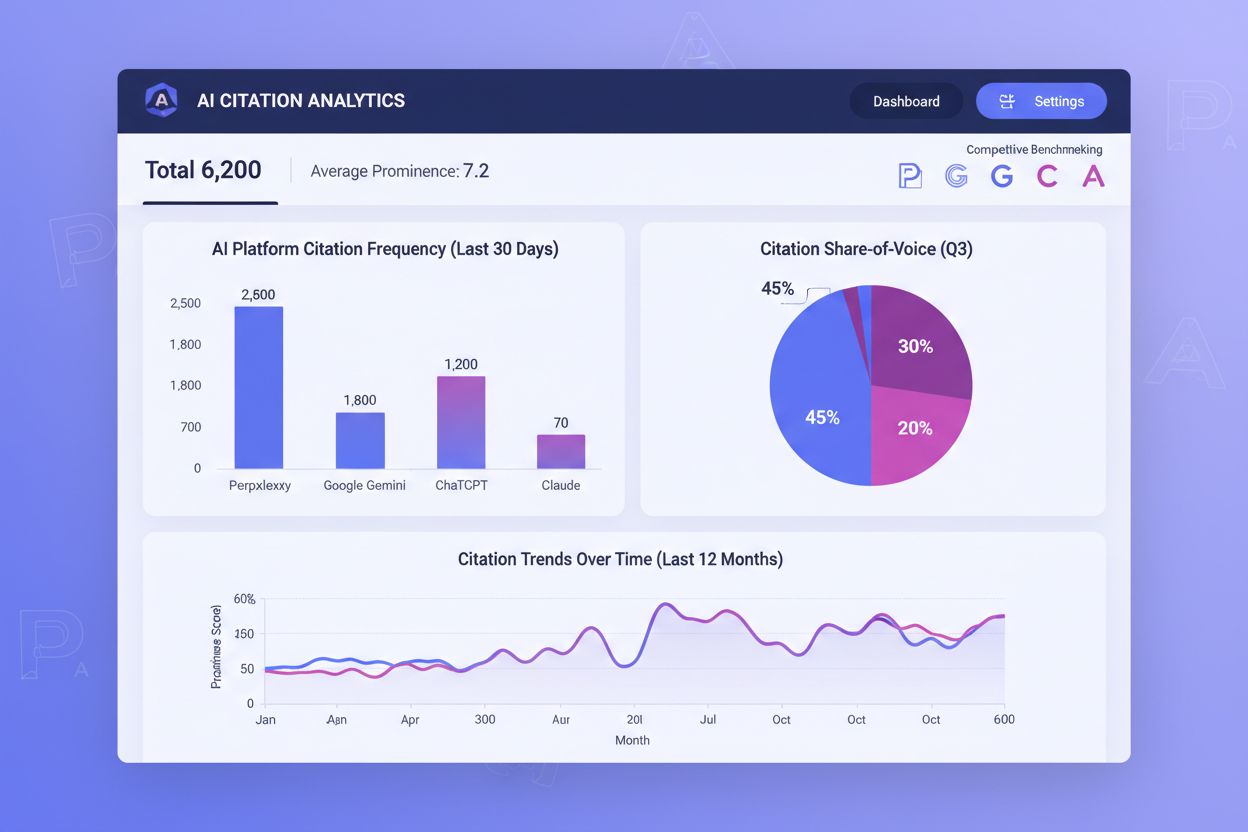
Tracking how your original research performs in AI-generated answers is essential for understanding its impact. Unlike traditional SEO where you can track rankings and traffic, AI visibility requires different metrics. You should monitor whether your research is being cited in AI-generated answers, how frequently it appears, and in what context it’s being referenced.
Tools designed for AI visibility tracking can show you which AI platforms are citing your research, what queries trigger your citations, and how your visibility compares to competitors. This data helps you understand whether your original research is achieving its goal of building AI visibility. If you notice that your research isn’t being cited as frequently as you’d expect, you can analyze why—perhaps the research needs to be more comprehensive, better structured for AI parsing, or promoted more widely to increase its discoverability.
The ultimate measure of success is whether your original research is influencing how AI systems describe your brand and industry. When AI systems cite your research in their answers, they’re essentially endorsing your expertise and perspective. This builds brand authority and positions you as a thought leader in your field, which has benefits that extend far beyond AI visibility alone.
Original research creates compounding returns for AI visibility over time. Unlike individual blog posts or marketing content that may have a limited lifespan, original research continues to be cited and referenced long after publication. As your research accumulates citations from AI systems, other researchers, and industry publications, it becomes increasingly authoritative in the eyes of AI engines.
This means that investing in original research is a long-term strategy that builds your brand’s authority and visibility in AI-generated answers. Each piece of original research you publish adds to your overall credibility and increases the likelihood that future research will also be cited. Over time, brands that consistently publish original research establish themselves as authoritative sources that AI systems regularly reference, creating a virtuous cycle of visibility and influence.
The brands that will dominate AI visibility in the coming years are those that recognize original research as a core component of their content strategy. Rather than competing for rankings on search engine results pages, they’re competing to be the most cited, most trusted sources in AI-generated answers. By creating original research that AI systems recognize as authoritative and valuable, you position your brand to win in this new era of AI-driven discovery.
Track where your brand appears in AI-generated answers across ChatGPT, Perplexity, and other AI platforms. Get insights into your AI visibility and optimize your content strategy.
Learn how to create original data and research that AI systems actively cite. Discover strategies for making your data discoverable to ChatGPT, Perplexity, Goog...
Discover how original research and first-party data drive 30-40% visibility boost in AI citations across ChatGPT, Perplexity, and Google AI Overviews.

Learn how to create effective how-to guides for AI visibility monitoring. Discover strategies for Answer Engine Optimization, content structuring, and tracking ...