
From Invisible to Recommended: AI Optimization Transformation Stories
Discover how brands transform from invisible to recommended in AI search. Real case studies showing 67% traffic growth, 32% SQLs from AI, and $90M+ pipeline imp...
6 min read

Discover why traditional SEO remains essential in 2025 despite AI search engines. Learn ROI data, AI integration, and how to optimize for both Google and AI platforms like ChatGPT and Perplexity.
Yes, traditional SEO is absolutely worth investing in. Data shows SEO delivers a 550% average ROI, significantly outperforming paid search ads at 200% ROI. Moreover, AI search engines like ChatGPT and Perplexity prioritize top Google rankings when selecting sources, making traditional SEO foundational for AI visibility.
The short answer is a resounding yes. Despite the rise of AI search engines and concerns about zero-click searches, traditional SEO remains one of the most effective marketing investments available. As of December 2023, SEO delivers an average return on investment of 550%, substantially outperforming search engine marketing (SEM) at 200% ROI and social media advertising at 150% ROI. This data demonstrates that businesses continuing to invest in organic search optimization are making a financially sound decision that compounds over time.
The confusion around SEO’s relevance stems from the rapid emergence of AI-powered search platforms like ChatGPT, Perplexity, and Google’s AI Overviews. Many business leaders worry that these new technologies will render traditional SEO obsolete. However, recent research analyzing 25,000 user searches reveals the opposite: AI search engines actively prioritize content from websites that rank highly on Google. This means traditional SEO is not becoming less important—it’s becoming the foundation for visibility across multiple search channels simultaneously.
Understanding how AI search engines select sources is crucial to appreciating why traditional SEO remains essential. Research from ZipTie studying real searches across ChatGPT, Perplexity, and Google’s AI Overviews found that websites ranked #1 on Google appear in AI search answers approximately 25% of the time. This percentage decreases significantly for lower rankings, establishing a clear correlation between traditional Google rankings and AI visibility.
The process by which AI systems select sources follows three distinct steps. First, during pre-selection, AI systems identify the best documents for each query, explicitly favoring pages with higher Google rankings. Second, during content extraction, the AI extracts relevant information from these top-ranking pages, prioritizing content that directly answers the user’s specific question. Third, during AI synthesis, the system synthesizes this information into one clear answer, utilizing advanced language models to generate the final response. Google’s internal documents from antitrust proceedings confirmed a critical fact: using top-ranking content enhances the accuracy of AI responses, which explains why traditional rankings continue to be so significant in the AI era.
| Ranking Position | Appearance in AI Answers | Implication |
|---|---|---|
| #1 on Google | ~25% of the time | Strong visibility in AI results |
| Top 3 Rankings | 15-20% of the time | Moderate AI visibility |
| Top 10 Rankings | 5-10% of the time | Limited but possible AI visibility |
| Outside Top 10 | <5% of the time | Minimal AI visibility without query fan-out |
One important mechanism that allows content outside the top 10 to appear in AI answers is the query fan-out technique. When users search for broad topics, AI systems don’t just run a single search—they issue multiple related searches across subtopics and data sources to develop comprehensive responses. For example, when someone searches “SEO vs SEM,” the AI might simultaneously run searches for “What is SEO?”, “SEO explained,” “What is PPC?”, and several other related queries.
This means pages that perform well for these secondary and related searches can appear in results even if they don’t rank for your primary target keyword. This creates additional opportunities for businesses to gain AI visibility by optimizing for the full spectrum of related questions and variations that users might ask. The implication is clear: comprehensive content strategies that address multiple angles of a topic are more likely to capture visibility across both traditional search and AI platforms.
While SEO’s 550% average ROI is compelling, it’s important to understand the investment required and the timeline for returns. In 2024, small businesses in the United States spend between $500 to $5,000 per month on SEO service providers, while larger enterprises allocate $30,000 to $50,000 monthly or higher. For in-house teams, salaries for SEO specialists range from $2,500 to $9,500 per month, with a full team of three professionals averaging $11,500 monthly in salaries alone.
The cost of SEO depends primarily on two factors: your SEO goals (such as how many pages you want to rank or how much organic traffic you need) and the level of competition in your industry. Unlike paid advertising, which delivers immediate results, SEO typically requires a frontloading period of 12-18 months before significant traffic increases occur. However, once organic rankings are established, the cost-per-click for SEO traffic becomes dramatically lower than paid search. One case study showed that after two years of SEO investment, the effective cost-per-click dropped to $0.59, compared to the average paid search CPC of $2.51—a 328% improvement in cost efficiency.
SEO is a viable marketing tactic for most business types, but certain conditions must be met. Go ahead with SEO if there are enough people searching for your products or services, the competition for your keywords is manageable and achievable, and your business has the time and budget for gradual results. Conversely, avoid SEO if your audience doesn’t use internet search to buy or research your products, if competition is extremely high making ranking impractical, or if you need immediate ROI and have limited resources.
There are specific scenarios where SEO might not be the best fit. Ultra-niche products or services with very small target markets and low search volume may not generate sufficient traffic to justify SEO investment. Temporary or seasonal ventures where the time lag in SEO effectiveness doesn’t align with business models may find paid advertising more suitable. Highly saturated niches where dominant online giants control core keywords can make it difficult for smaller competitors to achieve meaningful rankings. Examples include high-end art galleries relying on private viewings, pop-up event organizers, luxury yacht brokers operating in exclusive markets, independent authors promoting eBooks, and freelance interior decorators competing against large furniture manufacturers.
The rise of AI search engines doesn’t eliminate the need for traditional SEO—it transforms how content should be created and optimized. Traditional SEO focused on creating the “best page,” meaning comprehensive guides covering everything about a topic. AI search optimization requires a shift toward creating the “best answer,” meaning specific, focused responses to exact questions. This fundamental difference in approach is critical for success in the AI era.
When someone asks specifically about “iPhone 15 battery life,” you may rank #1 on Google for a broad guide about iPhones, but AI systems won’t cite your content if you don’t provide a precise, relevant answer to that exact question. This means content strategies must evolve to include more granular, question-based content alongside comprehensive guides. The most successful approach combines traditional SEO fundamentals—technical optimization, authority building, and on-page optimization—with AI-friendly content structures like Q&A sections, clear headings, bullet points, and direct answers to specific questions.
Based on current research and market trends, businesses should continue investing in traditional SEO while simultaneously preparing for AI search visibility. Continue your SEO efforts because top 10 rankings directly impact AI visibility—abandoning SEO strategies would be counterproductive. Restructure your content by dividing lengthy guides into sections that address specific questions, making content more useful for both human readers and AI systems. Target related searches by optimizing for various versions of your main keywords and the secondary queries that AI systems might run.
Write with clarity by favoring straightforward answers over content loaded with keywords, as AI systems prioritize clarity and relevance. Track everything by monitoring your visibility in both traditional search results and AI-generated answers using tools designed for this purpose. Build topical authority by creating groups of articles about one main topic from different angles, which helps both search engines and AI systems understand your expertise. Include multimedia like videos, images, and infographics, as AI systems often feature these in responses and they improve user engagement.
The future of search is not a replacement of traditional SEO with AI search—it’s a coexistence and integration of both. Search engines will continue to exist regardless of how answers are delivered, as the need to find information efficiently won’t disappear. Local SEO and niche markets will continue to rely on traditional SEO tactics to reach their target audiences, as ranking well in local searches and for specific keywords will remain crucial. Content will continue to matter because AI bots need to constantly understand and assimilate new information, or else they quickly become outdated. Several influential publishers are already blocking AI bots from their sites, and more will likely follow, making it impossible for all search queries to be fulfilled by AI-generated answers alone.
Additionally, paid advertising costs are subject to supply-and-demand forces. If many businesses decide to switch entirely to PPC ads, that automatically drives up the demand and cost of paid advertising, effectively improving the relative cost efficiency of SEO. This economic reality suggests that SEO will remain attractive compared to paid alternatives, even as the search landscape evolves.
The evidence overwhelmingly supports continued investment in traditional SEO. With a 550% average ROI that significantly outperforms alternatives, SEO remains the most cost-effective long-term marketing investment. AI search engines prioritize Google rankings, making traditional SEO foundational for visibility across multiple platforms. The query fan-out effect creates additional opportunities for content to appear in AI answers through related searches. While SEO requires patience and sustained investment, the long-term cost-per-click becomes dramatically lower than paid alternatives. Content strategies must evolve to address specific questions and provide clear answers, not just comprehensive guides. The future belongs to businesses that combine traditional SEO fundamentals with AI-optimized content structures, ensuring visibility across both traditional search and emerging AI platforms.
Track how your content appears in AI-generated answers from ChatGPT, Perplexity, and Google AI Overviews. Get real-time insights into your brand's presence in the AI search landscape.
Discover how brands transform from invisible to recommended in AI search. Real case studies showing 67% traffic growth, 32% SQLs from AI, and $90M+ pipeline imp...

Community discussion on whether traditional SEO remains valuable in the AI search era. Real ROI data and experiences from marketers balancing SEO and AI optimiz...
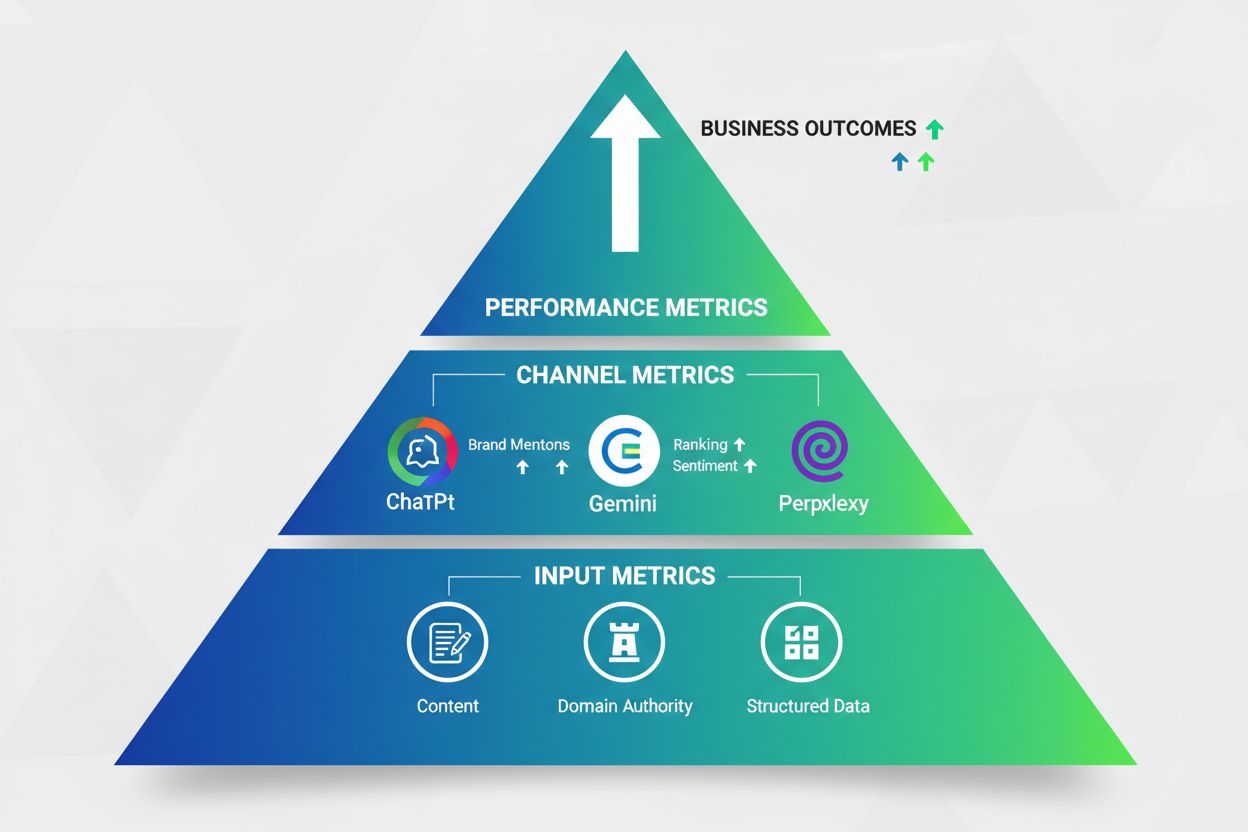
Learn how to set effective OKRs for AI visibility and GEO goals. Discover the three-tier measurement framework, brand mention tracking, and implementation strat...