

Content Rights in AI: Legal Framework and Future Outlook
Explore the evolving landscape of content rights in AI, including copyright protections, fair use doctrine, licensing frameworks, and global regulatory approach...
10 min read

Understand the copyright challenges facing AI search engines, fair use limitations, recent lawsuits, and legal implications for AI-generated answers and content scraping.
AI search engines face significant copyright challenges as they train on copyrighted content without authorization. Recent lawsuits from major publishers, unfavorable fair use rulings, and regulatory guidance indicate that using copyrighted works for AI training may constitute infringement, with limited fair use protections available.
The copyright implications of AI search represent one of the most significant legal challenges facing the artificial intelligence industry today. When AI search engines and generative AI systems are developed, they require massive amounts of training data to learn patterns, structures, and relationships within text, images, and other content. The critical issue is that most of this training data is obtained without authorization from copyright holders. The United States Copyright Office has taken a clear position that using copyrighted works to train AI models may constitute prima facie infringement of the reproduction and derivative work rights granted to copyright owners under the Copyright Act.
The development and deployment of generative AI systems implicate multiple exclusive rights held by copyright owners. This infringement can occur at several stages in the AI pipeline, including when developers initially download and store works for training purposes and when they create intermediate copies during the training process itself. The most contentious issue involves whether a model’s internal weights—the mathematical parameters that enable the model to generate outputs—constitute infringing copies of the underlying training data. When AI-generated outputs are substantially similar to the training data inputs, there is a strong argument that the model’s weights themselves infringe the reproduction and derivative work rights of original works.
| Stage of AI Development | Copyright Concern | Infringement Risk |
|---|---|---|
| Data Collection | Downloading copyrighted works without permission | High |
| Data Curation | Organizing and storing copyrighted materials | High |
| Model Training | Creating copies during training process | High |
| Output Generation | Producing content similar to training data | High |
| Model Deployment | Making infringing outputs accessible to users | High |
One of the most important developments in AI copyright law came from the Copyright Office’s May 2025 report, which addressed whether unauthorized use of copyrighted materials for AI training can be defended as fair use. The report’s findings significantly limit the fair use protections available to AI developers. The concept of transformativeness—whether a use serves a different purpose than the original work—is central to fair use analysis, but the Copyright Office concluded that transformativeness “is a matter of degree” when applied to AI training.
The report identified two ends of a spectrum regarding transformative use. On one end, training a generative AI foundation model on large and diverse datasets to generate outputs across diverse situations is likely to be transformative. On the other end, training an AI model to generate outputs substantially similar to copyrighted works in the training dataset is unlikely to be transformative. Most real-world AI systems fall somewhere in the middle, and where a model is trained to produce content that “shares the purpose of appealing to a particular audience,” the use is “at best, modestly transformative.” This means that many commercial AI search engines and generative AI products cannot rely on strong fair use protections.
The Copyright Office explicitly rejected two common arguments made by AI developers. First, the argument that AI training is inherently transformative because it is not for expressive purposes is “mistaken.” AI models absorb “the essence of linguistic expression”—how words are selected and arranged at the sentence, paragraph, and document level. Second, the analogy that AI training is like human learning does not justify copyright infringement. While humans retain only imperfect impressions of works they experience, filtered through their own unique perspectives, generative AI creates perfect copies with the ability to analyze works nearly instantaneously. This fundamental difference undermines the human learning analogy and suggests that the Copyright Act’s balance between encouraging creativity and innovation may not operate as intended in the AI context.
The copyright implications of AI search have become increasingly concrete through numerous lawsuits filed against major AI companies. The New York Times filed a landmark lawsuit against Perplexity AI in December 2025, accusing the company of illegally copying millions of articles and distributing journalists’ work without permission. The Times alleged that Perplexity’s business model fundamentally relies on scraping and copying content, including paywalled material, to power its generative AI products. Additionally, the Times claimed that Perplexity violated its trademarks under the Lanham Act by creating fabricated content or “hallucinations” and falsely attributing them to the newspaper by displaying them alongside its registered trademarks.
Perplexity AI has become a particular target of copyright enforcement actions, facing lawsuits from multiple major publishers and content creators. Murdoch-owned Dow Jones and the New York Post filed similar copyright infringement lawsuits against Perplexity for its use of copyrighted content. Encyclopedia Britannica and Merriam-Webster Dictionary also sued Perplexity, alleging systematic content scraping that violates fundamental copyright protections. The Chicago Tribune, Forbes, and Wired have all accused Perplexity of plagiarizing their content, with Wired notably reporting that Perplexity copied an article about Perplexity’s own plagiarism problems. Reddit sued Perplexity and three other companies in October 2025, accusing them of unlawfully scraping its data to train AI-based search engines.
These lawsuits reveal a pattern of aggressive content scraping and unauthorized use that goes beyond traditional fair use boundaries. The Copyright Office’s report specifically noted that “making commercial use of vast troves of copyrighted works to produce expressive content that competes with the original works in existing markets, especially where access to the original work was accomplished through illegal access, goes beyond established fair use boundaries.” This language directly describes the practices alleged in these lawsuits and suggests that courts may find copyright infringement in these cases.
The Copyright Office’s analysis of market harm represents a significant expansion of how copyright law evaluates the impact of unauthorized use. Traditionally, courts focused primarily on lost sales and direct substitution—when infringing works directly replace the original works and cause lost revenue. However, the Copyright Office identified three distinct forms of market harm relevant to AI training. Beyond direct substitution, the report includes market dilution and competition in the same class of works, where AI-generated outputs compete in the same market as original works even if they are not identical copies. This is particularly concerning because AI systems can generate content in the same style, genre, or category as original works, and they can do so at unprecedented speed and scale.
The third form of market harm involves lost licensing opportunities. As a nascent market for licensing content for AI training develops, the Copyright Office concluded that where licensing options exist or are likely to be feasible, this consideration will disfavor a finding of fair use. This is particularly significant because it means that AI developers cannot simply claim fair use when licensing arrangements are available. The report acknowledged that while some one-off AI training data licensing agreements have been negotiated, a scalable licensing solution may require collective licensing arrangements. However, the Copyright Office recommended allowing the licensing market to continue developing without government intervention, suggesting that licensing will become an increasingly important factor in copyright disputes.
One positive finding for AI developers in the Copyright Office’s report involves the use of guardrails to prevent or minimize the creation of infringing outputs. The report concluded that implementing guardrails weighs in favor of a fair use argument. These guardrails include blocking prompts likely to reproduce copyrighted content, training protocols designed to make infringing outputs less likely, and internal system prompts that instruct models not to generate names of copyrighted characters or create images in the style of living artists. This finding suggests that AI developers who implement robust safeguards to prevent their systems from reproducing copyrighted content may strengthen their fair use defense.
However, the effectiveness of guardrails as a fair use defense remains limited. The report acknowledged disagreement among commenters regarding how often original works are materially replicated in AI outputs and how difficult it would be to implement comprehensive guardrails. The fact that guardrails can only weigh in favor of fair use—rather than providing a complete defense—means that even AI systems with protective measures may still face copyright infringement liability. Additionally, the report noted that knowingly using pirated or illegally accessed works as training data weighs against fair use without being determinative, suggesting that courts will scrutinize the sources of training data and may penalize developers who use illegally obtained content.
The copyright implications of AI search create a complex landscape for both AI companies and content creators. For AI search engine operators, the legal environment has become increasingly hostile to the practice of scraping and using copyrighted content without authorization. The combination of unfavorable fair use guidance from the Copyright Office, multiple high-profile lawsuits, and court rulings suggesting that AI training may not qualify for fair use protection means that companies operating AI search engines face significant legal and financial risks. The scale of potential liability is enormous, given that these systems are trained on billions of copyrighted works.
For content creators and publishers, the copyright implications of AI search present both challenges and opportunities. The challenge is that their work is being used to train AI systems that may compete with their own products and services, potentially reducing the value of their content and their ability to monetize it. The opportunity lies in the developing licensing market, where publishers can potentially negotiate compensation for the use of their content in AI training. However, this requires that publishers actively monitor how their content is being used and assert their copyright rights through licensing negotiations or litigation. This is where monitoring tools become essential—understanding how your brand, domain, and URLs appear in AI-generated answers helps you identify unauthorized use and negotiate from a position of strength.
Protect your brand and content by monitoring how your domain and URLs appear in AI-generated answers across ChatGPT, Perplexity, and other AI search engines.
Explore the evolving landscape of content rights in AI, including copyright protections, fair use doctrine, licensing frameworks, and global regulatory approach...
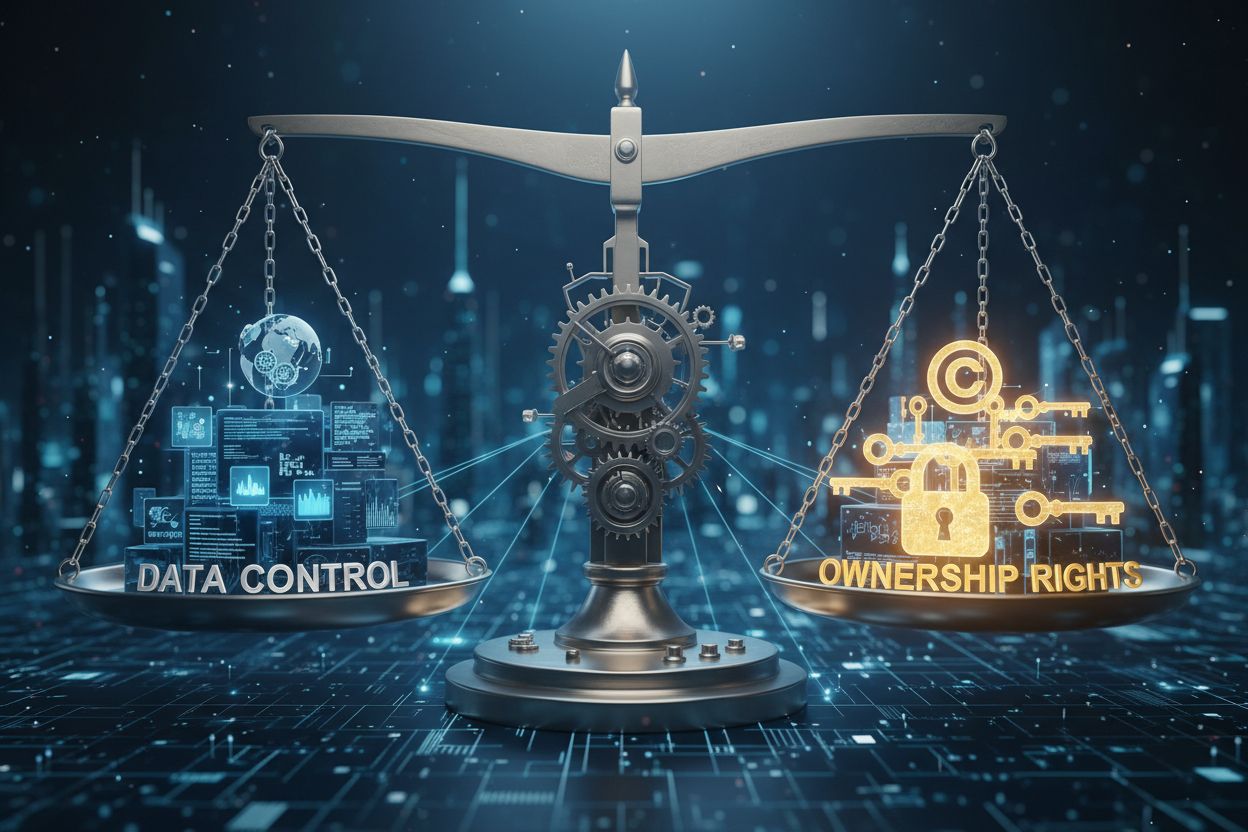
Explore the complex legal landscape of AI training data ownership. Learn who controls your content, copyright implications, and what regulations are emerging.
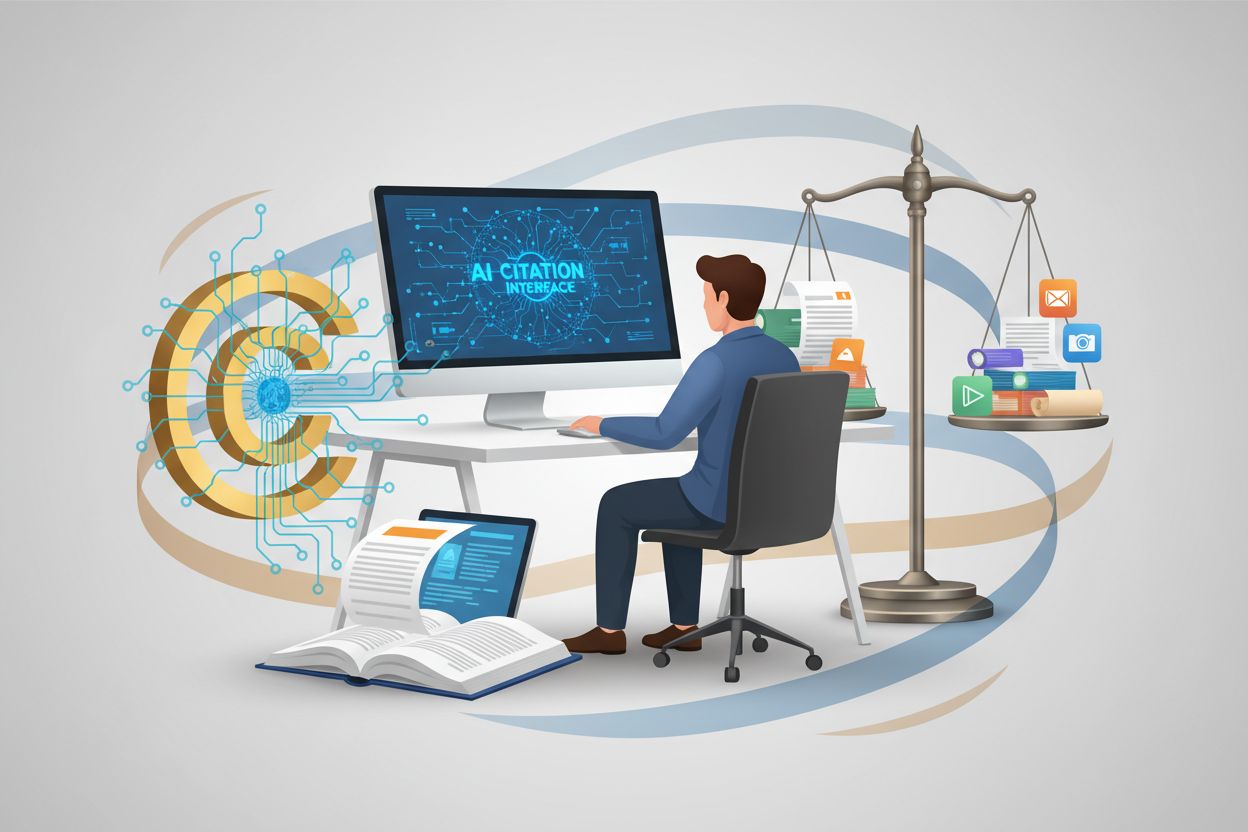
Understand copyright law and AI citations. Learn your legal rights as a content creator in the age of artificial intelligence, including fair use, licensing, an...