

Should You Use AI to Create Content for AI Search Engines?
Learn whether AI-generated content is effective for AI search visibility, including best practices for content creation, optimization strategies, and how to bal...
6 min read

Discover the best content formats for AI search engines like ChatGPT, Perplexity, and Google AI Overviews. Learn how to optimize your content for AI visibility and citations.
The best content formats for AI search include expert-led blog posts, Q&A pages (FAQs), comparison posts, definitive guides, data-backed content, glossaries, case studies, and multi-modal content. AI systems favor structured, factual, and well-organized content that directly answers user questions with clear formatting and semantic clarity.
AI search represents a fundamental shift in how users discover information online. Unlike traditional search engines that display ranked lists of links, AI-powered platforms like ChatGPT, Perplexity, Google AI Overviews, and Microsoft Copilot generate direct answers by synthesizing information from multiple sources across the web. These systems don’t simply rank pages—they parse content into smaller, structured pieces, evaluate them for authority and relevance, and assemble them into coherent, conversational responses. For brands and content creators, this shift means visibility is no longer defined by ranking position alone, but by whether your content is selected and cited within AI-generated answers. Understanding which content formats perform best in this new landscape is essential for maintaining your brand’s presence as search behavior continues to evolve.
Long-form blog content continues to be one of the most effective formats for AI search visibility, but only when it demonstrates clear subject matter expertise and topical authority. These posts typically originate from trusted domains, are written or reviewed by recognized specialists, and use clear formatting to guide both readers and AI systems. For SaaS and B2B companies, the most effective blog posts are often product-focused, pain-point driven, or deeply educational in nature.
AI systems like Google AI Overviews and Perplexity strongly prefer structured, high-authority sources that demonstrate E-E-A-T (Experience, Expertise, Authoritativeness, and Trustworthiness). When your blog post provides concise, structured answers to user questions while establishing clear expertise, it becomes far more likely to be cited in AI-generated responses. The key is to structure your content with clear hierarchies, author bios that reinforce expertise, short answer summaries followed by deeper explanations, and links to both internal and external trusted sources. This approach signals to AI systems that your content is reliable, well-researched, and worthy of citation.
Question-and-answer formatted pages are exceptionally effective for AI search because they directly mirror how people phrase queries and how AI systems search for answers. FAQ sections, knowledge base articles, user-generated forum threads, and dedicated help desk pages all fall into this category. The structure of these pages—with clear questions followed by direct answers—aligns perfectly with the conversational nature of AI search queries.
When users ask AI systems questions like “What is…” or “How do I…,” the system searches for content that matches this exact structure. Pages that present information in Q&A format are significantly easier for AI to parse, extract, and quote directly into generated responses. The effectiveness of this format lies in its simplicity and clarity. Each question should be specific and natural, answers should be concise and direct (ideally under 100 words), and the overall structure should be clean and scannable. Implementing FAQ schema markup further improves your chances of being selected, as it provides explicit signals to AI systems about your content’s structure and purpose.
Comparison content and list posts give structure to complex decisions and comparisons, which is exactly what AI models favor when generating answers. Whether it’s a “Top 10 Tools” roundup, a side-by-side feature breakdown, or an “X vs Y” comparison, this format helps both users and AI systems understand trade-offs, pricing, compatibility, and relative value. These pages are particularly valuable because they break down complex information into scannable, structured segments.
AI-generated results frequently include feature comparisons, pros and cons summaries, and product recommendations. List posts offer AI tools a predictable, structured format from which to extract insights and assemble into answers. The most effective comparison content uses tables, bullet points, or clear “X vs Y” layouts that make information immediately accessible. Include specific product names, use cases, pricing information, and clear recommendation takeaways. This structured approach makes it significantly easier for AI systems to identify, extract, and cite your content when answering user queries about product comparisons or feature evaluations.
Definitive guides and foundational explainer content serve as cornerstone pieces that define concepts and explain how things work in depth. These guides typically target top-of-funnel search intent and serve the dual purpose of educating audiences while showcasing your domain expertise. When users ask AI systems “What is [X]?” or “How does [X] work?”, AI tools often cite content that leads with a clear, concise definition and expands into structured sub-sections.
The most effective structure for this format begins with a one-sentence TL;DR that the AI can quote directly, followed by layered sections that answer related sub-questions, use examples and analogies to improve clarity, and provide context that helps readers (and AI systems) understand the concept thoroughly. This approach is particularly effective because it acknowledges how AI systems work—they extract concise, quotable pieces of content and weave them into larger answers. By providing clear, self-contained definitions and explanations, you increase the likelihood that your content will be selected for citation.
Original research, benchmark reports, usage statistics, and proprietary data analyses are increasingly valuable in AI search. B2B buyers and researchers value data, and AI systems strongly prefer verifiable, fact-based content—especially when it comes to citing specific facts, trends, or statistics. Content that includes original data that no other source offers is significantly more likely to be referenced in AI-generated summaries and cited as a source.
The power of data-backed content lies in its uniqueness and verifiability. When your post includes statistics or findings that competitors don’t offer, AI systems recognize this as valuable, original information worthy of citation. Include original charts and graphs, cite your sources and explain your methodology, and place data points near relevant questions or headings for maximum impact. This format not only improves your AI search visibility but also generates backlinks and authority as other websites reference your research, creating a compounding benefit for your overall SEO strategy.
Glossary pages and terminology resources target definition-style queries and help establish topical depth and authority. For example, a SaaS business might create a comprehensive “Product-Led Growth Glossary” that links out to detailed explanations of each term. These pages are particularly effective because AI systems frequently surface short, accurate definitions for term-based queries.
Glossary entries provide AI systems with clean, direct quotes they can use to answer definition-based questions. The most effective glossary strategy involves creating one comprehensive index page plus dedicated URLs for each individual term. Use a consistent structure for each entry: the term itself, a clear definition, and optional use cases or examples. Link internally between related terms to strengthen your topical authority and create a content cluster that signals expertise to both users and AI systems. This interconnected approach helps AI systems understand the relationships between concepts in your industry.
Case studies demonstrate how your product or solution delivers real-world results, making them valuable not only for sales enablement but also for AI-driven explanations. Many AI-generated answers include use cases or workflows, and detailed case studies provide AI systems with concrete examples to cite when explaining how something works or what outcomes are possible. A well-structured case study combines narrative storytelling with measurable metrics and clear process documentation.
The most effective case study structure follows a clear progression: Problem → Approach → Solution → Outcome. Include specific metrics like conversion rates, ROI, or time savings, document the tools and methodology used, and provide enough detail that AI systems can extract meaningful examples. When AI systems need to illustrate how something works or what results are achievable, they pull from detailed, real-world examples. By providing comprehensive case studies, you give AI systems the material they need to create more credible, detailed answers.
As generative AI tools expand to include video and visual search capabilities, multi-modal content—combining text, video, images, and infographics—becomes increasingly valuable. Pages that combine a YouTube video with summary text, screenshots, and infographics offer multiple surfaces for citation and discovery. AI tools like Perplexity and Claude pull from video descriptions and transcripts, while Google AI Overviews increasingly cite YouTube content when it’s relevant and well-optimized.
The strategy here is to publish video and transcript on the same page, use clear headers and keywords in video descriptions, and add alt text and context to visual assets. This multi-layered approach increases your content’s surface area for citation across different AI platforms and search modalities. As AI systems become more sophisticated in processing different content types, having your information available in multiple formats significantly increases the likelihood of being selected and cited.
AI systems don’t read content the way humans do—they parse it into smaller, structured pieces. Clear headings (H2s and H3s) act like chapter titles that define distinct content sections. Instead of vague headings like “Learn More,” use specific, question-based headings like “What Makes This Solution Different from Competitors?” This approach helps AI systems understand where one idea ends and another begins, making your content easier to parse and extract.
Lists and tables are particularly effective because they break complex details into clean, reusable segments. Bulleted lists work best for key steps, comparisons, or highlights, while numbered lists are ideal for sequential processes. Comparison tables are especially valuable for feature-based queries. However, avoid overusing these formats—they’re most effective when used strategically to highlight important information rather than for every line of content.
Schema markup is a type of code that helps search engines and AI systems understand your content structure and purpose. Using JSON-LD format, schema markup can label your content as a product, review, FAQ, article, or other content types, turning plain text into structured data that machines can interpret with confidence. Common schema types include:
| Schema Type | Best For | Example |
|---|---|---|
| FAQ Schema | Question/answer pages | FAQ sections, help desks |
| HowTo Schema | Step-by-step guides | Tutorials, process explanations |
| Article Schema | Long-form content | Blog posts, guides |
| Product Schema | Product pages | E-commerce, SaaS products |
| Review Schema | Customer reviews | Testimonials, ratings |
Implementing schema markup doesn’t require custom coding—tools like Rank Math, Yoast, or Schema.org generators can help embed this markup without technical expertise. Schema signals to AI systems that your content is well-organized and trustworthy, improving your chances of citation.
AI models crawl your site similarly to how search engines do. If they can’t easily navigate your content, they’re less likely to use it as a source. Maintain a flat site structure with key content accessible within 2-3 clicks from your homepage. Internal linking is crucial—use descriptive anchor text (like “see our SaaS SEO benchmark study” instead of “click here”) to show topic relationships and guide AI systems through your content.
Build hub pages that centralize key topics and link out to subpages. This approach is particularly effective for glossaries, content clusters, or FAQ sections. When AI systems crawl your site, they follow these internal links to understand your topical authority and the relationships between your content pieces. A well-organized internal linking structure signals expertise and makes it easier for AI to extract relevant information.
Semantic clarity means writing in a way that clearly conveys meaning to both humans and machines. Write for user intent, not just keywords. Use phrasing that directly answers the questions users ask. Avoid vague language—terms like “innovative” or “eco-friendly” mean little without specifics. Instead, anchor claims in measurable facts: “42 dB dishwasher designed for open-concept kitchens” is far more useful than “quiet dishwasher.”
Add context to your claims and use synonyms and related terms to reinforce meaning. This helps AI systems connect concepts and understand the full scope of your expertise. Keep punctuation simple and consistent—avoid decorative arrows, symbols, or long strings of punctuation that break parsing. Use periods and commas consistently, and be cautious with em dashes, which can confuse sentence structure for machines. A semicolon or period is usually clearer.
In AI search, snippet selection works similarly to traditional search—AI systems extract concise, “snippable” pieces of content and weave them into answers. Make your content eligible for featured snippets by providing concise answers (one to two sentences) that directly address questions, using structured formatting like lists and tables that can be lifted cleanly, employing strong headings that signal where complete ideas start and end, and using self-contained phrasing where sentences make sense even when pulled out of context.
| Metric | What It Measures | Why It Matters |
|---|---|---|
| Citations | Number of times your content is mentioned in AI responses | Direct indicator of AI search visibility |
| Mentions | Brand or content references in AI-generated answers | Shows recognition and authority |
| Referral Traffic | Visits from AI platforms to your website | Demonstrates conversion potential |
| Snippet Appearances | How often your content appears in featured snippets | Indicates content quality and relevance |
| Domain Authority | Overall credibility of your website | Influences citation likelihood |
Tracking these metrics requires dedicated tools, as traditional SEO platforms like Google Search Console and Ahrefs have limited AI search tracking capabilities. Platforms like OmniSEO provide comprehensive tracking across multiple AI engines, allowing you to monitor your visibility and compare performance against competitors.
The shift toward AI search represents a fundamental change in how content must be created and structured. The formats that perform best—expert-led blogs, FAQs, comparison posts, glossaries, data-backed insights, case studies, and multi-modal content—all follow the same core principle: answer questions clearly, structure information logically, and demonstrate authority. By understanding how AI systems parse, evaluate, and cite content, you can optimize your digital presence for this new layer of search visibility. The brands that adapt their content strategy now will gain a significant competitive advantage as AI search continues to reshape how users discover information online.
Track how your content appears in ChatGPT, Perplexity, Google AI Overviews, and other AI answer engines. Get real-time visibility into your brand mentions and citations across all major AI platforms.
Learn whether AI-generated content is effective for AI search visibility, including best practices for content creation, optimization strategies, and how to bal...
Learn proven strategies to maintain and improve your content's visibility in AI-generated answers across ChatGPT, Perplexity, and Google AI Overviews. Discover ...
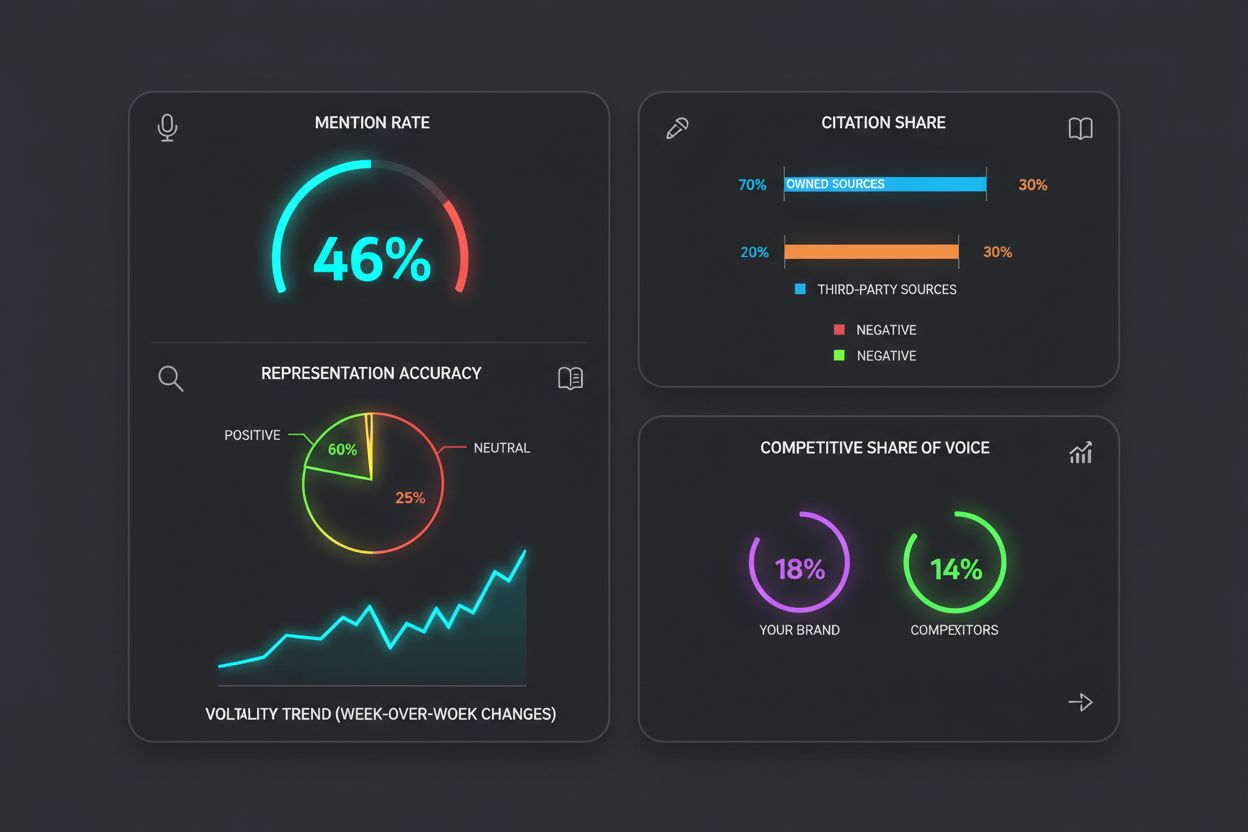
Quick reference guide to AI visibility monitoring. Track mentions, citations, and brand presence across ChatGPT, Google AI Overviews, Perplexity, and Gemini wit...