
Semrush AI Visibility Toolkit Review: Is It Worth Adding to Your Stack?
Comprehensive review of Semrush AI Visibility Toolkit. Learn about features, pricing, pros and cons, and how it compares to alternatives like AmICited and Profo...
13 min read

Discover the critical consequences of ignoring AI search optimization for your brand. Learn how missing from ChatGPT, Perplexity, and AI answers impacts traffic, visibility, and business growth.
Without AI optimization, your brand risks losing visibility in ChatGPT, Perplexity, and other AI search engines where customers increasingly find answers. You'll miss citations, traffic opportunities, and competitive advantage as AI-generated answers replace traditional search results.
The digital landscape is shifting faster than most businesses realize. While traditional search engine optimization has dominated marketing strategies for decades, a new paradigm is emerging that many companies are dangerously unprepared for. AI search engines and generative answer platforms are fundamentally changing how people discover information, and if your brand isn’t optimized for these new channels, you’re facing significant business consequences. The stakes are higher than ever because unlike Google, where you can still drive traffic through traditional SEO, many AI platforms don’t link back to sources or provide referral traffic at all.
The transformation is already underway. Millions of users now turn to ChatGPT, Perplexity, Google Gemini, and similar AI answer generators instead of traditional search engines. These platforms generate summaries and answers directly without requiring users to click through to source websites. This fundamental shift means that visibility in AI-generated answers is no longer optional—it’s essential for maintaining your online presence. Companies that fail to adapt to this new reality are watching their market share slip away to competitors who understand the importance of AI optimization.
One of the most immediate consequences of not optimizing for AI is complete invisibility in AI-generated answers. When users ask ChatGPT, Perplexity, or Gemini questions related to your industry, products, or services, your brand simply won’t appear. This is fundamentally different from traditional search where you might rank on page two or three—in AI search, if you’re not included in the generated answer, you don’t exist to that user.
Research shows that 87.8% of businesses are worried about their online findability in the AI era, and for good reason. The problem is that AI systems don’t automatically include all relevant sources the way Google’s algorithm tries to do. Instead, these platforms rely on training data, domain authority signals, and content structure to determine which sources to cite. If your content isn’t optimized for AI consumption, it simply won’t be selected, regardless of how well it ranks on Google. This creates a scenario where you could be the top-ranking result on Google for a particular keyword but completely absent from AI-generated answers about the same topic.
The visibility gap becomes even more pronounced when you consider that 75.5% of businesses prioritize brand visibility in AI-generated answers even without a link back to their site. This indicates that companies understand the value of being mentioned and cited, even if it doesn’t directly drive traffic. However, without proper optimization, you won’t achieve even this baseline level of visibility. Your competitors who understand AI optimization will be quoted, mentioned, and recommended while your brand remains unknown to users relying on AI for answers.
The traffic impact of not optimizing for AI is severe and measurable. Research has shown that AI Overviews can cause a 15-64% decline in organic traffic, depending on your industry and the type of search queries your audience uses. This isn’t a theoretical concern—it’s happening right now to businesses across every sector. When an AI system generates a comprehensive answer that includes statistics, recommendations, and insights from multiple sources, users have no reason to click through to individual websites. They get their answer directly from the AI platform.
Consider the practical implications: if you currently receive 10,000 monthly visitors from organic search, and AI Overviews capture 40% of those queries, you could lose 4,000 visitors immediately. That’s not a minor dip—that’s a significant revenue impact for most businesses. The problem compounds over time because as more users adopt AI search tools, the percentage of traffic lost to AI-generated answers will only increase. Companies that don’t optimize now are essentially watching their traffic decline in slow motion, with the rate of decline accelerating as AI adoption grows.
The traffic loss is particularly devastating because it’s not evenly distributed. High-intent queries—the ones most likely to convert—are increasingly being answered by AI systems. A user asking “best CRM for small business” or “how to optimize for AI search” is looking for a direct answer, and if an AI system provides that answer with citations from your competitors but not from you, you’ve lost a high-value opportunity. These aren’t casual browsers; these are decision-makers actively seeking solutions, and they’re getting answers that don’t include your brand.
Without optimization, your brand won’t be cited in AI-generated answers, which has profound implications for your authority and credibility. Being cited by AI systems serves as a powerful authority signal, even more so than traditional backlinks in some cases. When ChatGPT or Perplexity mentions your brand as a source, it’s essentially endorsing your expertise to users who are actively seeking information. This citation carries weight because it comes from a trusted AI system that users rely on for accurate information.
The citation problem is compounded by the fact that AI systems have different citation preferences than Google. Perplexity tends to cite sources more frequently than ChatGPT, but both platforms favor high-authority domains and well-structured content. If your website doesn’t meet these criteria, you won’t be cited, and you’ll miss the opportunity to build authority through AI mentions. This is particularly problematic for newer companies or those in competitive industries where establishing authority is already challenging.
Furthermore, not being cited in AI answers means you’re not building the brand recognition that comes with repeated mentions. When potential customers ask AI systems about solutions in your space and your competitors’ names appear repeatedly while yours doesn’t, a perception gap develops. Users begin to associate your competitors with expertise and authority while viewing your brand as less established or relevant. This perception becomes self-reinforcing because users are more likely to search for and engage with brands they’ve already heard mentioned in AI answers.
| Consequence | Impact | Timeline |
|---|---|---|
| Loss of AI visibility | Brand absent from ChatGPT, Perplexity, Gemini answers | Immediate |
| Traffic decline | 15-64% reduction in organic traffic from AI Overviews | 6-12 months |
| Missing citations | No brand mentions in AI-generated answers | Ongoing |
| Authority erosion | Competitors gain credibility through AI mentions | 6-18 months |
| Competitive disadvantage | Market share shifts to AI-optimized competitors | 12-24 months |
| Reduced conversion opportunities | High-intent users don’t discover your solutions | Immediate |
Perhaps the most dangerous consequence of not optimizing for AI is the competitive advantage you’re handing to your rivals. Companies that understand and implement AI optimization strategies are already capturing market share from those who don’t. When potential customers ask AI systems about solutions in your industry, they’re seeing your competitors’ names, products, and recommendations—not yours. This creates a compounding disadvantage where competitors gain visibility, authority, and traffic while you fall further behind.
The competitive gap widens because early adopters of AI optimization are establishing themselves as the go-to sources in their industries. As AI systems learn which sources are most frequently cited and trusted, they increasingly favor those sources in future answers. This creates a virtuous cycle for optimized competitors and a vicious cycle for those who ignore AI optimization. By the time you decide to optimize, your competitors may have already built such strong authority signals in AI systems that catching up becomes exponentially more difficult.
This competitive dynamic is particularly concerning in B2B and SaaS industries where decision-makers rely heavily on AI tools to research solutions. If your competitors are consistently mentioned in AI-generated answers while you’re absent, you’re effectively invisible to the exact audience you’re trying to reach. Sales teams can’t close deals with prospects who don’t know you exist, and marketing teams can’t build brand awareness if their target audience never encounters their brand in the channels they use most.
Without proper monitoring tools and strategies, you have no visibility into how your brand appears in AI-generated answers. You can’t track which AI systems mention your brand, how often you’re cited, or what context you’re mentioned in. This lack of visibility means you’re flying blind, unable to understand the impact of AI search on your business or make data-driven decisions about optimization.
This monitoring gap creates a dangerous situation where you might be losing significant traffic and market share without even realizing it. A competitor could be dominating AI search results in your industry while you remain unaware of the problem. By the time you notice declining traffic or market share, the competitive damage may already be substantial. Without monitoring, you can’t identify which topics, keywords, or content areas need optimization, making it impossible to prioritize your AI optimization efforts effectively.
Additionally, you can’t respond to misinformation or inaccurate citations in AI-generated answers if you don’t know they exist. If an AI system is providing incorrect information about your products or services, or if competitors are being cited instead of you for topics where you should be the authority, you have no way to address these issues. This lack of control over your narrative in AI search is a significant vulnerability that grows more problematic as AI systems become more influential in customer decision-making.
The cumulative effect of not optimizing for AI is gradual but relentless erosion of your market position. Over 12-24 months, companies that ignore AI optimization typically experience declining market share, reduced customer acquisition, and weakened brand authority. This isn’t a sudden collapse but rather a slow fade as customers increasingly discover competitors through AI search while your brand remains invisible.
The business impact extends beyond just traffic and visibility. Customer acquisition costs increase because you’re forced to rely more heavily on paid advertising to reach audiences that would otherwise discover you through organic AI search. Your sales cycle lengthens because prospects don’t have the same level of familiarity with your brand when they enter the buying process. Your brand perception weakens as competitors become more associated with expertise and authority in your industry.
For many businesses, the financial impact is substantial. A company losing 30-40% of its organic traffic to AI Overviews while simultaneously losing market share to AI-optimized competitors could see revenue decline by 20-30% or more within two years. This isn’t theoretical—it’s the trajectory many companies are currently on. The companies that will thrive in the next few years are those that recognize AI optimization as a critical business priority today, not something to address later when the problem becomes undeniable.
The timeline for AI adoption varies by industry, but the trend is clear: AI search is becoming the primary discovery method for an increasing percentage of users. In technical fields, B2B SaaS, healthcare, and professional services, AI adoption is already substantial. Users in these industries are actively using ChatGPT, Perplexity, and other AI tools to research solutions, compare options, and make purchasing decisions. If your business operates in any of these sectors, the urgency of AI optimization is immediate.
Even in industries where AI adoption is slower, the trajectory is inevitable. Within the next 12-24 months, AI search will be a significant traffic source for most businesses, and within 3-5 years, it may rival or exceed traditional search as a discovery channel. Companies that wait until AI search is obviously important to their business will find themselves playing catch-up against competitors who optimized years earlier. The competitive advantage goes to those who act now, not those who wait for proof that AI optimization matters.
The cost of inaction compounds over time. Every month you delay AI optimization is a month your competitors are building authority, accumulating citations, and capturing market share in AI search. Every quarter you wait is another quarter of lost visibility and traffic. The longer you wait, the more difficult and expensive it becomes to catch up. The most successful companies will be those that recognize AI optimization as a strategic imperative today and begin implementing comprehensive strategies immediately.
Don't let your competitors dominate AI-generated answers. Start tracking where your brand appears in ChatGPT, Perplexity, and other AI search engines with AmICited.
Comprehensive review of Semrush AI Visibility Toolkit. Learn about features, pricing, pros and cons, and how it compares to alternatives like AmICited and Profo...
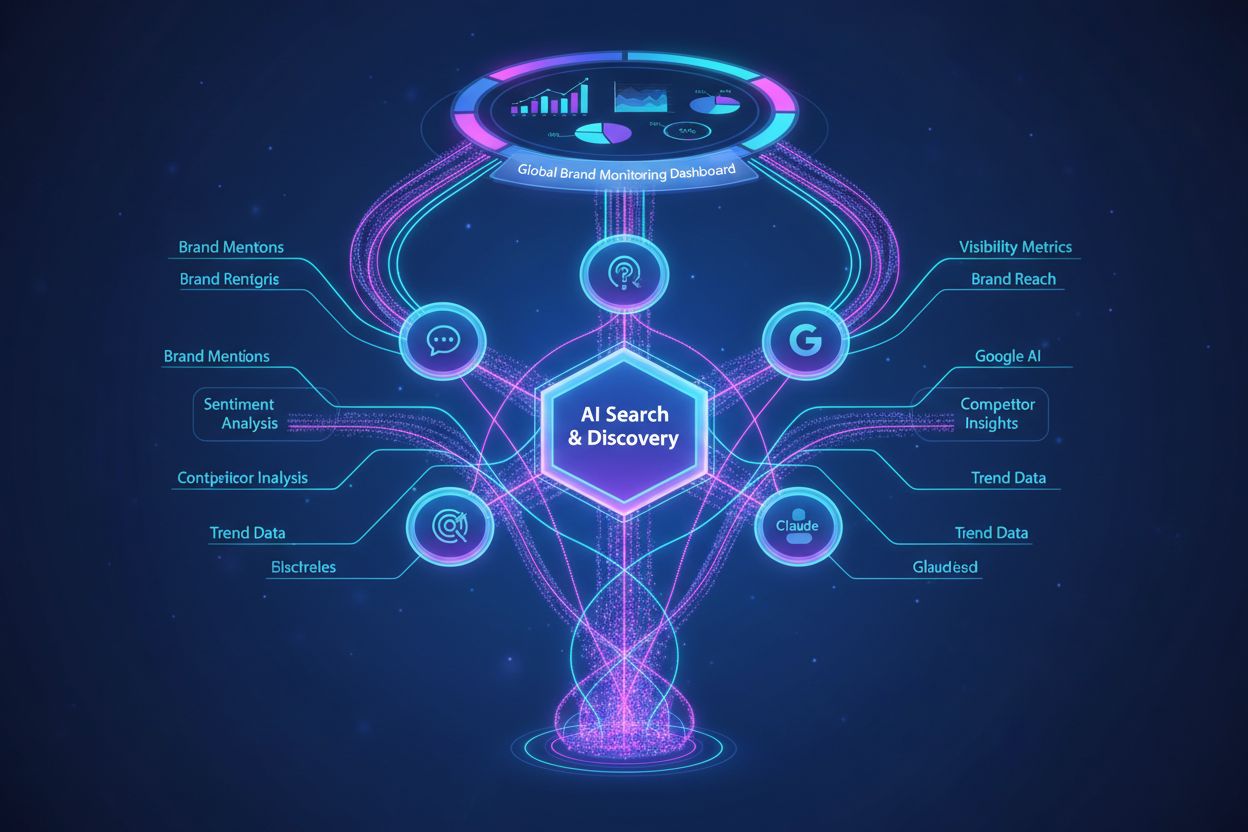
Compare the best AI visibility monitoring tools for 2025. Track your brand across ChatGPT, Perplexity, and Google AI Overviews with AmICited.com and other leadi...

Learn how to adapt your brand for AI search engines. Discover strategies for semantic authority, entity optimization, and visibility in ChatGPT, Perplexity, and...