
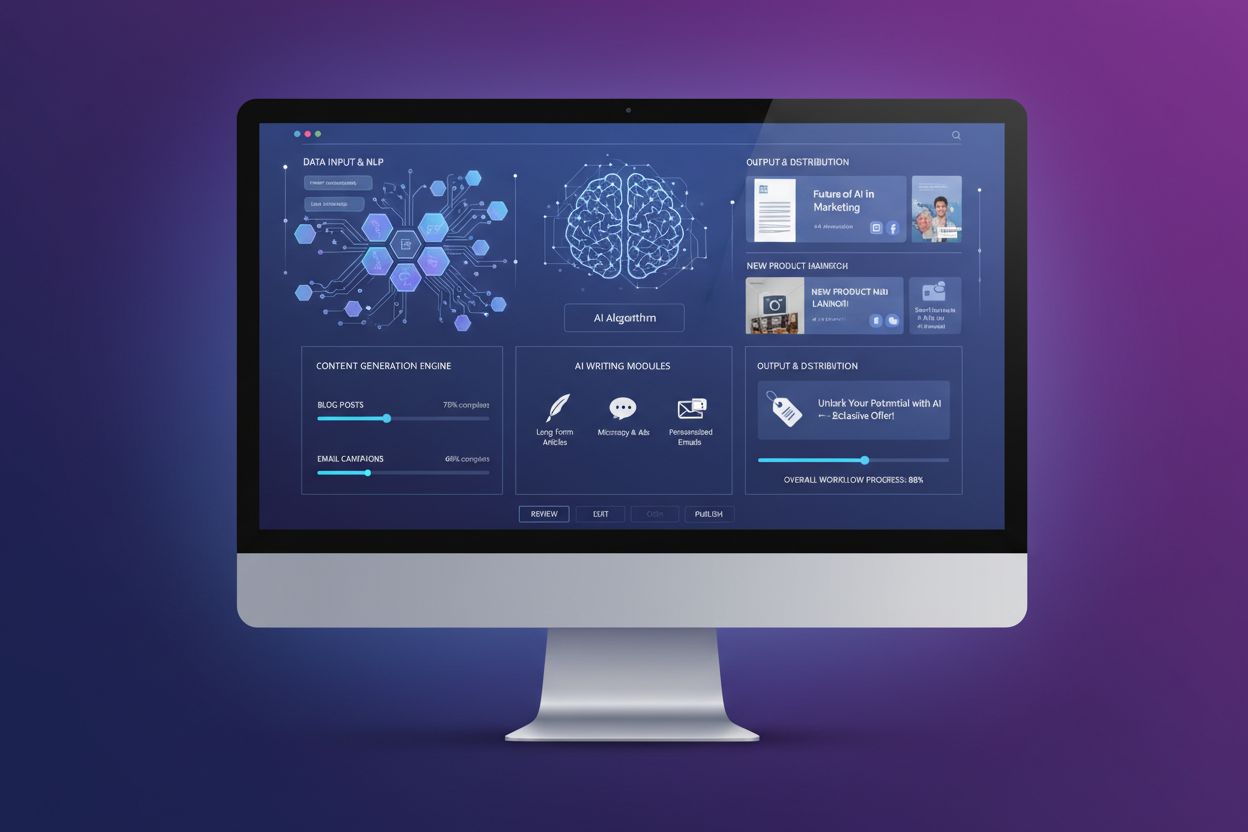
AI Content Generation
Learn what AI content generation is, how it works, its benefits and challenges, and best practices for using AI tools to create marketing content optimized for ...
12 min read

Learn what AI-native content creation means, how it differs from traditional approaches, and how to leverage AI technologies to create better content faster while maintaining quality and brand voice.
AI-native content creation is a content strategy where artificial intelligence is built into the core of the content creation process from the ground up, rather than being added as an afterthought. It integrates AI technologies like natural language processing, machine learning, and generative AI throughout research, creation, optimization, and distribution stages to produce higher-quality content at scale while maintaining human oversight and brand consistency.
AI-native content creation represents a fundamental shift in how organizations approach content strategy and execution. Unlike traditional content creation where artificial intelligence is bolted onto existing processes, AI-native content creation integrates intelligence at the architectural foundation. This means AI isn’t a separate tool you activate for specific tasks—it’s woven throughout every stage of the content lifecycle, from initial research and ideation through creation, optimization, distribution, and performance analysis. The distinction is crucial because it fundamentally changes how content is produced, personalized, and scaled across multiple channels and audiences.
The concept of AI-native differs significantly from simply using AI tools within your existing workflow. When you embed AI natively into your content strategy, the entire system adapts, learns, and improves continuously without manual intervention. This approach has gained tremendous momentum as organizations recognize that generative AI adoption has accelerated faster than the internet or personal computers, with a 39.4% adoption rate just two years after introduction. The global AI market, valued at over $600 billion, is expected to grow 5x in the next five years at a 37.3% annual growth rate, signaling that AI-native approaches are becoming industry standard rather than competitive advantages.
| Approach | Core Characteristic | Implementation | Best Use Case |
|---|---|---|---|
| AI-Native | AI is the foundation | Intelligence embedded throughout entire workflow | New products and strategies where AI creates core value |
| Embedded AI | AI added to existing systems | AI features integrated into traditional tools | Improving existing processes and workflows |
| AI-Based | AI used separately | AI called upon for specific, limited tasks | Particular needs with defined scope |
| Traditional | No AI integration | Manual processes and human-only workflow | Legacy systems with no AI capability |
The critical difference lies in how seamlessly AI operates within your content ecosystem. In traditional content creation, you might use ChatGPT to brainstorm ideas, then switch to a different tool for writing, then another for optimization. Each transition requires manual effort and context switching. In AI-native content creation, these processes flow together naturally. The system learns from your brand voice, understands your audience, and continuously improves recommendations based on what works. This integration creates what industry experts call a “living system” where every piece of content feeds performance data back into the system, enabling real-time optimization and strategic pivots.
Building a truly AI-native content creation system requires several interconnected technical and strategic components working in harmony. Data infrastructure forms the foundation, requiring solid data pipelines that handle information flowing from multiple sources in real-time. This isn’t just about storage—it’s about connecting diverse sources while maintaining security and compliance standards. Your system needs to ingest data from website analytics, social media platforms, customer interactions, market research, and competitive intelligence simultaneously.
Distributed processing ensures intelligence works where it delivers maximum value. Sometimes you need instant responses at the edge for real-time personalization; other times you need cloud-based heavy lifting for complex analysis. AI-native content creation systems automatically balance these needs. Continuous learning is built into normal operations rather than being a separate process. Feedback loops capture interactions and results, automatically improving the system as it runs. This means your content recommendations get smarter with every piece published, every audience interaction, and every performance metric recorded.
Security and governance must be part of the design from day one, not added later. You need mechanisms to monitor what AI does, explain its decisions, and ensure alignment with your brand values and ethical standards. Finally, scalability allows the system to adapt automatically. More users? The system scales up. Off-peak hours? It optimizes costs. This flexibility is automatic, not requiring manual configuration or intervention.
Leading organizations across industries demonstrate how AI-native content creation transforms business outcomes. Superhuman, an email productivity platform, rebuilt the entire email experience around AI from day one rather than adding AI features to traditional email. Their AI helps users write full emails from short phrases, learns individual writing styles, and automatically categorizes important messages. These aren’t add-ons—they’re the core experience. TikTok’s recommendation engine represents AI-native perfection in social media. They didn’t analyze engagement after the fact; they built the entire platform around intelligent content discovery with real-time feedback continuously optimizing what users see.
The Washington Post deployed Heliograf, a proprietary natural language generation system, to automatically generate brief data-driven news updates on nearly 500 electoral races in real-time during the 2016 election cycle. In its first year, Heliograf published around 850 articles and generated more than 500,000 clicks on election coverage that the newsroom otherwise wouldn’t have staffed. This freed journalists to focus on in-depth reporting while ensuring continuous live coverage. Starbucks launched Deep Brew, an AI-driven personalization engine integrated into its mobile app and rewards program. Machine learning analyzes customer preferences, weather, and location data to suggest tailored product recommendations and dynamic menus across its global store network, resulting in a reported 30% increase in ROI and 15% growth in customer engagement.
Trivago used AI to localize the same advertisement in 10+ languages with uniquely tailored voice-overs relevant to local cultures and markets. Netflix uses AI to deliver personalized audio-visual content on a massive scale, with machine learning picking the single image (thumbnail) for each show or movie that users are most likely to click on based on their past viewing habits. This AI-driven thumbnail personalization reportedly boosts click-through rates by about 30%, helping them save roughly $1 billion a year by reducing subscription churn.
Organizations implementing AI-native content creation experience measurable advantages across multiple dimensions. Better adaptation means systems respond dynamically to change without manual reconfiguration. As usage patterns, data volumes, or business needs evolve, the system adapts automatically. Greater efficiency emerges because AI-native systems allocate computing power and resources based on actual needs, not guesswork, resulting in less waste and controlled costs. AI-native startups achieve product-market fit with smaller teams and higher automation levels.
Competitive edge develops because AI-native products create experiences that traditional approaches simply cannot match. These unique capabilities become competitive advantages that competitors struggle to replicate. Faster decisions happen because intelligence at critical moments accelerates decision-making. Teams respond to opportunities and challenges faster with more confidence, and this speed advantage compounds over time. Future-proof design ensures systems evolve continuously without needing periodic overhauls to stay relevant. They adapt as technology and expectations change, protecting your investment in content infrastructure.
Implementing AI-native content creation requires systematic planning and phased execution. Start with assessment by evaluating your current tech stack, data assets, and team capabilities. Ask critical questions: How accessible is our data? What AI capabilities already exist? Do we have the right skills and expertise? Where would AI-native approaches create immediate value? Most organizations should take a phased approach, starting with specific high-value use cases to create early wins while building broader capabilities.
Design for intelligence by putting intelligence at the center of your design principles for new products. Define how AI will drive the user experience, what data will inform decisions, and how the system will continuously learn. Change the culture by embracing data-driven decision making, continuous learning, and experimentation. Leaders need to champion these changes while providing clear guidelines for responsible AI use. Measure what matters by tracking both technical metrics (model accuracy, response time) and business outcomes (efficiency gains, customer satisfaction). Regular benchmarking shows where to improve.
Complexity represents a significant barrier because building these systems requires specialized expertise in machine learning, data engineering, and cloud infrastructure. Most organizations either need to build these capabilities internally or partner with providers. Talent acquisition becomes critical since AI-native development needs different skills than traditional software engineering. You need data scientists, machine learning engineers, and AI architects who understand both technical and business sides.
Data quality directly impacts results—your AI is only as good as your data. You need sufficient volume and variety while addressing biases and gaps. Managing privacy becomes crucial as AI accesses more information. Ethics requires mechanisms for bias mitigation, transparency, and explainability. Clear guidelines for AI decision-making are essential, especially in sensitive contexts. Investment costs money upfront, with businesses allocating up to 20% of their tech budget to AI, and 58% planning to increase AI investments in 2025.
The trajectory is clear: AI-native content creation is becoming the standard rather than the exception. Organizations that embrace this approach position themselves for sustained competitive advantage as intelligence becomes central to everything. The key question isn’t whether to incorporate intelligence into your content strategy—it’s how deeply to integrate it. The most successful implementations reimagine entire processes around AI capabilities instead of merely augmenting existing workflows. By putting AI at the architectural core instead of adding it later, companies create experiences that adapt, learn, and deliver value in ways traditional approaches simply cannot match. The future belongs to organizations that build intelligence from the ground up, creating systems that continuously learn, adapt, and deliver exceptional content experiences.
Track where your brand, domain, and URLs appear in AI-generated answers across ChatGPT, Perplexity, and other AI search engines. Ensure your content gets properly cited and attributed in AI responses.
Learn what AI content generation is, how it works, its benefits and challenges, and best practices for using AI tools to create marketing content optimized for ...
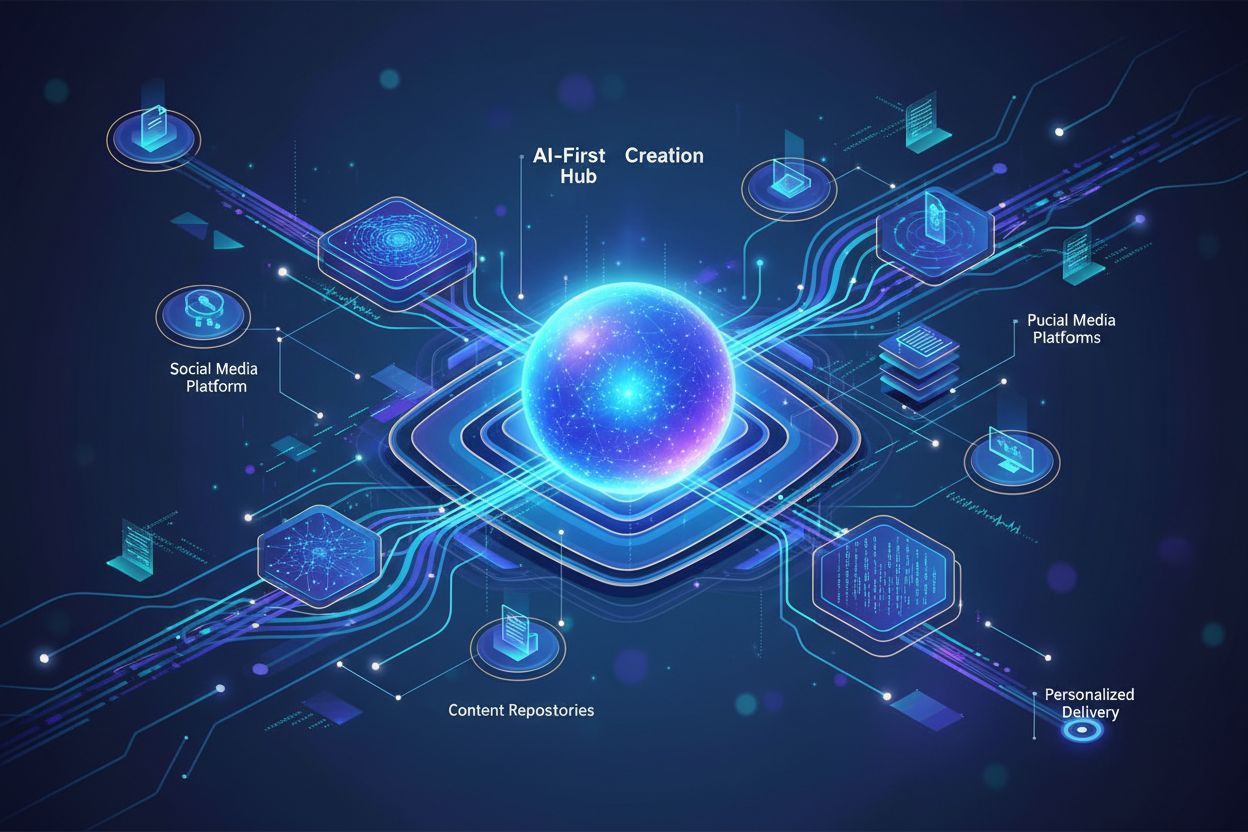
Learn what AI-First Content Strategy is, how it differs from traditional SEO, and how to implement it to ensure your content is visible in ChatGPT, Perplexity, ...

Learn essential strategies to optimize your support content for AI systems like ChatGPT, Perplexity, and Google AI Overviews. Discover best practices for clarit...