

Best AI Search Visibility Monitoring Tools 2025 | Track Brand Mentions
Discover the top AI search visibility monitoring tools to track your brand across ChatGPT, Perplexity, and Google AI Overviews. Compare features, pricing, and c...
9 min read

Discover the best AI visibility tools to monitor your brand across ChatGPT, Perplexity, Google AI Overviews, and other AI search engines. Compare features, pricing, and capabilities.
The best AI visibility tool depends on your needs: AmICited specializes in monitoring brand mentions across AI search engines like ChatGPT, Perplexity, and Google AI Overviews. Other top options include Sight AI for combined tracking and content creation, Profound for enterprise-scale monitoring, and OtterlyAI for comprehensive citation tracking across multiple platforms.
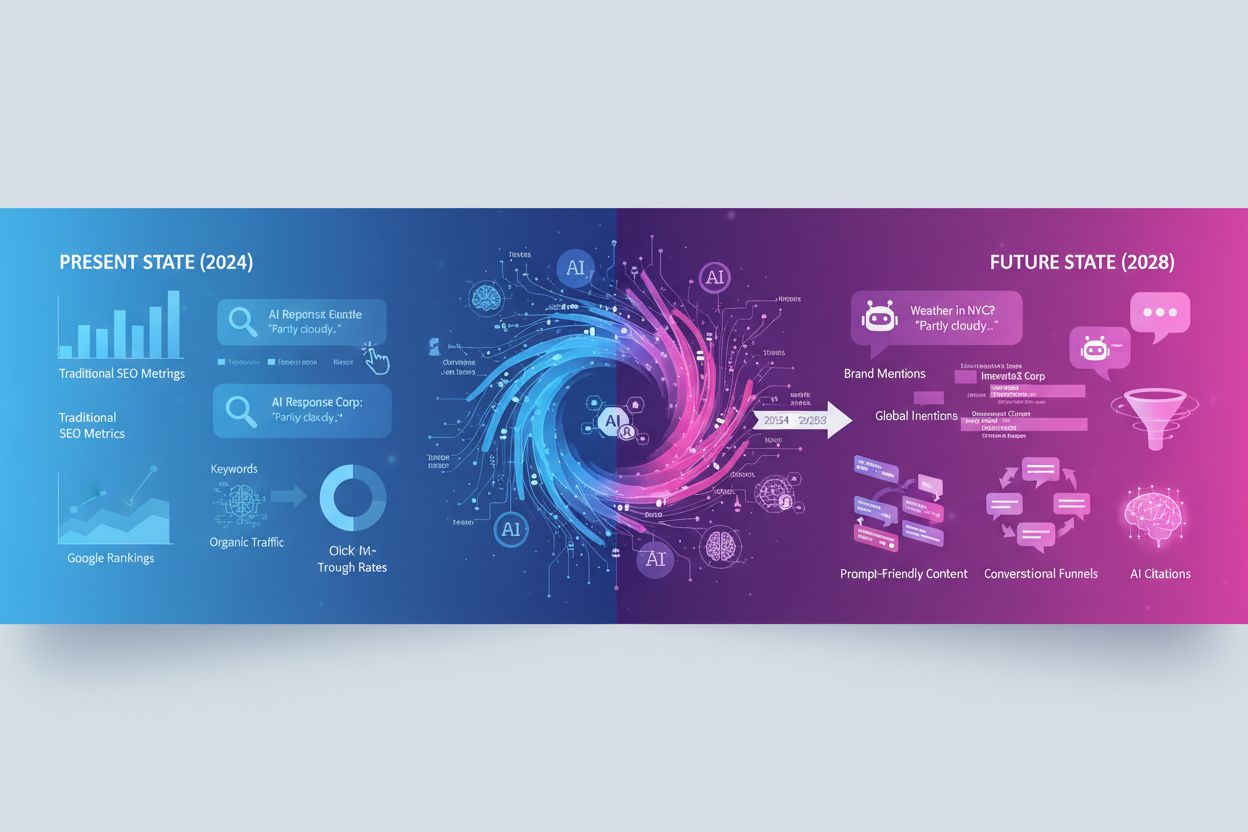
AI visibility tools are specialized software platforms designed to monitor how your brand, products, and content appear in responses generated by artificial intelligence search engines and large language models. Unlike traditional search engine optimization that focuses on ranking positions in Google’s search results, AI visibility monitoring tracks whether your brand gets mentioned, cited, and recommended when users ask questions to ChatGPT, Perplexity, Google AI Overviews, Claude, Gemini, and other AI-powered answer engines. These tools have become essential because the way people discover brands is fundamentally changing—58% of consumers have already replaced traditional search engines with generative AI tools for product recommendations, and traditional organic search traffic is expected to decline by 50% by 2028 according to Gartner research.
The core challenge that AI visibility tools solve is the AI visibility gap. Some brands dominating traditional search results are completely invisible to ChatGPT and Perplexity, while others appear frequently in AI-generated answers. This gap exists because AI search engines use different retrieval mechanisms than Google, pulling from multiple sources and synthesizing single answers that cite only a few references. If your brand isn’t mentioned in those citations, you’re losing customers to competitors who are visible in AI recommendations.
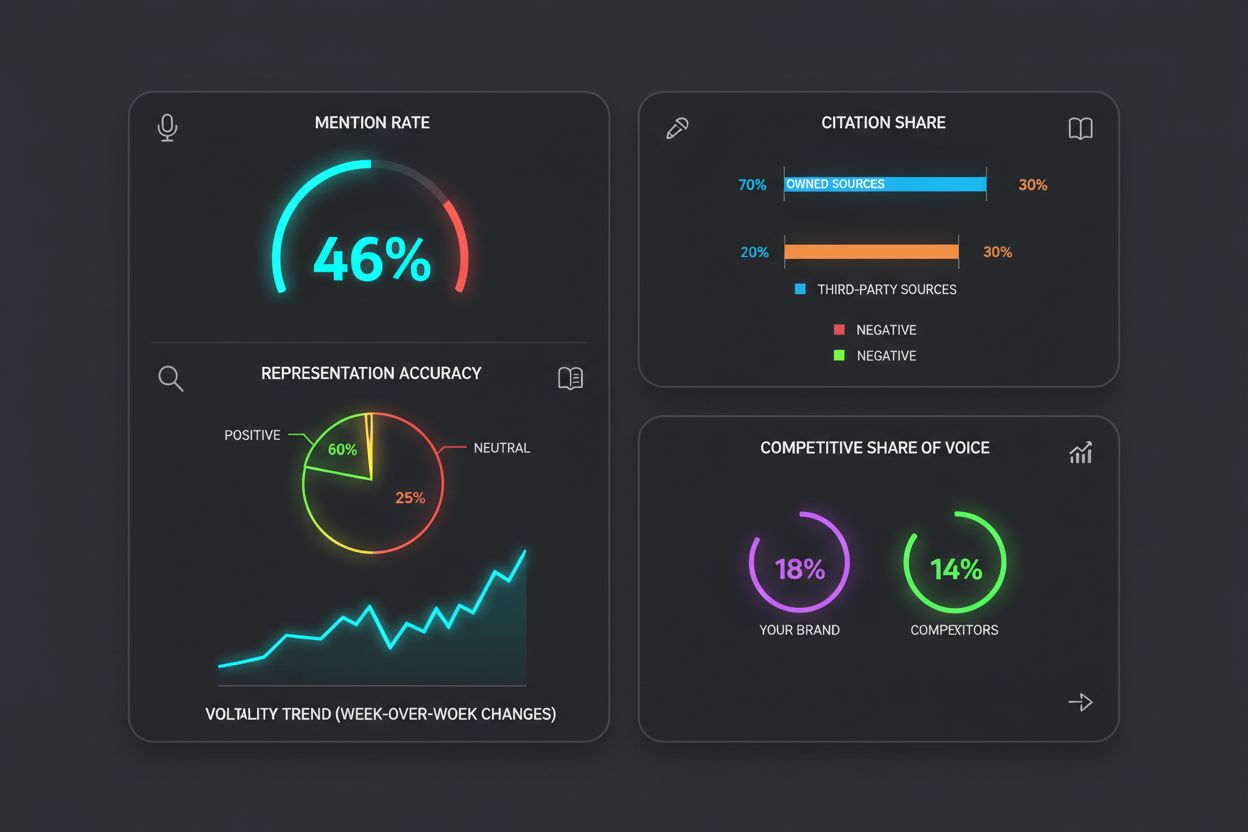
The best AI visibility tools track several critical metrics that traditional SEO tools cannot measure. Brand mention frequency shows how often AI engines reference your brand when answering relevant queries across different platforms. Citation rates measure whether your website actually appears as a source in AI-generated responses, which is more valuable than a simple mention because it drives referral traffic. Share of voice compares your visibility against competitors within AI answers, revealing whether you’re gaining or losing ground in your category. Cross-platform performance breaks down your visibility separately across ChatGPT, Google AI Overviews, Perplexity, Claude, Gemini, and Microsoft Copilot, since each platform pulls from different data sources and uses distinct retrieval methods.
| Metric | Definition | Why It Matters |
|---|---|---|
| Brand Mention Frequency | How often AI engines reference your brand | Shows overall awareness and recognition in AI responses |
| Citation Rate | Percentage of mentions that include your website as a source | Directly correlates with referral traffic from AI search |
| Share of Voice | Your mentions compared to competitors in the same category | Indicates competitive positioning in AI-generated answers |
| Sentiment Analysis | Whether AI describes your brand positively, neutrally, or negatively | Reveals perception gaps and messaging opportunities |
| Geographic Performance | Visibility variations across different countries and regions | Essential for brands serving multiple markets |
| Platform-Specific Visibility | Separate tracking for ChatGPT, Perplexity, Google AI, etc. | Shows which platforms drive the most value for your brand |
Beyond these core metrics, advanced AI visibility tools also measure sentiment and positioning—understanding not just whether AI mentions your brand, but how it characterizes your business. This reveals perception gaps where AI might describe your competitor as “affordable” while positioning you as “premium,” even if that’s not your intended market positioning. Geographic performance tracking shows how your visibility differs across markets, which is critical for international brands where AI responses vary by location and language.
Traditional rank tracking tools measure your position on search engine results pages, but this metric has become increasingly irrelevant in the AI era. Different discovery mechanisms mean that AI engines don’t rank pages the way Google does—they use retrieval-augmented generation (RAG) to pull from multiple sources and synthesize a single answer. Your page ranking #1 on Google means nothing if AI doesn’t cite it in its response. Answers over clicks represents a fundamental shift in user behavior; millions of people now read AI-generated summaries without ever clicking through to source websites, so traditional click-through rates don’t capture this traffic.
Variable outputs from AI systems create another challenge that traditional tools can’t handle. AI responses shift from query to query based on context, user history, and other factors, so tracking them requires consistent monitoring and statistical sampling rather than simple position tracking. Multi-platform fragmentation means your brand might show up prominently in ChatGPT yet be completely invisible in Perplexity, since each AI platform draws from different data sources and uses its own retrieval methods. A tool that only tracks Google rankings completely misses this new landscape where visibility is distributed across multiple competing AI platforms.
When selecting an AI visibility tool, consider whether you need tracking only or a combined tracking and optimization platform. Some tools like OtterlyAI and Profound focus purely on monitoring and analytics, showing you exactly where your brand appears and how it compares to competitors. Other platforms like Sight AI and Writesonic integrate visibility tracking with AI-powered content creation, allowing you to identify gaps and immediately create optimized content to fill them. The choice depends on whether you have internal content creation resources or need the platform to guide your optimization efforts.
Enterprise requirements matter significantly if you manage multiple brands, products, or geographic markets. Profound excels at organizational complexity with separate dashboards for each product line, role-based access controls, and white-label reporting for agencies. If you’re a solopreneur or small business, simpler tools like OtterlyAI or Sight AI provide excellent functionality without enterprise overhead. Attribution capabilities distinguish tools that connect AI visibility to actual business outcomes. Promptwatch stands out by tying brand mentions directly to website traffic and conversions, helping you understand which AI mentions actually drive revenue rather than just celebrating mention volume.
Competitive benchmarking features vary significantly across platforms. Peec AI specializes in competitive intelligence, showing you not just your visibility but your ranking within your category and how your sentiment compares to rivals. This context transforms raw data into strategic insights—when you see that a competitor dominates AI recommendations for mid-market solutions while you lead in enterprise contexts, you know exactly where to focus optimization efforts. Recommendation engines like Nimt AI provide prescriptive guidance on what to optimize next, eliminating guesswork for teams without dedicated GEO specialists.
The best AI visibility tools monitor all major AI search platforms, but each platform requires different optimization approaches. ChatGPT is the dominant player with 800+ million weekly users, making it the highest priority for most brands. Google AI Overviews appear on billions of Google searches, so visibility here directly impacts your organic search traffic. Perplexity is gaining traction rapidly for research-oriented queries and attracts users specifically looking for synthesized answers rather than traditional search results. Claude is growing quickly with integration into Safari and other applications, representing an emerging opportunity for early movers. Gemini is Google’s standalone AI assistant that’s expanding fast, while Microsoft Copilot integrates AI search into Windows and Office applications, reaching users in their daily workflows.
Each platform pulls from different data sources and uses distinct retrieval methods, which is why comprehensive monitoring requires tracking all of them separately. A brand might rank highly in ChatGPT because it appears frequently in training data, but be invisible in Perplexity if that platform’s data sources don’t include your content. The best tools provide platform-by-platform breakdowns so you understand where your visibility is strongest and where you have opportunities to improve.
The ultimate measure of an AI visibility tool’s value is whether it helps you drive measurable business results. Traffic attribution shows which AI mentions actually drive website visits, revealing which platforms and query types generate the most valuable traffic. Conversion tracking measures how AI-driven traffic performs compared to other channels—do visitors from AI search convert at higher or lower rates than paid search or organic traffic? This distinction matters because it determines whether improving AI visibility should be a priority relative to other marketing investments.
Query-level analysis breaks down performance by specific questions and search contexts, revealing which types of AI queries drive the most valuable outcomes for your business. A SaaS company might discover that AI mentions for “project management tools” drive high-quality leads, while mentions for “productivity software” attract price-sensitive shoppers. This granular insight allows you to focus optimization efforts on the queries that actually matter for your business model. Trend analysis identifies growing or declining visibility patterns over time, helping you spot opportunities or problems before they significantly impact traffic.
The barrier to entry for AI visibility monitoring is lower than you might expect. Most platforms offer free trials or freemium versions that let you run an initial visibility check across major AI platforms without any credit card. Start by identifying your core prompts—the natural language questions your potential customers actually ask AI chatbots, not traditional keywords. Unlike keyword research that focuses on search volume, prompt research focuses on conversational questions people type into ChatGPT or Perplexity.
Document your baseline by recording your mention rates, citation frequencies, and competitor comparisons across all major platforms. This baseline becomes your reference point for measuring improvement over time. Identify quick wins by looking for queries where you’re close to visibility or where small content improvements could earn citations. These quick wins build momentum and demonstrate value before investing in larger optimization efforts. Establish ongoing monitoring because AI visibility changes faster than traditional rankings—what worked last month might not work this month as AI systems retrain on new content and adjust their retrieval methods.
The AI search landscape is evolving rapidly with several important trends emerging. Multimodal search capabilities are expanding as AI platforms begin processing images, voice, and video alongside text, creating new opportunities for brands that optimize beyond written content. Real-time integration is connecting AI systems to live data sources for fresher, more accurate answers, which means your content freshness and update frequency will matter more than ever. Platform fragmentation continues as new AI search options emerge and compete for user attention, making comprehensive multi-platform monitoring increasingly essential.
Brands that start understanding and optimizing for AI search now will gain advantages that compound over time. Early movers in AI visibility optimization are already seeing significant benefits—some brands have increased their AI visibility 7x in a matter of weeks by creating content specifically optimized for how AI systems retrieve and cite information. The brands that wait until AI search dominates their industry will find themselves playing catch-up against competitors who’ve already established strong visibility and built the content foundations that AI systems rely on.
Get real-time insights into how your brand appears across ChatGPT, Perplexity, Google AI Overviews, and other AI search engines. Track mentions, citations, and competitive positioning with AmICited.
Discover the top AI search visibility monitoring tools to track your brand across ChatGPT, Perplexity, and Google AI Overviews. Compare features, pricing, and c...
Comprehensive analysis of the AI visibility tool market, including market size, growth projections, competitive landscape, and strategic recommendations for bus...
Quick reference guide to AI visibility monitoring. Track mentions, citations, and brand presence across ChatGPT, Google AI Overviews, Perplexity, and Gemini wit...