

How Do I Structure Content for AI Citations? Complete Guide for 2025
Learn how to structure your content to get cited by AI search engines like ChatGPT, Perplexity, and Google AI. Expert strategies for AI visibility and citations...
8 min read

Learn the best practices for formatting headers for AI systems. Discover how proper H1, H2, H3 hierarchy improves AI content retrieval, citations, and visibility in ChatGPT, Perplexity, and Google AI Overviews.
The best way to format headers for AI is to use a clear hierarchical structure with H1 for main titles, H2 for major sections, and H3 for subsections. Headers should be question-based, descriptive, and match natural search language. This helps AI systems understand content boundaries, extract relevant information, and cite your content in AI-generated answers.
Header formatting is far more critical in the age of artificial intelligence than it ever was for traditional search engines. When AI systems like ChatGPT, Perplexity, and Google’s AI Overviews process your content, they rely heavily on structural cues to understand what information is most important and how different concepts relate to each other. The hierarchical structure of headers acts as a roadmap that helps these systems parse your content into meaningful chunks that can be extracted and cited in AI-generated answers. Unlike human readers who can infer meaning from context and visual design, AI systems depend on explicit structural signals to determine content boundaries and relevance. This fundamental difference means that proper header formatting directly impacts whether your content gets selected for inclusion in AI responses.
The most effective header structure follows a logical progression: H1 tags represent the primary topic of your entire page, H2 tags introduce major sections that support the main topic, and H3 tags provide subsections within those major sections. This hierarchical approach creates what content strategists call “chunk architecture”—self-contained sections that make sense when extracted from the full page. When you maintain this structure consistently, AI systems can more easily identify where one idea ends and another begins, making your content significantly more retrievable. Research shows that pages with proper heading hierarchy are substantially more likely to be cited in AI Overviews and featured in AI-generated summaries compared to pages with inconsistent or missing header structures.
Question-based headers have emerged as one of the most powerful formatting techniques for AI visibility. Instead of using generic phrases like “Content Overview” or “Key Information,” formatting your headers as actual questions that users might ask creates direct alignment with how AI systems interpret search intent. For example, rather than using “Header Optimization Strategies,” a question-based header like “How Should You Format Headers for AI Search?” signals to AI systems that your content directly addresses a specific user query. This alignment is crucial because modern AI systems are designed to match user questions with content that provides direct answers, and question-based headers make this matching process significantly more efficient.
The effectiveness of question-based headers stems from how AI language models process natural language. These systems are trained on conversational patterns and understand that users typically search using question formats, especially in voice search and AI chat interfaces. When your headers mirror this natural language pattern, the AI system recognizes your content as highly relevant to the query. Additionally, question-based headers improve semantic alignment—the degree to which your content’s language matches the user’s intent. This semantic alignment is one of the primary factors AI systems use when deciding which content to cite. Pages that use question-based headers consistently see higher citation rates in AI Overviews and answer engine results.
One of the most common mistakes in header formatting is skipping heading levels, such as jumping from H1 directly to H3, or from H2 to H4. This practice confuses both AI systems and human readers about the logical structure of your content. When you skip levels, you create ambiguity about how different sections relate to each other and what the relative importance of each section is. AI systems interpret heading hierarchy as a signal of content organization and importance, so skipping levels can cause the system to misunderstand your content structure. The correct approach is to maintain a strict hierarchy: H1 at the top, followed by H2s for major sections, then H3s for subsections within those H2s. If you need additional levels of organization, you can use H4s, but only after establishing H3s.
Maintaining proper hierarchy also improves content scannability for both humans and machines. When readers (or AI systems) encounter a page with consistent heading structure, they can quickly understand the overall organization and find the specific information they need. This improved scannability translates directly into better engagement metrics and higher citation rates in AI systems. Furthermore, proper heading hierarchy supports accessibility standards, which are increasingly important for AI systems that evaluate content quality. Search engines and AI systems now consider accessibility compliance as a ranking and citation factor, so maintaining proper heading structure benefits both human users with screen readers and AI systems evaluating your content.
Keyword incorporation in headers requires a delicate balance between optimization and readability. Your headers should include relevant keywords that match what users and AI systems are searching for, but these keywords must fit naturally within the question or statement. Forced keyword stuffing in headers—such as “Best Header Formatting Techniques for AI Search Engine Optimization Strategies”—actually reduces effectiveness because it appears unnatural and may trigger spam detection algorithms. Instead, focus on incorporating your primary keyword naturally into your H1 tag and secondary keywords into your H2 and H3 tags where they fit contextually.
The key principle is that headers should read naturally first and be optimized second. When you write headers that sound like genuine questions or statements that real users would search for, you automatically incorporate relevant keywords in a natural way. For instance, “What is the best way to format headers for AI?” naturally includes the primary keyword phrase while remaining conversational and user-focused. This approach serves multiple purposes: it improves readability for human visitors, it aligns with how AI systems process natural language queries, and it incorporates keywords in a way that search engines recognize as legitimate optimization rather than manipulation.
| Header Element | Purpose for AI Systems | Best Practice |
|---|---|---|
| H1 Tag | Identifies main page topic | Use one per page, include primary keyword |
| H2 Tags | Defines major content sections | Use 3-5 per page, make question-based |
| H3 Tags | Organizes subsections | Use under H2s, provide specific details |
| Header Length | Improves parsing efficiency | Keep between 6-12 words for clarity |
| Keyword Placement | Signals relevance | Place primary keyword near beginning |
| Question Format | Matches search intent | Frame as natural user questions |
The way you format headers directly impacts how AI systems extract and cite your content. When AI systems like those powering Google’s AI Overviews or Perplexity process your page, they use headers as primary signals to identify content chunks. A well-formatted header tells the AI system: “Here is a distinct idea or section that can potentially be extracted and used in an answer.” This is why header clarity and specificity are so important—vague headers like “More Information” or “Additional Details” don’t provide clear signals about what content follows, making it less likely that AI systems will extract that section for citation.
The most effective header formatting strategy combines several key practices into a cohesive approach. First, lead with your answer in the paragraph immediately following each header. AI systems scan the first 40-60 words after a header to determine if that section contains relevant information. If you bury your answer deep in the paragraph, AI systems may not recognize the section as relevant to the query. Second, keep headers concise but descriptive—aim for 6-12 words that clearly communicate what the section covers. Long, rambling headers confuse both readers and AI systems about the section’s focus.
Third, avoid branded or clever language in headers when you want AI systems to cite your content. Headers like “Our Unique Approach” or “The Secret Sauce” might work for brand voice in other contexts, but they reduce AI retrievability because they don’t clearly signal what information the section contains. Instead, use straightforward, descriptive language that explicitly states the topic. Fourth, use consistent formatting across your entire page—if you use question-based headers for some sections, use them for all sections. Consistency helps AI systems recognize your content structure and extract information more reliably. Finally, ensure headers are self-contained—each header should make sense on its own without requiring readers to understand previous sections. This is critical because AI systems often extract individual sections without the surrounding context.
Different AI systems have slightly different algorithms for processing and citing content, but they all rely on similar structural signals. ChatGPT and similar large language models prioritize content that is well-organized with clear headers because these models were trained on high-quality web content that typically follows good formatting practices. Perplexity and other answer engines use headers as primary signals for identifying answer-worthy content sections. Google’s AI Overviews analyze header structure to understand content organization and determine which sections are most relevant to specific queries. Despite these differences, the fundamental principle remains the same: clear, hierarchical, question-based headers improve your content’s visibility across all AI platforms.
To optimize for all major AI platforms simultaneously, focus on creating headers that are genuinely useful for human readers first. Headers that clearly communicate what each section covers, that follow proper hierarchy, and that match natural search language will perform well across all AI systems. Avoid the temptation to optimize specifically for one platform at the expense of others—this typically backfires because it often results in unnatural formatting that reduces overall content quality. Instead, adopt a universal best-practice approach that serves both human readers and AI systems effectively.
Many content creators inadvertently reduce their content’s AI visibility through common header formatting mistakes. Using multiple H1 tags on a single page confuses AI systems about your page’s primary topic. Each page should have exactly one H1 tag that clearly states the main topic. Inconsistent heading hierarchy creates confusion about how sections relate to each other—if some sections use H2s and others use H3s at the same level, AI systems struggle to understand the structure. Vague or generic headers like “Introduction,” “Details,” or “Information” don’t provide clear signals about what content follows, reducing the likelihood of AI extraction. Headers that don’t match search language make it harder for AI systems to connect your content to user queries—if users search for “how to format headers for AI” but your header says “Header Formatting Methodology,” the connection is less obvious.
Overly long headers (more than 15-20 words) become difficult for AI systems to parse and often contain unnecessary words that dilute the main message. Headers with keyword stuffing appear unnatural and may trigger spam detection—phrases like “Best Header Formatting for AI SEO Optimization Strategies” are obviously optimized rather than genuinely useful. Skipping heading levels creates structural ambiguity that confuses both AI systems and readers. Using headers purely for styling rather than semantic structure undermines their value for AI systems—if you need visual styling, use CSS instead of misusing header tags. Avoiding these mistakes is often more important than implementing advanced optimization techniques, as these errors actively harm your AI visibility.
To understand whether your header formatting improvements are working, you need to track specific metrics related to AI visibility. Citation tracking involves monitoring whether your content appears in AI-generated answers across platforms like ChatGPT, Perplexity, and Google AI Overviews. Tools like Google Search Console now provide data on AI Overview appearances, allowing you to see which pages are being cited and which aren’t. Zero-click impressions indicate when your content is cited in AI answers without users clicking through to your site—this is increasingly common and represents a form of visibility that traditional metrics don’t capture. Brand mention tracking helps you identify when your brand or domain is referenced in AI-generated answers, even if your specific content isn’t directly cited.
Additionally, monitor engagement metrics on pages with optimized headers—improved header formatting should correlate with increased time on page, lower bounce rates, and higher conversion rates. Search visibility for your target keywords should improve as your header formatting becomes more aligned with search intent. Track these metrics over time to understand the impact of your header optimization efforts. Most importantly, manually check AI platforms periodically to see if your content is appearing in AI-generated answers for your target queries. This direct observation often reveals insights that automated tools miss and helps you understand how specific header formatting choices impact AI visibility.
Track how your content appears in AI-generated answers across ChatGPT, Perplexity, and Google AI Overviews. Get real-time alerts when your brand is mentioned and optimize your header strategy for maximum AI visibility.
Learn how to structure your content to get cited by AI search engines like ChatGPT, Perplexity, and Google AI. Expert strategies for AI visibility and citations...
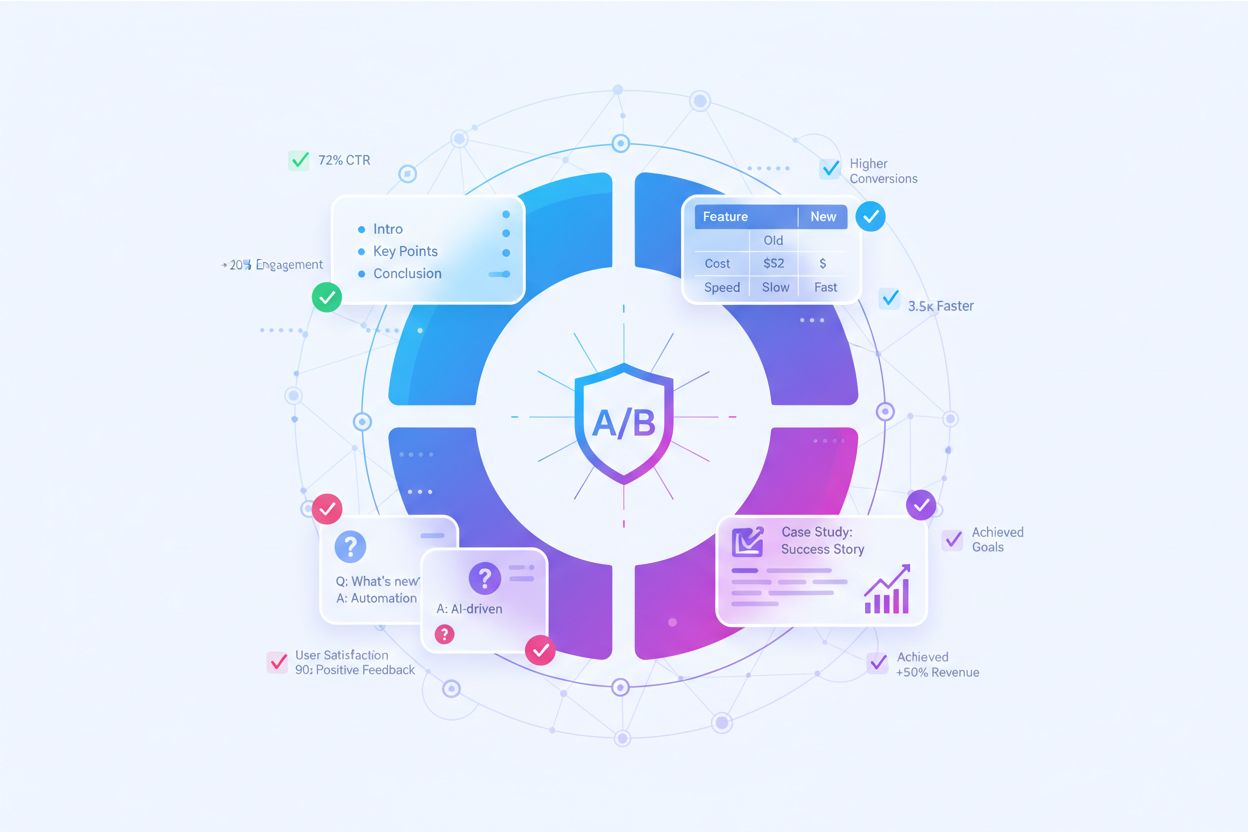
Learn how to test content formats for AI citations using A/B testing methodology. Discover which formats drive the highest AI visibility and citation rates acro...
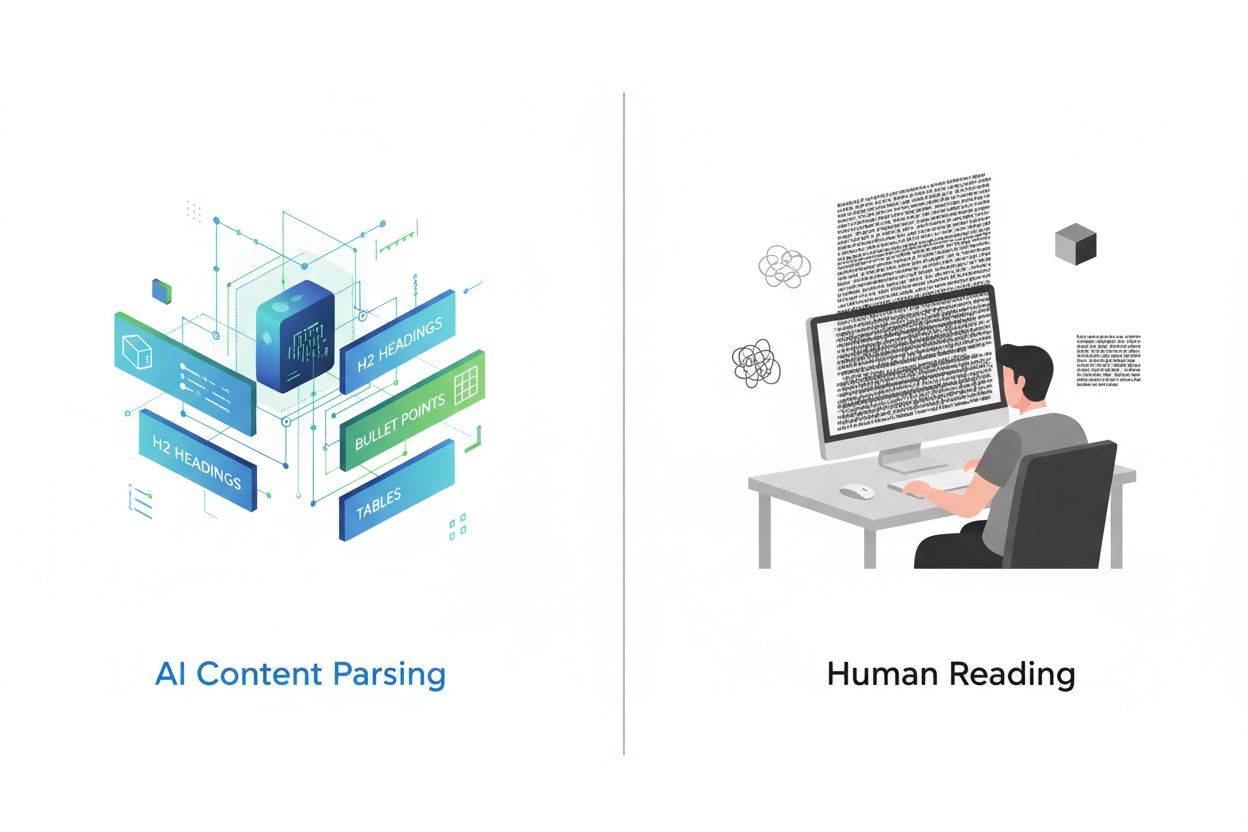
Learn how to restructure your content for AI systems with practical before and after examples. Discover techniques to improve AI citations and visibility across...