

Co-Occurrence
Co-occurrence is when related terms appear together in content, signaling semantic relevance to search engines and AI systems. Learn how this concept impacts SE...
11 min read

Learn how co-occurrence patterns help AI search engines understand semantic relationships between terms, improve content ranking, and enhance AI-generated answers.
Co-occurrence refers to how frequently two or more words or entities appear together within the same context in text. AI search engines use co-occurrence patterns to understand semantic relationships, improve query understanding, and determine content relevance for AI-generated answers.
Co-occurrence is a fundamental concept in natural language processing that describes how frequently two or more words, phrases, or entities appear together within a specified context, such as a sentence, paragraph, or document. In the context of AI search engines like ChatGPT, Perplexity, and other AI answer generators, co-occurrence patterns play a critical role in how these systems understand content, extract meaning, and generate relevant answers. When AI models analyze text, they don’t just look at individual words in isolation—they examine which terms consistently appear together, as this proximity reveals semantic relationships and contextual meaning that helps the AI understand what content is truly about.
The importance of co-occurrence in AI search cannot be overstated. Modern AI language models are trained on massive datasets where they learn statistical patterns about which words naturally cluster together. These patterns become embedded in the model’s understanding of language, allowing it to recognize that certain terms are semantically related even when they don’t appear in the exact same sentence. For example, an AI search engine learns that “electric vehicles,” “battery range,” and “charging stations” frequently co-occur in automotive content, which helps it understand that these concepts belong to the same topic domain. This understanding directly influences how AI systems rank, retrieve, and cite content when generating answers to user queries.
AI search engines use co-occurrence analysis to build a statistical map of how language works across billions of documents and conversations. When an AI model encounters a user query, it doesn’t simply match keywords—it analyzes the semantic space around those keywords by examining which other terms typically appear alongside them in high-quality, authoritative content. This process helps the AI understand user intent more accurately and retrieve content that truly addresses what the user is asking, rather than just content that contains the exact keywords. The co-occurrence matrix, a mathematical representation that captures how often word pairs appear together, serves as a foundational tool that AI systems use to create word embeddings and semantic vectors.
The distributional hypothesis underpins how co-occurrence works in AI: “You know a word by the company it keeps.” This principle means that words appearing in similar contexts with similar co-occurrence partners are likely to have related meanings. AI language models leverage this principle extensively. When training on text data, these models build co-occurrence statistics that help them understand semantic similarity. For instance, if “doctor,” “physician,” and “medical professional” all co-occur with similar sets of words like “patient,” “diagnosis,” and “treatment,” the AI learns these terms are semantically equivalent. This understanding allows AI search engines to recognize synonyms and related concepts, making them more effective at understanding diverse ways users might phrase the same question.
Co-occurrence is measured using several statistical methods that go beyond simple frequency counting. The most basic approach is raw frequency counting—simply tallying how many times two words appear together within a defined context window. However, raw counts can be misleading because very common words naturally co-occur frequently just due to their high frequency in the language, not because they’re meaningfully related. To address this limitation, AI systems use more sophisticated metrics like Pointwise Mutual Information (PMI), which measures how much more often two words co-occur together compared to what would be expected by random chance.
| Measurement Method | Description | Use Case |
|---|---|---|
| Raw Frequency | Simple count of co-occurrences | Baseline analysis, quick assessment |
| Pointwise Mutual Information (PMI) | Compares observed vs. expected co-occurrence | Identifying meaningful semantic relationships |
| Log-Likelihood Ratio (LLR) | Statistical significance test for associations | Filtering noise from large datasets |
| Chi-Square Test | Tests independence between word pairs | Determining statistical significance |
| Dice Coefficient | Measures similarity between word distributions | Semantic similarity scoring |
PMI is particularly valuable in AI search because it filters out spurious associations. A high PMI score indicates that two words co-occur much more frequently than random chance would predict, suggesting a genuine semantic relationship. Conversely, if two common words co-occur often but not more than statistically expected, PMI assigns a low or negative value. This distinction is crucial for AI systems because it helps them distinguish between meaningful semantic relationships and coincidental co-occurrences. Modern AI language models use these association measures to weight the importance of different co-occurrence patterns, allowing them to focus on the most semantically significant relationships when understanding and generating content.
When AI search engines generate answers to user queries, co-occurrence patterns directly influence which content gets retrieved and cited. The AI system analyzes your query and looks for documents where the query terms and semantically related terms co-occur in meaningful ways. If your content contains the primary keywords the user searched for, but those keywords don’t co-occur with related concepts that typically appear in authoritative content on that topic, the AI may rank your content lower or skip it entirely. Conversely, if your content demonstrates rich co-occurrence patterns—where your main topic appears alongside relevant subtopics, related entities, and supporting concepts—the AI recognizes this as a sign of comprehensive, authoritative coverage.
This has profound implications for how content appears in AI-generated answers. Consider a user asking “What are the benefits of renewable energy?” An AI search engine will look for content where “renewable energy” co-occurs with terms like “solar power,” “wind energy,” “carbon emissions reduction,” “sustainability,” and “cost savings.” Content that mentions renewable energy but lacks these related co-occurrences may be overlooked, even if it’s technically relevant. The AI interprets rich co-occurrence patterns as evidence that the content thoroughly addresses the topic from multiple angles. This is why semantic relevance—the alignment between your content and the full semantic context of a topic—has become more important than simple keyword matching in AI search visibility.
Entity co-occurrence extends the concept beyond individual words to named entities like people, organizations, locations, and products. When two entities frequently appear together in text, AI systems infer that they likely have a relationship in the real world. For example, if “Apple Inc.” and “Tim Cook” consistently co-occur in business news and technology articles, the AI learns to associate them and understands that Tim Cook is connected to Apple. This entity-level co-occurrence analysis helps AI systems build and maintain knowledge graphs—structured representations of how different concepts and entities relate to each other.
For brands and organizations, understanding entity co-occurrence is critical for AI search visibility. If your brand name frequently co-occurs with specific products, services, or industry terms, AI systems learn to associate your brand with those concepts. This affects how your content is retrieved and cited when users ask questions related to those topics. If your brand rarely co-occurs with relevant industry terms or competitor names, AI systems may not recognize your content as relevant to queries in your industry. This is why monitoring your brand’s co-occurrence patterns across AI search engines is essential—it reveals how AI systems are categorizing and understanding your business, and whether your content is being positioned correctly within your industry’s semantic landscape.
To improve your visibility in AI-generated answers, you need to understand and optimize for co-occurrence patterns. The first step is identifying which terms should co-occur with your primary keywords. Research what concepts, related terms, and supporting ideas appear together in top-ranking content for your target queries. If you’re writing about “sustainable packaging,” you should identify which related terms—like “biodegradable materials,” “environmental impact,” “cost-effectiveness,” and “supply chain”—consistently co-occur in authoritative content on this topic. Your content should naturally incorporate these related terms throughout, creating rich co-occurrence patterns that signal to AI systems that you’ve comprehensively covered the topic.
However, it’s important to note that co-occurrence optimization must feel natural and authentic. AI systems are sophisticated enough to detect artificial keyword stuffing or forced term insertion. The goal is to write content that genuinely addresses a topic from multiple angles, which naturally results in rich co-occurrence patterns. This means structuring your content to cover related subtopics, include relevant examples, address common questions, and explore different dimensions of your main topic. When you do this authentically, the co-occurrence patterns emerge naturally, and AI systems recognize your content as authoritative and comprehensive. Additionally, using clear headings and subheadings helps organize your content in ways that make co-occurrence patterns more visible to AI systems, as these structural elements help the AI understand which concepts are related and how they fit together within your overall topic.
While co-occurrence is a powerful tool for AI understanding, it has important limitations that content creators should recognize. Co-occurrence alone doesn’t guarantee semantic relationship—two terms might appear together frequently due to coincidence, shared context, or broad topic overlap rather than genuine semantic connection. For example, if “Monday” and “President” frequently co-occur in news articles simply because press conferences happen on Mondays, this doesn’t indicate a meaningful relationship between the concepts. Modern AI systems address this by combining co-occurrence analysis with other signals like linguistic context, semantic role labeling, and knowledge base information to determine whether a relationship is genuine.
Another significant challenge is context window size. The definition of “appearing together” matters enormously. Should co-occurrence be measured at the sentence level, paragraph level, or document level? A smaller context window captures more specific, direct relationships but might miss broader semantic connections. A larger context window captures more relationships but introduces noise and false associations. Different AI systems make different choices about context window size, which affects how they interpret co-occurrence patterns in your content. Additionally, polysemy—where a single word has multiple meanings—can create confusion in co-occurrence analysis. The word “Mercury” might co-occur with “planet,” “chemical element,” or “Roman mythology” depending on context, and without proper entity disambiguation, AI systems might conflate these different meanings. Understanding these limitations helps you recognize that while co-occurrence is important, it’s just one of many signals that AI systems use to understand and rank content.
For organizations using AI monitoring platforms like AmICited, tracking co-occurrence patterns provides valuable insights into how AI systems are understanding and categorizing your content. By monitoring which terms co-occur with your brand name, products, or key topics across different AI search engines, you can identify gaps in your content strategy and opportunities to improve your AI search visibility. If you notice that your brand rarely co-occurs with important industry terms or competitor names, this signals that AI systems may not be recognizing your content as relevant to queries in your industry. Conversely, if you see strong co-occurrence patterns between your brand and relevant concepts, this indicates that AI systems are correctly positioning your content within your industry’s semantic landscape.
This monitoring capability is particularly valuable because co-occurrence patterns vary across different AI systems. ChatGPT, Perplexity, Google’s AI Overviews, and other AI answer generators may have been trained on different datasets and use different algorithms, resulting in different co-occurrence patterns and different content retrieval behaviors. By tracking how your content appears across multiple AI search engines, you gain a comprehensive understanding of how different AI systems are interpreting your content and which co-occurrence patterns are most influential for your visibility. This information allows you to refine your content strategy to optimize for the specific co-occurrence patterns that matter most for your target audience and business goals, ensuring your content is discoverable and cited across the AI search landscape.
Track how your content appears in AI-generated answers across ChatGPT, Perplexity, and other AI search engines. Understand co-occurrence patterns that influence your visibility.
Co-occurrence is when related terms appear together in content, signaling semantic relevance to search engines and AI systems. Learn how this concept impacts SE...
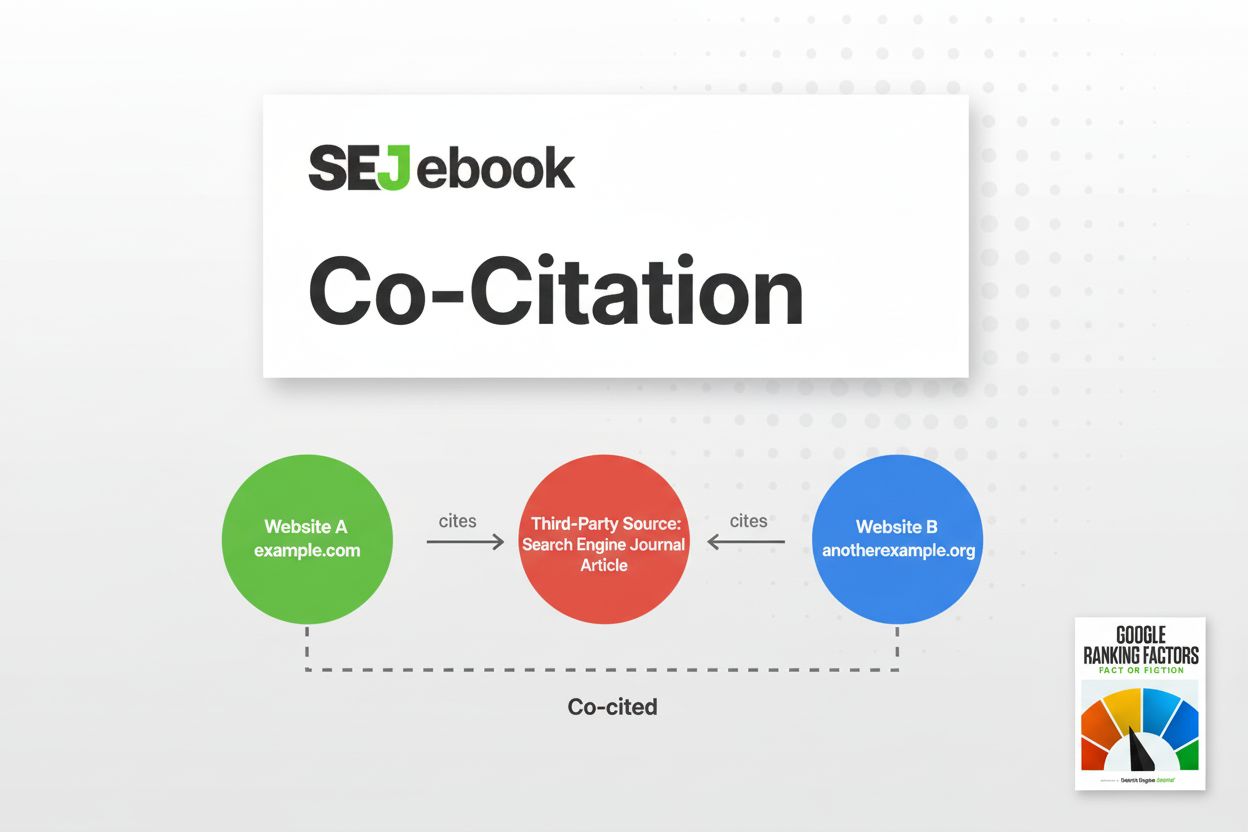
Co-citation is when two websites are mentioned together by third parties, signaling semantic relatedness to search engines and AI systems. Learn how co-citation...

Learn proven strategies to maintain and improve your content's visibility in AI-generated answers across ChatGPT, Perplexity, and Google AI Overviews. Discover ...