

AI Search Optimization
Learn AI Search Optimization strategies to improve brand visibility in ChatGPT, Google AI Overviews, and Perplexity. Optimize content for LLM citation and AI-po...
13 min read

Learn how continuous optimization for AI search helps monitor and improve your brand’s visibility across AI search engines through real-time monitoring and data-driven improvements.
Continuous optimization for AI search is an ongoing process of monitoring, analyzing, and improving your content's visibility and performance across AI-powered search engines like ChatGPT, Perplexity, and Google AI Overviews through real-time data tracking and iterative refinements.
Continuous optimization for AI search represents a fundamental shift in how organizations approach visibility in the evolving search landscape. Unlike traditional search engine optimization that focuses on periodic updates and static keyword rankings, continuous optimization is an ongoing, data-driven process that monitors your brand’s appearance across multiple AI-powered search engines in real-time. This approach recognizes that AI search engines are constantly evolving, user behavior is changing rapidly, and your competitors are continuously adapting their strategies. The goal is to maintain and improve your content’s visibility, citation frequency, and relevance within AI-generated responses across platforms like ChatGPT, Perplexity, Google AI Overviews, Claude, and Gemini.
The concept emerged as AI search engines gained significant market adoption, with Perplexity experiencing 858% search volume growth in just one year and ChatGPT reaching 180.5 million monthly active users. Organizations realized that static optimization strategies were insufficient in this dynamic environment. Continuous optimization acknowledges that AI algorithms are constantly being refined, user queries are becoming more complex and conversational, and the sources cited in AI responses shift based on content quality, freshness, and relevance signals. By implementing continuous monitoring and optimization practices, organizations can adapt quickly to these changes and maintain competitive advantage in AI search visibility.
The importance of continuous optimization for AI search cannot be overstated in today’s digital landscape. Research from Princeton, Georgia Tech, Allen Institute of AI, and IIT Delhi analyzing 10,000 queries across major AI platforms found that specific optimization tactics can improve visibility by 30-40%. However, this improvement doesn’t happen through one-time efforts—it requires sustained, iterative refinement based on real-time performance data. As AI search platforms consolidate information into summaries featuring just one or two primary sources, securing and maintaining a top position becomes increasingly critical. The competitive landscape is intensifying rapidly, with early adopters establishing authority within AI systems before competitors recognize the opportunity.
| Aspect | Traditional SEO | Continuous AI Search Optimization |
|---|---|---|
| Update Frequency | Periodic (monthly/quarterly) | Real-time and continuous |
| Data Analysis | Historical rankings and traffic | Live citation tracking and visibility metrics |
| Adaptation Speed | Weeks to months | Days to hours |
| Primary Metric | Organic search traffic and rankings | Citation frequency and AI visibility |
| Content Focus | Keyword optimization | Conversational language and source credibility |
| Monitoring Tools | Traditional SEO tools | AI-specific monitoring platforms |
| Strategy Adjustment | Based on algorithm updates | Based on real-time performance data |
Consumer adoption of AI search is accelerating faster than many predicted, with 79% of consumers planning to use AI-enhanced search soon and 70% already trusting generative AI results. This rapid adoption means that businesses failing to implement continuous optimization risk becoming invisible to an increasingly large segment of their target audience. The stakes are particularly high because AI search experiences often provide direct answers within the interface itself, reducing the need for users to click through to websites. This means that being cited in AI responses becomes the primary pathway to visibility, making continuous monitoring and optimization essential for maintaining market presence.
Effective continuous optimization for AI search requires a multi-faceted approach that addresses several interconnected components. The first critical component is real-time monitoring and tracking of your brand’s appearance across all major AI search platforms. This involves regularly querying AI engines with terms related to your business, products, and expertise areas, then documenting whether your content appears in the generated responses, what position it occupies, and how frequently it gets cited. Unlike traditional search where rankings are relatively stable, AI citations can fluctuate based on query variations, user context, and algorithm updates. Continuous monitoring helps you identify these patterns and respond quickly when visibility drops.
The second essential component is content quality and freshness management. AI search engines prioritize content that demonstrates clear expertise, provides well-structured information, and includes proper citations and supporting data. Continuous optimization requires regularly auditing your existing content to ensure it remains accurate, up-to-date, and aligned with current user needs. This includes refreshing outdated statistics, incorporating recent research findings, and ensuring that all claims include proper citations to authoritative sources. Content that performs well in traditional organic search often shows higher citation rates in AI generated responses, making traditional SEO fundamentals still relevant but requiring adaptation for AI consumption.
The third component involves structured data implementation and maintenance. Properly structured data using schema.org vocabulary helps AI systems understand content relationships, context, and factual claims that can be confidently cited in generated responses. Continuous optimization requires regularly validating that your structured data markup is accurate, complete, and matches the visible content on your pages. This includes ensuring that FAQ schema, HowTo schema, Article schema, and other relevant markup types are properly implemented and updated as your content evolves. AI systems rely on this structured information to quickly assess content relevance and authority.
Establishing effective real-time monitoring systems is foundational to continuous optimization for AI search. Specialized AI search monitoring tools have emerged to help organizations track their visibility across multiple platforms simultaneously. Tools like Peec.ai, SERanking’s AI Results Tracker, and Advanced Web Ranking’s Google AI Overview Tool provide dashboards showing where your brand appears in AI-generated responses, how frequently your content gets cited, and how your visibility compares to competitors. These platforms typically track metrics across ChatGPT, Perplexity, Google AI Overviews, and other major AI search engines, providing a comprehensive view of your AI search performance.
Manual testing remains an important complement to automated monitoring tools. This involves regularly querying AI engines with terms related to your content and documenting citation patterns. While time-intensive, manual testing provides direct insight into AI search performance that automated tools might miss and helps you understand the context in which your content appears. You should establish a systematic testing schedule, perhaps weekly or bi-weekly, using a consistent set of target queries that represent your key business areas. Document not just whether your content appears, but also the specific context—what question prompted the citation, what other sources were cited alongside yours, and how your content was summarized or quoted.
Google Search Console continues to provide valuable data that correlates with AI search performance. While Google’s AI Overviews represent a separate system from traditional organic search, content that performs well in traditional search often shows higher citation rates in AI generated responses. By monitoring your Search Console data for impressions, clicks, and average position, you can identify content that’s gaining traction and prioritize optimization efforts accordingly. Additionally, setting up custom tracking for referral traffic from AI platforms helps you understand the quality and behavior of users discovering your content through AI search, revealing whether AI-driven traffic converts at higher or lower rates than traditional search traffic.
Continuous optimization requires a strategic approach to content creation and refinement that goes beyond traditional keyword optimization. Focus on creating comprehensive, well-researched content that thoroughly addresses user needs and anticipates follow-up questions. AI search engines excel at understanding semantic relationships and context, making it more important to provide complete topic coverage rather than optimize for specific search terms. This means creating content that answers not just the primary question but also related questions that users might ask, providing context and supporting information that helps AI systems understand the full scope of your expertise.
Implement citation-rich content strategies that significantly enhance your visibility in AI search results. Research shows that adding credible references, academic citations, and links to authoritative sources can improve AI visibility by up to 40%. This involves including specific statistics from recognized authorities, expert quotes from industry leaders, and data from reputable research organizations. Rather than making general claims, support your assertions with concrete evidence: instead of stating “most businesses benefit from AI,” provide specific data like “65% of organizations now using generative AI regularly report improved operational efficiency according to a 2024 enterprise survey.” This approach not only improves AI visibility but also builds trust with human readers.
Create comparative and listicle-style content that AI systems frequently cite. Comparison content naturally provides the structured, factual information that AI platforms prefer while addressing common user intent patterns. Examples include “best tools for X,” “X vs Y comparison,” and “top strategies for achieving Y.” These content formats are particularly effective because they organize information in ways that AI systems can easily parse and synthesize into comprehensive responses. When creating this content, ensure that each comparison point includes supporting data, expert perspectives, and clear explanations of why certain options are recommended for specific use cases.
Effective measurement is essential for understanding whether your continuous optimization efforts are delivering results. Establish a baseline of your current AI search visibility before implementing optimization changes. Document your citation frequency across major AI platforms for your target keywords and topics, noting which content appears most frequently and in what contexts. This baseline allows you to measure improvement over time and identify which optimization tactics are most effective for your specific industry and audience.
Track multiple performance indicators beyond just citation frequency. Monitor the quality of traffic from AI search by analyzing user behavior patterns—how long do users spend on your site after arriving from AI search, what actions do they take, and do they convert at higher or lower rates than traditional search traffic? These engagement metrics often reveal that AI search traffic is higher quality because users arrive with more context and specific intent. Additionally, track your share of voice across AI platforms by comparing your citation frequency to that of your top competitors. If competitors are being cited more frequently for similar topics, this indicates opportunities for content improvement or expansion.
Analyze citation context and positioning to understand how your content is being used in AI responses. Are you being cited as a primary source or a supporting reference? Are your quotes being used accurately? Is your content appearing in responses to your target queries? This qualitative analysis, combined with quantitative metrics, provides a complete picture of your AI search performance. Use this information to identify patterns—perhaps your content performs well for certain query types but not others, or maybe your visibility is strong on one platform but weak on another. These insights guide your optimization priorities and help you allocate resources to the highest-impact opportunities.
AI search platforms are constantly evolving, with algorithm updates, new features, and changing user behaviors requiring continuous adaptation. Stay informed about platform updates by following official announcements from ChatGPT, Perplexity, Google, and other major AI search engines. Subscribe to their blogs, join developer communities, and participate in webinars where they discuss upcoming changes. Understanding how platforms are evolving helps you anticipate optimization needs and adjust your strategy proactively rather than reactively.
Implement A/B testing and experimentation to identify which optimization tactics work best for your specific content and audience. Test different content formats, citation styles, structural approaches, and keyword variations to see which generate the highest AI visibility. Document your experiments and results, building a knowledge base of what works for your organization. This empirical approach to optimization is more reliable than following generic best practices, as your results may differ based on your industry, audience, and competitive landscape.
Maintain flexibility in your optimization strategy while staying committed to core principles of quality and user value. As AI search evolves, the specific tactics that work today may become less effective tomorrow. However, the fundamental principles—creating unique, valuable content, providing proper citations, maintaining technical excellence, and focusing on user needs—remain constant. By building your optimization strategy on these enduring principles while remaining flexible about specific tactics, you can adapt successfully to whatever changes the AI search landscape brings.
Continuous optimization for AI search is not a short-term project but a long-term strategic commitment that builds sustainable competitive advantage. Organizations that implement continuous monitoring and optimization now will establish authority within AI systems before competitors recognize the opportunity. As more businesses compete for AI visibility and the tactics that work today become more widely adopted, the competitive advantage goes to those who have already built strong foundations and established patterns of consistent, high-quality content creation.
The integration of continuous optimization into your overall digital strategy ensures that you’re not treating AI search as a separate initiative but as a core component of how you reach and engage your audience. This means aligning your content strategy, technical implementation, and measurement approaches across both traditional search and AI search. It means training your team to think about AI search visibility when creating content, monitoring AI search performance alongside traditional metrics, and making optimization decisions based on comprehensive data that includes both traditional and AI search performance.
Organizations that succeed with continuous optimization for AI search will be those that embrace the ongoing nature of the work, invest in the right tools and expertise, and maintain commitment to creating genuinely valuable content that serves user needs. The competitive landscape will continue to intensify as more organizations recognize the importance of AI search visibility, making early and sustained action increasingly valuable. By implementing continuous optimization practices now, you position your organization to thrive in the evolving search landscape and maintain visibility with your audience regardless of how search technology continues to evolve.
Track how your brand appears across ChatGPT, Perplexity, Google AI Overviews and other AI search engines with continuous monitoring and optimization insights.
Learn AI Search Optimization strategies to improve brand visibility in ChatGPT, Google AI Overviews, and Perplexity. Optimize content for LLM citation and AI-po...
Learn how technology companies optimize content for AI search engines like ChatGPT, Perplexity, and Gemini. Discover strategies for AI visibility, structured da...
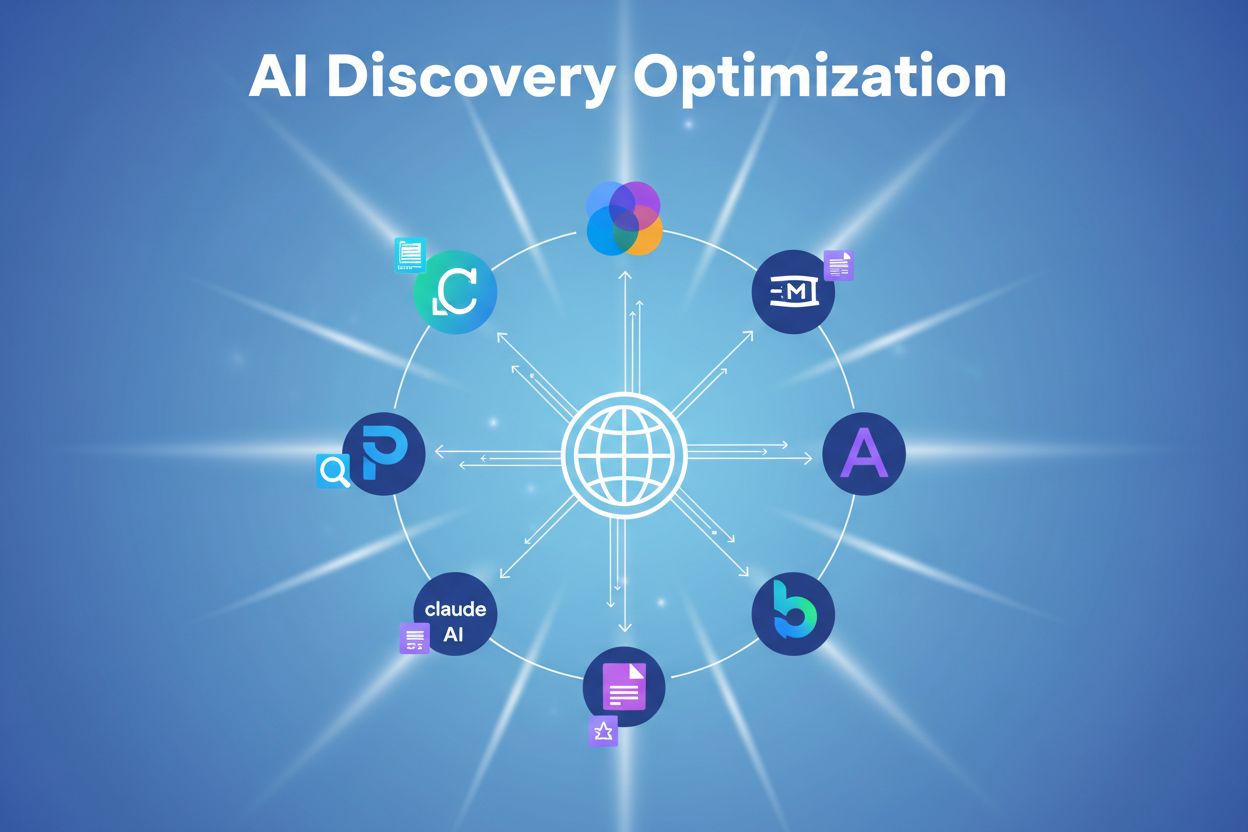
Learn how to optimize content for AI discovery. Understand AI crawlers, content structure, and strategies to ensure your brand is found and cited by ChatGPT, Ge...