

Conversational Commerce
Learn what conversational commerce is, how AI chatbots and messaging apps transform e-commerce, market statistics, implementation best practices, and future tre...
10 min read

Learn what conversational commerce and AI are, how they work together, their benefits for businesses and customers, and best practices for implementation in your ecommerce strategy.
Conversational commerce is the use of messaging apps, chatbots, and AI-powered assistants to facilitate real-time customer interactions and transactions. It combines automated conversations with artificial intelligence to create personalized shopping experiences, streamline customer support, and guide buyers through their purchase journey seamlessly across multiple channels.
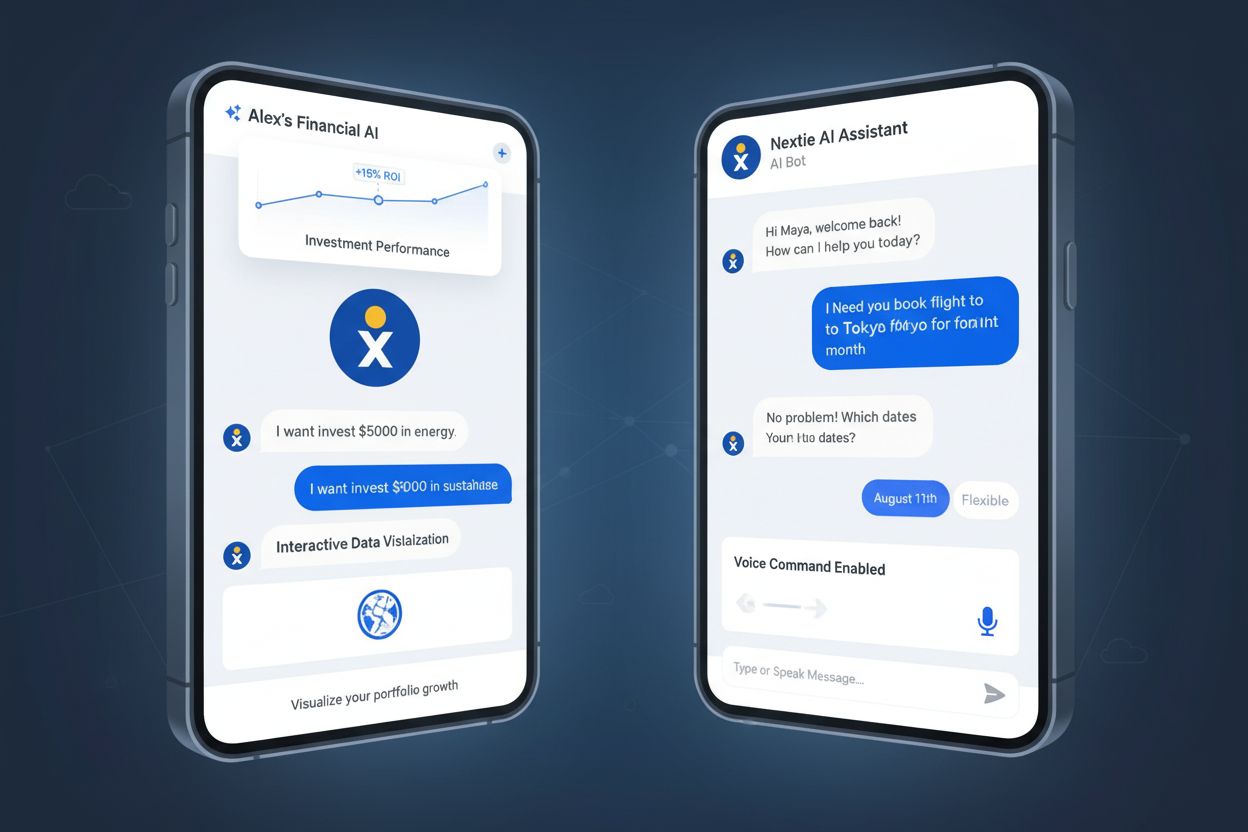
Conversational commerce represents a fundamental shift in how businesses interact with customers by leveraging messaging platforms, chatbots, and artificial intelligence to create seamless, real-time shopping experiences. Rather than forcing customers to navigate traditional e-commerce websites, conversational commerce brings the shopping experience directly into the communication channels where customers already spend their time—messaging apps, social media, and voice assistants. This approach combines the convenience of digital communication with personalized, human-like interactions powered by advanced AI technologies.
The concept was first coined by Chris Messina in 2015, who recognized that the intersection of messaging apps and online shopping would fundamentally transform how people make purchases. Today, conversational commerce has evolved from simple chatbots answering frequently asked questions into sophisticated AI-powered systems capable of understanding customer intent, providing personalized recommendations, and completing transactions entirely within messaging interfaces.
Conversational commerce operates through multiple interconnected technologies and channels that work together to create a unified customer experience. At its core, the system uses natural language processing (NLP) to interpret customer messages, understand their intent, and generate contextually appropriate responses. When a customer types “I need a winter coat that’s waterproof and under $200,” the AI doesn’t just match keywords—it comprehends the full request and can recommend specific products that meet those exact criteria.
The technology stack behind conversational commerce includes several critical components. Machine learning algorithms analyze customer preferences, purchase history, and browsing patterns to deliver increasingly personalized recommendations over time. Large language models (LLMs) enable chatbots to engage in natural, flowing conversations that feel human-like rather than robotic. Integration layers connect these AI systems with product catalogs, inventory management, CRM systems, and payment processors, ensuring that every interaction is informed by real-time business data.
| Component | Function | Impact |
|---|---|---|
| Natural Language Processing | Interprets customer intent and meaning | Enables natural conversations without keyword matching |
| Machine Learning | Analyzes patterns and preferences | Delivers personalized recommendations |
| Large Language Models | Generates contextually appropriate responses | Creates human-like interactions at scale |
| Integration APIs | Connects to business systems | Ensures data accuracy and real-time information |
| Sentiment Analysis | Detects customer emotion and tone | Allows AI to respond with appropriate empathy |
WhatsApp Business has emerged as one of the most powerful platforms for conversational commerce, allowing brands to run targeted ads that open direct conversations with customers. Businesses can host entire product catalogs within WhatsApp, enable in-chat payments in certain regions, and guide customers from product discovery through post-purchase support without ever leaving the app. The familiarity of WhatsApp as a personal messaging platform makes it an ideal channel for building trust and maintaining ongoing customer relationships.
Facebook Messenger and Instagram Direct provide integrated messaging solutions where brands can launch ads that drive users directly into conversations. Shoppable posts on Instagram allow customers to tag products in content, and with conversational commerce, brands can send product links directly through chat for a frictionless path to purchase. WeChat in Asia has pioneered mini-programs that create entire storefronts within the messaging platform, enabling customers to browse, purchase, and manage loyalty programs without leaving the app.
Website chat widgets remain essential for conversational commerce, giving customers real-time guidance throughout the purchase process. These embedded solutions provide immediate assistance at critical moments—when customers have questions about product specifications, shipping costs, or return policies. Voice assistants like Amazon Alexa, Google Assistant, and Apple’s Siri extend conversational commerce into hands-free scenarios, allowing customers to reorder products, check order status, and make purchases through voice commands.
Artificial intelligence is the engine that powers modern conversational commerce, transforming it from simple rule-based chatbots into intelligent systems capable of understanding context, predicting needs, and personalizing interactions at scale. Early chatbots relied on keyword matching and predetermined response trees, which often frustrated customers when their questions didn’t fit neatly into predefined categories. Today’s AI-powered conversational systems use advanced natural language processing to understand nuance, context, and even emotion.
Generative AI has revolutionized conversational commerce by enabling chatbots to generate original, contextually appropriate responses rather than selecting from a library of pre-written answers. When a customer asks “Can you help me plan outfits for a beach vacation in Cancun where I’ll be for five days and prefer casual styles?” the AI can now understand the full context and provide genuinely personalized recommendations. This represents a quantum leap from earlier systems that would have struggled with such open-ended, multi-faceted requests.
Agentic AI represents the next evolution, where AI agents can work autonomously to make decisions, learn from interactions, and collaborate with other systems to achieve specific outcomes. These agents don’t wait for explicit instructions but proactively identify opportunities to help customers, resolve issues, and drive conversions. The combination of predictive analytics with generative AI enables systems to anticipate customer needs before they’re explicitly stated, recommending products or solutions based on behavioral patterns and similar customer profiles.
Increased conversion rates represent one of the most compelling benefits of conversational commerce implementation. By providing immediate answers to purchase-defining questions, businesses dramatically reduce cart abandonment rates. Research shows that 35% of customers who respond to AI chatbots about abandoned carts follow through with their purchase, compared to much lower rates for traditional email reminders. The convenience of getting instant answers without leaving the messaging app removes friction from the buying process.
Reduced operational costs emerge as conversational commerce scales customer support without proportional increases in headcount. AI chatbots can handle millions of routine inquiries simultaneously, freeing human agents to focus on complex, high-value interactions. Studies indicate that generative AI increases issue resolution by 14% per hour while decreasing time spent on individual issues by 9%. This efficiency gain allows support teams to handle higher volumes while improving overall customer satisfaction.
Enhanced customer loyalty and retention develop through the personalized, responsive experiences that conversational commerce enables. 94% of shoppers report that good customer service makes them more likely to purchase from a brand again. When customers receive instant, personalized assistance across their preferred channels, they develop stronger emotional connections to the brand. The ability to maintain conversation continuity across channels—starting on WhatsApp, continuing on Instagram, and finishing on the website—creates a seamless experience that reinforces brand loyalty.
Valuable customer data collection happens naturally through conversational interactions. Every message, question, and preference expressed in these conversations becomes data that refines future personalization efforts. Businesses gain insights into customer pain points, product preferences, and decision-making processes that would be difficult or impossible to gather through traditional surveys or analytics alone.
Immediate, 24/7 support transforms the customer experience by eliminating wait times and business hour limitations. Customers no longer need to wait for email responses or navigate phone trees during business hours. Whether it’s 3 AM on a Sunday or during peak business hours, conversational AI provides instant assistance, making customers feel valued and heard regardless of when they reach out.
Personalized shopping experiences powered by AI create a sense of having a personal shopping assistant available at all times. Rather than browsing generic product recommendations, customers receive suggestions tailored to their specific preferences, body type, style, budget, and occasion. This personalization extends beyond product recommendations to include personalized pricing, exclusive offers, and content tailored to individual interests.
Reduced friction in the purchase journey means customers can complete transactions without navigating away from their preferred messaging app. Payment links can be sent directly through chat, authentication can happen seamlessly, and customers can track orders and manage returns entirely within the messaging interface. This frictionless experience significantly increases the likelihood of purchase completion.
Natural, conversational interactions feel more human and less robotic than traditional e-commerce interfaces. Customers can ask questions in their own words, using natural language and even casual phrasing, without worrying about exact keyword matching. The AI understands context, remembers previous conversations, and adapts its tone to match the customer’s communication style.
While conversational commerce and social commerce are related concepts, they serve different purposes and operate in distinct ways. Social commerce specifically refers to the ability to discover, research, and purchase products directly on social media platforms like Instagram, TikTok, and Facebook without navigating away. It encompasses user-generated content, influencer recommendations, shoppable posts, and live shopping events. Social commerce focuses on the entire customer journey within social platforms, leveraging the social aspect of discovery and peer recommendations.
Conversational commerce, by contrast, focuses specifically on real-time, two-way interactions between brands and customers. While it can happen on social platforms, it’s not limited to them. Conversational commerce emphasizes the dialogue, the personalization, and the guidance provided through messaging. A customer might discover a product through social commerce (seeing an influencer’s Instagram post), but then use conversational commerce (sending a direct message to the brand) to ask detailed questions before purchasing.
The two approaches frequently overlap and complement each other. A customer might see a TikTok video showcasing a product (social commerce), then send a WhatsApp message to the brand asking about sizing and shipping (conversational commerce), and finally complete the purchase through a payment link sent via WhatsApp. The most successful brands integrate both strategies, using social platforms for discovery and awareness while leveraging conversational commerce for personalized guidance and transaction completion.
Start with clear engagement goals before deploying conversational commerce systems. Define whether you’re primarily focused on increasing conversions, improving customer retention, reducing support costs, or gathering customer insights. These goals shape the conversation flows, personalization logic, and metrics used to measure success. A fashion retailer might prioritize personalized product recommendations, while a financial services company might focus on account inquiries and compliance-friendly interactions.
Train AI systems with high-quality, contextual data to ensure personalization actually delivers value. The better your customer data—including purchase history, browsing behavior, preferences, and previous interactions—the more relevant and helpful the AI becomes. Many conversational commerce implementations fail not because of poor AI technology, but because the underlying data is incomplete, outdated, or siloed across different systems. Invest in data integration and quality before launching conversational experiences.
Blend automation with human connection by designing clear escalation paths for complex issues. Not every customer interaction should be handled entirely by AI. Some situations require human judgment, negotiation, or emotional intelligence. The best conversational commerce systems seamlessly hand off to human agents when needed, passing along complete conversation history and context so the agent can continue without the customer repeating themselves.
Keep conversations natural but purposeful by maintaining your brand voice while guiding customers toward meaningful outcomes. The AI should sound like your brand—whether that’s playful and casual or professional and formal—while ensuring every interaction moves the customer closer to their goal. Avoid overwhelming customers with information; instead, guide them through a logical progression of questions and recommendations.
Continuously optimize based on audience insights by analyzing how customers interact with your conversational systems. Track where customers engage, where they drop off, which conversation flows drive conversions, and how different customer segments respond to various approaches. Use this feedback to refine conversation logic, improve AI responses, and personalize experiences even further.
Product discovery and recommendations represent one of the most powerful applications of conversational commerce. Rather than browsing through hundreds of products, customers can describe what they’re looking for in natural language, and AI provides curated recommendations. A customer might say “I need professional shoes that are comfortable for all-day wear, under $150, and available in black,” and the system instantly provides relevant options with detailed specifications and customer reviews.
Customer support and issue resolution become dramatically more efficient through conversational AI. Common issues like order tracking, return inquiries, payment problems, and product questions can be resolved instantly without human intervention. When customers do need human support, the AI has already gathered context, attempted resolution, and identified the specific issue, allowing human agents to focus on complex problems requiring judgment or negotiation.
Post-purchase engagement and loyalty programs benefit from conversational commerce by enabling personalized follow-up, order tracking, and exclusive offers delivered through preferred messaging channels. Customers receive proactive notifications about order status, personalized recommendations for complementary products, and exclusive loyalty rewards—all delivered conversationally rather than through impersonal email blasts.
Appointment scheduling and service management in healthcare, beauty, and professional services sectors leverage conversational commerce to streamline booking processes. Customers can schedule appointments, receive reminders, provide pre-appointment information, and reschedule entirely through messaging, reducing no-shows and administrative overhead.
Key performance indicators for conversational commerce include conversation completion rates, average order value from chat interactions, customer satisfaction scores, and conversion rates from chat to purchase. Track how many customers who engage with your conversational AI actually complete purchases, and compare this to baseline conversion rates from other channels. Monitor response times, resolution rates, and customer effort scores to ensure the experience is genuinely improving customer satisfaction.
Cost metrics should include the cost per conversation, cost per resolution, and cost savings compared to traditional customer support channels. Calculate the reduction in support ticket volume, the decrease in average handling time, and the improvement in first-contact resolution rates. Compare these savings against the investment in conversational commerce technology and training.
Customer lifetime value improvements resulting from conversational commerce often exceed immediate conversion gains. Customers who receive personalized, responsive service through conversational channels tend to make repeat purchases, spend more per transaction, and recommend the brand to others. Track retention rates, repeat purchase frequency, and customer advocacy metrics to understand the full impact on business value.
Deeper personalization will continue advancing as AI systems access more sophisticated customer data and employ more advanced prediction algorithms. Future conversational commerce will anticipate customer needs before they’re explicitly stated, proactively offering solutions based on behavioral patterns, seasonal trends, and predictive analytics. The line between reactive support and proactive assistance will blur as AI becomes increasingly predictive.
Multimodal interactions will expand beyond text and voice to include video, images, and gesture-based communication. Customers will be able to show the AI a photo of an outfit and ask for similar items, or use video calls with AI agents for complex product demonstrations. This richer communication will enable more nuanced, efficient interactions.
Emotionally aware AI will detect and respond to customer emotions with appropriate empathy and tone adjustments. Rather than providing the same response to every customer, AI will recognize frustration, excitement, or confusion and adapt its approach accordingly. This emotional intelligence will make conversational commerce feel more genuinely human and caring.
Omnichannel integration will become seamless, with customers able to start conversations on one channel and continue on another without any disruption or repetition. A customer might begin browsing on the website, continue on mobile app, and complete the purchase on WhatsApp, with the AI maintaining full context throughout the entire journey.
Discover how your brand appears in AI search results and conversational AI responses. Track mentions across ChatGPT, Perplexity, and other AI answer generators to ensure your content is being cited correctly.
Learn what conversational commerce is, how AI chatbots and messaging apps transform e-commerce, market statistics, implementation best practices, and future tre...
Conversational AI is a collection of AI technologies enabling natural dialogue between humans and machines. Learn how NLP, machine learning, and dialogue manage...

Community discussion on conversational commerce and AI. Understanding how AI-powered shopping conversations work and how brands can prepare.