

How to Prepare for AI Search Crises: Crisis Management Framework
Learn how to prepare for AI search crises with monitoring, response playbooks, and crisis management strategies for ChatGPT, Perplexity, and Google AI.
16 min read

Learn how to manage brand reputation crises in AI-generated answers from ChatGPT, Perplexity, and other AI search engines. Discover strategies for monitoring, responding, and preventing misinformation about your brand.
Crisis management for AI search involves monitoring how your brand appears in AI-generated answers, detecting misinformation or inaccuracies, and implementing strategies to correct false information and protect your brand reputation across AI platforms like ChatGPT, Perplexity, and Google AI Overviews.
Crisis management for AI search is a strategic approach to protecting your brand’s reputation in an era where artificial intelligence systems like ChatGPT, Perplexity, Claude, and Google AI Overviews have become primary research tools for consumers and business buyers. Unlike traditional search engines where you can track rankings and optimize content, AI-generated answers operate as black boxes, synthesizing information from across the web and presenting it without revealing your brand’s standing or the accuracy of the information being shared. This fundamental shift in how information is discovered and consumed creates new vulnerabilities for brands that must be actively managed and monitored.
The crisis emerges because 80% of global B2B tech buyers now use generative AI as much as traditional search when researching vendors, yet over 90% of consumers express concern about AI spreading misinformation. When an AI system cites outdated pricing, discontinued products, or inaccurate information about your company, potential customers receive false information that can damage your reputation and influence their purchasing decisions. Crisis management for AI search addresses this gap by providing visibility into what AI systems are saying about your brand and enabling rapid response when inaccuracies occur.
Traditional crisis management focuses on controlling narratives through press releases, social media responses, and media relations. AI search crisis management operates differently because you cannot directly control what large language models output, nor can you simply “optimize” your way to better visibility like you would with traditional SEO. The systems are closed, with different training sets and behaviors, making each platform unique in how it sources and presents information about your brand.
The stakes are particularly high because 19% of business buyers said inaccurate or misleading results from AI systems made them less confident in their purchase decisions. When a prospect asks ChatGPT for recommendations in your industry and receives incorrect information about your company, you’ve lost an opportunity before you even knew a crisis was developing. Additionally, popular generative AI platforms hallucinate between 2.5% and 8.5% of the time, with some models exceeding 15% hallucination rates. This means AI systems may not just cite outdated information—they may fabricate details entirely, creating false narratives about your products, pricing, or company history that spread across multiple platforms.
| Component | Purpose | Action |
|---|---|---|
| Real-time Monitoring | Detect when your brand appears in AI responses and track accuracy | Monitor ChatGPT, Perplexity, Claude, Google AI Overviews for brand mentions |
| Sentiment Analysis | Identify negative narratives or misinformation spreading | Track sentiment shifts and emerging negative themes |
| Source Identification | Trace inaccurate information back to its origin | Identify which websites AI systems are citing |
| Rapid Response Protocol | Establish workflows for addressing inaccuracies quickly | Create escalation paths and response templates |
| Content Optimization | Ensure accurate information is easily accessible to AI systems | Update website content, add structured data, improve content authority |
| Competitive Intelligence | Understand how competitors appear in AI responses | Compare your visibility and positioning against rivals |
The first step in crisis management is establishing visibility into your AI footprint. Most marketers lack clear insight into how their brand, products, and competitors appear in AI-generated responses. Without this baseline understanding, you’re essentially guessing whether a crisis is developing. Modern monitoring tools now provide data-backed pictures of your AI visibility: which AI models surface your brand, what narratives are attached to it, and where misinformation or visibility gaps exist.
When a crisis is detected—such as an AI system citing outdated pricing or spreading false information about your company—rapid response is critical. The challenge is that you cannot directly edit what an AI system outputs. Instead, you must address the source of the misinformation. If ChatGPT is citing incorrect information from an old blog post on your website, you update that content and add structured data to clarify the accurate information. If Perplexity is pulling false information from a third-party website, you may need to reach out to that source or create authoritative content that contradicts the misinformation.
Predictive alerts are essential for staying ahead of crises. Rather than discovering problems after they’ve spread, advanced monitoring systems scan for early signals including unusual conversation spikes, sentiment shifts, or misinformation spreading across AI responses. This early warning system gives you critical lead time to investigate and respond while you still have options, preventing minor inaccuracies from becoming full-blown reputation crises.
Prevention is more effective than crisis response. Consistently appearing as a credible source across quality online content causes AI systems to default to citing you, actively improving your visibility and accuracy across answer engines. This concept, known as entity authority, compounds over time. When a Forbes article quotes your CEO, amplify it. When an industry podcast features your research, share it widely. Each citation builds on the last, gradually making your brand the reference AI systems reach for first.
The relationship between content quality and AI visibility is direct. AI systems privilege fresh content and recent conversations, meaning outdated information gradually loses influence as newer, more authoritative sources emerge. By consistently publishing high-quality, original research and expertise, you establish your brand as the authoritative source in your category. This authority translates into more accurate AI citations because the systems recognize your content as reliable and prioritize it when synthesizing answers.
Structured data and schema markup play a crucial role in preventing crises. When your website includes clear, machine-readable information about your company, products, pricing, and key facts, AI systems can more easily access and cite accurate information. This reduces the likelihood that they’ll pull outdated or incorrect information from other sources. Additionally, maintaining consistent brand language and messaging across all your owned platforms—website, social media, thought leadership hub, research library—reinforces accurate narratives that AI systems will recognize and cite.
Effective crisis management requires multi-platform coverage and diverse data sources. The tools you choose should monitor more than just one or two AI platforms because ChatGPT, Perplexity, Claude, Google AI Overviews, and emerging systems each operate differently and draw from different data sources. You also need visibility into the data sources these AI systems reference, including news sites, social media, forums, and podcasts—basically anywhere people are talking about your brand.
Advanced sentiment analysis and trend detection capabilities separate useful monitoring from essential crisis management tools. Basic sentiment tracking tells you if mentions are positive or negative, but advanced analysis reveals why sentiment shifted and which specific topics are driving the change. Real-time alerts catch problems early, while reporting capabilities let you track progress over time and share findings with stakeholders. The best tools let you customize alert thresholds and automate reports so your team gets the right information at the right time without manual labor.
Competitive benchmarking provides critical context for understanding your crisis landscape. You need to know whether competitors are showing up more often in AI responses, whether they’re dominating recommendations in your category, and where gaps exist in your visibility. This competitive intelligence helps you understand whether a crisis is industry-wide or specific to your brand, and whether competitors are gaining ground while you’re losing visibility.
Successful crisis management requires clear processes and assigned ownership. Someone on your team should review AI monitoring insights weekly, flag anomalies, and loop in relevant teams when action is required. Establish escalation paths before issues arise—determine when a sentiment drop requires immediate response versus active monitoring, and create clear workflows that specify who handles different types of crises.
Start with 3–5 core brand terms including your company name, flagship products, and key executives, then add category terms where you need visibility. Run monitoring for two weeks without changes to establish a clear baseline, giving you a sense of your status quo before you begin optimizing. This baseline becomes your reference point for detecting crises—when metrics deviate significantly from baseline, you know something has changed and investigation is warranted.
Integration with existing marketing tools is essential for effective crisis management. Connect monitoring data to the toolkit your team already uses—push alerts to Slack, feed insights into your CRM, or sync with your analytics dashboard. Without integration, metrics remain siloed on yet another platform, which teams may eventually ignore. When AI visibility metrics flow into your existing workflow, they can inform the decisions you’re already making, from campaign planning and content strategy to crisis response.
The ultimate goal of crisis management is prevention. Misinformation spreads when accurate information is difficult to find or when AI systems cannot access authoritative sources. By making your brand’s data and expertise more accessible, verifiable, and valuable to AI systems, you reduce the likelihood that they’ll cite misinformation or hallucinate false details about your company.
This requires a data-driven framework that tests prompts, monitors AI output accuracy, and connects insights back to owned content and schema improvements. You’re not trying to hack or trick the models, but rather making your brand’s information more discoverable and trustworthy. The more you measure and refine your signals—from well-sourced content and structured markup to consistent brand language—the more likely these engines are to reference you correctly and confidently.
Offering magnetic experiences outside of AI platforms provides the ultimate protection against crisis. Your owned platforms—website, social media, thought leadership hub, influencer ecosystem, and research library—must become compelling destinations. When buyers encounter your brand through AI search, these experiences should pull them in and demonstrate why your brand offers more than a generic AI answer ever could. By doubling down on original research, distinctive expertise, and human voices that algorithms can’t replicate, you create a moat around your brand that protects it from the uncertainties of AI-generated content.
Monitor how your brand appears across ChatGPT, Perplexity, and other AI search engines in real-time. Detect misinformation early and respond before it spreads.
Learn how to prepare for AI search crises with monitoring, response playbooks, and crisis management strategies for ChatGPT, Perplexity, and Google AI.
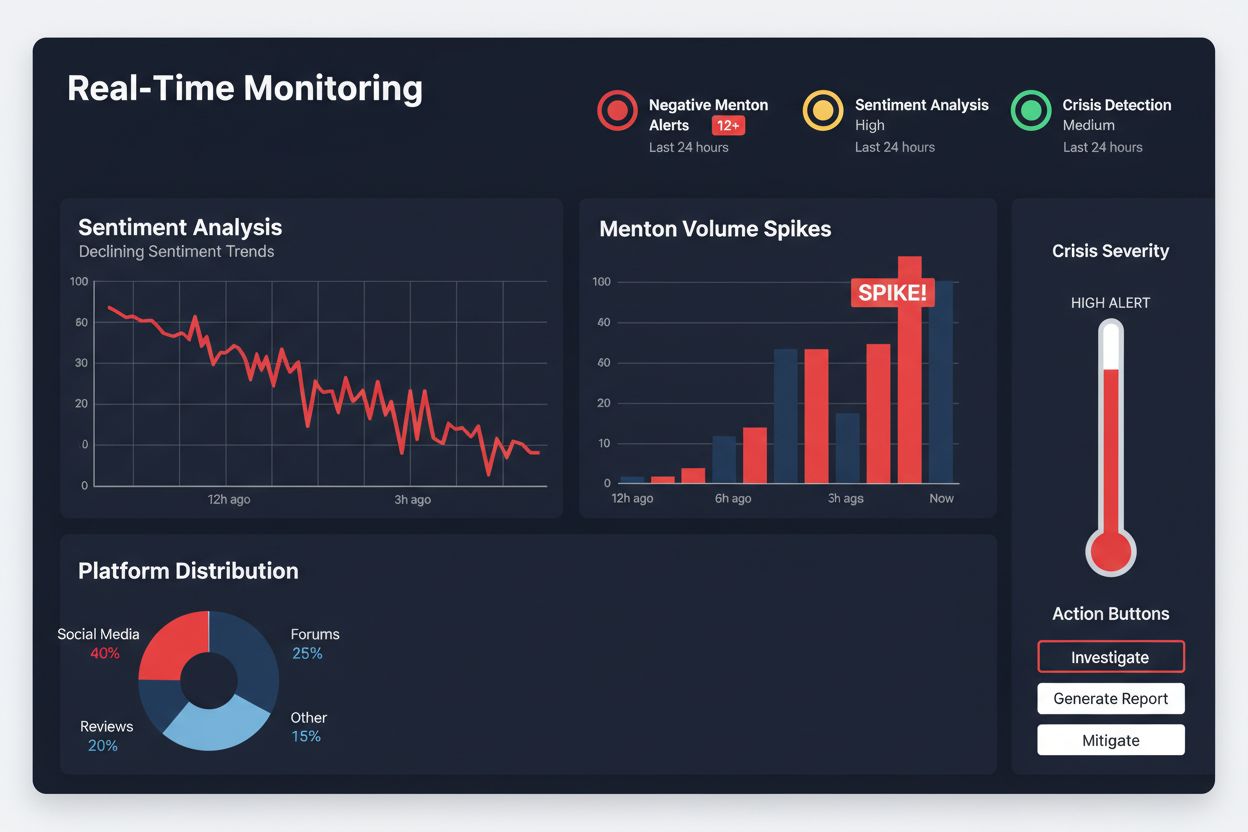
Learn how to detect and respond to negative brand mentions in AI search platforms with real-time alert systems. Protect your reputation before negative content ...
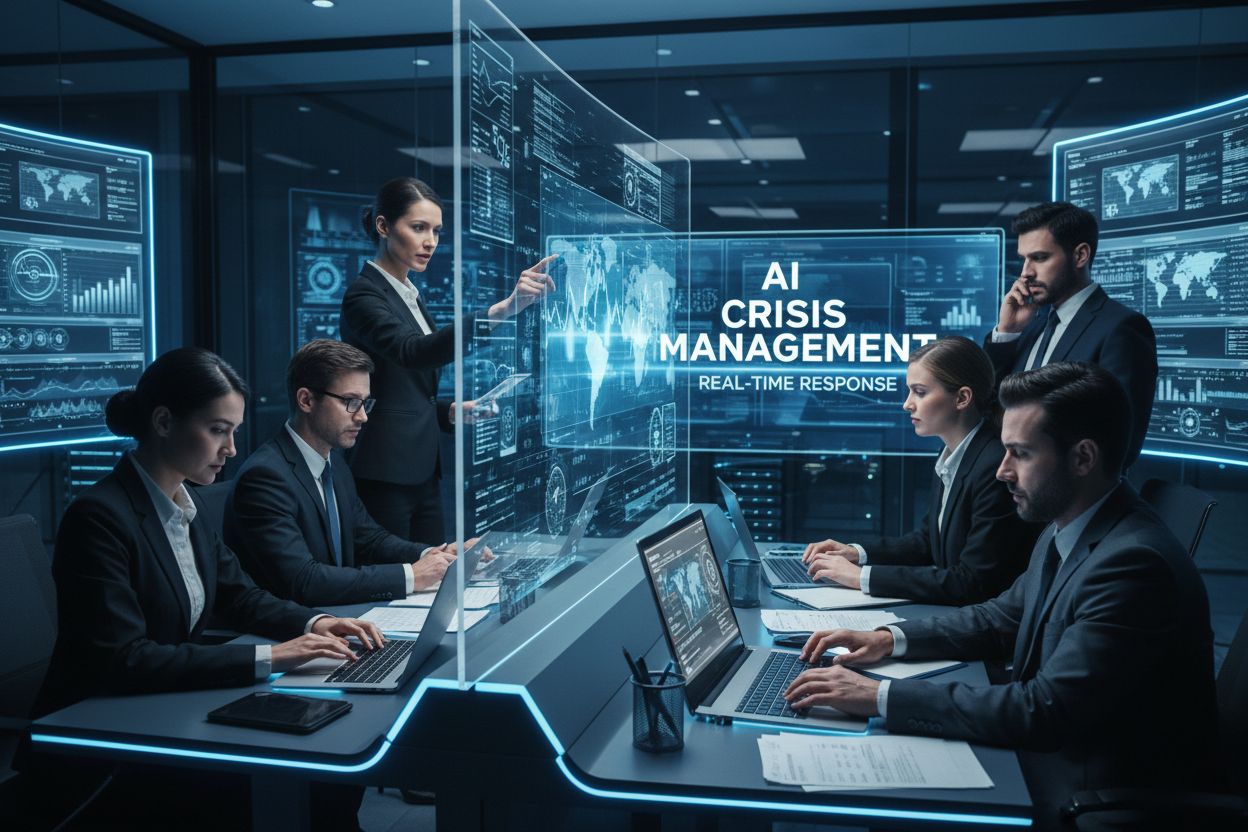
Learn how to detect, respond to, and prevent AI-generated crises that threaten brand reputation. Discover real-time monitoring strategies, response playbooks, a...