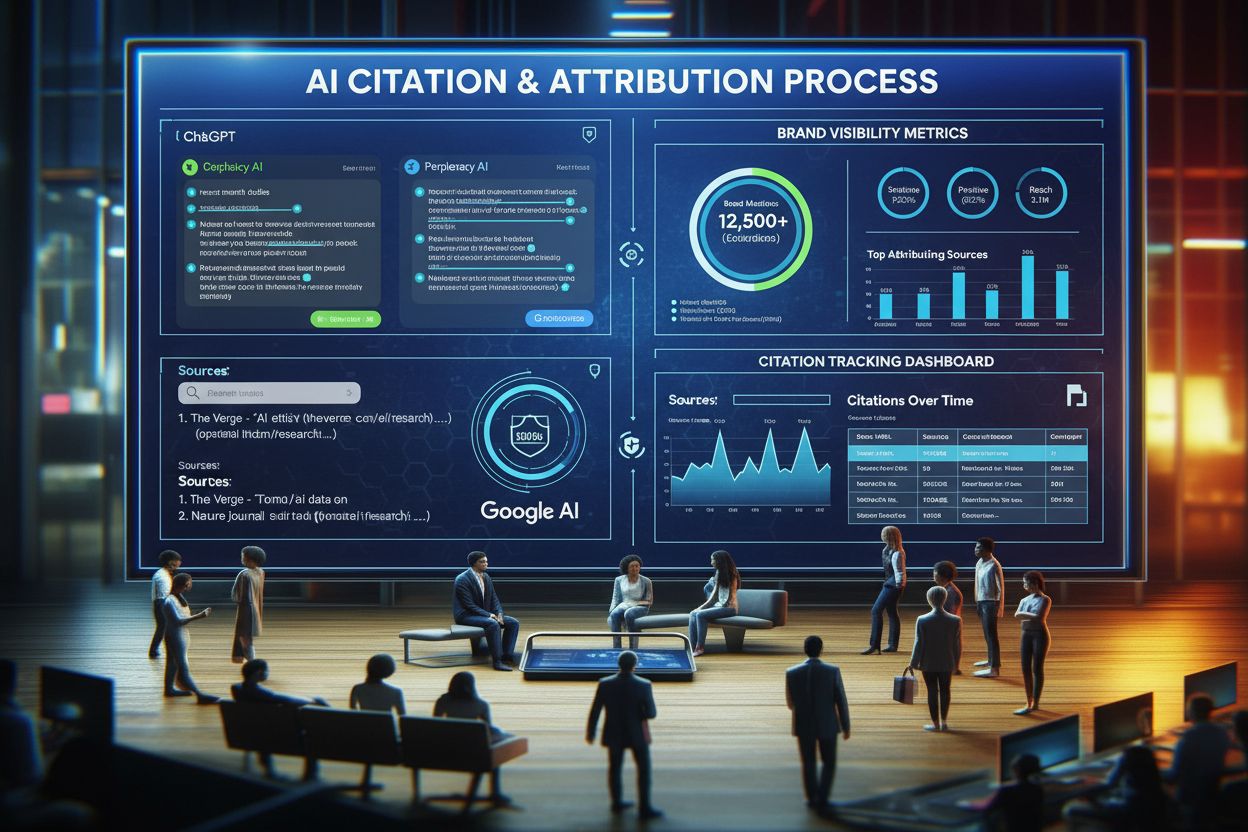
Understanding Indexing and Citation in Modern Search
Indexing and citation are two distinct but interconnected processes that determine how your content gets discovered and credited in search results and AI-powered answers. While both are essential for online visibility, they serve fundamentally different purposes in how search engines and AI systems treat your content. Understanding the difference between these concepts is crucial for anyone managing digital presence, whether you’re optimizing for traditional search or preparing for the era of AI-driven discovery. The distinction becomes increasingly important as AI search engines like Perplexity, ChatGPT, Google AI Overviews, and Claude reshape how users find information online. According to recent research, approximately 76% of search queries now trigger AI Overviews on Google, making both indexing and citation critical components of modern visibility strategy.
What is Indexing?
Indexing is the foundational process by which search engines discover, analyze, and store web pages in their massive databases. When Googlebot or other web crawlers visit your website, they read your content, understand its meaning, and add it to the search engine’s index—essentially a giant library of billions of web pages. This process happens in three stages: crawling (discovering pages through links), indexing (analyzing and storing content), and serving (returning relevant results to users). Indexing is not guaranteed; search engines evaluate whether your content meets quality standards before adding it to their index. According to Google’s official documentation, indexing involves processing and analyzing textual content, key content tags, attributes like title elements and alt text, images, videos, and more. The search engine also determines if a page is a duplicate or the canonical version during indexing. Without indexing, your content is essentially invisible to search engines—it cannot appear in search results regardless of how well-optimized it is. Indexing is a prerequisite for all visibility; it’s the infrastructure that makes everything else possible.
Ready to Monitor Your AI Visibility?
Track how AI chatbots mention your brand across ChatGPT, Perplexity, and other platforms.
What is Citation?
Citation is the act of referencing and attributing specific sources within search results or AI-generated answers. In traditional search, citations appear as the blue links in search results. In AI search, citations are more sophisticated—they can be clickable source cards, numbered footnotes, embedded links within AI-generated text, or source lists displayed alongside AI overviews. A citation explicitly credits where information came from, creating a direct connection between the AI’s answer and your content. Unlike indexing, which is about storage and retrieval infrastructure, citation is about attribution and credibility. When an AI system cites your content, it signals to users that your information is trustworthy enough to support the AI’s response. Research from Conductor reveals that mentions (where AI names your brand without linking) and citations (where AI links to your content) are both valuable, though they serve different purposes. Citations provide direct traffic pathways, while mentions build brand awareness and authority. The distinction matters because being indexed doesn’t guarantee being cited—your content must be relevant, authoritative, and discoverable enough for AI systems to select it as a source.
Comparison Table: Indexing vs Citation
| Aspect | Indexing | Citation |
|---|
| Definition | Process of discovering, analyzing, and storing web pages in search engine database | Act of referencing and attributing sources in search results or AI answers |
| Purpose | Make content discoverable and retrievable by search engines | Credit sources and drive traffic from AI-generated responses |
| Who Controls It | Search engine algorithms and crawlers | Search engine or AI system algorithms |
| Visibility | Behind-the-scenes infrastructure; users don’t see indexing | Front-facing; users see citations in results or AI responses |
| Requirement | Must happen first; prerequisite for all visibility | Depends on indexing; content must be indexed to be cited |
| Impact on Traffic | Enables potential visibility; doesn’t guarantee clicks | Drives direct traffic when users click cited sources |
| Measurement | Tracked via Search Console; shows indexed page count | Tracked via AI monitoring tools; shows citation frequency |
| Quality Signal | Indicates content meets minimum quality standards | Indicates content is authoritative enough to support AI answers |
| Failure Consequence | Content won’t appear in any search results | Content appears in index but isn’t selected as source material |
Stay Updated on AI Visibility Trends
Get the latest insights on AI mentions, brand monitoring, and optimization strategies.
How Search Engine Indexing Works
Indexing is a multi-stage process that begins after a page is crawled. When Googlebot downloads your page, the search engine renders it just like a browser would, analyzing all textual content, images, videos, and metadata. The engine then processes this information to understand what your page is about, determining relevance signals, content quality, and whether the page is duplicate or canonical. According to Google’s official guidance, indexing includes analyzing key content tags and attributes, processing images and videos, and collecting signals about language, geographic location, and page usability. The search engine stores all this analyzed information in its index, a massive database hosted on thousands of computers. However, indexing is not automatic—search engines evaluate whether your content meets quality standards. Pages with thin content, poor user experience, or violations of search engine guidelines may be crawled but not indexed. You can check your indexing status using Google Search Console, which shows exactly how many of your pages are in Google’s index. The index is constantly updated as crawlers revisit pages, discovering new content and re-evaluating existing pages for relevance and quality.
How AI Citations Work in Modern Search
Citations in AI search function differently than traditional search results. When you ask ChatGPT, Perplexity, or Google AI Overviews a question, the AI generates an answer by synthesizing information from multiple sources in its training data or from live web searches. The AI then attributes this information by citing the sources it used. According to research from Surfer SEO analyzing 10,000 keywords, approximately 67.82% of AI Overview citations don’t rank in Google’s top 10 results—meaning AI systems are pulling from a broader range of sources than just top-ranking pages. Citations can appear in several formats: source cards with clickable links, numbered footnotes within the AI response, embedded links in the generated text, or source lists at the bottom of the response. The most visible citations—the top 3 shown without clicking “show more”—are more likely to rank in top 10 results (54.14% according to Surfer’s data), but even these frequently come from pages ranking beyond position 10. This means citation selection is based on relevance, authority, and content quality rather than traditional ranking position alone. AI systems evaluate whether your content directly answers the user’s question and whether it’s authoritative enough to cite.
Different AI platforms have distinct citation behaviors and preferences. Google AI Overviews cites YouTube (62.4% of citations), Reddit (25.4%), and other Google-owned properties frequently, though this reflects their prominence rather than preferential treatment. Perplexity shows more balanced citation patterns across diverse sources, often citing niche authority sites that rank well for specific queries. ChatGPT relies on its training data rather than live web searches, making citations less predictable and sometimes referencing sources that may not rank for the query. Claude emphasizes source transparency and often provides detailed citations when generating answers. Research from BrightEdge reveals that citation patterns vary significantly by platform: Google AI Overview cites brand names in 12.3% of responses, while ChatGPT mentions brands in only 0.4% of cases. This variation means your strategy for earning citations must account for which AI platforms matter most to your audience. Some platforms prioritize recency and live web data, while others rely on training data from specific time periods. Understanding these differences helps you optimize content for the specific AI systems your target users rely on.
Why Indexing Matters for Visibility
Without indexing, your content cannot appear anywhere in search results or be considered by AI systems. Indexing is the foundational requirement that enables all downstream visibility. When search engines don’t index your pages, you’re essentially invisible—no amount of optimization, backlinks, or content quality can overcome this barrier. Common reasons pages fail to get indexed include: low content quality, robots.txt rules blocking crawlers, noindex meta tags, poor site structure making pages hard to discover, and server errors preventing access. You can improve indexing by submitting XML sitemaps to Google Search Console, ensuring your site has clear navigation that allows crawlers to discover all important pages, fixing crawl errors, and removing any blocks preventing crawler access. According to Google’s documentation, indexing also depends on content metadata—pages with clear, descriptive titles and meta descriptions are more likely to be indexed. The indexing process is where search engines make their first quality judgment about your content. If your page doesn’t meet minimum quality standards during indexing, it won’t be stored in the index, and no amount of citation optimization will help because AI systems can’t cite content that isn’t indexed.
Why Citations Matter for AI Visibility
While indexing is necessary, citations are what drive actual visibility and traffic in the AI search era. Being indexed means your content is in the database; being cited means your content is actively being recommended to users. Research shows that 54.14% of top 3 AI citations rank in Google’s top 10, but 45.86% don’t—meaning AI systems are actively selecting sources based on relevance and authority rather than just traditional ranking position. Citations create multiple benefits: they drive direct traffic from users clicking cited sources, they build brand authority by associating your content with AI-generated answers, and they provide social proof that your information is trustworthy. According to Conductor’s research, mentions (where AI names your brand) may actually be more valuable than citations in some cases because users read the AI’s answer before seeing citations. However, citations provide measurable traffic and direct attribution. The key insight is that AI systems select sources based on whether content directly answers the user’s question and whether the source is authoritative. This means optimizing for citations requires creating content that comprehensively answers specific questions, using clear structure and formatting that AI can easily parse, and building topical authority in your niche.
The Relationship Between Indexing and Citation
Indexing and citation are sequential but distinct processes. Indexing must happen first—your content must be in the search engine’s index before it can possibly be cited. However, indexing alone doesn’t guarantee citation. Many indexed pages are never cited because they don’t meet the criteria AI systems use for source selection. Think of indexing as getting your book into the library (necessary but not sufficient) and citation as having that book recommended by the librarian to patrons (the actual visibility that drives usage). The relationship becomes clearer when you consider that AI systems can only cite indexed content, but they’re selective about which indexed content they cite. An indexed page might rank well in traditional search but never be cited by AI if it doesn’t directly answer the specific questions users ask AI systems. Conversely, a page that ranks poorly in traditional search might be frequently cited by AI if it comprehensively answers a specific question that users ask AI systems. This distinction means your optimization strategy must address both: ensure your content is indexed (foundational), then optimize it to be cited (visibility driver). Using tools like AmICited to monitor both your indexing status and citation frequency helps you understand whether your visibility challenges stem from indexing issues or citation selection issues.
Optimizing for Both Indexing and Citation
To maximize visibility in both traditional and AI search, you need strategies addressing both indexing and citation. For indexing, focus on: submitting XML sitemaps to Google Search Console, ensuring clear site structure with logical navigation, fixing crawl errors and broken links, removing any robots.txt blocks on important pages, and creating high-quality content that meets search engine quality guidelines. For citation, focus on: creating comprehensive, question-focused content that directly answers what users ask AI systems, using clear formatting with headers, bullet points, and structured data that AI can easily parse, building topical authority by covering related questions thoroughly, and ensuring your content is factually accurate and well-sourced. Research from Surfer SEO shows that pages ranking for multiple related queries (fan-out queries) are 173% more likely to be cited in AI Overviews. This means creating content that answers not just your primary question but related variations significantly increases citation likelihood. Additionally, including specific statistics, expert quotes, and original research makes your content more citation-worthy because AI systems prefer sources that provide unique, verifiable information rather than generic summaries. The most effective approach combines traditional SEO best practices (which ensure indexing) with AI-specific optimization (which drives citations).
Key Differences in Practice
- Indexing is infrastructure; citation is visibility – Indexing creates the possibility of being found; citation creates actual discovery
- Indexing is binary; citation is variable – Pages are either indexed or not; citation frequency varies based on relevance and authority
- Indexing requires technical compliance; citation requires content quality – Indexing depends on crawlability and quality standards; citation depends on whether your content is the best answer
- Indexing is search engine controlled; citation is AI system controlled – Search engines decide what gets indexed; AI systems decide what gets cited
- Indexing enables ranking; citation enables traffic – Indexing is prerequisite for ranking in traditional search; citation drives traffic from AI answers
- Indexing is one-time (mostly); citation is ongoing – Pages are indexed once and updated periodically; citation frequency changes based on user queries and AI algorithm updates
The Future of Indexing and Citation
As AI search continues to evolve, the relationship between indexing and citation will become increasingly important. Traditional search will likely continue to rely on indexing as the foundational infrastructure, but AI search is creating new visibility pathways that don’t depend solely on ranking position. Research indicates that approximately 14% of keywords analyzed in May 2025 generated AI Overviews, and this percentage is growing. This expansion means more content will be evaluated for citation, not just ranking. The future likely involves: more sophisticated citation selection based on content comprehensiveness and user intent, increased importance of structured data and semantic markup for AI understanding, growing emphasis on topical authority rather than individual page optimization, and potentially new metrics for measuring citation frequency and impact. Brands that understand both indexing and citation will have competitive advantages. Those optimizing only for traditional ranking may find themselves indexed but rarely cited. Those creating AI-optimized content without ensuring proper indexing will miss opportunities. The winning strategy involves ensuring your content is properly indexed while simultaneously optimizing it to be the most relevant, authoritative source for the questions your audience asks AI systems. Tools like AmICited help monitor both dimensions, showing you not just whether your content is indexed but whether it’s actually being cited in AI search results across platforms like Perplexity, ChatGPT, Google AI Overviews, and Claude.