
Entity Optimization for AI: Making Your Brand Recognizable to LLMs
Learn how entity optimization helps your brand become recognizable to LLMs. Master knowledge graph optimization, schema markup, and entity strategies for AI vis...
12 min read

Learn what entity optimization for AI is, how it works, and why it’s critical for visibility in ChatGPT, Perplexity, and other AI search engines. Complete technical guide.
Entity optimization for AI is the practice of structuring and presenting your brand, products, and content as clearly defined entities that AI systems can recognize, understand, and confidently recommend. Unlike traditional SEO focused on keywords, entity optimization helps AI systems comprehend your expertise through semantic relationships, structured data, and consistent brand representation across digital platforms.
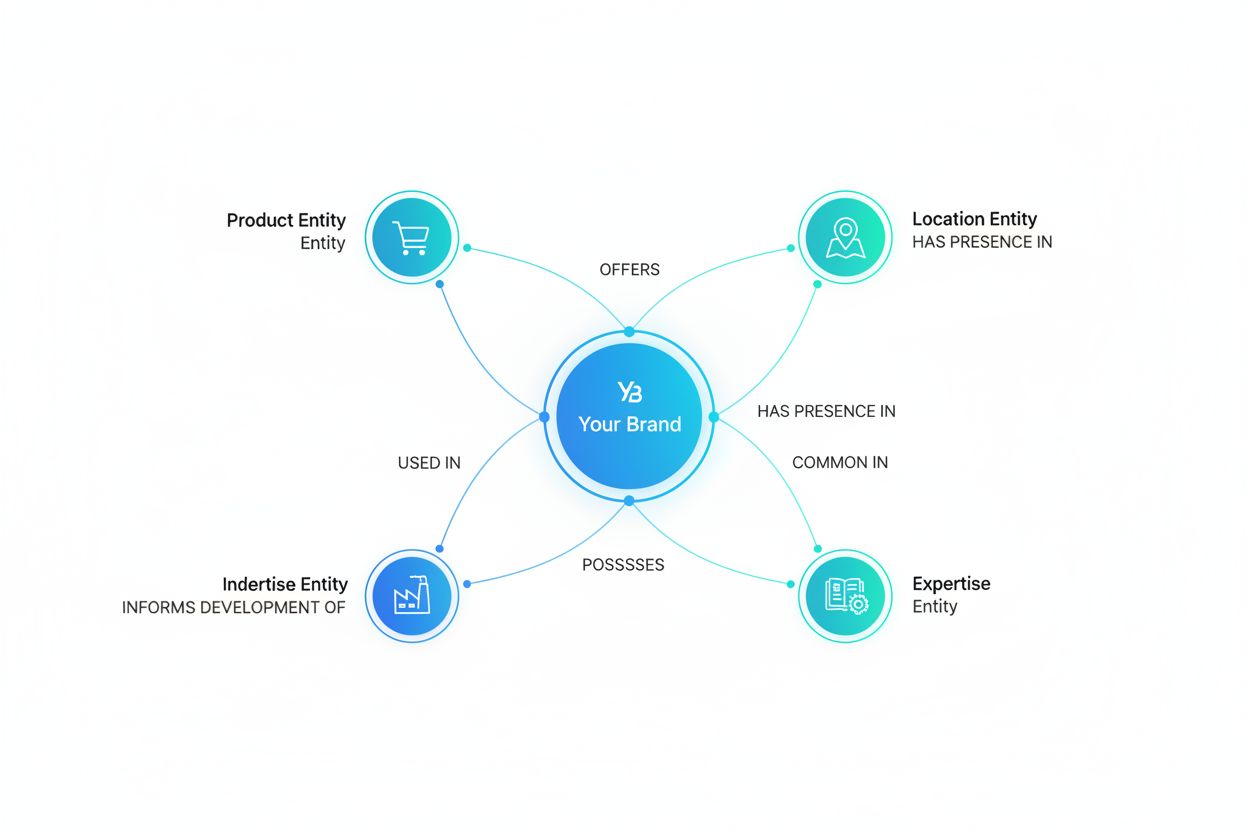
Entity optimization for AI is fundamentally different from traditional keyword-based SEO. While conventional search engine optimization focuses on matching text strings and keyword density, entity optimization centers on how artificial intelligence systems understand and represent real-world concepts. An entity is any distinct, uniquely identifiable concept—a person, organization, product, location, or idea—that exists independently and can be recognized by AI systems across different contexts and platforms.
The shift toward entity-based understanding represents a paradigm change in how search engines and AI systems process information. When you search for something or ask an AI a question, these systems don’t look for keyword matches; they search for trusted entities that fit the context of your query. If your brand isn’t structured or referenced in a way that machines can interpret, it becomes invisible to the new generation of AI-driven discovery platforms like ChatGPT, Perplexity, Google’s AI Overviews, and Claude.
Entity optimization solves this visibility problem by creating a digital fingerprint that connects your brand with the right topics, attributes, and signals of credibility. This ensures that both humans and machines understand exactly who you are, what you do, and why they should trust your expertise. The process involves consistent brand data, structured metadata, authoritative mentions, topical relevance, and reputation signals that collectively tell AI systems your brand is a reliable entity worth citing.
The evolution from keyword-based to entity-based search reflects how AI systems have fundamentally changed. For years, SEO revolved around matching phrases and building backlinks. But as AI reshapes search, semantic understanding—not just keyword density—drives visibility. Modern search and generative systems rely on understanding meaning and relationships rather than literal text matching.
When AI interprets a query like “best sustainable packaging companies,” it doesn’t scan for pages with that exact phrase. Instead, it evaluates which entities it already associates with sustainability, packaging, and reliability. If your brand isn’t connected to those concepts through structured data, content, and reputation signals, it simply won’t be surfaced in AI-generated responses.
| Aspect | Traditional SEO | Entity Optimization |
|---|---|---|
| Focus | Keyword matching | Semantic meaning |
| Approach | Text strings | Real-world concepts |
| Understanding | Literal phrases | Relationships & context |
| AI Interpretation | Keyword density | Entity relationships |
| Authority Signal | Backlinks | Co-citations & mentions |
| Visibility | Search rankings | AI citations & recommendations |
| Update Frequency | Periodic | Continuous (89.7% of ChatGPT citations go to recently updated pages) |
This distinction matters enormously for AI visibility. In 2025, knowledge graphs define your authority and credibility. E-E-A-T signals—expertise, experience, authoritativeness, and trustworthiness—influence how AI models rank your content’s reliability. Co-citations and mentions establish connections between your brand and industry topics, fostering semantic trust that AI systems recognize and reward.
Effective entity optimization relies on combining technical accuracy with consistent reputation signals across all digital touchpoints. Understanding these key pillars helps you build a comprehensive strategy that makes your brand unmistakable to AI systems.
Your business details must be identical everywhere they appear online. This includes your official business name, address, phone number, website URL, and all professional profiles. Inconsistencies confuse both users and AI systems, weakening your entity integrity. When your brand appears as “Acme Consulting” on LinkedIn but “Acme Advisors” on your website, machines may treat you as separate entities entirely.
This consistency extends beyond your website to social media bios, press mentions, business directories, industry databases, and any platform where your brand is referenced. AI systems cross-reference these mentions to build a unified understanding of your entity. Conflicting information creates fragmentation that undermines your authority signals.
Schema markup plays a critical role in entity optimization. By using structured data like Organization, Person, Product, and Article schemas, you’re teaching AI systems who and what you are in a machine-readable format. This makes your brand eligible for richer display in AI-driven results and helps systems understand your content’s meaning without relying solely on natural language interpretation.
JSON-LD (JavaScript Object Notation for Linked Data) provides the most flexible approach to schema implementation. It allows you to describe complex entity relationships and detailed factual claims that AI systems can easily parse. Proper schema implementation signals to AI that your content is professionally maintained and trustworthy, increasing the likelihood of citation in generated responses.
AI models prioritize co-citations over traditional backlinks. If your brand consistently appears alongside reputable industry names, it’s considered part of that trusted group. Building authority through press coverage, thought leadership content, expert collaborations, and industry recognition enhances these signals significantly.
When your brand gets mentioned in respected media outlets, research publications, or industry databases, you’re providing AI systems with “evidence” that it should trust your expertise. These mentions act as verification signals that strengthen your entity’s credibility within AI knowledge graphs.
AI understands brands through topics and context. Publishing high-quality, relevant content that aligns with your expertise strengthens your brand’s connection to key industry themes. Over time, this helps AI associate your entity with the right subject clusters and conceptual frameworks.
Comprehensive coverage of topics related to your expertise demonstrates semantic authority. When you explore concepts, relationships, and ecosystem connections thoroughly, you build the kind of rich semantic network that AI systems recognize as authoritative understanding rather than surface-level knowledge.
Authentic user feedback, reviews, testimonials, and community engagement serve as real-world proof of trustworthiness. AI reads sentiment just like users do. Positive, consistent feedback across Google, industry review platforms, and social channels contributes to your overall credibility score in AI systems’ evaluation frameworks.
When your entity signals are clear and consistent, AI can confidently identify your brand, summarize your expertise, and recommend you in responses to relevant queries. This process works through several interconnected mechanisms that collectively enhance your visibility in AI-generated content.
Context Building occurs when structured data and verified mentions help AI understand what your brand does and how it relates to other entities. This contextual understanding enables AI to place your brand appropriately within broader knowledge ecosystems and industry landscapes.
Disambiguation becomes crucial when multiple brands share similar names or operate in overlapping spaces. Consistent entity data ensures the right version of your brand appears in results, preventing confusion with competitors or unrelated entities.
Authority Mapping links your brand to relevant topics, increasing chances of citation in AI Overviews, voice assistants, and chatbot answers. The stronger these topical connections, the more frequently AI systems will reference your expertise when answering related questions.
Visibility Expansion means that once your entity is recognized and trusted, it can appear in Knowledge Panels, featured snippets, and as a referenced source within AI summaries. This expanded visibility across multiple AI platforms compounds your overall presence in AI-driven search results.
Ultimately, entity optimization makes your brand not just searchable—but intelligible to AI. It gives machines the confidence to say, “This is the right source” when generating responses about your industry, products, or expertise.
Building a strong entity presence requires systematic implementation across multiple dimensions of your digital presence. These strategies compound over time, creating increasingly powerful signals that AI systems recognize and reward.
Use Structured Schema Markup by implementing JSON-LD for your organization, products, and content. Start with foundational schemas like Organization and Person, then expand to include specific entities relevant to your industry. Each schema should include as many relevant properties as possible to provide comprehensive entity descriptions.
Build Knowledge Graph Entries by creating or updating entries in public databases like Wikidata, Wikipedia, and Crunchbase. These sources act as hubs in AI’s web of knowledge. A Wikidata entry with your company’s official name, aliases, and web properties ensures consistent recognition across AI systems.
Secure Authoritative Mentions through original research, thought leadership content, and journalist collaborations. Focus on creating unique assets that AI systems will cite—frameworks, proprietary data, original terminology, or comprehensive guides that become anchors in AI-driven outputs.
Maintain Semantic Consistency across all platforms by using identical names, descriptors, and taglines everywhere. This consistency helps AI connect the dots and strengthens recognition across different digital properties and platforms.
Create Original Assets that AI can cite. When you publish white papers with structured data, introduce original terminology, or create proprietary frameworks, you give AI something unique to reference. These assets become persistent links between your brand and specific concepts in AI systems’ understanding.
Effective measurement requires tracking metrics that specifically relate to AI understanding and citation rather than traditional SEO performance indicators. These metrics reveal how successfully your entity optimization efforts translate into actual visibility in AI-generated responses.
Monitor AI Citations by tracking how frequently AI systems cite your content across different topics and entity types. Tools are emerging that track brand mentions in AI-generated outputs, such as monitoring citations in Google’s AI Overviews. Track citation frequency, accuracy, and competitive positioning to understand your entity’s performance.
Track Schema Performance through Google Search Console’s rich results reports. Monitor Knowledge Panel appearances, featured snippet attribution, and voice search responses. These indicators show whether your structured data implementation successfully establishes your brand as an authoritative source.
Analyze Entity Recognition using Google’s Natural Language API to see what entities AI systems extract from your content. Check whether your primary topic receives the highest salience score, whether related entities make sense together, and whether important concepts are missing compared to competitors.
Monitor Knowledge Graph Inclusion to verify that your entity optimization successfully establishes your brand within AI knowledge graphs. Regular monitoring helps identify misrepresentations that could harm your credibility.
Different AI systems have varying approaches to entity recognition and citation, though they share fundamental principles about what constitutes trustworthy, authoritative entities.
ChatGPT prioritizes recently updated content, with 89.7% of citations going to pages updated within the last 30 days. Strong entity signals combined with fresh content dramatically increase citation likelihood. Comprehensive coverage of related concepts and clear entity relationships improve your chances of being selected as a source.
Perplexity emphasizes direct citations and source attribution. Clear entity identification, authoritative mentions, and well-structured content increase your visibility. Perplexity users often see your brand name and URL directly in responses, making entity clarity particularly important.
Google AI Overviews integrate with Knowledge Graphs and structured data. Schema markup implementation directly affects your visibility. Entities with strong Knowledge Graph connections and recent updates receive preferential treatment in AI-generated summaries.
Claude and other emerging platforms follow similar principles: they reward clear entity signals, authoritative mentions, semantic depth, and recent content updates. Optimizing for one platform’s entity requirements generally improves visibility across all AI systems.
Understanding what undermines entity optimization helps you avoid costly mistakes that could damage your AI visibility.
Entity Disconnection occurs when you use different names across platforms, fail to publish schema markup, or ignore public databases like Wikipedia. This fragmentation prevents AI from recognizing your brand as a unified entity. The remedy is persistent, harmonized data across your entire digital footprint.
Weak Primary Entity Signals happen when your main topic appears only once or twice in your content, then gets replaced with vague pronouns. AI systems struggle to recognize your primary focus when signals are inconsistent or weak.
Missing Related Entities means your content lacks the semantic depth that demonstrates comprehensive understanding. Competitors with richer entity ecosystems will outrank you in AI citations because they appear more authoritative.
Outdated Content significantly reduces AI citation likelihood. Since 89.7% of ChatGPT citations go to recently updated pages, stale content loses visibility regardless of how well-optimized it is. Regular updates are essential for maintaining entity authority.
Inconsistent Schema Implementation creates confusion about what your content actually represents. Incomplete or conflicting schema markup undermines the clarity that helps AI systems understand and cite your expertise.
Entity optimization and structured data implementation must evolve as AI systems become more sophisticated and new search experiences emerge. Staying current with developments ensures your strategy remains effective as the landscape changes.
Monitor Emerging Schema Standards regularly. New schema types emerge to support evolving content formats and industry requirements. Staying current with schema.org developments ensures continued compatibility with advancing AI systems.
Implement Scalable Approaches that can grow with your content library. Automated entity recognition tools can identify optimization opportunities within existing content, helping prioritize efforts for maximum impact.
Plan for Cross-Platform Compatibility to ensure your entity optimization works effectively across different AI systems rather than optimizing for single platforms. This future-proofs your strategy against shifts in which platforms dominate AI search.
Maintain Quality Assurance Workflows that ensure entity optimization maintains accuracy and effectiveness as content libraries scale. Regular audits using tools like Google’s Natural Language API help identify gaps and opportunities.
Entity optimization isn’t a one-time project—it’s an ongoing commitment to maintaining clear, consistent, authoritative entity signals across all digital touchpoints. As AI systems become primary decision engines for how users discover information, brands that master entity optimization will dominate visibility in AI-generated responses.
Track how your brand appears in ChatGPT, Perplexity, and other AI answer generators. Get real-time alerts when your domain or brand is mentioned in AI responses.
Learn how entity optimization helps your brand become recognizable to LLMs. Master knowledge graph optimization, schema markup, and entity strategies for AI vis...

Community discussion on entity optimization for AI search. Real strategies for establishing your brand as a recognized entity that AI systems understand and rec...
Learn how to strengthen your brand entity for AI search visibility. Optimize for ChatGPT, Perplexity, Google AI Overviews, and Claude with entity SEO strategies...