

Will AI Search Have Ads? Current Implementation and Future Trends
Discover how AI search engines are monetizing through advertising. Learn about ad placements in ChatGPT, Google AI Overviews, Perplexity, and Microsoft Copilot,...
9 min read

Explore the future of AI search advertising: projected growth to $26B by 2029, platform strategies, brand visibility challenges, and how to monitor your presence across ChatGPT, Perplexity, and Google AI.
AI search advertising is projected to surge from $1.1 billion in 2025 to $26 billion by 2029, with platforms like ChatGPT, Perplexity, and Google integrating ads through sponsored results, contextual recommendations, and affiliate models. Brands must adapt strategies to maintain visibility as AI systems become primary discovery channels, requiring monitoring of brand mentions across multiple AI platforms.
AI search advertising represents a fundamental shift in how brands reach consumers through generative AI platforms like ChatGPT, Perplexity, Google AI Overviews, and Claude. Unlike traditional search advertising where brands bid for placement in keyword-driven results, AI search ads integrate directly into conversational responses, product recommendations, and sponsored suggestions within AI-generated answers. This emerging advertising model is reshaping the digital marketing landscape as AI systems increasingly become the primary discovery channel for information, products, and services. The transformation matters because approximately 80% of users rely on AI summaries at least 40% of the time when searching, fundamentally changing how brands must position themselves to remain visible and competitive in this new ecosystem.
The significance of this shift cannot be overstated. Traditional search advertising generated over $200 billion globally for Google and other platforms, but AI search is fragmenting discovery across multiple platforms simultaneously. Brands that fail to adapt their advertising strategies to AI search environments risk losing visibility to competitors who understand how generative AI systems interpret, synthesize, and present information to users. The challenge is compounded by the fact that AI Overviews now appear in 21% of all Google searches, and this percentage continues to grow, forcing marketers to optimize for answer-level visibility rather than traditional keyword rankings.
The advertising market for AI-powered search is experiencing unprecedented growth. Industry analysts project that AI-driven search ad spending in the United States alone will surge from approximately $1.1 billion in 2025 to roughly $26 billion by 2029—a staggering 24-fold increase in just four years. This explosive growth reflects the massive shift in user behavior and advertiser investment toward AI search platforms as they become mainstream discovery tools. The scale of this opportunity has attracted major tech companies to accelerate their monetization strategies, with Google, Microsoft, OpenAI, and emerging platforms all racing to capture market share in this lucrative new advertising category.
The financial imperative driving this growth is substantial. ChatGPT alone has reached 400 million weekly active users as of early 2025, yet only approximately 5% of users subscribe to paid plans like ChatGPT Plus ($20/month) or ChatGPT Pro ($200/month). This massive free user base represents an untapped revenue opportunity that advertising can unlock. OpenAI has explicitly stated it aims to derive up to 20% of its revenue from advertising-related features and sales commissions, signaling the company’s commitment to building a sustainable ad-supported model. Similarly, Perplexity has begun testing sponsored follow-up question ads, while Google continues expanding ad placements within its AI Overviews feature, demonstrating that all major platforms are moving toward integrated advertising models.
| Platform | Ad Format | Placement Strategy | Monetization Status | Brand Visibility Impact |
|---|---|---|---|---|
| ChatGPT | Contextual suggestions, affiliate links, sponsored recommendations | Integrated into answers or sidebar panels | Under development; expected 2026 rollout | Brands must optimize for conversational queries and product recommendations |
| Perplexity | Sponsored follow-up questions, branded suggestions | Separate from core answer content; clearly labeled | Active testing with select advertisers | Brands appear as suggested next steps rather than in primary answers |
| Google AI Overviews | Traditional search ads + AI-integrated placements | Above/below AI-generated summaries; traditional ad slots | Fully operational; expanding rapidly | Brands compete for both traditional ad slots and answer-level citations |
| Claude | Limited/experimental | Minimal current advertising | Minimal monetization | Primarily enterprise-focused; consumer ads not yet implemented |
| Microsoft Bing Chat | Integrated with Bing search ads | Alongside AI responses; leverages existing Bing ad infrastructure | Operational; tied to Bing search revenue | Brands benefit from existing Bing advertiser relationships |
AI search advertising fundamentally differs from traditional PPC (pay-per-click) search advertising in several critical ways that brands must understand. In traditional search, advertisers bid on specific keywords, and their ads appear in designated ad slots alongside organic results. In AI search, the advertising model is more subtle and integrated—brands may appear as sponsored recommendations within the AI’s conversational response, as affiliate product suggestions, or as contextual ads that feel native to the answer being provided. This shift requires brands to think beyond keyword optimization and instead focus on answer-level visibility and how their products or services are mentioned and recommended within AI-generated content.
The attribution and measurement challenges are also substantially different. Traditional search advertising provides clear click-through rates and conversion tracking because users click on ads and land on specific landing pages. AI search advertising, by contrast, often presents information without direct links or with buried attribution, making it harder for brands to track which AI mentions drive actual traffic or conversions. Google has acknowledged attribution discrepancies in its AI Max bidding system, where advertisers struggle to understand how their ads perform within AI Overviews. This opacity creates both challenges and opportunities: brands that can effectively monitor their brand mentions across AI platforms gain competitive advantage through AmICited’s prompt monitoring capabilities, which track how often and in what context brands appear in AI-generated answers across ChatGPT, Perplexity, Google AI, and Claude.
OpenAI has been deliberately cautious about introducing advertising to ChatGPT, emphasizing that any ads must be “thoughtful and tasteful” and never compromise the accuracy or neutrality of responses. However, the company’s financial realities are driving rapid movement toward monetization. With OpenAI projecting cash burn of over $100 billion through 2029 and infrastructure spending commitments exceeding $1 trillion, advertising has become essential to the company’s survival strategy. ChatGPT is expected to introduce ads in 2026, likely starting with an ad-supported free tier that offers basic functionality with advertisements, while premium subscribers on ChatGPT Plus and ChatGPT Pro remain ad-free.
The advertising format ChatGPT is developing appears to focus on contextual product recommendations and affiliate links rather than traditional banner ads. For example, if a user asks ChatGPT for gift recommendations, the AI might suggest specific products with a “Sponsored” label and earn affiliate commissions when users click through to purchase. OpenAI is also developing an in-chat checkout system with Shopify, allowing users to complete purchases directly within ChatGPT without leaving the platform. This integration suggests that ChatGPT advertising will be deeply embedded in commerce-related queries, making it essential for e-commerce brands to optimize their product information and ensure they appear in relevant product recommendation contexts.
Perplexity, the AI search engine that emphasizes research and source attribution, has taken a different approach to advertising. Rather than inserting ads directly into answer content, Perplexity is testing sponsored follow-up questions that appear alongside its responses. This format allows advertisers to suggest related topics or products that users might want to explore next, without compromising the integrity of the primary answer. The strategy is clever because it maintains Perplexity’s reputation for unbiased, source-backed answers while still monetizing user attention through suggested next steps.
For brands, Perplexity’s advertising model creates opportunities in the research and discovery phase of the customer journey. If a user is researching a product category, Perplexity might suggest a sponsored follow-up question like “Compare the top brands in this category” or “What are the latest reviews for [Brand]?” This positions brands as thought leaders and discovery options at a critical moment when users are actively researching. Brands that understand Perplexity’s user base—typically more research-oriented and quality-conscious than average search users—can craft compelling sponsored suggestions that align with user intent rather than interrupt it.
Google has the most mature AI search advertising strategy because it’s integrating AI into its existing search infrastructure. Google AI Overviews now appear in approximately 21% of all Google searches, and this percentage is expected to rise to over 75% by 2028. Google is placing traditional search ads both above and below AI Overviews, while also experimenting with AI-integrated ad placements where sponsored content appears within or adjacent to the AI-generated summary itself.
The challenge for brands is that Google AI Overviews often answer user questions directly without requiring clicks to external websites, reducing traffic to brand websites even when brands are mentioned. However, Google is also creating opportunities for brands to appear in AI Overviews through structured data markup, high-quality content, and brand authority signals. Brands that rank well in traditional search and have strong E-E-A-T signals (Experience, Expertise, Authoritativeness, Trustworthiness) are more likely to be cited in AI Overviews. Additionally, Google Shopping integration within AI Overviews creates direct product visibility opportunities for e-commerce brands.
One of the most significant challenges brands face in the AI search advertising era is the visibility paradox: while AI systems mention brands frequently in their responses, these mentions often don’t drive traffic to brand websites because users get their answers directly from the AI without clicking through. A Bain and Dynata survey of 1,100 consumers conducted in December 2024 found that 80% of users rely on AI summaries at least 40% of the time, meaning they’re getting information from AI rather than visiting brand websites directly. This creates a situation where brands can be highly visible in AI search results but receive minimal traffic benefit.
The solution lies in understanding share of search—a metric that measures what percentage of total searches in a category mention or reference a specific brand. Share of search correlates strongly with market share and future buying behavior, making it a more reliable indicator of brand health in the AI era than traditional traffic metrics. Brands that appear frequently in AI-generated answers across multiple platforms demonstrate strong market demand and competitive positioning, even if those mentions don’t immediately drive website clicks. This is where prompt monitoring becomes critical: by tracking how often and in what context your brand appears in AI search results across ChatGPT, Perplexity, Google AI Overviews, and Claude, you can measure your true competitive position in the AI search landscape.
The AI search advertising landscape will continue to evolve rapidly over the next 3-5 years. OpenAI is expected to launch its ad-supported ChatGPT tier in 2026, which will immediately create a massive new advertising inventory of over 400 million weekly active users. This launch will likely trigger similar moves from competitors, with Google, Microsoft, and other platforms accelerating their own AI advertising initiatives. The market will likely consolidate around a few dominant platforms—ChatGPT, Google, and Perplexity—each with distinct advertising models optimized for their user bases and use cases.
Beyond 2026, we can expect AI advertising to become increasingly sophisticated and personalized. AI systems will develop better understanding of user intent and context, allowing for more relevant and less intrusive advertising. Privacy-preserving personalization will become a competitive differentiator, with platforms that can deliver targeted ads without extensive data collection gaining user trust and loyalty. Additionally, AI-powered attribution will improve, allowing brands to better understand how AI mentions and sponsored recommendations drive actual business outcomes. The integration of AI agents—autonomous systems that can make purchases, book services, and complete transactions on behalf of users—will create entirely new advertising opportunities where brands compete for inclusion in agent-recommended options.
For brands, the strategic imperative is clear: AI search advertising is not a future concern but a present reality that demands immediate attention. The $26 billion projected market by 2029 represents a massive shift in advertising spend away from traditional channels. Brands that understand how AI systems work, how to optimize for AI visibility, and how to measure their performance in AI search will capture disproportionate value. Those that ignore this transformation risk losing market share to competitors who are already adapting their strategies. The future of advertising is conversational, distributed across multiple AI platforms, and increasingly focused on answer-level visibility rather than traditional keyword rankings. Success requires both strategic thinking about how your brand fits into AI-generated answers and tactical execution through prompt monitoring and continuous optimization of your AI search presence.
Track how your brand appears in AI-generated answers across ChatGPT, Perplexity, Google AI Overviews, and Claude. Understand your visibility and competitive positioning in the AI search landscape.
Discover how AI search engines are monetizing through advertising. Learn about ad placements in ChatGPT, Google AI Overviews, Perplexity, and Microsoft Copilot,...
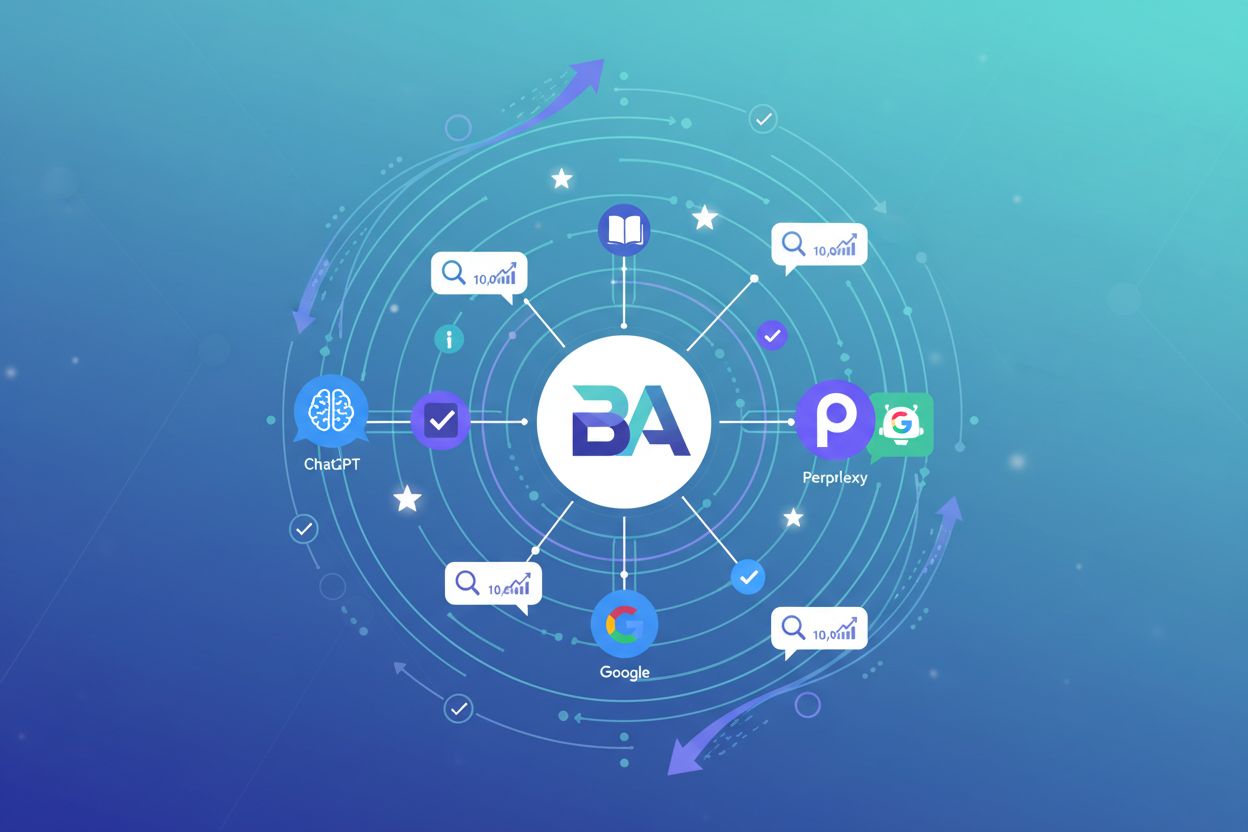
Discover how branded search volume directly correlates with AI visibility. Learn to measure brand signals in LLMs and optimize for AI-driven discovery with acti...
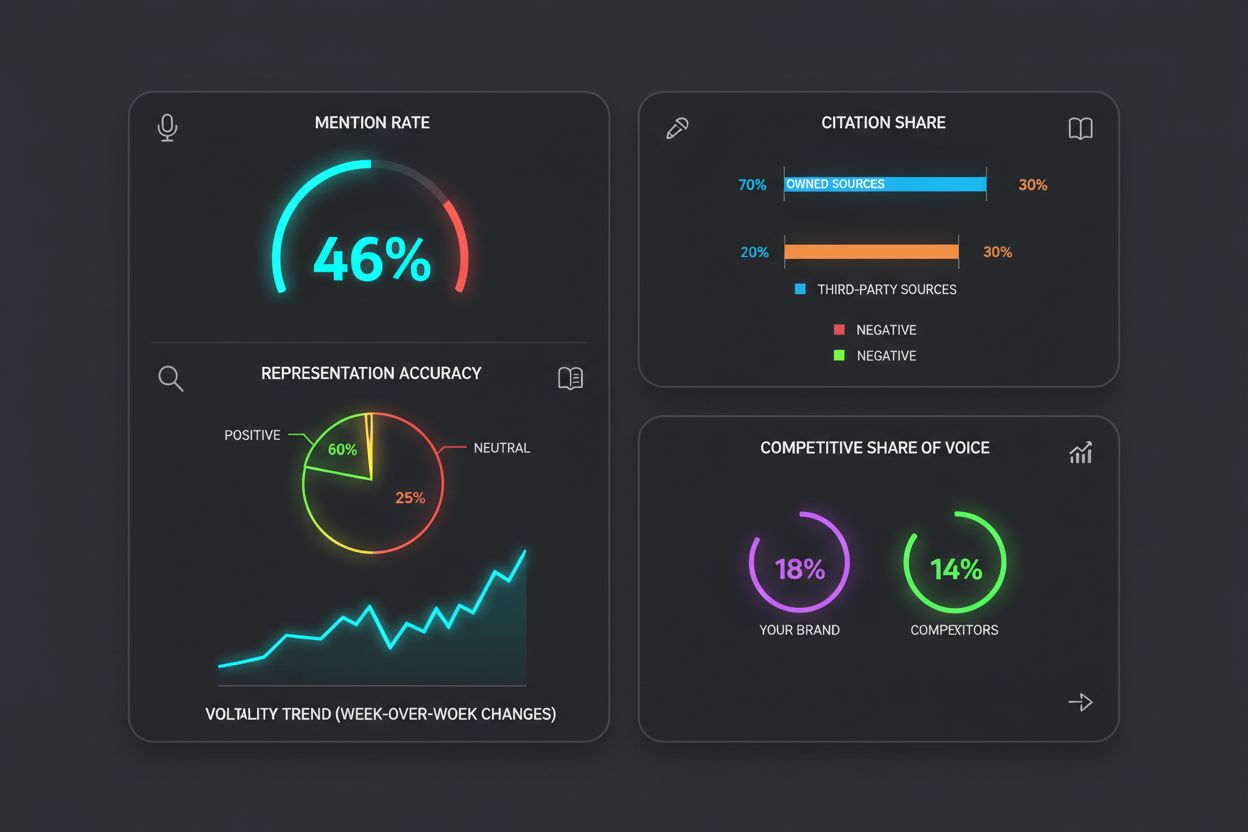
Quick reference guide to AI visibility monitoring. Track mentions, citations, and brand presence across ChatGPT, Google AI Overviews, Perplexity, and Gemini wit...