
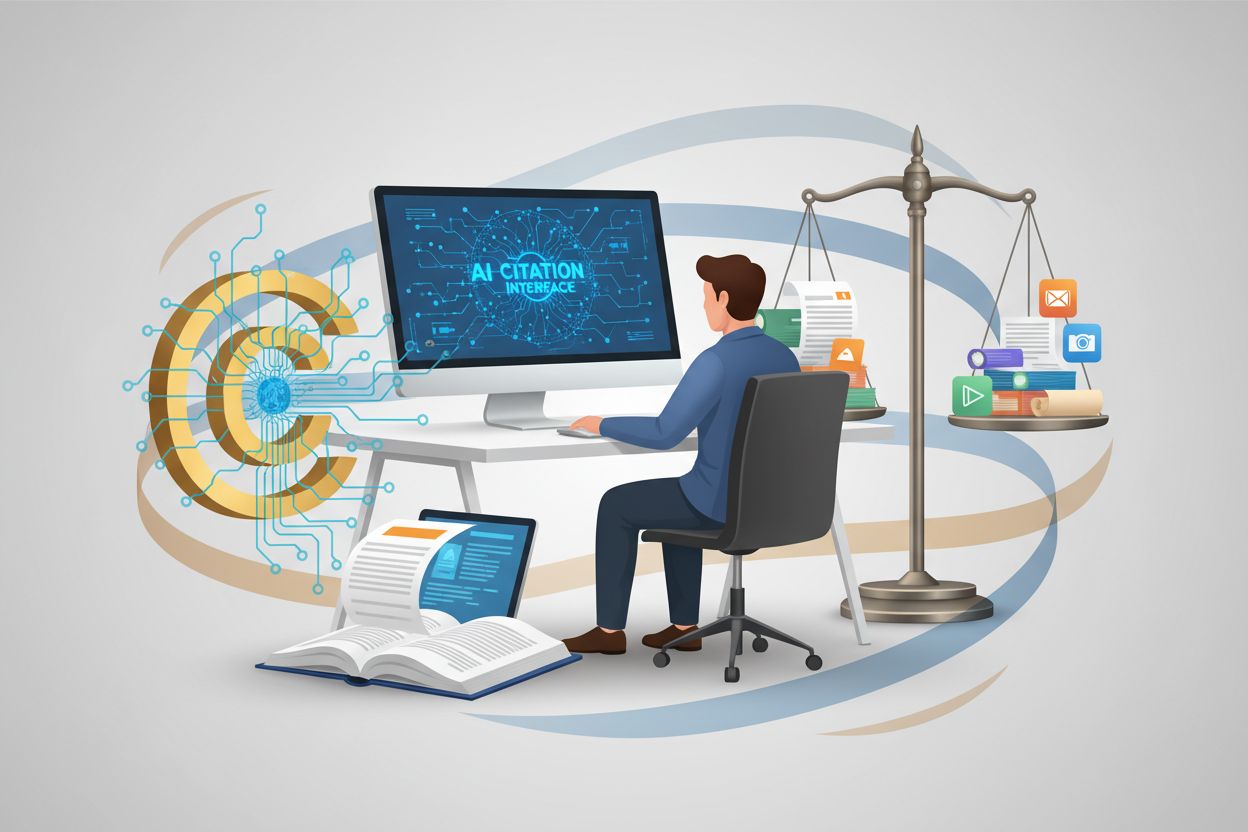
Copyright and AI Citations: Legal Considerations for Content Creators
Understand copyright law and AI citations. Learn your legal rights as a content creator in the age of artificial intelligence, including fair use, licensing, an...
10 min read

Explore the evolving landscape of content rights in AI, including copyright protections, fair use doctrine, licensing frameworks, and global regulatory approaches shaping the future of creator compensation and AI development.
The future of content rights in AI involves evolving legal frameworks, licensing markets, and regulatory approaches. Courts are determining whether AI training on copyrighted works constitutes fair use, while governments worldwide are implementing new laws to protect creator rights and establish clearer boundaries for AI development.
The intersection of artificial intelligence and copyright law represents one of the most significant legal challenges of our time. As generative AI systems become increasingly sophisticated and widespread, fundamental questions about content ownership, creator compensation, and intellectual property protection have moved from academic discussions to courtrooms and legislative chambers worldwide. The future of content rights in AI will be shaped by ongoing court decisions, emerging licensing frameworks, and regulatory initiatives that attempt to balance innovation with creator protection.
Court decisions are establishing critical precedents that will define content rights in AI for years to come. The U.S. Copyright Office has taken a clear position that using copyrighted works to train AI models may constitute prima facie infringement of reproduction and derivative work rights. This means that the initial act of downloading and storing copyrighted materials for training purposes can be considered infringement, even before the AI generates any outputs. Additionally, courts have begun examining whether the mathematical weights within AI models themselves constitute infringing copies when they produce outputs substantially similar to training data.
Several landmark cases have shaped the current legal landscape. In the Andersen v. Stability AI case, courts found that allegations of copying billions of copyrighted images to train AI image generators were sufficient to proceed with infringement claims. The New York Times’ lawsuits against OpenAI and Microsoft, along with subsequent actions against Perplexity, have established that using copyrighted journalistic content without permission to train AI systems raises serious copyright concerns. These cases demonstrate that courts are increasingly willing to recognize the harm to original creators when AI systems generate content that competes directly with their work.
The fair use doctrine remains contested in AI contexts. While some courts have ruled that using legally obtained copyrighted materials for AI training can constitute fair use under certain circumstances, others have rejected this defense entirely. The U.S. Copyright Office’s May 2025 report emphasized that fair use is “a matter of degree” and that using copyrighted works to train models that generate content competing with original works “goes beyond established fair use boundaries.” This nuanced approach suggests that future court decisions will likely depend heavily on whether AI outputs directly compete with original works in existing markets.
Licensing frameworks are emerging as a critical mechanism for balancing creator rights with AI development needs. Rather than relying solely on litigation or fair use arguments, the industry is developing voluntary licensing agreements where AI companies compensate creators for using their work in training datasets. These arrangements represent a fundamental shift from the early days of AI development when companies often used copyrighted content without permission or compensation.
Several companies have pioneered licensing approaches that could become industry standards. Shutterstock has established partnerships where it pays content creators when their work is used for AI training. Bria AI has implemented a model where artists receive royalties based on AI-generated outputs created in their style, giving creators ongoing compensation as their work influences AI outputs. Disney’s landmark $1 billion partnership with OpenAI demonstrates that major content holders can negotiate substantial licensing deals that provide both compensation and control over how their intellectual property is used.
| Licensing Model | Key Features | Compensation Structure | Scalability |
|---|---|---|---|
| Royalty-Based | Artists paid per AI-generated output | Variable based on usage | Medium |
| Upfront Licensing | One-time payment for training rights | Fixed or tiered fees | High |
| Hybrid Approach | Combination of upfront and per-use fees | Mixed structure | High |
| Collective Licensing | Rights holders pool resources | Distributed among creators | Very High |
The U.S. Copyright Office has recommended allowing licensing markets to develop organically without government intervention through compulsory licensing schemes. However, the report acknowledges that scaling licensing solutions remains challenging, particularly for independent creators and smaller rights holders who lack negotiating power. The future likely involves a mix of direct licensing agreements for major content holders and collective licensing organizations that represent smaller creators’ interests.
International regulatory frameworks are diverging significantly in their approach to AI and copyright protection. The European Union has taken a proactive stance through its AI Act, which requires AI developers to maintain detailed records of training data and comply with copyright obligations. The EU’s approach emphasizes transparency and accountability, with provisions that acknowledge the importance of balancing copyright protection with innovation through limited exceptions for text and data mining, particularly for non-commercial research and small enterprises.
China has adopted a distinctly different approach, recognizing copyright protection for AI-generated works when they demonstrate originality and reflect human intellectual effort. Chinese regulations mandate that AI-generated content be clearly labeled, and AI companies are held liable for misinformation or unlawful content produced by their models. This regulatory framework reflects China’s commitment to maintaining control over AI development while establishing clearer boundaries for content rights.
The United Kingdom stands alone among major jurisdictions by offering copyright protection for works generated solely by computers, a position that contrasts sharply with the U.S. approach requiring human authorship. Germany’s recent court ruling that OpenAI violated copyright laws by training ChatGPT on licensed musical works without permission signals that European courts are increasingly willing to enforce strict copyright protections against AI companies. These divergent approaches create a complex global landscape where content rights protections vary significantly depending on jurisdiction.
Recent landmark settlements and court rulings have established important precedents for content rights in AI. Anthropic’s $1.5 billion settlement in the Bartz v. Anthropic case represents the largest copyright recovery in U.S. history, compensating approximately 500,000 works at roughly $3,000 per work. This settlement required the destruction of improperly acquired training content and signals that courts are willing to impose substantial penalties for unauthorized use of copyrighted materials. The settlement also demonstrates that even when AI companies argue fair use, they may face significant financial liability if they cannot prove they obtained training data legally.
The U.S. Copyright Office’s multi-part report on AI and copyright has provided crucial guidance on how existing copyright law applies to AI systems. Part 2 addressed the copyrightability of AI-generated outputs, confirming that fully AI-generated content cannot be copyrighted in the United States because copyright requires human authorship. Part 3 focused on generative AI training, concluding that using copyrighted works to train models may constitute infringement and that fair use does not automatically apply to AI training activities. These reports, while non-binding, carry significant weight in ongoing litigation and legislative discussions.
The emergence of guardrails and content filtering as a fair use factor represents an important development. The Copyright Office noted that AI developers implementing measures to prevent or minimize infringing outputs—such as blocking prompts likely to reproduce copyrighted content or training protocols designed to reduce similarity to original works—strengthen fair use arguments. This creates an incentive for AI companies to invest in technical solutions that respect copyright, potentially becoming a standard industry practice.
The question of authorship in human-AI collaborations remains one of the most complex issues in content rights. The U.S. Copyright Office has clarified that copyright protection depends on the extent of human creative input and control. If a human provides significant creative contributions—such as editing, arranging, selecting, or directing AI-generated elements—the work may be eligible for copyright protection. However, if a human simply provides a text prompt and the AI generates complex creative works in response, the Copyright Office considers the “traditional elements of authorship” to have been executed by the machine, not the human.
The Zarya of the Dawn case illustrated these complexities when the Copyright Office initially granted copyright protection for a graphic novel created with Midjourney, then partially revoked it, determining that the AI-generated images lacked human authorship while the text and overall arrangement remained protected. This decision established that copyright protection in human-AI collaborations is granular—different elements of a work may receive different levels of protection depending on the degree of human creative involvement. Future cases will likely refine these standards as courts grapple with increasingly sophisticated forms of human-AI collaboration.
Creator compensation frameworks are evolving to address the reality that AI systems are built on human-created content. Beyond traditional licensing, new models are emerging that attempt to fairly distribute value generated by AI systems. Some platforms are implementing direct payment systems where creators receive compensation when their work influences AI outputs, while others are exploring collective rights management organizations that can negotiate on behalf of large groups of creators.
The challenge of scaling compensation systems remains significant. Independent artists, writers, and musicians often lack the resources to negotiate individual licensing agreements with major AI companies. Collective licensing organizations, similar to those that manage music rights through entities like ASCAP and BMI, could provide a solution by pooling creator rights and negotiating on their behalf. However, establishing fair royalty rates, tracking usage, and distributing payments across millions of creators presents substantial technical and administrative challenges that the industry is still working to solve.
Technical protection measures are emerging as creators seek to prevent their work from being used in AI training without permission. Tools like Glaze, developed by researchers at the University of Chicago, allow artists to add imperceptible modifications to their work that render it useless as training data while remaining visually identical to human viewers. These “poison” techniques represent a defensive approach where creators can protect their work at the point of publication rather than relying on legal remedies after infringement occurs.
Other creators are taking more proactive approaches by carefully controlling where their work is published and under what terms. Some are using watermarking, metadata, and licensing statements to clearly communicate their copyright status and restrictions on AI training use. The emergence of AI-specific licensing terms and opt-out registries—such as the proposed central registry for Text and Data Mining exceptions under EU law—could provide creators with standardized mechanisms to prevent their work from being used in AI training.
Congressional and international legislative efforts are attempting to establish clearer rules for AI and copyright. The Generative AI Copyright Disclosure Act, introduced in the U.S. Congress, would require AI companies to disclose the datasets used to train their systems, increasing transparency and giving copyright owners more information about potential infringement. The ELVIS Act, enacted in Tennessee and now being considered in other jurisdictions, specifically protects musicians from unauthorized voice cloning using AI technology, establishing a precedent for creator-specific protections.
The European Commission’s feasibility study on a central registry of opt-outs under the Text and Data Mining exception represents another legislative approach. This would allow creators to register their works and opt out of AI training use, shifting the burden from creators proving infringement to AI companies proving they have permission to use content. Such registries could provide a scalable solution for protecting creator rights while maintaining some flexibility for legitimate research and innovation.
The future of content rights in AI will likely involve a combination of legal, technical, and market-based solutions rather than a single approach. Court decisions will continue to refine the boundaries of fair use and establish clearer standards for when AI training constitutes infringement. Licensing markets will mature, with standardized terms and collective organizations making it easier for creators to be compensated for their work. Regulatory frameworks will evolve globally, with different jurisdictions potentially adopting distinct approaches that reflect their values regarding creator protection and innovation.
The fundamental tension between enabling AI innovation and protecting creator rights will persist, but the trajectory suggests movement toward greater creator protection and compensation. As AI systems become more valuable and generate more revenue, the pressure to fairly compensate the creators whose work trained these systems will intensify. The emergence of licensing frameworks, substantial legal settlements, and regulatory initiatives all point toward a future where using copyrighted content in AI training requires explicit permission and fair compensation, rather than relying on broad fair use arguments.
Track how your brand, domain, and content appear in AI-generated answers across ChatGPT, Perplexity, and other AI platforms. Ensure your intellectual property is properly attributed and protected.
Understand copyright law and AI citations. Learn your legal rights as a content creator in the age of artificial intelligence, including fair use, licensing, an...

Understand the copyright challenges facing AI search engines, fair use limitations, recent lawsuits, and legal implications for AI-generated answers and content...
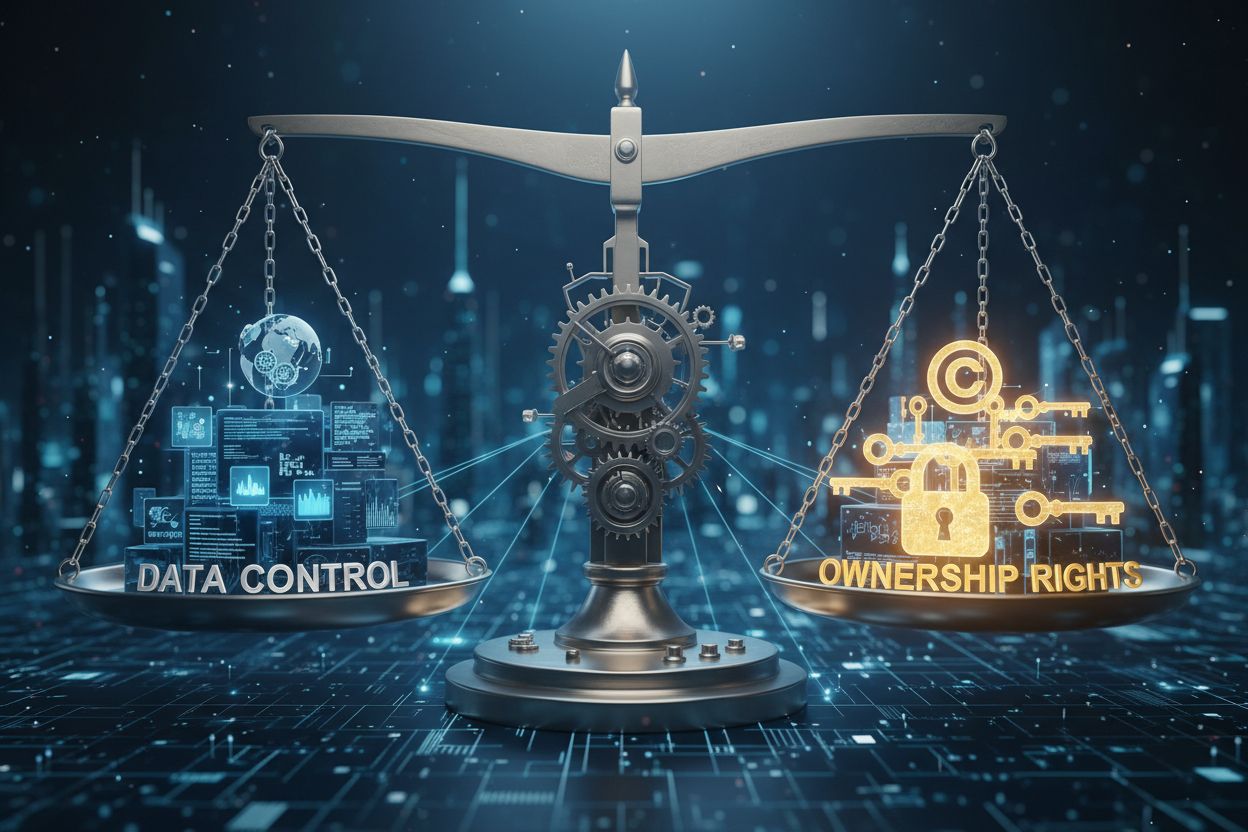
Explore the complex legal landscape of AI training data ownership. Learn who controls your content, copyright implications, and what regulations are emerging.