
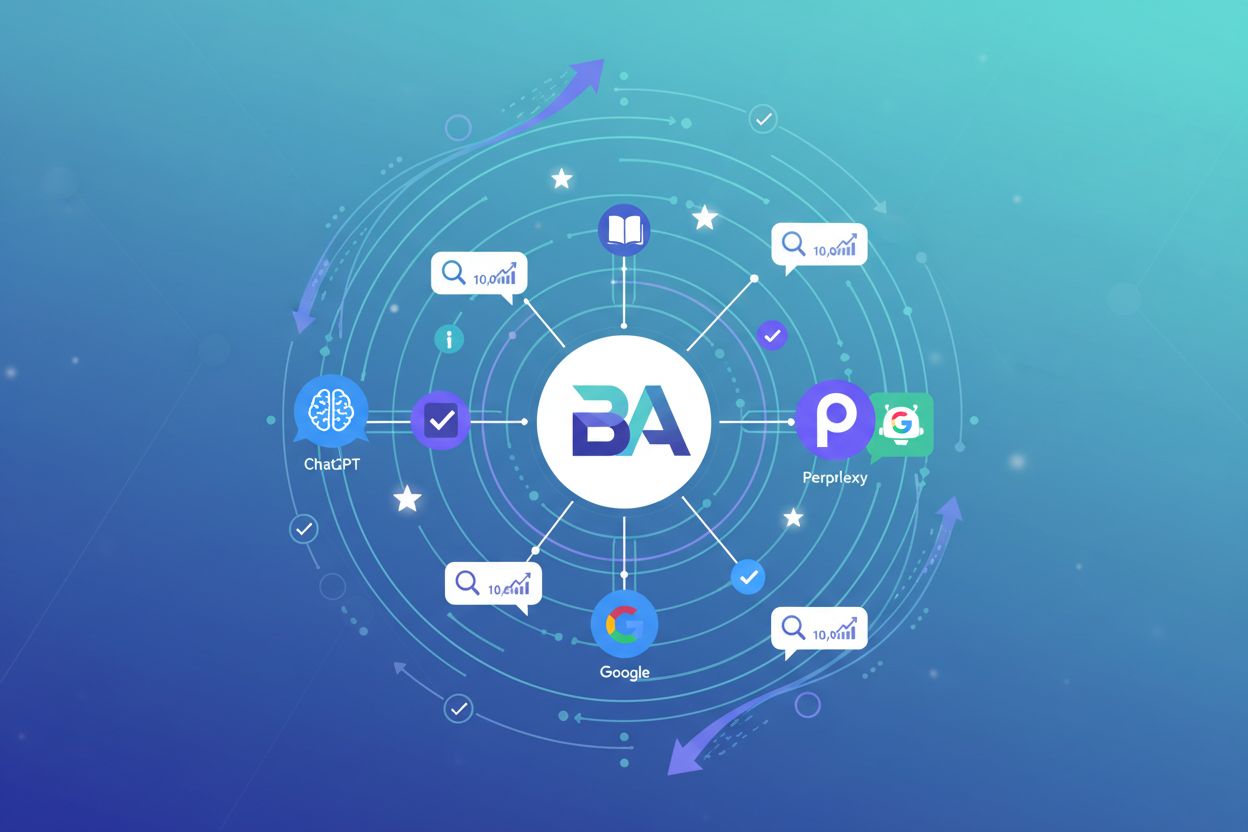
Branded Search Volume and AI Visibility: The Connection Explained
Discover how branded search volume directly correlates with AI visibility. Learn to measure brand signals in LLMs and optimize for AI-driven discovery with acti...
8 min read

Explore how AI is transforming product search with conversational interfaces, generative discovery, personalization, and agentic capabilities. Learn about emerging trends in AI-powered product discovery.
The future of product search in AI is shifting from traditional keyword-based search to intelligent, conversational discovery powered by generative AI models. AI-powered product search will feature personalized recommendations, real-time inventory integration, visual search capabilities, and agentic systems that can complete purchases autonomously while maintaining user control.
Artificial intelligence is fundamentally reshaping how consumers discover and purchase products, moving away from simple keyword-based searches toward intelligent, conversational experiences. Traditional product search relied on users entering specific keywords and browsing through ranked results, but AI-powered search systems now understand user intent, context, and preferences to deliver highly personalized product recommendations. The shift represents a profound change in the buyer journey, where discovery and research increasingly happen outside of brand websites through AI-powered platforms like ChatGPT, Perplexity, and Google’s AI Mode. This transformation means that product visibility in AI-generated answers has become as critical as traditional search engine optimization, fundamentally altering how businesses must approach product marketing and discoverability.
The integration of generative AI models into product search platforms enables systems to synthesize information from multiple sources and present curated product recommendations with explanations. Rather than showing a list of products, AI search engines can now explain why a particular product matches user needs, compare alternatives, and even provide personalized suggestions based on browsing history and preferences. This capability has driven significant engagement increases, with AI Overviews in Google Search showing over 10% usage increases in major markets as users discover they can ask more complex, multimodal questions and receive comprehensive answers. The technology enables real-time analysis of product attributes, pricing, availability, and customer reviews to surface the most relevant options for each unique query.
Generative AI serves as the intelligence layer that powers modern product discovery systems, enabling machines to understand nuanced customer needs and generate personalized recommendations. Unlike traditional recommendation engines that rely on collaborative filtering or simple attribute matching, generative AI models can interpret complex, conversational queries and understand the context behind product searches. When a customer asks “find me affordable running shoes for marathon training with good arch support,” generative AI can parse multiple requirements, weigh their importance, and surface products that best match the complete picture rather than just matching individual keywords. This capability transforms product search from a retrieval problem into an intelligent matching problem.
Generative AI also enables the creation of expert-level product comparisons and analyses that would traditionally require hours of manual research. Systems like Deep Search can issue hundreds of queries simultaneously, analyze disparate product information, and create fully-cited reports comparing options across multiple dimensions. The technology powers visual search capabilities that allow customers to upload images and receive product recommendations based on visual similarity, enabling discovery methods that weren’t previously possible. Furthermore, generative AI can synthesize customer reviews, product specifications, and expert opinions into coherent narratives that help customers make informed purchasing decisions. This represents a fundamental shift from product search as information retrieval to product discovery as intelligent synthesis and recommendation.
Personalization in AI-powered product search will evolve from basic behavioral tracking to sophisticated context-aware recommendations that incorporate user history, preferences, real-time location, and even connected calendar data. Future product search systems will understand not just what products users have viewed, but why they viewed them, what problems they’re trying to solve, and how their needs change over time. AI systems will integrate personal context from multiple sources — past purchases, browsing history, email confirmations for travel plans, restaurant preferences — to deliver recommendations that feel intuitively relevant. For example, when searching for “things to do in Nashville this weekend,” AI can surface restaurants with outdoor seating based on past dining preferences and suggest events near the hotel location extracted from travel confirmations.
The personalization layer will become increasingly granular and real-time, adapting recommendations as user behavior and preferences evolve throughout their shopping journey. AI systems will learn individual decision-making patterns, understanding whether a user prioritizes price, quality, sustainability, or brand reputation, and weight product recommendations accordingly. This level of personalization will extend to dynamic pricing and inventory integration, where product search results reflect real-time availability and personalized pricing based on loyalty status or purchase history. However, personalization will remain under user control, with transparent indicators showing when personal context is being used and options to connect or disconnect data sources at any time. This balance between relevance and privacy will become a key differentiator in product search platforms.
Agentic capabilities represent the next frontier in product search, where AI systems can autonomously complete tasks on behalf of users while maintaining transparency and user control. Rather than simply presenting product options, agentic AI can fill out forms, compare prices across multiple retailers, check real-time inventory, and even initiate purchases when users authorize the action. For event tickets, the system can analyze hundreds of options with real-time pricing and inventory, filter for specific criteria like “affordable tickets in the lower level,” and present curated options ready for purchase. This capability saves users hours of tedious research and comparison shopping while ensuring they maintain final decision-making authority.
The implementation of agentic capabilities in product search requires sophisticated integration with retailer systems, payment processors, and inventory databases to ensure real-time accuracy and security. AI systems must understand the nuances of different retailer interfaces and checkout processes, adapting their approach to complete transactions across diverse platforms. This technology is expanding beyond event tickets to include restaurant reservations, local appointments, and general e-commerce purchases, with partnerships between AI platforms and major retailers like Ticketmaster, StubHub, Resy, and Vagaro. The key to successful agentic product search is maintaining user oversight and control, ensuring that AI systems present options and seek confirmation before completing any transaction. This approach builds trust while dramatically reducing friction in the product discovery and purchase process.
Visual and multimodal search capabilities are expanding product discovery beyond text-based queries to include images, video, and real-time camera feeds as search inputs. Google Lens, used by over 1.5 billion people monthly, demonstrates the massive demand for visual product search, allowing users to photograph products and find similar items online. The next evolution brings live, real-time capabilities where users can point their camera at objects and ask questions, with AI providing instant answers and product recommendations. For fashion and apparel, virtual try-on technology allows customers to upload images of themselves and see how billions of products would look, eliminating the uncertainty that often prevents online purchases.
Multimodal search combines text, images, video, and audio inputs to create richer, more expressive product discovery experiences. Users can describe a product using multiple modalities — “show me running shoes like the ones in this photo, but in blue, under $150” — and AI systems can synthesize all inputs to deliver precise recommendations. This capability is particularly powerful for fashion, home décor, and other visually-driven product categories where appearance and fit are critical purchase factors. The integration of Project Astra’s live capabilities into search enables conversational interactions where users can ask follow-up questions about products they see in real-time, with AI providing explanations, suggestions, and links to relevant resources. This multimodal approach makes product discovery more intuitive and accessible, particularly for users who struggle to articulate their needs in text form.
| Aspect | Traditional E-Commerce | AI-Powered Product Search |
|---|---|---|
| Discovery Method | Keyword search, category browsing | Conversational queries, visual search, intent-based |
| User Journey | Multiple site visits, comparison shopping | Single platform research and purchase |
| Personalization | Basic recommendations | Context-aware, real-time adaptation |
| Purchase Friction | Multiple steps, form filling | Agentic completion with user approval |
| Traffic Pattern | Direct website visits | “Zero-click” searches with AI answers |
| Conversion Quality | High volume, variable quality | Lower volume, higher intent traffic |
| Competitive Advantage | SEO rankings, paid ads | Product visibility in AI answers |
AI-powered product search will fundamentally alter traffic patterns and conversion dynamics for e-commerce businesses, with significant implications for how companies approach digital strategy. Research indicates that AI Overviews could reduce organic website traffic by 18-64% for some sites, as users find answers directly within AI search results without clicking through to brand websites. However, the traffic that does reach websites will be higher-quality and more conversion-focused, as users have already conducted research and narrowed their options through AI-assisted discovery. This shift requires e-commerce companies to rethink their metrics and success measures, moving beyond simple organic traffic volume to focus on conversion rates and customer lifetime value.
Traditional e-commerce sites will need to optimize for AI visibility by ensuring their product data, descriptions, and structured information are discoverable by AI systems. This means implementing proper schema markup, creating high-quality product content, and maintaining accurate inventory data that AI systems can access and cite. Companies that successfully adapt will see increased brand visibility in AI-generated answers, which can drive qualified traffic even as overall organic search traffic changes. The future of e-commerce will likely involve hybrid models where brands maintain owned channels while also optimizing for visibility in AI search ecosystems, recognizing that customer discovery increasingly happens across multiple platforms rather than exclusively on brand websites.
Brand visibility in AI-powered product search requires a fundamentally different approach than traditional search engine optimization, focusing on content quality, structured data, and expertise demonstration rather than keyword density and backlinks. AI systems prioritize authoritative, well-sourced content that demonstrates genuine expertise and trustworthiness, making it critical for brands to publish original research, detailed product information, and authentic customer insights. When AI systems cite sources in product recommendations, brands that appear in these citations gain credibility and traffic, making citation frequency a new key performance indicator for marketing teams. This shift means content strategy must evolve to address the questions AI systems ask on behalf of users, rather than just the keywords users type into search boxes.
Marketing teams must expand their focus beyond Google Search to include emerging AI platforms like ChatGPT, Perplexity, Google’s AI Mode, and Apple Intelligence. Each platform has different training data, citation practices, and user bases, requiring tailored content strategies for each AI ecosystem. Brands should monitor their appearance in AI-generated answers across multiple platforms, tracking how often they’re cited, in what context, and for which product categories. This monitoring capability is essential because AI systems can hallucinate or provide incomplete information about brands, and companies need visibility into how they’re being represented. The future of brand marketing will increasingly involve proactive management of brand presence in AI answers, similar to how companies currently manage their Google Search presence, but with greater emphasis on content quality and expertise demonstration.
Several cutting-edge technologies are converging to create the next generation of AI-powered product search, including advanced language models, real-time data integration, and sophisticated reasoning capabilities. Gemini 2.5 and similar frontier models bring improved reasoning, multimodality, and the ability to handle complex, multi-step queries that require synthesizing information from dozens of sources. Query fan-out techniques, which break down complex questions into multiple subtopics and issue simultaneous searches, enable AI systems to dive deeper into product information than traditional search approaches. This technology allows systems to discover hyper-relevant, niche products that might not rank highly in traditional search but perfectly match specific user requirements.
Real-time integration with inventory, pricing, and availability systems will become increasingly important as AI product search moves from informational to transactional. AI systems will need direct access to current product data, pricing information, and stock levels to provide accurate recommendations and enable agentic purchasing. Custom data visualization and analysis capabilities will allow AI systems to create interactive charts and graphs that help users understand product comparisons and make data-driven decisions. The integration of personal context from connected services — email, calendar, location, past purchases — will enable unprecedented levels of personalization while maintaining user privacy and control. These technologies collectively represent a shift from static product catalogs and search indexes to dynamic, real-time product discovery systems that adapt continuously to user needs and market conditions.
Ensure your products and brand appear in AI-generated answers across ChatGPT, Perplexity, and other AI search engines. Track your visibility and optimize your presence in the AI-powered search landscape.
Discover how branded search volume directly correlates with AI visibility. Learn to measure brand signals in LLMs and optimize for AI-driven discovery with acti...

Learn how to optimize product descriptions for AI recommendations. Discover best practices, tools, and strategies to improve visibility in AI-driven e-commerce ...

Discover how AI agents reshape search behavior, from conversational queries to zero-click results. Learn the impact on user habits, brand visibility, and search...