

Keyword Stuffing
Learn what keyword stuffing is, why it's harmful to SEO, how Google detects it, and best practices to avoid this black-hat tactic that damages rankings and user...
10 min read

Learn what keyword stuffing is and how AI systems like ChatGPT and Perplexity detect it. Understand AI detection methods and why keyword stuffing fails in modern search.
Keyword stuffing is the practice of excessively repeating keywords in content to manipulate search rankings. Yes, AI systems detect it through natural language processing, semantic analysis, and content quality evaluation. Modern AI rewards high-quality, naturally-written content and penalizes keyword-stuffed pages.
Keyword stuffing is the practice of excessively repeating keywords or phrases throughout website content in an attempt to manipulate search engine rankings and improve visibility for specific search terms. This spammy SEO tactic involves unnaturally forcing keywords into webpages, often resulting in content that reads awkwardly and provides little value to readers. The goal behind keyword stuffing is to make search engines believe that a page is more relevant to a particular keyword than it actually is, thereby achieving higher rankings in search results.
Keyword stuffing can occur in multiple locations on a webpage, including the main body content, title tags, meta descriptions, URLs, anchor text, and image alt text. For example, a page about shoes might read: “Our cheap shoes are perfect for anyone looking to buy cheap shoes for any occasion. These affordable cheap shoes are made with the finest materials, and our selection includes cheap shoes in various styles such as cheap sneakers, cheap heels, and cheap boots.” This unnatural repetition is immediately recognizable as keyword stuffing and provides a poor user experience.
Keyword stuffing manifests in several different areas of web content, each presenting unique challenges for detection and optimization. Understanding these locations helps website owners identify and eliminate this problematic practice from their digital properties.
| Location | Example | Impact |
|---|---|---|
| Body Content | Repeating “cheap shoes” 15+ times in a 500-word article | Unnatural reading experience, poor engagement |
| Title Tags | “Cheap Affordable Footwear - Buy Cheap Sneakers Heels Boots” | Reduced click-through rates, user distrust |
| Meta Descriptions | Excessive keyword repetition in search snippets | Lower CTR, damaged credibility |
| URLs | /cheap-affordable-discount-footwear-shoes/ | Technical SEO issues, reduced readability |
| Anchor Text | Multiple links with “buy cheap affordable boots online” | Unnatural backlink profile, algorithmic penalties |
| Alt Text | “Cheap shoes, affordable shoes, discount shoes” | Accessibility issues, spam signals |
Modern AI systems detect keyword stuffing through multiple sophisticated mechanisms that go far beyond simple keyword counting. These detection methods have evolved significantly, making it nearly impossible for keyword-stuffed content to rank well in AI-powered search results or be cited in AI-generated answers.
AI systems employ advanced Natural Language Processing algorithms that understand the meaning and context behind words rather than just counting their frequency. These algorithms can analyze sentence structure, grammar, and semantic relationships to identify when keywords are used in ways that deviate from how humans naturally write. When a keyword appears repeatedly in unnatural patterns, NLP systems flag this as suspicious content that violates quality standards.
Latent Semantic Indexing helps AI understand the relationships between words and concepts within content. This technology allows AI systems to recognize when keywords are used in ways that don’t make sense in the broader context of the article. For instance, if a page about shoes repeatedly uses the word “shoes” but never discusses related concepts like “footwear,” “sneakers,” “comfort,” or “materials,” the AI recognizes this as artificial keyword repetition rather than genuine topical coverage.
AI algorithms scrutinize keyword density—the proportion of words that are keywords—and compare it against natural language patterns. When keyword density significantly exceeds what appears in high-quality competitor content, AI systems identify this as a red flag. Modern AI understands that naturally-written content about shoes will mention the word “shoes” a certain number of times, and excessive deviation from this norm indicates manipulation.
AI systems analyze user behavior signals to identify keyword-stuffed content. When users quickly bounce away from a page, spend minimal time on it, or don’t interact with the content, these signals indicate low-quality material. AI learns that keyword-stuffed pages typically have poor engagement metrics, and uses this information to downrank or exclude such content from AI-generated answers and recommendations.
Google’s algorithms and other AI systems use machine learning to continuously analyze vast amounts of data and identify patterns associated with keyword stuffing and other spammy tactics. These systems learn from millions of examples of both high-quality and low-quality content, developing increasingly sophisticated abilities to spot manipulation attempts. The algorithms adapt and evolve constantly, making it impossible for keyword stuffing techniques to remain effective over time.
Human reviewers manually assess websites for compliance with quality guidelines and can spot nuanced cases of keyword stuffing that automated systems might miss. These manual reviews provide feedback that helps train AI systems to recognize more subtle forms of keyword manipulation, ensuring that even sophisticated attempts at keyword stuffing are eventually detected.
AI systems fundamentally reject keyword-stuffed content because it contradicts their core design principles. Unlike early search engines that relied heavily on keyword frequency, modern AI prioritizes content quality, relevance, and user value. AI models like ChatGPT and Perplexity are trained on high-quality human-written content and understand that naturally-written material provides better information to users.
When AI systems generate answers, they select sources based on content quality, comprehensiveness, accuracy, and relevance to the user’s query. Keyword-stuffed content typically fails on all these criteria. The unnatural language patterns make the content less useful, the excessive repetition obscures the actual information, and the poor user experience signals that the content isn’t trustworthy. As a result, AI systems actively avoid citing or recommending keyword-stuffed pages.
Furthermore, AI doesn’t care about keyword frequency in the way that early search engines did. Modern AI understands that a page can be highly relevant to a topic without mentioning the exact keyword repeatedly. A comprehensive article about shoe comfort that never uses the phrase “cheap shoes” might be far more relevant to a user searching for affordable footwear than a keyword-stuffed page that repeats “cheap shoes” fifty times.
The consequences of keyword stuffing have become more severe as AI systems have become more sophisticated. Websites that engage in keyword stuffing face multiple negative outcomes that directly impact their visibility and credibility.
Lower Rankings and Reduced Visibility: Search engines and AI systems penalize keyword-stuffed content by pushing it down in rankings or removing it entirely from search results. This means your content won’t appear in AI-generated answers, won’t be cited by AI systems, and won’t rank well in traditional search results. The penalty can be severe and long-lasting, requiring significant effort to recover.
Poor User Experience and High Bounce Rates: Keyword-stuffed content is difficult to read and provides little value to visitors. Users quickly recognize the manipulation and leave the page, resulting in high bounce rates. These negative engagement signals further reinforce to AI systems that the content is low-quality and untrustworthy.
Damaged Brand Reputation and Credibility: When users encounter keyword-stuffed content, they lose trust in your brand. They perceive your website as spammy and untrustworthy, which damages your reputation and makes them less likely to engage with your content in the future. This reputational damage extends beyond individual pages to affect your entire domain.
Manual Penalties and Removal: Google and other search engines can issue manual penalties to websites that violate their spam policies through keyword stuffing. In severe cases, your entire domain can be removed from search results, effectively making your website invisible to both traditional search and AI systems.
Rather than attempting keyword stuffing, successful content creators focus on natural keyword optimization that serves both users and AI systems. This approach involves strategic keyword placement combined with high-quality, comprehensive content that genuinely addresses user needs.
Focus on Quality Content First: Write for humans first and search engines second. Create valuable, informative, and engaging content that naturally incorporates your target keywords. The content should provide genuine value to readers, answer their questions thoroughly, and establish your expertise on the topic. When you prioritize user value, natural keyword integration follows naturally.
Strategic Keyword Placement: Use your primary keyword in important locations like the title tag, H1 heading, meta description, and the first paragraph of body content. Include secondary keywords and related terms throughout the content where they fit naturally. This strategic placement signals relevance to AI systems without appearing manipulative.
Use Related Keywords and Semantic Variations: Instead of repeating the same keyword, use related keywords, synonyms, and semantic variations that naturally expand on your topic. For example, an article about “running shoes” might naturally include terms like “athletic footwear,” “jogging sneakers,” “performance shoes,” and “running gear.” This approach provides better coverage of the topic while maintaining natural language flow.
Comprehensive Topic Coverage: Create content that thoroughly explores your topic from multiple angles. Comprehensive content naturally incorporates keywords in various contexts and demonstrates genuine expertise. AI systems reward content that provides complete, well-researched information that fully addresses user intent.
Understanding how AI systems detect and evaluate your content is crucial for maintaining visibility in AI-generated answers. AI monitoring platforms help you track how your content appears in AI search results and ensure that your brand is properly cited when AI systems generate answers related to your industry or expertise.
By monitoring your brand’s visibility across AI platforms like ChatGPT, Perplexity, and other AI answer generators, you can identify which of your content pieces are being cited, how frequently they appear in AI-generated answers, and whether your brand is receiving proper attribution. This visibility is essential in the modern search landscape where AI-generated answers increasingly compete with traditional search results for user attention.
Effective AI monitoring also helps you understand what types of content AI systems prefer to cite. You can identify patterns in your high-performing content and replicate those characteristics in future content creation. This data-driven approach ensures that your content strategy aligns with how modern AI systems evaluate and recommend content, maximizing your visibility in AI-generated answers without resorting to manipulative tactics like keyword stuffing.
Discover how your content appears in AI-generated answers across ChatGPT, Perplexity, and other AI search engines. Track your brand visibility and ensure your content is cited properly.
Learn what keyword stuffing is, why it's harmful to SEO, how Google detects it, and best practices to avoid this black-hat tactic that damages rankings and user...

Keyword clustering groups related keywords by search intent and semantic relevance. Learn how this SEO technique improves rankings, content strategy, and AI vis...
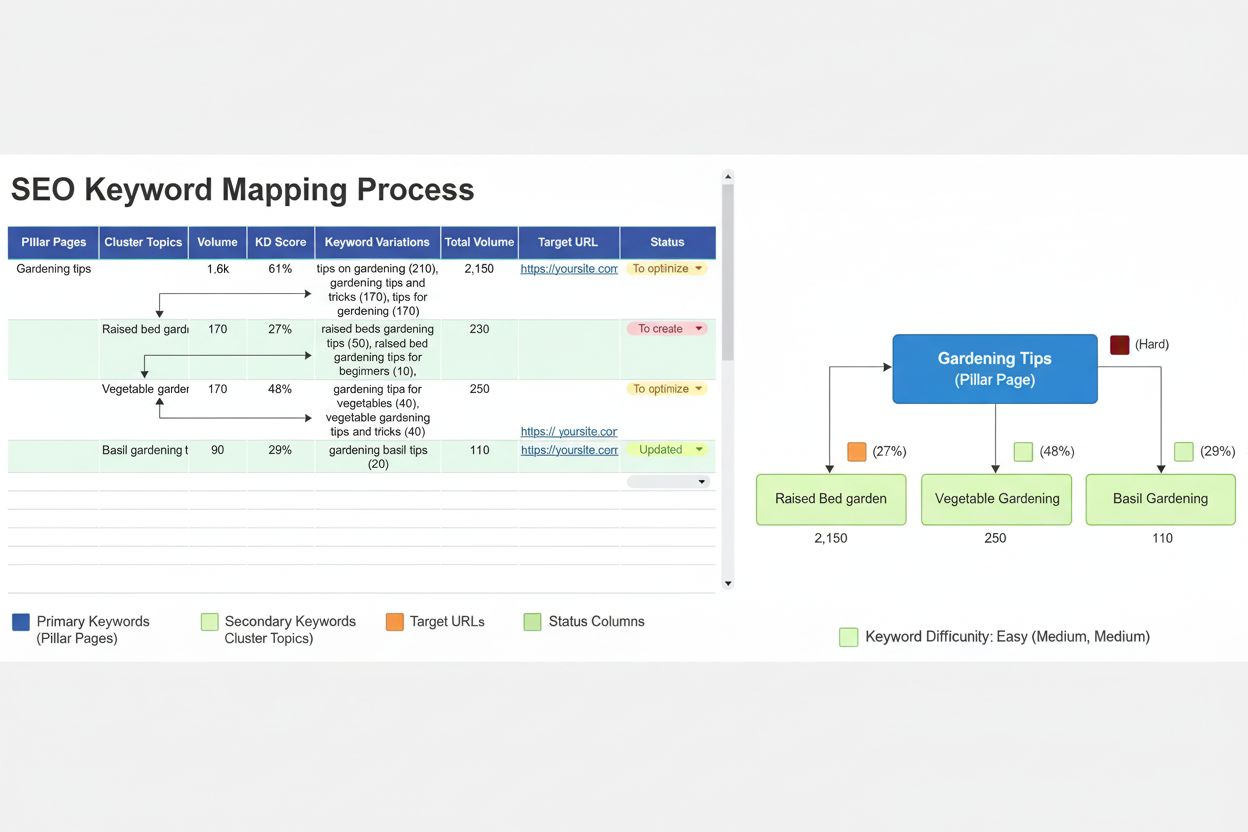
Learn keyword mapping: the process of assigning target keywords to website pages. Discover how to prevent cannibalization, optimize site structure, and improve ...