
Navigational Intent
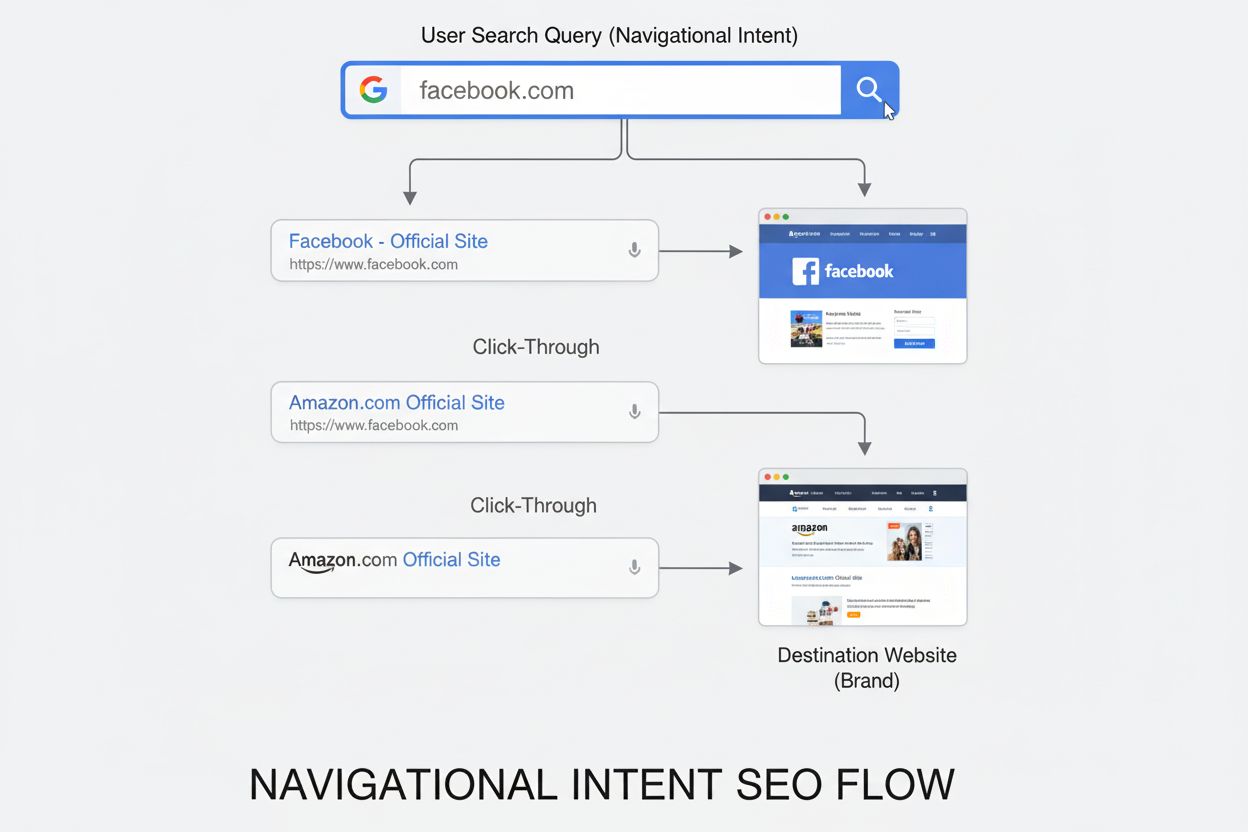
Navigational intent is when users search for specific websites or brands. Learn how it differs from other search intents and why it matters for AI brand monitor...
13 min read

Learn how navigational search intent works in AI systems. Understand why it collapsed from 32% to 2% in ChatGPT and how this shift impacts your brand’s visibility in AI-generated answers.
Navigational search intent for AI refers to when users search to find a specific website, page, or resource directly. In AI systems like ChatGPT and Perplexity, navigational intent has dramatically collapsed from 32% in traditional search to just 2%, as users now expect AI to deliver complete answers without requiring navigation to external sites.
Navigational search intent represents a fundamental shift in how users interact with artificial intelligence systems compared to traditional search engines. In conventional search, navigational intent occurs when users search for a specific website, page, or resource they already know about—such as searching “Facebook login” or “Amazon homepage” instead of typing the URL directly. However, the emergence of AI-powered search engines and chat models has dramatically transformed this behavior pattern, creating an entirely new dynamic that marketers and content strategists must understand.
The traditional definition of navigational intent remains relevant but increasingly obsolete in the AI era. When users interact with AI systems like ChatGPT, Perplexity, or Google’s AI Overviews, they no longer need to navigate anywhere. The AI itself becomes the destination, providing comprehensive answers, recommendations, and solutions directly within the chat interface. This fundamental change has profound implications for how brands maintain visibility and influence in AI-generated responses.
Research analyzing over 50 million real ChatGPT prompts reveals a startling transformation in user behavior. Navigational intent collapsed from 32% in traditional Google search to just 2% in ChatGPT interactions. This 94% decline represents one of the most significant shifts in digital behavior since the rise of search engines themselves. Users are no longer using AI systems to navigate to other websites; instead, they expect AI to complete their tasks entirely within the platform.
| Search Type | Navigational Intent | Informational Intent | Transactional Intent | Generative Intent |
|---|---|---|---|---|
| Traditional Google Search | 32.2% | 52.7% | 0.6% | N/A |
| ChatGPT & AI Systems | 2.1% | 32.7% | 6.1% | 37.5% |
| Change | -94% | -38% | +900% | New Category |
This data demonstrates that navigational search intent is becoming irrelevant in AI-powered environments. The rise of generative intent (37.5% of all ChatGPT prompts) shows users now ask AI to create, draft, and generate content directly. When someone requests “create a marketing budget breakdown for a SaaS startup,” they expect ChatGPT to deliver the answer immediately, not navigate them to external resources. This shift fundamentally changes how brands should approach their AI visibility strategy.
Understanding the complete landscape of search intent helps clarify why navigational intent has become less critical in AI systems. The four primary types of search intent—informational, navigational, commercial, and transactional—each serve different user needs, but AI has reorganized how these intents function.
Informational intent represents searches where users seek knowledge or answers to questions. In traditional search, this accounted for 52.7% of all queries. Users would search “how to fix a leaky tap” or “what is blockchain” expecting to find educational content. In AI systems, informational intent has dropped to 32.7%, as users now phrase these as direct requests: “explain blockchain technology in simple terms.” The AI provides the answer immediately without requiring users to navigate to multiple sources.
Commercial intent occurs when users research products or services before making a purchase decision. These searches include terms like “best budget laptops 2024” or “iPhone vs Samsung comparison.” In traditional search, commercial intent represented 14.5% of queries. In AI systems, this has decreased to 9.5%, but the nature of these searches has changed fundamentally. Users now ask AI to “compare three affordable smartphones and recommend the best one for students,” expecting comprehensive analysis within the chat interface rather than navigating to review websites.
Transactional intent represents the highest-intent searches where users are ready to take action—buying products, signing up for services, or downloading resources. This intent has exploded from just 0.6% in traditional search to 6.1% in ChatGPT, a 900% increase. Users now ask AI systems to help them find deals, compare pricing, and even facilitate purchases directly within the chat. This represents a critical shift where AI systems are becoming transaction facilitators, not just information providers.
The collapse of navigational intent in AI systems stems from a fundamental difference in how these platforms function compared to traditional search engines. Traditional search engines are discovery tools—they help users find websites and pages. Users must click through to external sites to complete their tasks. AI systems, conversely, are completion tools—they deliver finished answers, recommendations, and solutions directly within the interface.
When a user searches for “best running shoes for beginners” on Google, they navigate to review websites, product pages, and comparison guides. The search engine’s job ends when the user clicks a link. When the same user asks ChatGPT “recommend the best running shoes for beginners,” the AI analyzes thousands of products, considers user preferences, and delivers a personalized recommendation with explanations—all without the user ever leaving the chat interface.
This architectural difference eliminates the need for navigational intent as traditionally defined. Users no longer need to navigate to specific websites because AI systems aggregate information and deliver comprehensive answers. The “no intent” category (12% of ChatGPT prompts) further illustrates this shift—these are conversational moments like “thanks,” “make it funnier,” or “actually, I prefer something more affordable.” These interactions represent the connective tissue of AI conversations, something that doesn’t exist in traditional search.
The emergence of generative intent as the dominant search behavior in AI systems (37.5% of all ChatGPT prompts) represents the most significant challenge for brands accustomed to traditional SEO. Generative intent encompasses requests where users ask AI to create, draft, write, analyze, or generate content directly. Examples include “create a social media calendar for Q1,” “draft a professional email,” “write Python code for data analysis,” or “generate 10 blog post ideas about sustainable fashion.”
This shift has profound implications for brand visibility. In traditional search, brands could rank for keywords and capture traffic through search results. In AI systems, brands are cited or recommended within AI-generated responses, but users never click through to the brand’s website. A user asking ChatGPT “recommend project management tools for remote teams” might receive a response that mentions Asana, Monday.com, and Notion—but the user never visits these companies’ websites. The AI provides pricing, features, and comparisons entirely within the chat.
This creates what researchers call the “zero-click search” phenomenon. Millions of impactful micro-transactions and recommendations now occur invisibly, entirely mediated through AI chat experiences. Traditional attribution models collapse because traffic no longer flows from search results to websites to conversions. Instead, influence flows through AI citations and recommendations, making it nearly impossible to track using conventional analytics.
While navigational intent has collapsed, branded searches remain important in AI systems, but they function differently than in traditional search. When users search for “Yoast SEO” on Google, they’re using navigational intent to reach Yoast’s website. In ChatGPT, when users ask “what is Yoast SEO,” they expect the AI to explain the product, its features, and how it compares to alternatives—all without navigating to Yoast’s site.
This distinction is critical for brand strategy. Branded searches in AI systems are opportunities for AI citations, not website traffic. If ChatGPT recommends your product when users ask about solutions in your category, that’s a win—even if users never visit your website. The AI’s recommendation carries weight because users trust the AI’s analysis and synthesis of information.
However, this creates a measurement challenge. Traditional metrics like click-through rates, bounce rates, and conversion rates become less relevant when users never leave the AI interface. Brands must shift to measuring AI visibility, citation frequency, and recommendation accuracy instead of traditional web traffic metrics.
Modern AI systems use sophisticated natural language processing (NLP) and machine learning to understand what users actually want, even when navigational intent is implied. When a user asks “how do I access my Gmail account,” the AI recognizes this as a navigational query (the user wants to reach Gmail) but responds with instructions rather than a link.
AI systems analyze multiple signals to determine intent:
For example, if a user asks “where can I buy Nike running shoes,” the AI recognizes this as a transactional query with navigational elements. Rather than directing users to Nike’s website, the AI might provide information about retailers, pricing, and availability directly within the chat. This represents a fundamental shift from navigation-based discovery to information-based completion.
The collapse of navigational intent from 32% to 2% in AI systems represents an existential pivot moment for SEO and digital marketing. Companies that built their entire strategy around ranking for branded and navigational keywords must fundamentally rethink their approach. The traditional funnel—search → click → website → conversion—no longer applies when AI systems intercept user intent before they ever reach a website.
This shift creates both challenges and opportunities. The challenge is that traditional ranking metrics become less relevant. A company might rank #1 for its branded keyword on Google but receive zero traffic if users ask ChatGPT about the product instead. The opportunity is that companies can now influence AI recommendations through content optimization for AI systems, ensuring their products and services are cited accurately and favorably when relevant.
Brands must now focus on becoming AI-referenced first and referenced best, rather than simply ranking high in search results. This requires creating content that AI systems can easily find, understand, and cite. It means ensuring your brand information is accurate across the web, your content is authoritative and well-structured, and your products are positioned clearly within your category.
Traditional metrics for measuring navigational intent—such as branded keyword rankings and click-through rates—no longer tell the complete story in AI-powered environments. New measurement approaches are necessary to understand how users interact with your brand through AI systems.
| Traditional Metric | AI-Era Metric | What It Measures |
|---|---|---|
| Branded keyword ranking | AI citation frequency | How often your brand appears in AI responses |
| Click-through rate | Citation accuracy | Whether AI describes your brand correctly |
| Website traffic from branded searches | AI recommendation rate | How often AI recommends your product |
| Bounce rate | User engagement with AI response | Whether users find the AI’s answer helpful |
| Conversion rate | Downstream conversions from AI citations | Sales influenced by AI recommendations |
Companies like Profound have developed tools to track prompt volumes and AI citation patterns across platforms like ChatGPT, Perplexity, and Google’s AI Overviews. These tools reveal how often your brand is mentioned, in what context, and whether the mentions are accurate and favorable. This represents the new frontier of brand monitoring in the AI era.
While navigational intent has become less critical, brands must still optimize their presence for AI systems. The focus shifts from ranking for keywords to ensuring accurate, favorable citations in AI-generated responses. Here are key strategies:
The shift from navigational intent to AI-mediated recommendations represents a fundamental transformation in how users discover and interact with brands. Success in this new environment requires understanding that the destination is no longer the website—it’s the AI system itself, and your goal is to be recommended favorably within that system.
Track how your domain and brand appear in AI-generated answers across ChatGPT, Perplexity, and other AI search engines. Get real-time insights into your AI visibility and citations.
Navigational intent is when users search for specific websites or brands. Learn how it differs from other search intents and why it matters for AI brand monitor...

Learn what informational search intent means for AI systems, how AI recognizes these queries, and why understanding this intent matters for content visibility i...
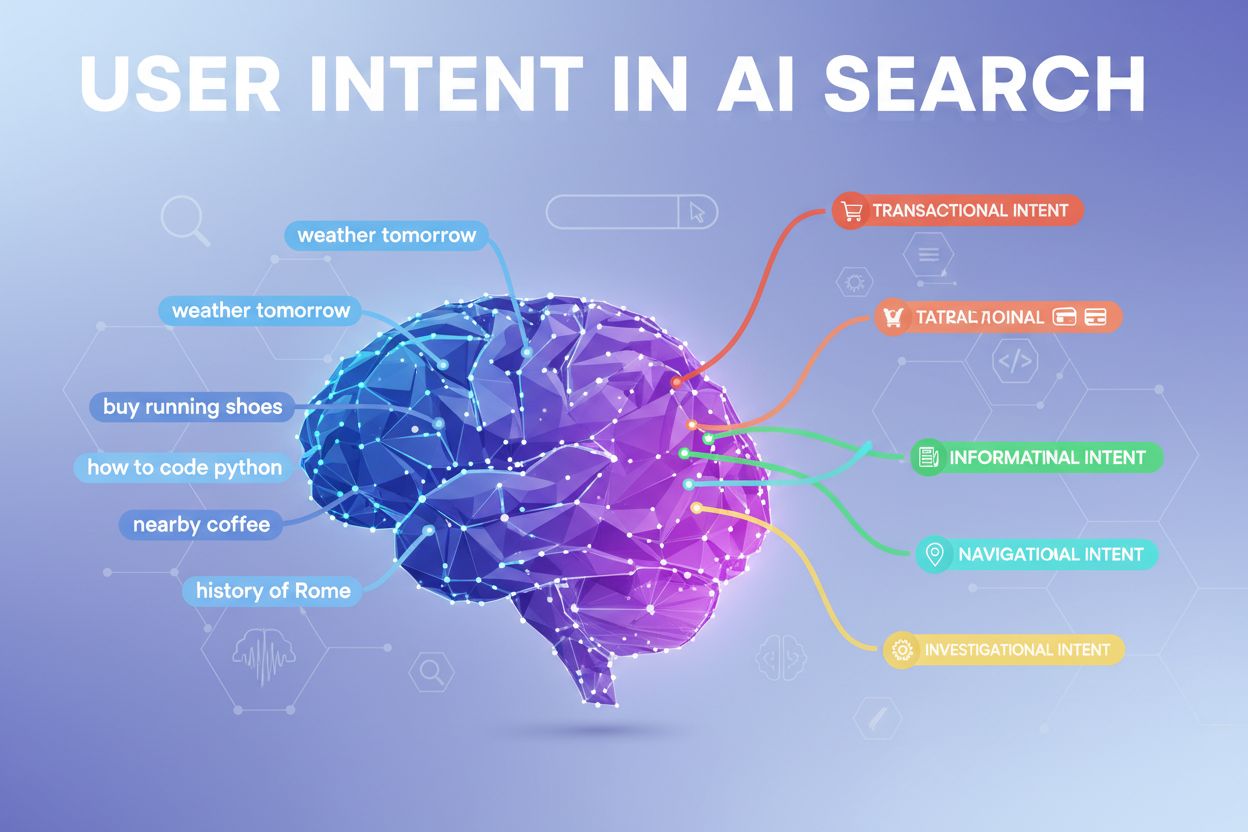
Learn how large language models interpret user intent beyond keywords. Discover query expansion, semantic understanding, and how AI systems determine which cont...