

What is Prompt Engineering for AI Search - Complete Guide
Learn what prompt engineering is, how it works with AI search engines like ChatGPT and Perplexity, and discover essential techniques to optimize your AI search ...
10 min read

Learn how prompt engineering enhances GEO strategy to get your brand cited by AI search engines like ChatGPT, Perplexity, and Google AI Overviews.
Prompt engineering for GEO is the practice of crafting precise, context-rich instructions for AI tools to generate content that AI search engines want to cite. It combines strategic keyword targeting, user intent mapping, and structured content formatting to increase your brand's visibility in AI-generated answers across ChatGPT, Perplexity, Google AI Overviews, and similar platforms.
Prompt engineering for GEO represents a fundamental shift in how brands optimize content for visibility in the age of artificial intelligence. Rather than optimizing solely for traditional search engine rankings, prompt engineering focuses on crafting instructions that guide AI language models to generate content that is both discoverable and citation-worthy. This approach recognizes that generative engines like ChatGPT, Perplexity, and Google AI Overviews synthesize information from multiple sources rather than simply ranking individual pages, creating a new competitive landscape where being cited by AI is as valuable as ranking on Google.
The core principle behind prompt engineering for GEO is precision and context. When you provide an AI system with a well-structured prompt that includes clear objectives, domain context, data-driven details, and specific formatting requirements, the resulting content is more likely to align with what AI systems recognize as authoritative, relevant, and citation-worthy. This is fundamentally different from traditional SEO, where optimization focused on keyword density, backlinks, and technical factors. In GEO, the emphasis shifts to creating content that AI systems can easily parse, understand, and synthesize into their responses.
Successful prompt engineering for GEO rests on four foundational elements that work together to maximize your content’s visibility in AI-generated answers. Understanding and implementing each pillar ensures your prompts produce content that resonates with both AI systems and human readers.
Objective Clarity forms the first pillar. This means defining exactly what you want from the AI with specificity that goes far beyond vague requests. Instead of asking for “a blog about email automation,” a clear objective specifies the format (500-word article), target audience (SaaS growth leads), primary keyword (best email automation software for SaaS), and desired action (conversion-focused with strong CTA). This precision sets the stage for outputs that are immediately usable and strategically aligned with your business goals.
Domain Context serves as the second pillar, embedding essential information about your brand, audience, and competitive position directly into your prompts. This includes brand guidelines, audience personas, product differentiators, unique selling points, and the specific funnel stage the content targets. When you provide this context, AI systems generate content that feels authentic to your brand voice while addressing the specific needs of your target audience. For example, specifying that your product is “20% faster than competitors” ensures the AI emphasizes this advantage throughout the generated content.
Data-Driven Details constitute the third pillar, transforming generic prompts into strategic assets. This involves including your SEO targets (primary and secondary keywords), competitive intelligence (top competitors and their positioning), live SERP insights (what’s currently ranking), and market data that supports your claims. AI systems trained on vast amounts of information respond powerfully to specific data points and research-backed claims, making your content more authoritative and more likely to be selected as a source for AI-generated answers.
Formatting and Output Control represents the fourth pillar, ensuring that AI-generated content arrives in a format ready for publication or further optimization. This includes specifying desired structure (H2 headings, bullet lists, comparison tables), metadata requirements (meta titles and descriptions), call-to-action placement, and any special formatting needs. Clear formatting requirements in your prompts eliminate hours of post-editing work and accelerate your content pipeline from creation to publication.
Understanding how different AI platforms choose sources is essential for effective prompt engineering for GEO. Research into citation patterns across major AI systems reveals that different platforms have distinctly different preferences for which sources they cite, creating opportunities for strategic optimization.
| AI Platform | Citation Preference | Top Cited Sources | Citation Count | Strategy Implication |
|---|---|---|---|---|
| ChatGPT | Broad authority signals | Wikipedia (48%), Reddit (11%), YouTube (11.3%) | ~10 citations per answer | Focus on comprehensive, well-structured content; consider Wikipedia contributions |
| Perplexity | Community wisdom | Reddit (46.7%), Yelp, TripAdvisor, StackExchange | ~4-5 citations per answer | Build presence in forums and community platforms; answer niche questions |
| Google AI Overviews | Balanced authority | Reddit (21%), YouTube (19%), Quora, LinkedIn | ~9.26 citations per answer | Maintain traditional SEO strength; optimize for multiple content formats |
| Bing Chat | Procedural clarity | WikiHow (6.3%), Wikipedia, text-heavy sites | ~3 citations per answer | Create step-by-step guides and how-to content with clear structure |
ChatGPT’s heavy reliance on Wikipedia and established authority sites suggests that building topical authority through comprehensive, well-researched content is essential for ChatGPT visibility. The platform appears to favor sources that demonstrate expertise through depth and breadth of coverage. Perplexity’s preference for Reddit and community-driven content indicates that active participation in forums, Q&A sites, and community discussions significantly increases citation likelihood. Google AI Overviews’ balanced approach suggests that traditional SEO fundamentals remain important while also rewarding multimedia content and community engagement.
Notably, research shows that 87% of ChatGPT’s cited web content comes from Bing’s top 10 search results, revealing that ChatGPT’s web browsing mode essentially piggybacks on Bing’s index. This means that ranking well on Bing dramatically increases your chances of being cited by ChatGPT. Additionally, studies found that 45% of cited pages had negligible traffic, indicating that AI systems will surface long-tail, niche content if it’s the best answer to a specific question, even if traditional Google SEO would never rank it.
Intent mapping represents a critical evolution beyond traditional keyword-focused SEO. Rather than simply targeting keywords, intent mapping requires understanding what users truly want when they search, and structuring your prompts to generate content that satisfies those deeper needs. This approach recognizes that AI systems evaluate content not just for keyword relevance but for contextual completeness, accuracy, and usefulness.
There are four core types of search intent, each requiring different prompt engineering approaches:
Informational Intent addresses queries where users want to learn or understand something (“What is…?”, “How to…?”, “Why does…?”). For informational content, your prompts should specify clear, step-by-step explanations with supporting data and expert insights. Example prompt: “Write a clear, step-by-step guide for SaaS founders explaining [topic], using the keyword ‘[topic] explained for SaaS.’ Include recent data, expert tips, and format with H2 headings, bulleted lists, and a key takeaways section.”
Transactional Intent targets users ready to take action (“Buy,” “Demo,” “Get a quote,” “Sign up”). These prompts should emphasize conversion elements, address common objections, and include strong calls-to-action. Example: “Write a high-conversion landing page for [product], targeting decision-stage e-commerce managers. Use the keyword ‘[product] free trial,’ address key objections about implementation time and data migration, and end with a compelling, urgent CTA.”
Navigational Intent serves users seeking a specific site or resource (“login,” “pricing page,” “knowledge base”). These prompts should focus on clarity, direct answers, and internal linking. Example: “Draft a concise, keyword-optimized FAQ for our platform’s pricing page. Use ‘[platform] pricing details’ as the main keyword, answer the 10 most common pricing questions, and link to the subscription comparison chart.”
Commercial Investigation Intent addresses users comparing solutions (“best X,” “compare,” “top tools for Y”). These prompts should emphasize structured comparisons, data-backed analysis, and clear differentiation. Example: “Write a data-backed comparison of the top 5 [category] tools for SaaS CFOs in 2025, using the keyword ‘best [category] software.’ Include a comparison table with features, pricing, and integrations, highlight unique selling points, and recommend next steps based on company size.”
Moving beyond basic prompt structure, advanced techniques significantly enhance the likelihood that AI systems will cite your content. These methods leverage deep understanding of how language models process information and make citation decisions.
Clarity and Specificity form the foundation of advanced prompting. Vague requests produce vague results that AI systems struggle to cite. Instead of “Write about our product,” specify: “Write a 300-word product FAQ for SaaS CFOs, focusing on onboarding speed and implementation timeline, using the keyword ‘fast SaaS implementation,’ addressing concerns about data migration, and closing with a link to our implementation guide.”
Delimiters and Structured Inputs guide AI systems to organize information in ways that are easy to parse and cite. Using numbered steps, bullet points, or quoted sections creates clear boundaries that help the model deliver organized, multi-part answers. For example: “Provide: (1) Three key benefits with 2-3 sentences each, (2) Two detailed case studies with metrics, (3) One sentence CTA.”
Persona and Scenario Framing increases relevance by assigning the AI a specific role. Instead of generic instructions, try: “Act as a B2B SaaS CMO writing a LinkedIn post for Series A investors about product adoption metrics. Include specific data points, address investor concerns about user retention, and end with a call to schedule a demo.”
Chain-of-Thought Reasoning helps AI systems work through complex analysis step-by-step, producing more thorough and citation-worthy content. Example: “Analyze the competitive landscape for AI analytics tools. First, list the key players and their market positioning. Next, compare features across the top three solutions. Finally, recommend the best fit for enterprise SaaS companies based on scalability and integration capabilities.”
Format Control accelerates your publishing pipeline by specifying exact output structure. Request: “Provide a meta title (60 characters), a meta description (155 characters), a summary table comparing three solutions, and three key takeaways as bullet points.”
Multi-Prompt Chaining orchestrates complex workflows by breaking tasks into sequential steps. Start with research, move to outline creation, then draft the full article, and finally generate metadata. This approach ensures each stage builds on previous work, resulting in more coherent and comprehensive content.
Guardrails and Compliance protect your brand by instructing AI on boundaries. Specify: “Do not mention competitor names negatively. Use only verified data from published studies. Maintain a confident but supportive tone. Ensure all claims are backed by citations.”
Creating effective prompts is valuable, but systematizing prompt engineering transforms it into a sustainable competitive advantage. High-performing organizations build prompt libraries and workflows that turn one-off successes into repeatable processes.
Start by documenting and standardizing what works. Rather than reinventing prompts for every project, develop proven templates for your core content types: blog articles, landing pages, product descriptions, FAQ sections, and ad copy. Tag each template with metadata including target audience, funnel stage, intended outcome, and performance metrics. This creates a living library that your entire team can access and improve over time.
Implement quality control processes that catch brand misalignment, factual errors, or compliance issues before publication. Establish review workflows where generated content passes through fact-checking, brand voice verification, and SEO compliance checks. Set up feedback loops where performance data informs prompt refinements, creating a continuous improvement cycle.
Measure what matters by tracking metrics that connect prompts to business outcomes. Monitor organic traffic lift from prompt-driven content, engagement metrics (time on page, scroll depth, shares), conversion rates for different content types, and pipeline influence (how many leads progress through the funnel after encountering prompt-generated content). Use UTM tracking and content scoring to attribute results back to specific prompt templates.
Operate in feedback cycles where data continuously informs prompt optimization. The cycle flows: Prompt → Content → SERP → Data → Refined Prompt. Monitor how your content ranks, what traffic it drives, how users engage with it, and what conversions result. Use these insights to refine your prompts, test new variations, and double down on what works.
Traditional SEO metrics like organic traffic and click-through rates provide incomplete pictures of GEO success. AI citations often deliver value without generating clicks, as users read AI-synthesized answers without visiting source websites. This requires a new measurement framework focused on visibility and influence rather than traffic alone.
Citation Frequency becomes your primary GEO metric, tracking how often your brand, content, or data appears as a source in AI-generated responses across platforms. Tools like Profound, Athena, and Bluefish AI now provide dashboards showing citation counts across ChatGPT, Perplexity, and Google AI Overviews. Track this metric weekly or monthly to identify trends and correlate citation increases with content launches.
Share of Voice in AI measures your brand’s visibility within AI answers for target topics relative to competitors. If your competitor appears in 15% of “best CRM software” ChatGPT answers while you appear in 5%, you’ve identified a clear optimization opportunity. This metric helps prioritize which topics deserve additional content investment.
Sentiment and Accuracy of Mentions requires qualitative analysis of how AI systems portray your brand. Are mentions positive or neutral? Is the information accurate? Does the AI correctly represent your product’s capabilities? Negative or inaccurate mentions require source correction or additional authoritative content to counterbalance.
Branded Search Lift tracks changes in branded search volume over time, correlating with increased AI visibility. Users who see your brand cited by AI often perform branded searches afterward, making this a lagging indicator of GEO success. A 20-30% increase in branded search volume following a GEO content push suggests your AI visibility strategy is working.
Referral Traffic from AI captures direct clicks from AI platforms when they provide clickable source links. While not all AI answers include links, tracking this traffic separately from organic search reveals the direct impact of AI citations. Research suggests that users referred by AI citations convert 12-18% higher than traditional organic traffic, indicating high-quality, pre-qualified visitors.
As GEO matures, the temptation to game the system grows. Black hat GEO tactics mirror early SEO spam: content scraping, keyword stuffing, thin content creation, and misleading claims. However, AI systems are rapidly developing defenses against these tactics, and the risks far outweigh short-term gains.
Content scraping and republishing represents a common black hat approach where marketers copy high-performing content and republish it, hoping AI systems cite the duplicate instead of the original. This tactic fails because AI systems are increasingly sophisticated at identifying original sources through authorship signals, publication dates, and content evolution patterns. Google’s systems already penalize scraped content, and AI platforms are implementing similar protections.
Thin content creation involves generating dozens of low-quality Q&A pairs or listicles solely to capture AI citations. This approach backfires because AI systems evaluate content quality through multiple signals including depth, accuracy, and usefulness. Thin content gets filtered out as AI algorithms improve, and it damages your domain’s overall authority.
Keyword stuffing and unnatural language attempts to game AI systems by overloading content with keywords or using stilted phrasing. Modern language models easily detect unnatural writing patterns, and such content performs poorly in both AI citations and human readership. AI systems reward natural, conversational language that genuinely serves reader needs.
Misleading claims and unsupported assertions violate the fundamental principle that AI systems reward accuracy and verifiability. Making claims without data backing, exaggerating product capabilities, or misrepresenting competitor offerings gets caught by fact-checking systems and damages your brand’s credibility with both AI and human audiences.
The white-hat approach focuses on creating genuinely useful, accurate, well-researched content that serves user needs. This includes building authentic presence in communities and forums, earning media mentions through legitimate digital PR, creating original research and data, and developing comprehensive resources that become industry standards. White-hat tactics align with AI system incentives because AI companies profit from providing accurate, helpful answers. If your content helps users, AI systems want to cite it.
GEO should not replace traditional SEO but rather complement and enhance it. The most successful organizations integrate GEO into a comprehensive content strategy that addresses both traditional search and AI-powered discovery. This integration requires thinking about content across the entire digital ecosystem, not just your owned website.
Start by maintaining SEO fundamentals. Technical excellence, quality content, and authority building remain essential because AI systems still rely heavily on traditional ranking signals. Google’s AI Overviews use the same ranking systems that power traditional search results. Bing Chat draws from Bing’s search index. Even ChatGPT, which uses Bing’s index, benefits from strong traditional SEO performance.
Expand beyond your website by building presence across the platforms where AI systems source information. This includes Reddit and community forums (heavily cited by Perplexity and Google AI Overviews), YouTube (cited by ChatGPT for video transcripts), Wikipedia (ChatGPT’s preferred source), industry publications, and review sites. A comprehensive GEO strategy allocates resources to managing your brand’s presence across these channels, not just optimizing your website.
Create content for the entire funnel because AI systems synthesize information from TOFU (Top of Funnel), MOFU (Middle of Funnel), and BOFU (Bottom of Funnel) content to answer complex queries. When someone asks “What’s the best accounting software for freelance designers?”, the AI needs to understand what accounting software is (TOFU), how different solutions compare (MOFU), and which tools work best for specific use cases (BOFU). To win citations for high-value queries, you need authoritative content across all funnel stages.
Develop comparative and superlative content because AI systems frequently synthesize comparisons and rankings. Create “X vs Y” comparison articles, “Top 10” listicles with clear criteria, and “Best tools for [specific use case]” guides. Structure these with comparison tables, clear differentiation, and data-backed recommendations. When AI systems need to answer comparative queries, they’ll cite your well-structured comparisons.
Optimize for multiple content formats because different AI systems prefer different formats. ChatGPT favors comprehensive, well-researched articles. Perplexity values community discussions and forum posts. Google AI Overviews cite multimedia content including videos and infographics. YouTube transcripts get cited frequently. Create content in multiple formats—written articles, videos, infographics, interactive tools—to maximize citation opportunities across platforms.
Prompt engineering for GEO represents a fundamental evolution in how brands optimize for visibility in an AI-driven information landscape. Rather than competing solely for search rankings, successful organizations now compete for citations in AI-generated answers, a shift that requires new skills, new metrics, and new strategic thinking. By mastering prompt engineering—crafting precise, context-rich instructions that guide AI systems to generate citation-worthy content—brands can ensure their expertise, products, and perspectives reach audiences through the discovery channels they increasingly prefer.
The organizations that succeed in GEO will be those that combine technical prompt engineering skills with deep understanding of user intent, commitment to content quality, and strategic thinking about the entire digital ecosystem. They’ll build prompt libraries that scale content creation while maintaining quality. They’ll measure success through citation frequency and brand visibility rather than clicks alone. And they’ll recognize that the best GEO strategy is fundamentally the same as the best content strategy: create genuinely useful, accurate, well-researched information that serves real user needs. When you do that, both AI systems and human readers will cite you.
Track how often your brand appears in AI-generated answers across ChatGPT, Perplexity, and Google AI Overviews. Get real-time insights into your GEO performance and optimize your content strategy.
Learn what prompt engineering is, how it works with AI search engines like ChatGPT and Perplexity, and discover essential techniques to optimize your AI search ...
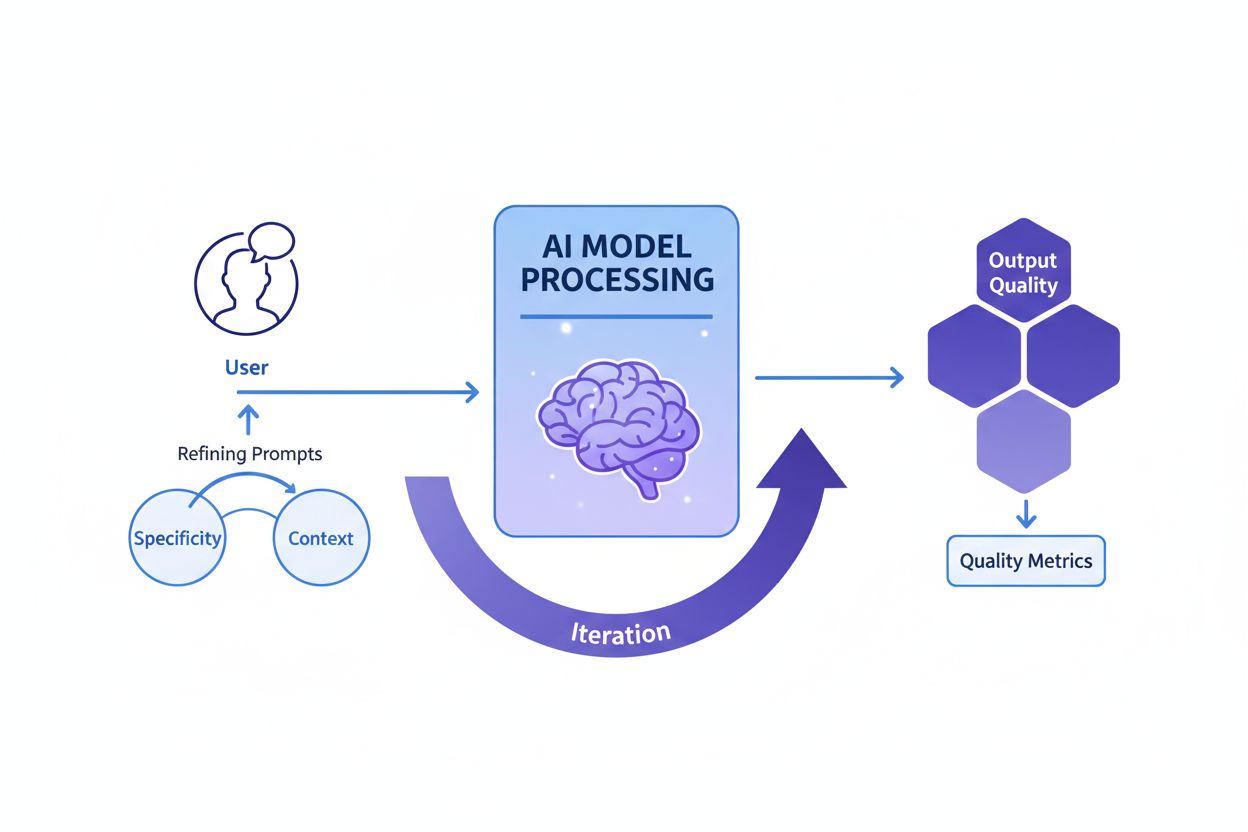
Prompt engineering is the art of structuring instructions to guide generative AI models. Learn techniques, best practices, and how it impacts AI visibility and ...
Community discussion on how prompt engineering relates to GEO (Generative Engine Optimization). Understanding the connection between AI prompts and content opti...