

How Do I Structure Content for AI Citations? Complete Guide for 2025
Learn how to structure your content to get cited by AI search engines like ChatGPT, Perplexity, and Google AI. Expert strategies for AI visibility and citations...
8 min read

Learn how to structure Q&A content for AI systems. Discover best practices for question formatting, answer optimization, schema markup, and how to increase your brand visibility in AI-generated responses.
Q&A content structure is a format where information is organized as question-and-answer pairs that AI systems can easily parse, understand, and cite. This format aligns with how AI language models process information and how users naturally search for answers.
Q&A content structure refers to the organization of information in question-and-answer format that is specifically optimized for how artificial intelligence systems process, understand, and cite content. Unlike traditional narrative content, Q&A structure breaks information into discrete, answerable units that align perfectly with how AI language models like ChatGPT, Claude, and Google’s AI Overviews interpret and extract information. This format has become essential because AI systems are fundamentally designed to answer questions, making Q&A content naturally aligned with their core function and processing patterns.
The importance of Q&A structure cannot be overstated in today’s AI-driven search landscape. When AI referrals to top websites increased 357% year-over-year in 2025, organizations realized that traditional SEO approaches alone were insufficient. AI systems don’t just rank pages—they parse content into smaller, structured pieces that can be evaluated for authority and relevance. Q&A content provides exactly this structure, making it dramatically more likely to be selected for inclusion in AI-generated answers and featured snippets.
AI systems employ a sophisticated multi-step process when evaluating Q&A content. First, they identify text that represents a question by looking for question marks, interrogative words (who, what, where, when, why, how), and question-like sentence structures. The system then performs intent classification to determine what type of information is being sought—whether it’s factual information, instructions, comparisons, or opinions. This classification step is crucial because it helps the AI understand the context and scope of the answer needed.
Next, the AI system creates a contextual framework by analyzing surrounding content to better understand the full meaning of both questions and answers. This is why Q&A content performs better when it’s well-integrated into broader content rather than appearing in isolation. The system then performs answer matching, using semantic understanding to evaluate how directly and completely each answer addresses the identified question. Finally, each potential answer receives a confidence score based on its directness, completeness, authority signals, and context alignment. Higher confidence scores mean your content is more likely to be featured prominently in search results or AI responses.
| Processing Stage | What AI Evaluates | Impact on Your Content |
|---|---|---|
| Question Recognition | Question marks, interrogative words, sentence structure | Content must be formatted as clear questions |
| Intent Classification | Type of information sought (factual, instructional, comparative) | Answers must match the specific intent type |
| Context Building | Surrounding content and semantic relationships | Q&A should be integrated into relevant context |
| Answer Matching | Directness and completeness of response | Answers must directly address the question |
| Confidence Scoring | Authority signals and semantic clarity | Strong signals increase citation probability |
The questions you choose to answer form the foundation of an effective Q&A strategy for AI optimization. Effective questions must be based on actual user search behavior rather than internal assumptions about what people want to know. Start by analyzing your Google Search Console data to identify question-based queries that already drive traffic to your site. These validated questions represent real search intent and should be prioritized in your Q&A content strategy.
Beyond Search Console, leverage specialized question research tools like AnswerThePublic, AlsoAsked, and People Also Ask data extractors to discover the specific phrasing users employ when searching. Community mining through industry forums, Reddit, Quora, and social media reveals authentic questions your audience is asking in their own words. This is particularly valuable because AI systems prioritize content that matches natural language patterns. When your FAQ questions mirror the exact phrasing people use in searches, you dramatically increase the likelihood that AI systems will match your content to user queries.
Competitor analysis also provides valuable insights—review how competitors structure their Q&A content to identify gaps and opportunities. Finally, use AI tools themselves to generate comprehensive question lists by prompting ChatGPT or Claude with queries like “What questions do people commonly ask about [topic]?” This approach combines human insight with AI-generated possibilities to create comprehensive question coverage.
The way you structure answers significantly impacts how AI systems evaluate and prioritize your content. Direct answers should come first, before supporting details or context. This “answer-first” structure is critical because AI systems are trained to identify and extract the most relevant information quickly. A well-structured answer begins with a one-sentence direct response (10-15 words) that provides the core answer, followed by supporting details and examples that provide context and credibility.
Semantic clarity is essential for AI comprehension. This means using precise, unambiguous language that clearly expresses your ideas. Avoid vague terms like “innovative” or “cutting-edge” without specific context. Instead, anchor claims in measurable facts. For example, rather than saying “our solution is fast,” specify “processes queries in under 100 milliseconds.” Include relevant terminology and synonyms throughout your answer to reinforce meaning and help AI systems connect related concepts. This semantic reinforcement helps AI understand the full scope of your expertise.
The featured snippet formula provides a proven structure: begin with a direct, concise answer (25-40 words), follow with a paragraph of supporting details, and then include either a bulleted list of examples or a numbered list if the question requires a process explanation. This layered approach serves multiple purposes—it provides immediate value to users seeking quick answers while also giving AI systems multiple extraction points for different query types.
Beyond content itself, the visual structure and formatting of your Q&A content significantly impacts AI understanding. Use clear heading hierarchies with H3 or H4 tags for questions and regular paragraph text for answers to create explicit relationships that AI systems can easily identify. Keep paragraphs short (3-5 sentences) to improve readability for both users and AI systems. Short paragraphs work because they isolate single ideas, making it easier for AI to extract and cite specific concepts.
Strategic formatting using bullet points, bold text, and tables helps AI identify and extract key information. However, use these formatting elements purposefully—not every line needs to be a bullet point. Bullets work best for key steps, comparisons, or highlights. Maintain consistent terminology between questions and answers to strengthen semantic connections. When you use the same key terms in both the question and answer, you reinforce relevance signals that help AI systems understand the relationship between them.
Tables deserve special attention because they present structured data that AI systems can interpret differently than sequential text. Well-designed tables with clear headers and logical organization help AI extract comparative information effectively. Avoid decorative symbols, excessive punctuation, or complex formatting that might confuse AI parsing. Keep punctuation simple and consistent—periods and commas are clearer than em dashes or strings of exclamation marks.
FAQ schema markup is structured data code that explicitly tells search engines and AI systems that specific content is organized in question-and-answer format. This markup, typically implemented using JSON-LD format, provides clear semantic signals that dramatically enhance AI visibility. When you implement FAQ schema correctly, you’re essentially creating a machine-readable version of your Q&A content that AI systems can confidently interpret and cite.
The benefits of proper FAQ schema implementation are substantial. Your content becomes eligible for rich results in Google Search, which can significantly increase your visual footprint in search results. FAQ schema also increases the likelihood of inclusion in AI Overviews, People Also Ask boxes, and voice search responses. For voice assistants like Google Assistant, Alexa, and Siri, properly marked-up FAQ content is frequently used as the authoritative answer because the schema provides clear confidence signals.
Implementing FAQ schema requires technical precision. The basic structure includes a FAQPage entity containing an array of Question items, each with an acceptedAnswer property. All FAQ content must be visible to users on page load—hidden or dynamically loaded content violates Google’s guidelines and will be ignored by AI systems. Each page should feature unique FAQ content relevant to that specific page’s topic. Answers must be self-contained and comprehensible without additional context. Always validate your markup using Google’s Rich Results Test and Schema.org validator to catch technical errors before deployment.
Strategic placement of Q&A content throughout your website dramatically improves both user experience and AI visibility. Rather than treating FAQs as an afterthought buried at the bottom of a page, integrate Q&A content where users naturally hesitate or need reassurance. Place high-value FAQs near your calls to action, within landing pages, or alongside pricing sections where buyers often have last-minute doubts. This positioning meets users where their questions arise and keeps them moving toward conversion.
Product pages, service descriptions, and blog posts all benefit from context-specific Q&A sections that address likely objections in real time. By distributing Q&A content strategically across your site, you increase your relevance for AI Overviews by providing clean, structured answers across multiple topics and intents. This distributed approach also improves your overall content depth and topical authority, which are important ranking factors for both traditional search and AI systems.
Consider creating dedicated Q&A pages for complex topics that require comprehensive coverage. These pages signal to AI systems that your content is specifically created to answer particular questions. Dedicated pages also create opportunities for strategic internal linking between related questions, which strengthens your overall site structure and topical authority.
Tracking the performance of your Q&A content requires monitoring both traditional SEO metrics and AI-specific indicators. Featured snippet acquisition is a key metric—monitor how many featured snippets your Q&A content captures using tools like SEMrush or Ahrefs. These snippets represent prime real estate in search results and often serve as the basis for AI-generated answers. Track your click-through rate (CTR) for Q&A-formatted pages compared to traditional content in Google Search Console to understand how formatting impacts user behavior.
Monitor how frequently your content appears in “People Also Ask” boxes using specialized tools, as these boxes represent validated questions with significant search volume. Regularly test your target questions in ChatGPT, Claude, Perplexity, and other AI assistants to see if your content is being referenced. This direct testing provides invaluable insights into how AI systems are actually using your content. Track ranking positions specifically for question-based queries to understand how your Q&A content performs in traditional search results.
Voice search performance is increasingly important as voice assistants become more prevalent. Use voice search testing tools to check if your content is being served for voice queries. Based on these metrics, continuously refine your approach by expanding successful Q&A patterns, reformulating underperforming content, and regularly adding new questions based on emerging search trends. The most successful organizations treat their Q&A content as a living asset that requires ongoing optimization and updates.
Many organizations make critical errors when implementing Q&A content that undermines its effectiveness for AI systems. Vague or overly broad questions that don’t match actual search patterns fail to capture real user intent. Questions should be specific and reflect how people actually search. Avoid compound questions with multiple parts—each question should address a single, clear concept. Questions that don’t match actual search patterns won’t drive visibility because AI systems are trained to match user queries with relevant content.
Incomplete or evasive answers damage both user trust and AI confidence scores. Be transparent about pricing, timelines, deliverables, and support. When you provide clear answers to potential deal-breakers, users are far more likely to convert. Avoid hiding important answers in tabs or expandable menus because AI systems may not render hidden content, causing key details to be skipped. All FAQ content must be visible on page load to be properly indexed and evaluated by AI systems.
Inconsistent terminology between questions and answers weakens semantic connections that help AI understand relationships. Use the same key terms in both questions and answers to reinforce relevance. Avoid long walls of text that blur ideas together and make it harder for AI to separate content into usable chunks. Keep answers concise and focused. Don’t rely on PDFs for core information—while search engines can index text-based PDFs, they often lack the structured signals that HTML provides. For critical details, use HTML to ensure clarity and better parsing by AI systems.
Q&A content works best as part of a comprehensive content strategy rather than in isolation. Integrate Q&A sections into your blog posts, service pages, and product descriptions to provide context-specific answers that address likely objections. This integration improves user experience by allowing readers to find answers within comprehensive guides without navigating to separate pages. It also contributes to overall content depth, which is an important ranking factor for both traditional search and AI systems.
Create content clusters where multiple Q&A pages comprehensively cover a specific topic area. This clustering approach signals topical authority to AI systems and creates opportunities for strategic internal linking. When you have a cluster of related Q&A content, each piece reinforces the others, creating a stronger overall signal of expertise. This approach also improves user experience by providing multiple entry points to your content and clear navigation paths between related topics.
Regularly update and refresh your Q&A content to maintain relevance and freshness. As your products evolve, new features launch, and customer expectations shift, revisit and update your FAQs accordingly. Outdated or incomplete answers signal neglect to both users and search engines. Frequent updates boost freshness signals that help your content stay visible in search and AI Overviews. Treat your Q&A content as part of your ongoing optimization cycle—review performance data, identify emerging search trends, and refine your answers accordingly.
Track how your content appears in AI-generated responses across ChatGPT, Perplexity, Google AI Overviews, and other AI search engines. Get real-time alerts when your brand is mentioned.
Learn how to structure your content to get cited by AI search engines like ChatGPT, Perplexity, and Google AI. Expert strategies for AI visibility and citations...
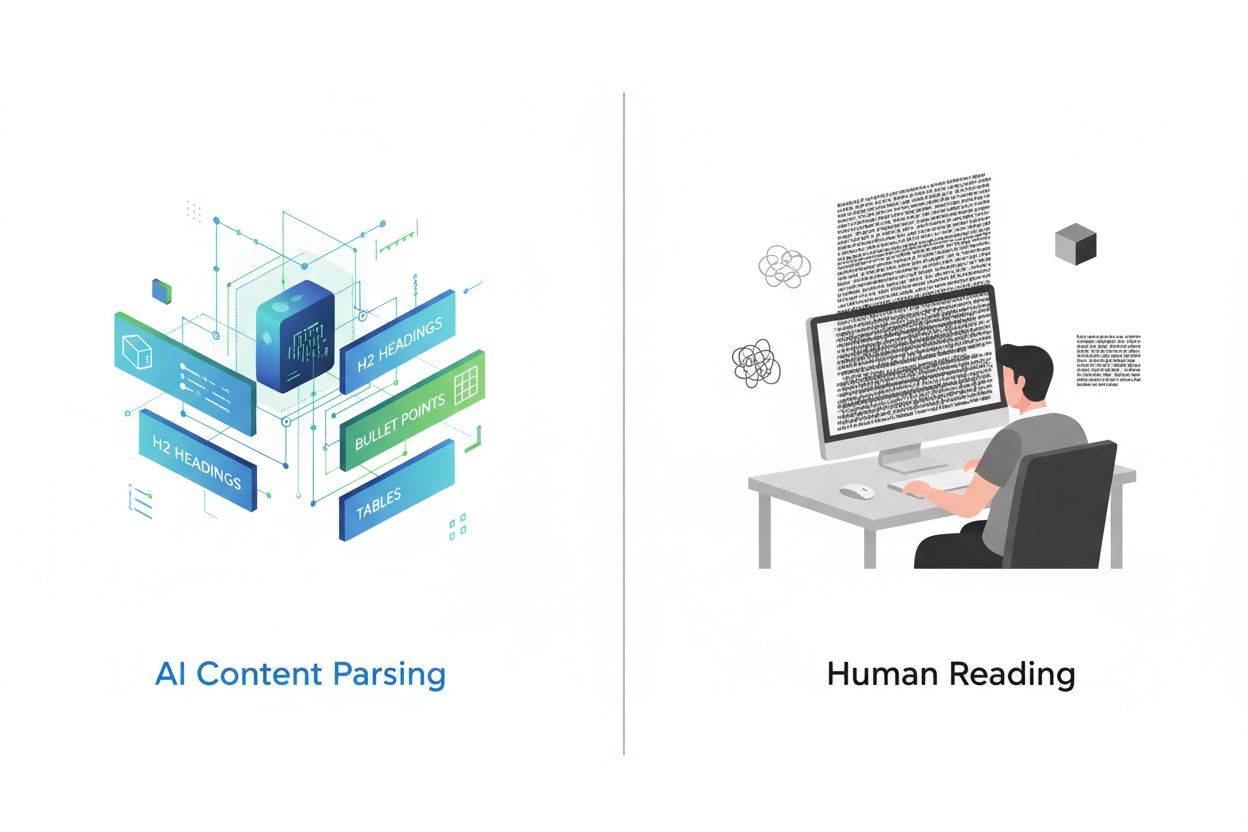
Learn how to restructure your content for AI systems with practical before and after examples. Discover techniques to improve AI citations and visibility across...
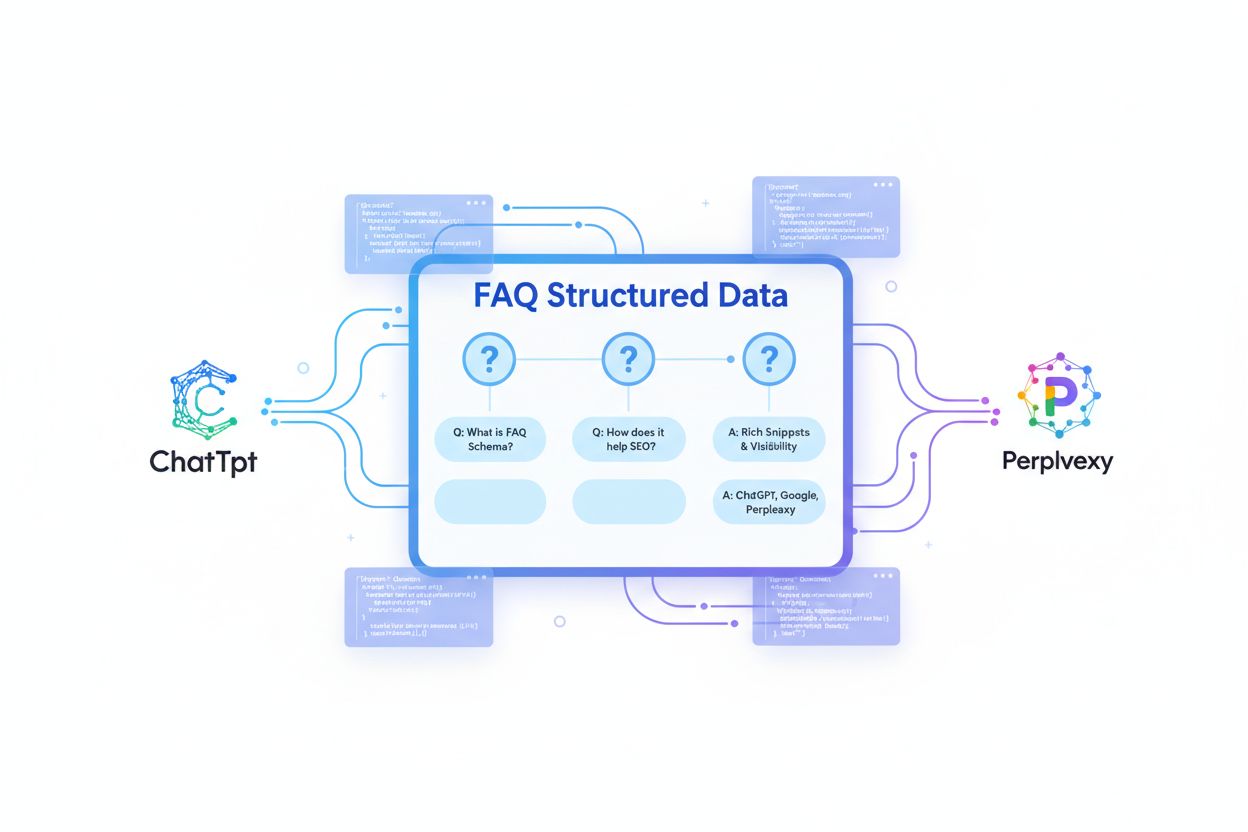
Learn how FAQ sections with proper schema markup improve visibility in AI-generated answers from ChatGPT, Perplexity, and Google AI Overviews. Optimize your con...