
Press Release Optimization for AI
Learn how to optimize press releases for AI systems, LLMs, and answer engines. Discover structured formatting, distribution strategies, and best practices for m...
8 min read

Discover how press releases influence AI search results on ChatGPT, Perplexity, Google AI Overviews, and Claude. Learn why 57% of companies use them for AI visibility.
Press releases serve as trusted, authoritative sources that AI systems like ChatGPT, Perplexity, and Google AI Overviews use to train their models and generate answers. When properly formatted and distributed, press releases significantly increase brand visibility in AI search results, with 57% of companies reporting increased visibility for their products and brands through strategic press release distribution.
Press releases have evolved from traditional media announcements into critical components of artificial intelligence training data and generative engine optimization (GEO). In today’s AI-driven search environment, press releases function as authoritative sources that large language models (LLMs) like ChatGPT, Perplexity, Google AI Overviews, and Claude actively scrape, index, and cite when generating answers to user queries. Unlike traditional search engine optimization (SEO), which focused on ranking individual web pages, the modern press release serves a dual purpose: communicating with human audiences while simultaneously feeding the algorithms that power AI search systems. According to PR Newswire’s 2025 Global State of the Press Release Report, 57% of communications professionals report that press releases have increased visibility for their brand or products, demonstrating the tangible impact of strategic press release distribution in the AI era. The shift from SEO to GEO represents a fundamental change in how brands must approach content strategy, making press releases more valuable than ever before.
Large language models are trained on vast amounts of internet content, and press releases represent a particularly valuable data source because they are timestamped, structured, and typically contain verified information about companies, products, and announcements. When AI systems encounter a user query, they search their training data for relevant information to synthesize into an answer. Press releases are heavily weighted in this process because they are considered authoritative, first-hand sources directly from organizations. According to industry experts, AI systems use press releases to accomplish two critical functions: first, they “know” about your company by incorporating press release information into their understanding of industries, brands, and products; second, they “verify” your company’s information by comparing press release content against other sources to confirm accuracy before responding to user questions. This verification process means that consistent, accurate press release distribution across multiple channels directly influences how AI systems represent your brand in their responses. The more frequently and consistently your press releases appear across different platforms and publications, the more weight AI systems assign to your brand narrative. This is fundamentally different from traditional media relations, where securing coverage in a few major outlets was the primary goal.
| AI Platform | Primary Use of Press Releases | Citation Likelihood | Optimization Priority | Distribution Strategy |
|---|---|---|---|---|
| ChatGPT | Training data for knowledge base; answers to business queries | High - directly cites sources | Clear structure, keyword placement | Broad syndication across multiple channels |
| Perplexity | Real-time information retrieval; current events and announcements | Very High - emphasizes source attribution | Recency and specificity critical | Wide distribution with topical relevance |
| Google AI Overviews | Supplementary information for search results; fact verification | High - cross-references with traditional search | SEO fundamentals + AI formatting | Multi-channel amplification |
| Claude | Context for comprehensive answers; industry insights | Medium-High - depends on query type | Natural language clarity | Syndication to specialized publications |
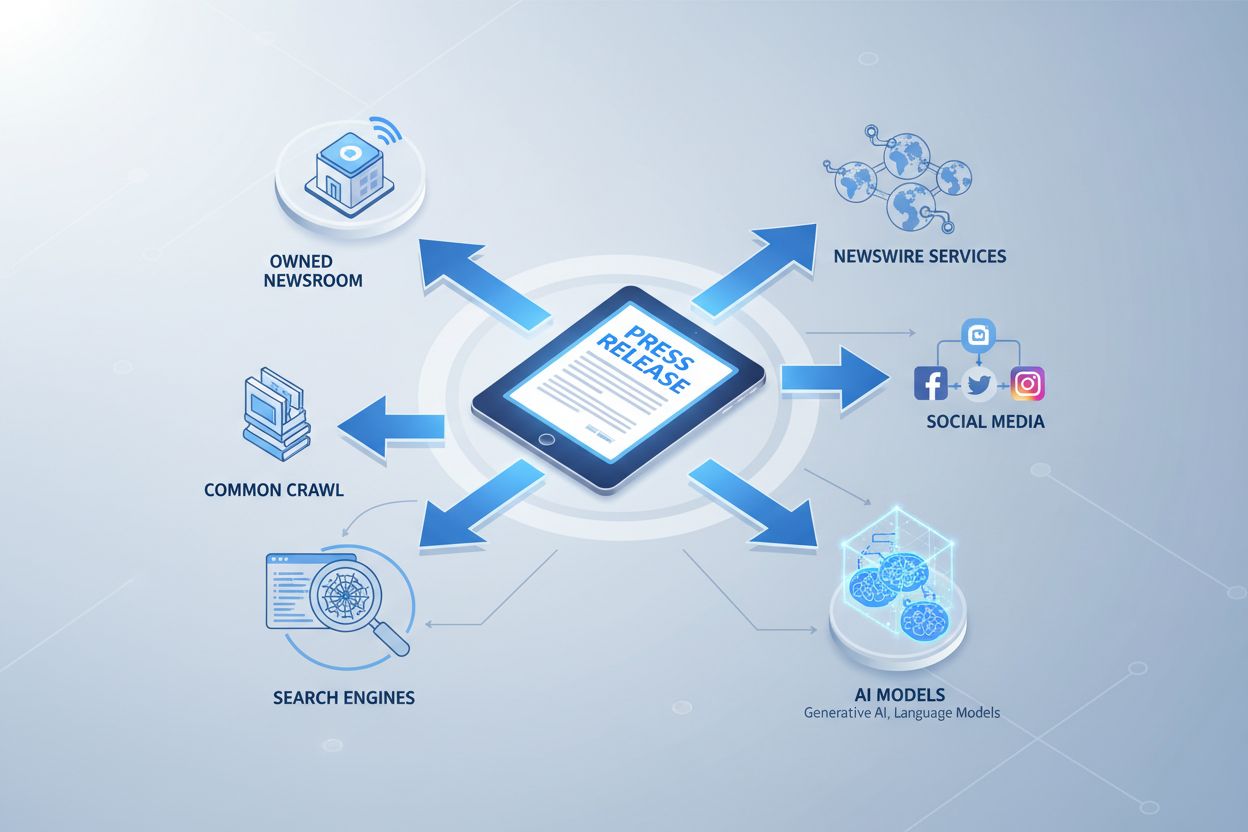
Strategic press release distribution operates on a fundamentally different principle than traditional media outreach. Rather than targeting a handful of major news outlets, modern GEO strategy emphasizes broad syndication across numerous publications, databases, and platforms. According to Jeremy Fields, VP of Corporate Development at Newsmatics, “AI models treat large legacy publications the same as they do your local newspaper. What the AI models love is relevance.” This means that a press release about a new software feature published on a technology-focused publication carries more weight with AI systems than the same release on a general news portal. The distribution strategy should include topical and geographic relevance, ensuring your press release reaches publications and databases that align with your industry and target audience. When a press release is distributed to hundreds of publications simultaneously, AI systems encounter your information from multiple sources, which increases the likelihood they will incorporate it into their training data and cite it in responses. Additionally, 91% of communications professionals reuse their press release content on other channels, including social media, blogs, and email newsletters. This multichannel amplification creates multiple touchpoints for AI systems to discover and index your content, significantly expanding your AI search visibility.
Proper formatting is essential for ensuring that AI systems can effectively parse and understand your press release content. Large language models process information more effectively when it follows predictable, structured patterns. The most critical formatting elements include a strong headline and subheading that immediately convey the news, a publication date and location for context, and a lead paragraph following the inverted pyramid style that summarizes the most important information first. Research shows that LLMs give disproportionate weight to the first 50 words of a press release, making your opening paragraph crucial for AI visibility. Beyond the opening, clear and natural language significantly improves AI comprehension compared to jargon-heavy or overly complex writing. For example, “The company will leverage its synergistic capabilities to effectuate a paradigm shift” is far less effective for AI systems than “The company will use its team’s skills to grow the business.” The second version is clearer, more direct, and easier for language models to understand and utilize. Strategic keyword placement remains important, but keyword stuffing is counterproductive—AI systems can easily detect and penalize this tactic. Instead, focus on placing primary keywords in your headline, subheading, and lead paragraph, then weave secondary keywords naturally throughout the release. Readability enhancements like descriptive subheadings, bulleted lists for key takeaways, and short paragraphs help both human readers and AI crawlers navigate your content more effectively.
Different AI platforms have distinct approaches to sourcing and citing information, which means your press release strategy should account for these variations. ChatGPT relies on training data from its knowledge cutoff date, making consistent historical press release distribution important for long-term visibility. When users ask ChatGPT about your company or industry, the model draws from press releases it encountered during training. Perplexity, by contrast, emphasizes real-time information retrieval and source attribution, meaning recent press releases with clear publication dates are particularly valuable. Perplexity users often see direct citations to press releases in the platform’s responses, making it critical to ensure your releases are properly formatted with publication metadata. Google AI Overviews integrate press releases into traditional search results, meaning your press release strategy should align with both SEO best practices and AI formatting requirements. This dual optimization ensures visibility across both traditional search and AI-generated summaries. Claude tends to provide more comprehensive, nuanced answers that benefit from well-researched, detailed press releases. When distributing press releases, consider which AI platforms your target audience uses most frequently and tailor your distribution channels accordingly. For B2B companies, Perplexity users may be more prevalent, while consumer brands might prioritize ChatGPT visibility. This targeted approach, combined with broad syndication, maximizes your overall AI search presence.
The strategic importance of press releases in AI search extends beyond visibility metrics to tangible business outcomes. According to PR Newswire’s 2025 report, more than half of companies globally are now using generative AI to craft some press release components, indicating widespread recognition of press releases’ AI importance. Additionally, 9 in 10 companies now include multimedia in their press releases, underscoring the importance of visual content in modern digital storytelling. The report also found that 93% of communicators in the US and 91% in EMEIA expect to send the same or more press releases in the next year, demonstrating sustained investment in this channel despite predictions of its decline. Companies that strategically distribute press releases across multiple channels report measurable improvements in brand awareness, customer acquisition, and thought leadership positioning. When your press releases appear in AI-generated answers, you gain credibility and visibility with audiences who are actively seeking information. This is particularly valuable for companies launching new products, announcing partnerships, or establishing industry expertise. The ability to control your brand narrative through press releases becomes increasingly important as AI systems become the primary information source for many users. By ensuring your press releases are discoverable and citable by AI systems, you directly influence how your brand is represented in AI search results.
As AI technology continues to evolve, the role of press releases will likely become even more central to brand visibility and reputation management. Generative engine optimization (GEO) is emerging as a distinct discipline separate from traditional SEO, with press releases serving as a cornerstone tactic. Industry experts predict that AI systems will become increasingly sophisticated in evaluating source credibility, which means press releases from established, reputable distribution channels will carry even more weight. The integration of agentic AI tools that can autonomously research and synthesize information will create new opportunities for press releases to influence AI-generated content. Companies that establish consistent, high-quality press release programs now will build significant competitive advantages as AI search becomes the dominant discovery mechanism. Additionally, the ability to monitor where your press releases appear in AI search results—across platforms like ChatGPT, Perplexity, Google AI Overviews, and Claude—will become essential for measuring PR effectiveness. Tools that track brand mentions and press release citations in AI-generated answers provide valuable insights into how your content is being used and how your brand narrative is being shaped by AI systems. This represents a fundamental shift from traditional media monitoring to AI search monitoring, requiring new measurement frameworks and optimization strategies. Organizations that adapt their press release strategies to this new reality will maintain stronger brand control and visibility in the AI-driven information landscape.
+++
Track where your press releases appear in AI-generated answers across ChatGPT, Perplexity, Google AI Overviews, and Claude with AmICited's real-time monitoring platform.
Learn how to optimize press releases for AI systems, LLMs, and answer engines. Discover structured formatting, distribution strategies, and best practices for m...
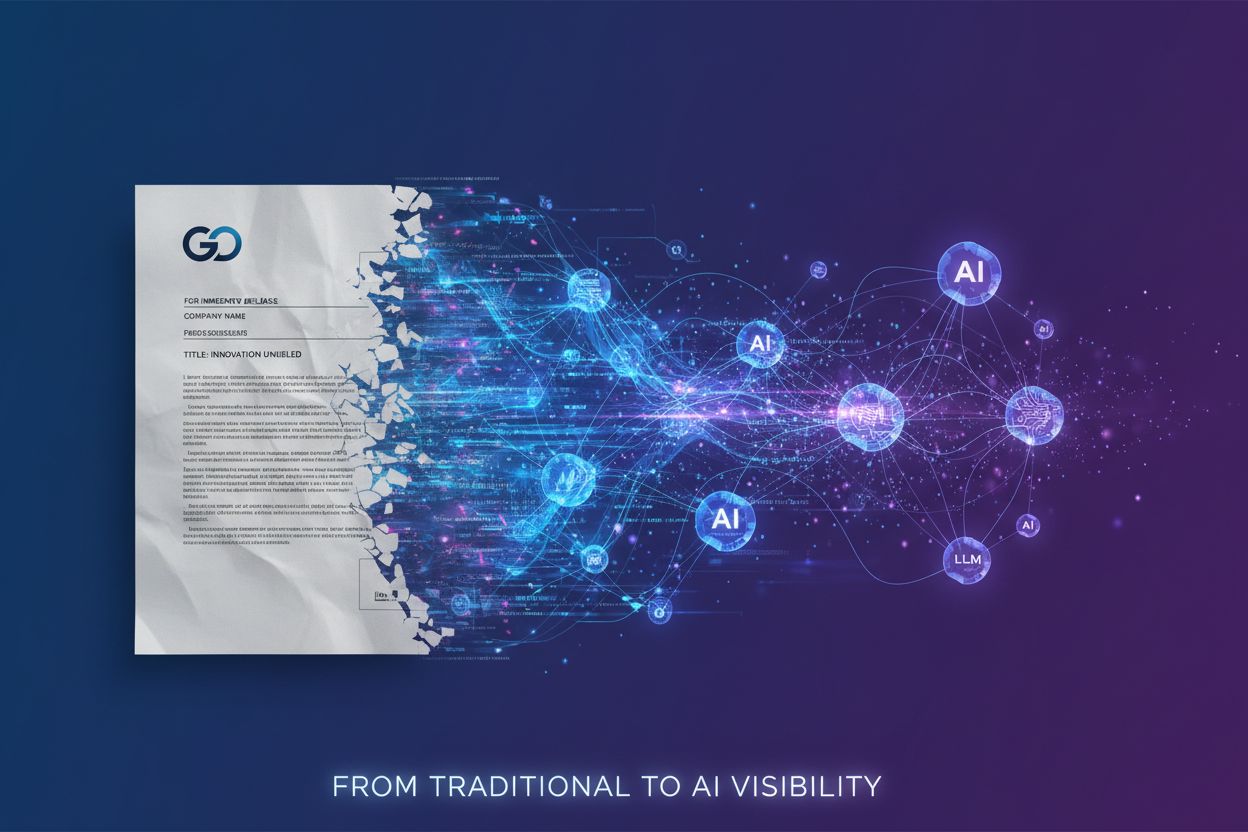
Discover why press releases matter more than ever for LLM visibility. Learn how to optimize press releases for AI citations and track your brand's presence in C...

Learn how to optimize press releases for AI visibility across ChatGPT, Gemini, Perplexity and other AI search engines. Discover GEO best practices, formatting s...