
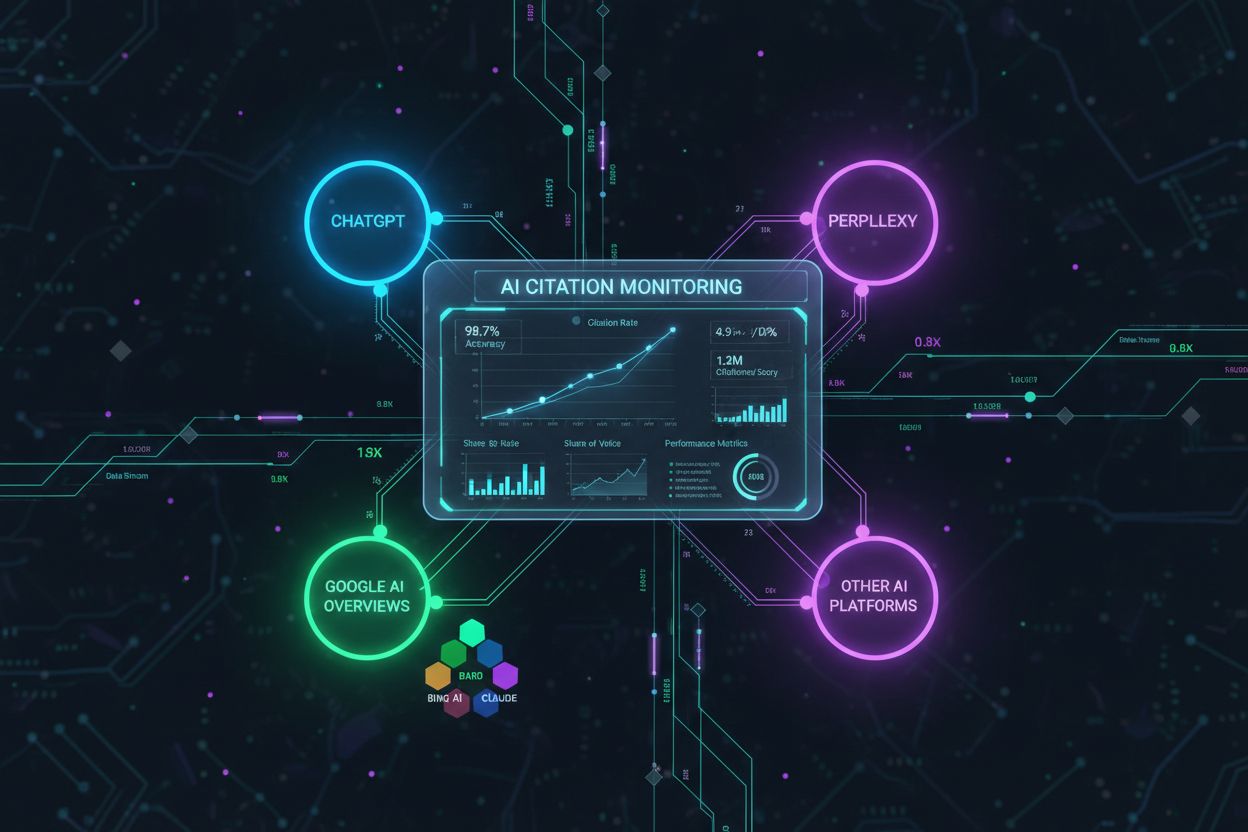
GEO Optimization Checklist: Print and Follow
Complete GEO optimization checklist for AI monitoring. Printable guide to optimize your content for Google AI Overviews, ChatGPT, and Perplexity citations.
7 min read

Discover which AI platforms to optimize for in 2025. Learn platform-specific strategies for ChatGPT, Perplexity, Claude, Google AI, and emerging AI search engines.
Brands should prioritize optimizing for ChatGPT (81.84% market share), Perplexity (11.06%), Google AI Overviews, Claude, and emerging platforms like Meta AI and DeepSeek. Each platform has unique ranking factors and citation behaviors, requiring tailored optimization strategies beyond traditional SEO to ensure visibility in AI-generated answers.
Generative Engine Optimization (GEO) has fundamentally transformed how brands achieve visibility in search. Unlike traditional SEO, which focuses on ranking positions in search results pages, GEO targets AI-powered answer engines that synthesize information from multiple sources to provide direct answers to user queries. The shift is dramatic: 58% of consumers have replaced traditional search engines with generative AI tools for product recommendations, and traditional organic search traffic is expected to decline by 50% by 2028 according to Gartner research. This means the platforms you optimize for today will determine your discoverability tomorrow. The primary entity in modern search visibility is no longer just your website ranking—it’s your brand being cited and mentioned within AI-generated responses across multiple platforms. Understanding which platforms matter most and how each one operates is essential for maintaining competitive visibility in the AI-driven search landscape.
ChatGPT maintains overwhelming market dominance with 81.84% of the AI chatbot market share, followed by Perplexity at 11.06% and Microsoft Copilot at 3.06% according to Statcounter Global Stats. However, market share alone doesn’t determine optimization priority—each platform has distinct user bases, citation behaviors, and ranking factors. ChatGPT’s 400+ million weekly active users represent the largest addressable audience, making it a critical optimization target. Perplexity, despite smaller market share, attracts research-focused users and shows aggressive recency requirements, updating citation rankings every 2-3 days. Google’s AI Overviews now appear on over 50% of search results, making Google AI optimization essential for maintaining traditional search visibility while capturing AI-driven traffic. Claude continues growing particularly among technical and professional audiences, while emerging platforms like Meta AI, DeepSeek, and specialized vertical AI tools create new optimization opportunities for specific industries and use cases.
| Platform | Market Share | Primary User Base | Citation Frequency | Recency Requirement | Key Ranking Factors |
|---|---|---|---|---|---|
| ChatGPT | 81.84% | General users, professionals | 3-5 sources per query | 12+ months acceptable | Domain authority, backlinks, content depth (2,900+ words) |
| Perplexity | 11.06% | Research-focused users | 10+ sources per query | 2-3 days critical | Freshness, domain authority, topic multiplier effect |
| Google AI Overviews | 50%+ of searches | All Google users | 3-5 sources per query | Recent preferred | Traditional SEO signals, E-E-A-T, schema markup |
| Claude | Growing | Technical, professional | 1-3 sources per query | 6+ months acceptable | Academic sources, nuanced writing, context depth |
| Microsoft Copilot | 3.06% | Microsoft ecosystem users | 3-4 sources per query | Recent preferred | Bing ranking signals, freshness, authority |
| Meta AI | Emerging | Social media users | 2-3 sources per query | Recent preferred | Social signals, brand mentions, engagement |
ChatGPT’s dominance creates both opportunity and challenge for brands seeking AI visibility. With over 400 million weekly users and 10% of new user sign-ups now coming from ChatGPT referrals (up from less than 1% six months prior), optimizing for ChatGPT should be a primary focus. Citation analysis reveals that ChatGPT prioritizes content exceeding 2,900 words, with such articles earning an average of 5.1 citations compared to just 3.2 for shorter content. However, length alone doesn’t guarantee success—structure matters enormously. Pages with clear section headings of 120-180 words consistently outperform both shorter and longer sections, creating an optimal “Goldilocks zone” for AI extraction. Original data and statistics dramatically increase citation probability, with content featuring quotes, expert opinions, or proprietary data showing 30-40% higher visibility in AI-generated answers. ChatGPT also values traffic volume and domain authority—high-traffic sites receive disproportionate citation share, though this creates opportunity for newer sites with exceptional content to break through by providing unique, authoritative information unavailable elsewhere.
Perplexity represents a fundamentally different optimization challenge compared to ChatGPT, with aggressive recency requirements that reward consistent content updates. Research shows that Perplexity visibility begins dropping just 2-3 days after publication without strategic refreshes, making it the most demanding platform for content maintenance. This creates both a challenge and a competitive advantage: brands willing to implement aggressive refresh schedules (2-3 day cycles) for priority content achieve measurable results that compounds over time. Perplexity’s citation behavior differs notably from competitors—the platform often cites 10+ sources per query, providing more distributed visibility opportunities than platforms citing only 3-5 sources. The platform shows strong preference for topic-multiplier subjects like AI, science, and marketing, which receive 3x visibility compared to other topics. Domain authority remains critical, but Perplexity also rewards editorial content style and quality scores above 0.75 on a 0-1 scale. Initial impression metrics matter significantly—content achieving 1,000+ views in the first 30 minutes and maintaining 4.2%+ click-through rates sustains visibility, making distribution strategy as important as content quality.
Google AI Overviews represent a unique optimization opportunity because they combine traditional SEO fundamentals with generative AI capabilities. Appearing on over 50% of searches, Google AI Overviews now represent a critical visibility channel that directly impacts both traditional rankings and AI-driven traffic. Pages ranking in positions 1-10 for relevant keywords have the highest probability of AI Overview citations, making traditional SEO optimization a prerequisite for AI visibility. Google’s AI features particularly favor government and educational domains for factual information, medical and academic journals for health topics, recent news articles for current events, YouTube videos for how-to queries, and forum discussions (especially Reddit) for product recommendations. E-E-A-T signals remain paramount—Google’s emphasis on Experience, Expertise, Authoritativeness, and Trustworthiness has intensified with AI integration. Schema markup and structured data contribute approximately 10% to ranking factors, making proper implementation essential. Unlike Perplexity’s aggressive recency requirements, Google AI Overviews accept content within the last 12 months, though recent updates improve visibility. The strategic advantage lies in optimizing existing high-ranking pages with answer capsule formats and enhanced structure to maximize AI visibility without requiring complete content rewrites.
Claude attracts a growing audience of technical professionals and research-focused users who value thoughtful, nuanced responses over quick answers. The platform’s unique strength lies in handling 200k token contexts—entire books or documents—making it exceptional for deep analysis, contract review, and complex reasoning tasks. Claude’s citation behavior differs from competitors: the platform typically cites only 1-3 sources per query, making each citation more valuable and harder to earn. The platform shows strong preference for academic and research sources, technical depth over surface-level explanations, and neutral, factual presentation over marketing language. Content that reads like research papers or technical documentation performs better than promotional material. Claude is more conservative in responses, sometimes overly cautious, but this measured approach appeals to professional and technical audiences making high-stakes decisions. Optimization for Claude requires clear, well-structured writing with supporting evidence, acknowledgment of limitations, and balanced perspectives. Unlike ChatGPT’s preference for high-traffic sites, Claude values authoritative sources regardless of traffic volume, creating opportunities for specialized, niche expertise to achieve visibility among professional audiences.
Meta AI represents a significant emerging opportunity as Facebook and Instagram integrate AI capabilities into their platforms. With billions of social media users, Meta AI’s reach could rival or exceed traditional search platforms. Meta AI shows preference for social signals, brand mentions, and engagement metrics, making social media optimization increasingly important for AI visibility. The platform cites 2-3 sources per query and prefers recent content, creating opportunities for brands with strong social presence and active community engagement. DeepSeek and other emerging Chinese AI platforms are gaining traction globally, particularly among technical audiences and in specific geographic markets. These platforms often have different training data sources and ranking factors than Western AI platforms, requiring localized optimization strategies. Vertical AI solutions focused on specific industries—legal AI, medical AI, financial AI—are proliferating, each with unique citation behaviors and optimization requirements. Brands should monitor emerging platforms in their industry vertical and begin optimization early, as first-mover advantages compound as these platforms grow. The strategic approach involves identifying which emerging platforms your target audience uses, then implementing foundational optimization (quality content, schema markup, E-E-A-T signals) that transfers across platforms.
Answer capsule formatting has emerged as the most effective universal optimization technique across all AI platforms. This approach places a comprehensive, standalone answer immediately after your primary heading—before any introductory context or background information. The answer capsule should be 2-3 paragraphs providing a complete, extractable answer that AI systems can pull directly into responses. This structure serves multiple purposes: it satisfies users seeking quick answers, provides AI models with extraction-ready content, and establishes topical relevance immediately. Semantic structure optimization involves organizing information so AI models can identify relationships between concepts and entities. Proper heading hierarchy (H1 → H2 → H3), one concept per section, and topic clusters around central themes all improve AI discoverability. Content depth requirements vary by platform—ChatGPT and Google AI accept content as short as 1,500 words if comprehensive, while Perplexity rewards 2,900+ word articles. However, quality matters more than quantity: content must provide original insights, specific examples, and practical applications unavailable in competing resources.
Schema markup contributes approximately 10% to AI ranking factors on platforms like Perplexity, making proper implementation essential for competitive visibility. Article Schema should appear on every blog post, guide, and resource page, explicitly marking publication details, authors, and modification dates. FAQ Schema makes question-answer pairs explicitly extractable, dramatically increasing citation probability for question-based searches. HowTo Schema structures step-by-step instructions for AI extraction, particularly effective for tutorial content. Organization and Person Schema establish entity recognition for your brand and team members, helping AI systems understand who you are and what you’re known for. Review and Rating Schema amplifies social proof signals, while BreadcrumbList Schema clarifies site architecture and content relationships. Implementation should use JSON-LD format placed in the page head section—Google’s recommended format that AI crawlers parse most easily. Validation is essential: use Google’s Rich Results Test, Schema.org Validator, or Bing Markup Validator to ensure proper implementation. Schema errors can prevent AI systems from accessing your structured data entirely, negating the optimization effort.
Publishing content exclusively on your website limits AI discovery potential. Strategic syndication multiplies touchpoints where AI models might encounter your expertise. Medium and Substack reach audiences who may never find your blog while creating additional indexable content—AI models may cite the Medium or Substack version even when the original exists on your site, expanding overall visibility. Industry publications offer pre-qualified, authoritative platforms where contributing articles provides instant credibility that AI systems recognize. Aggregator sites relevant to your industry—Alltop, Product Hunt, Hacker News, industry-specific aggregators—create additional discovery pathways. YouTube represents massive opportunity for AI citations, particularly for Google’s AI systems which heavily favor video content. Optimize for AI visibility by creating detailed video descriptions with timestamps, including comprehensive transcripts, using descriptive titles matching natural question patterns, and covering topics in depth (15-30 minute videos outperform short clips). LinkedIn serves as critical platform for B2B AI visibility, with ChatGPT analysis showing professional content frequently cited for business, marketing, and professional development queries. Reddit has emerged as AI citation goldmine, particularly for product recommendations and user experience questions, with AI models valuing Reddit’s authentic, unfiltered discussions. Podcast appearances generate AI-readable content through transcripts—many podcasts don’t publish transcripts, creating opportunity to request or create them, then publish on your website with proper attribution.
Traditional analytics tools don’t adequately capture AI search visibility. Google Search Console provides limited AI Overview data without filtering AI traffic from traditional results. Dedicated AI visibility tracking tools like Semrush AI SEO Toolkit, Profound, and Ziptie.dev offer comprehensive monitoring across ChatGPT, Claude, Perplexity, and Google AI Mode. Manual testing remains valuable for understanding current visibility: systematically ask target questions across AI platforms and document whether your brand appears, which competitors get cited instead, and how responses vary across platforms. Create a spreadsheet tracking 20-30 high-priority queries, testing monthly and documenting citation presence, position, sentiment, and competitor mentions. AI referral traffic appears differently in analytics—direct traffic spikes often indicate AI referrals that aren’t properly attributed, while referral traffic from ai.com , perplexity.ai , and claude.ai indicates successful citations. Branded search increases often correlate with AI visibility: when users encounter your brand in AI responses, many perform follow-up branded searches to learn more, making branded search volume an indirect indicator of AI visibility success.
Unlinked brand mentions now carry significant weight in AI ranking decisions, sometimes contributing more to visibility than traditional backlinks. When AI platforms encounter your brand name mentioned across dozens of reputable sources, they infer authority even if many mentions lack formal links. Citation frequency accounts for approximately 35% of AI answer inclusions, making every mention valuable. Co-citations occur when your brand appears alongside competitors or related concepts on third-party websites—if industry publications consistently mention your project management software in articles also discussing Asana and Monday.com, AI models infer you’re a comparable solution. Co-occurrence extends this concept to topical associations: when your brand frequently appears in content discussing specific concepts, AI systems associate you with those topics, increasing citation probability for related queries. Active brand monitoring using tools like Google Alerts, Mention, or Semrush’s Brand Monitoring helps identify where your brand gets mentioned and enables engagement with those conversations. Digital PR campaigns earn brand mentions across authoritative publications, with original research studies generating particularly strong citation potential. Expert contributions position team members as thought leaders through guest posts, journalist quotes, conference speaking, and podcast interviews, each building entity recognition. Community engagement in forums, social platforms, and user-generated content sites generates organic brand mentions that AI platforms increasingly cite.
Multimodal AI capabilities are expanding rapidly, with platforms increasingly processing images, diagrams, charts, and infographics alongside text. Visual optimization becomes critical: high-quality, informative images become ranking factors, alt text and image descriptions gain importance, infographics and data visualizations drive citations, and video content with proper transcripts becomes increasingly valuable. Personalized AI responses mean citation opportunities become more dynamic—your content might be cited for some users but not others based on individual factors. Comprehensive content ecosystems serving diverse user segments, addressing multiple experience levels, and covering various use cases remain visible across varied user contexts. Real-time information integration creates opportunities for dynamic content to achieve AI visibility that static content cannot. Voice and conversational interfaces continue growing, with optimization requiring natural, conversational language patterns, question-and-answer formats matching spoken queries, local optimization for “near me” voice searches, and featured snippet optimization. The strategic approach involves building foundational optimization (quality content, schema markup, E-E-A-T signals) that transfers across platforms while monitoring emerging trends and adapting tactics as platforms evolve.
Start with baseline assessment by testing your current visibility across ChatGPT, Perplexity, Google AI Mode, and Claude. Document which queries return your content, where competitors appear instead, and what sources AI platforms prefer for your target topics. Prioritize based on audience: if your target audience heavily uses Perplexity, prioritize that platform; if you serve technical professionals, Claude optimization matters more; if you reach general consumers, ChatGPT dominates. Implement foundational optimization that transfers across platforms: quality content, proper schema markup, E-E-A-T signals, and multi-platform distribution. Then layer platform-specific tactics: aggressive refreshing for Perplexity, traditional SEO excellence for Google AI, academic tone for Claude. Track performance systematically using dedicated AI visibility tools or manual testing, documenting baseline metrics and measuring progress quarterly. Iterate based on data: identify which tactics drive citations, which platforms show strongest ROI, and which content types resonate with AI systems. Maintain consistency: AI optimization is ongoing—content requires regular updates, brand mentions need monitoring, and emerging platforms demand attention as they grow.
Track where your brand appears in AI-generated answers across ChatGPT, Perplexity, Claude, and Google AI Overviews. Identify optimization opportunities and stay ahead of competitors.
Complete GEO optimization checklist for AI monitoring. Printable guide to optimize your content for Google AI Overviews, ChatGPT, and Perplexity citations.
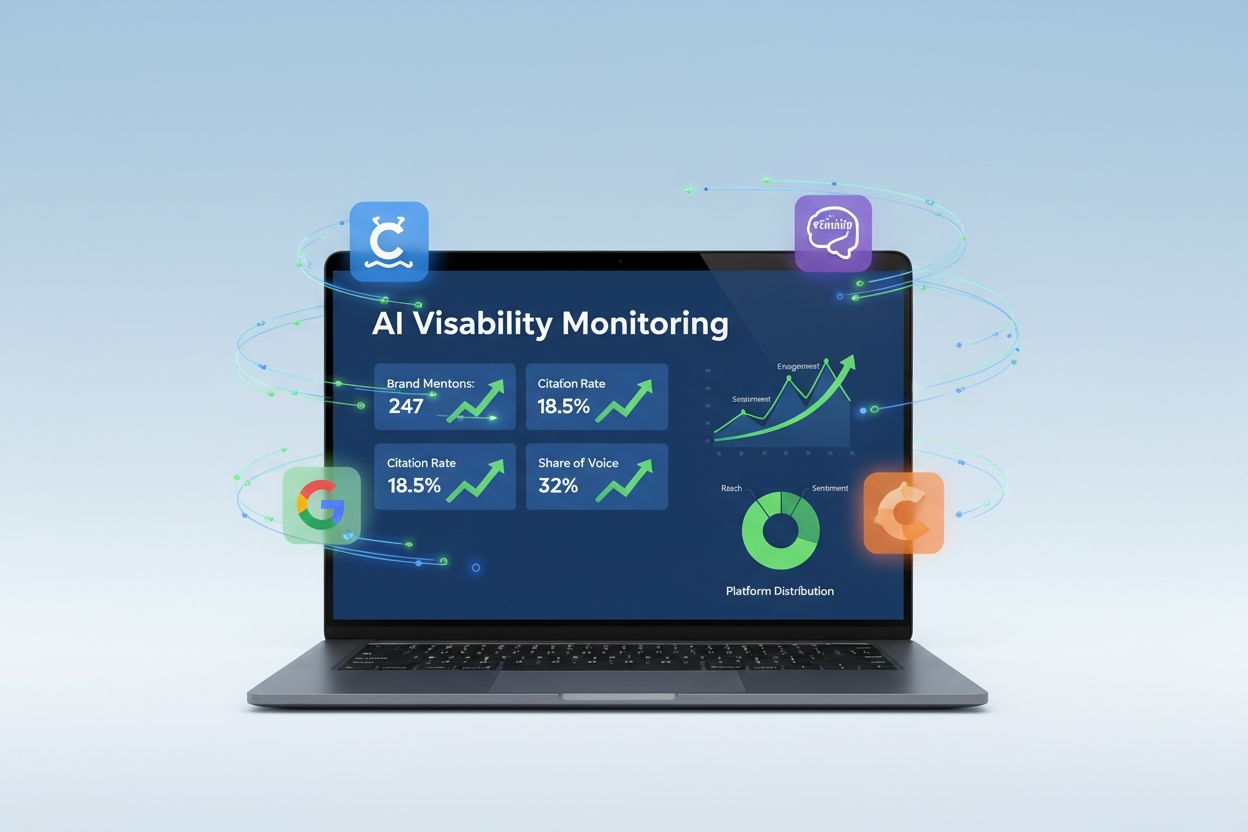
Learn essential AI visibility resources and tools for beginners. Discover how to monitor your brand in ChatGPT, Perplexity, and Google AI Overviews with our com...
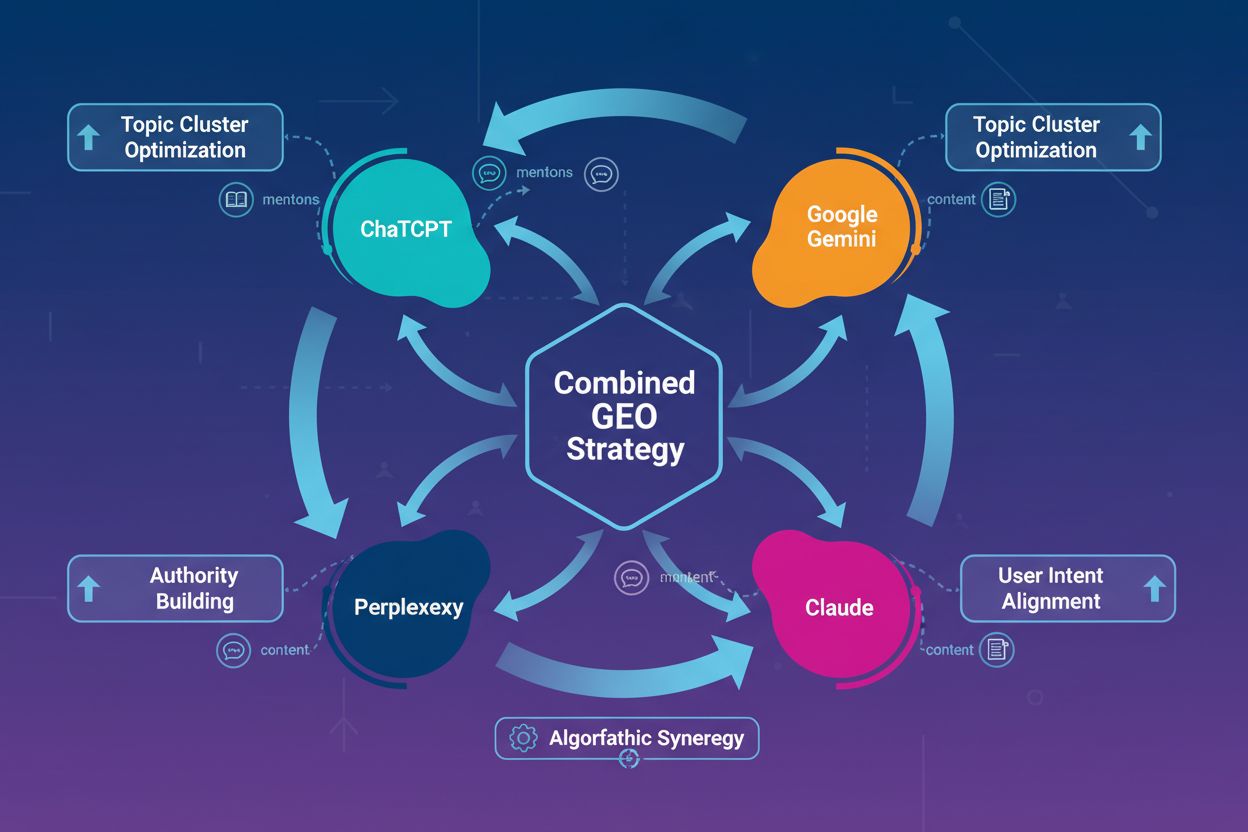
Master combined GEO strategies by stacking multiple optimization methods. Learn how to optimize for multiple AI platforms simultaneously and maximize your visib...