

How Do I Get Started with GEO Today?
Learn how to get started with Generative Engine Optimization (GEO) today. Discover essential strategies to optimize your content for AI search engines like Chat...
9 min read

Discover the key team roles and responsibilities needed for successful AI search optimization, including GEO specialists, content strategists, and data analysts to monitor brand visibility in ChatGPT, Perplexity, and AI answer engines.
AI search optimization requires a multi-disciplinary team including AI search specialists, content strategists, data analysts, technical SEO experts, and brand visibility managers. Over 34% of SEO roles now require AI search skills, with leadership positions requiring these competencies first before implementation at individual contributor levels.
AI search optimization represents a fundamental shift in how organizations approach digital visibility. Unlike traditional search engine optimization that focuses primarily on Google rankings, AI search optimization (also called GEO or Generative Engine Optimization) requires teams to monitor and optimize for visibility in AI-generated responses from systems like ChatGPT, Perplexity, Google AI Overviews, and Claude. This emerging discipline demands specialized expertise that extends beyond conventional SEO practices, requiring organizations to build teams with distinct roles and responsibilities that work collaboratively to achieve visibility across multiple AI platforms.
The evolution of search has created an urgent need for organizations to understand which roles are essential for success in this new landscape. Research analyzing over 30,000 job postings reveals that 34% of all SEO roles now require AI search skills, with this requirement being most prevalent in senior leadership positions. This trend indicates that organizations are recognizing the strategic importance of AI visibility while simultaneously struggling to find and hire professionals with the necessary expertise. Understanding the specific roles needed for AI search optimization helps organizations build effective teams capable of managing both traditional SEO and emerging AI-driven visibility challenges.
The AI Search Specialist (also titled GEO Specialist or Director of AEO & SEO) represents a new category of professional specifically trained to optimize content for AI systems. This role focuses on understanding how large language models process, interpret, and cite content in their generated responses. These specialists must comprehend the technical mechanisms behind AI answer engines, including how they retrieve information, evaluate source credibility, and determine which content to reference in their outputs.
The AI Search Specialist conducts research into how different AI platforms surface content and brand mentions, analyzing patterns in AI-generated responses to identify optimization opportunities. They develop strategies specifically designed to increase the likelihood of brand mentions and content citations within AI responses, which differs significantly from traditional keyword ranking strategies. This role requires deep knowledge of LLM optimization (LLMO) principles, understanding how content structure, clarity, and authority influence whether AI systems will reference your content. The specialist must stay current with how different AI platforms operate, as each system—ChatGPT, Perplexity, Google AI Overviews, and others—may have different retrieval and citation mechanisms.
The Content Strategist focused on AI optimization plays a critical role in developing content that resonates with both human readers and AI systems. This professional must understand how to structure content in ways that are easily parsed by machine learning algorithms while remaining engaging and valuable to human audiences. They develop comprehensive content strategies that address the specific requirements of AI systems, including clear formatting, direct answers to user queries, and well-organized information hierarchies.
Content strategists for AI optimization must recognize that AI systems favor content with clear structure, direct answers, and comprehensive coverage of topics. They work to ensure that primary answers to user questions appear early in content sections, that headings are descriptive and question-based, and that information is organized in ways that AI systems can easily extract and reference. This role requires understanding how AI systems evaluate content quality, authority, and relevance, then translating those insights into actionable content development guidelines. The strategist collaborates closely with writers and technical teams to ensure content meets both AI optimization requirements and business objectives.
The Data Analyst specializing in AI visibility metrics serves as the measurement expert for AI search optimization efforts. This professional develops frameworks for tracking brand mentions and content citations across multiple AI platforms, creating dashboards and reports that reveal where and how often a brand appears in AI-generated responses. They establish key performance indicators (KPIs) specific to AI visibility, which differ from traditional SEO metrics like search rankings and organic traffic.
This role requires expertise in analyzing unstructured data from AI responses, identifying patterns in how different platforms cite sources, and measuring the impact of optimization efforts on brand visibility. The AI visibility analyst must understand how to track mentions across ChatGPT, Perplexity, Google AI Overviews, and emerging AI systems, then synthesize this data into actionable insights. They work closely with leadership to demonstrate the business value of AI visibility initiatives and identify which optimization strategies are delivering measurable results. This role is increasingly critical as organizations recognize that success requires far more than dabbling in LLM prompts—it demands real infrastructure and systems that can track where and how brands appear in AI-generated responses.
The Technical SEO Specialist with AI optimization expertise ensures that websites are technically optimized for both traditional search engines and AI systems. This professional understands how AI systems crawl and index content, ensuring that websites have proper technical foundations that allow AI systems to access and process information effectively. They work on site architecture, crawlability, page speed, mobile optimization, and structured data implementation—all factors that influence how AI systems discover and evaluate content.
Technical SEO specialists with AI focus must understand how different technical implementations affect AI system performance. They ensure that content is properly structured with semantic HTML, that important information is not hidden behind JavaScript or other barriers that might prevent AI systems from accessing it, and that websites provide clear signals about content authority and relevance. This role bridges the gap between development teams and AI optimization strategy, ensuring that technical decisions support broader AI visibility goals.
The SEO Manager or Director oversees the entire AI search optimization strategy and coordinates between different specialized roles. This leadership position is critical because research shows that AI search skills are mentioned in 50% of executive roles, 41% of manager roles, and only 29% of individual contributor roles. This distribution indicates that strategic decisions about AI optimization must be established at leadership levels before becoming expectations for team members.
The SEO Manager or Director develops the overall vision for AI visibility, allocates resources to different optimization initiatives, and ensures alignment between AI optimization efforts and broader business goals. They communicate with other departments about AI visibility requirements, manage relationships with external partners or agencies, and track overall performance against established KPIs. This role requires understanding both traditional SEO principles and emerging AI optimization strategies, positioning the manager as a bridge between established practices and new methodologies.
The Brand Visibility Manager focuses specifically on ensuring that brand names, products, and company information appear prominently in AI-generated responses. This role involves monitoring how AI systems mention the brand, analyzing competitive positioning in AI responses, and developing strategies to increase brand mentions and positive associations in AI outputs. The Brand Visibility Manager works closely with content teams to ensure that brand-relevant content is optimized for AI visibility and with data analysts to track brand mention metrics across platforms.
This role recognizes that AI visibility depends on establishing a strong digital presence across multiple platforms, including the company website, YouTube, LinkedIn, and industry-specific platforms. The Brand Visibility Manager develops strategies for leveraging multiple touchpoints to increase the likelihood that AI systems will reference the brand, understanding that AI systems often draw information from highly-ranked sources and authoritative platforms.
The Content Writer or Copywriter creates the actual content that will be optimized for AI systems. These professionals must understand AI optimization principles while maintaining the ability to write engaging, valuable content for human readers. They work closely with content strategists to implement AI optimization guidelines, ensuring that content includes clear answers to user questions, uses descriptive headings, and maintains the structural clarity that AI systems require.
Content writers for AI optimization must recognize that content is still king for how search engines and AI systems rank and reference information. They develop content that directly addresses user queries, provides comprehensive coverage of topics, and establishes the brand as an authoritative source. This role requires understanding how to balance keyword optimization with natural language, ensuring that content reads naturally while incorporating the signals that AI systems use to evaluate relevance and authority.
The Link Building and Outreach Specialist develops strategies to increase the authority and credibility of the website, which influences how AI systems evaluate content. While backlinks may not directly affect AI citations in the same way they affect search rankings, they contribute to overall domain authority and trustworthiness—factors that AI systems consider when evaluating sources. This professional identifies opportunities to secure high-quality backlinks and builds relationships with other websites and publications that might reference or link to the company’s content.
The UX/UI Designer ensures that the website provides an excellent user experience, which indirectly supports AI optimization goals. AI systems evaluate user engagement signals and website quality, so designers must create interfaces that are intuitive, visually appealing, and conversion-focused. They work with SEO and content teams to ensure that design decisions support content visibility and that important information is easily accessible to both human users and AI systems.
| Team Structure Type | Best For | Key Characteristics | Advantages | Challenges |
|---|---|---|---|---|
| Role Separation (Functional) | Smaller to medium teams | Each person specializes in one function (technical SEO, content, analytics, etc.) | Clear specialization, easier to hire for specific skills, scalable as team grows | Requires strong coordination, potential silos between functions |
| Vertical/Specialty Structure | Large organizations with diverse audiences | Teams organized by audience segment, product line, or market | Ownership and accountability per segment, better understanding of specific audiences, faster decision-making | Requires more senior talent, potential duplication of effort, higher costs |
| Hybrid Structure | Enterprise organizations | Combination of functional specialists and vertical teams | Balances specialization with audience focus, flexible resource allocation | Most complex to manage, requires strong leadership |
The distribution of AI search skills across organizational levels reveals important insights about how organizations should approach building AI optimization capabilities. AI search requirements are more popular in senior roles, with the following distribution:
This pattern suggests that organizations must first establish strategic direction and leadership commitment to AI optimization before implementing these practices at operational levels. Senior leaders need to understand AI visibility opportunities, allocate resources appropriately, and set organizational priorities. Managers then translate these strategic decisions into operational plans and coordinate between different teams. Individual contributors execute specific optimization tasks based on strategies developed by leadership and managers.
Successful AI search optimization requires teams to manage several critical responsibilities that work together to improve visibility in AI-generated responses:
Strategy and Planning: Developing comprehensive AI optimization strategies that align with business goals, identifying priority topics and keywords, and establishing measurement frameworks. This responsibility typically falls to senior leaders and strategists who understand both the technical aspects of AI systems and broader business objectives.
Content Development and Optimization: Creating and optimizing content specifically for AI systems, ensuring clear structure, direct answers, and comprehensive coverage. This involves writers, strategists, and technical specialists working together to implement optimization guidelines while maintaining content quality and engagement.
Technical Implementation: Ensuring websites are technically optimized for AI system crawling and indexing, implementing structured data, optimizing site speed and mobile performance, and maintaining proper site architecture. Technical SEO specialists and developers collaborate on these implementation efforts.
Monitoring and Measurement: Tracking brand mentions and content citations across AI platforms, analyzing performance data, and identifying optimization opportunities. Data analysts and visibility managers work together to create comprehensive reporting and insights.
Authority Building: Developing thought leadership content, securing high-quality backlinks, and establishing the brand as an authoritative source in the industry. This involves content teams, outreach specialists, and sometimes external PR professionals.
The industry is rapidly developing new terminology to describe AI optimization roles and responsibilities. GEO (Generative Engine Optimization) and AEO (Answer Engine Optimization) have emerged as the primary frameworks for describing AI-driven search optimization. Some organizations are creating entirely new job titles like SEO & GEO Specialist and Director of AEO & SEO, indicating that AI optimization is becoming a core expectation rather than a specialized add-on.
Research shows that GEO wins the terminology war so far, with AEO not far behind, suggesting that the industry is converging around these labels as the primary ways to describe AI-driven search optimization. This terminology evolution reflects the maturation of AI optimization as a distinct discipline with its own strategies, tools, and measurement frameworks. Organizations should recognize that these new roles and titles represent genuine specialization rather than simple rebranding of existing positions.
Organizations should approach team building strategically, recognizing that not all companies need identical structures. Smaller organizations might start with a single AI Search Specialist who understands both traditional SEO and AI optimization principles. As the organization grows and AI visibility becomes more critical to business success, specialized roles can be added to handle specific functions like content strategy, data analysis, and technical implementation.
The key is ensuring that leadership understands and commits to AI optimization as a strategic priority before expecting individual contributors to implement these practices effectively. Teams need clear communication about why AI visibility matters, how it connects to business goals, and what success looks like. Without this strategic foundation, even well-intentioned optimization efforts may lack focus and fail to deliver measurable results.
Organizations should also recognize that hiring for AI search skills is currently lagging behind organizational curiosity and early experimentation. This means that finding professionals with established AI optimization expertise may be challenging, requiring investment in training existing team members or working with external partners who specialize in this emerging discipline. As the field matures and more professionals develop AI optimization expertise, hiring will become easier and more straightforward.
Track where your brand appears in AI-generated answers across ChatGPT, Perplexity, Google AI Overviews, and other AI systems. Get real-time visibility into your AI search performance.
Learn how to get started with Generative Engine Optimization (GEO) today. Discover essential strategies to optimize your content for AI search engines like Chat...
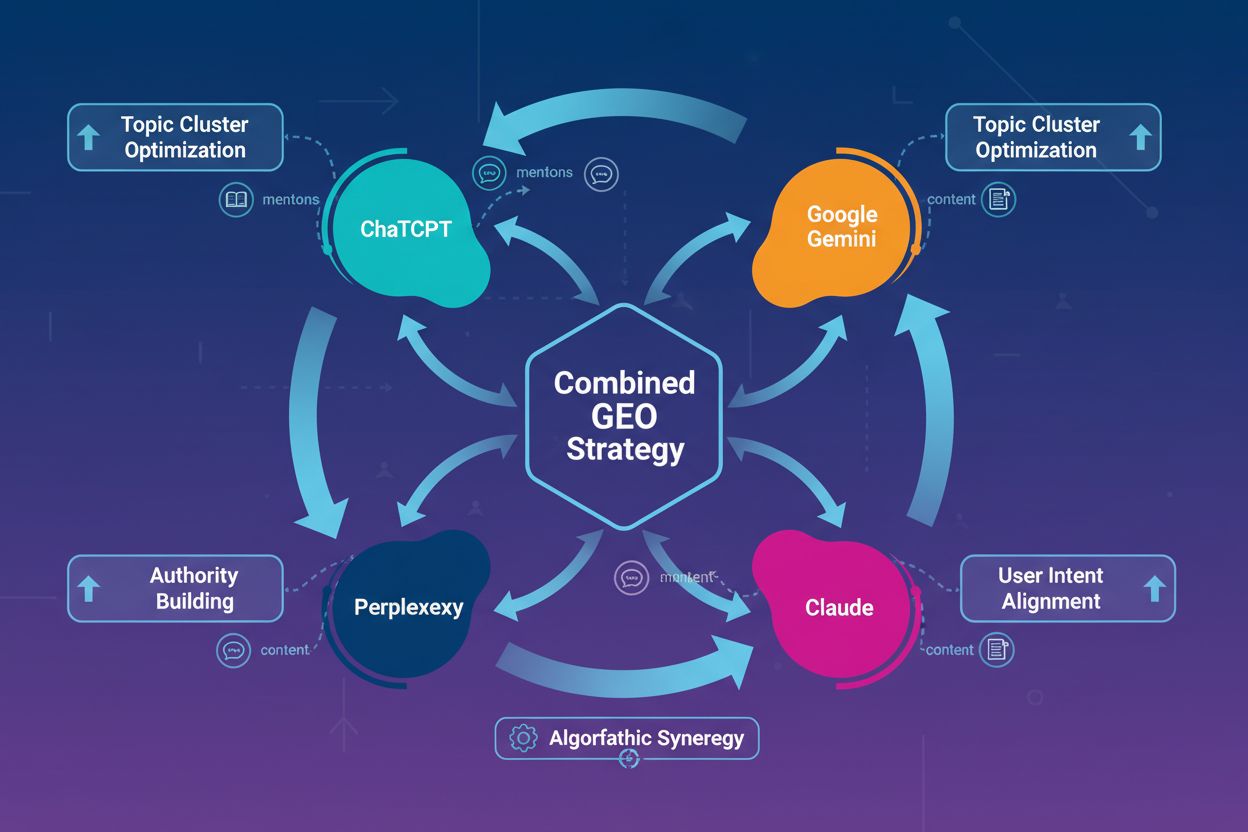
Master combined GEO strategies by stacking multiple optimization methods. Learn how to optimize for multiple AI platforms simultaneously and maximize your visib...
Learn how ecommerce businesses optimize for AI search engines like ChatGPT, Perplexity, and Google AI Mode. Discover strategies for product visibility, schema m...